Raul Delapena Setiawan
In a move that has sent shockwaves through both the technology and healthcare sectors, Midjourney—the creative powerhouse synonymous with generative AI art—has announced an audacious transition from digital aesthetics to physical health diagnostics. The company, best known for its text-to-image synthesis software, is pivoting toward "Midjourney Medical," a new division dedicated to creating high-speed, full-body ultrasonic scanning technology.
Far from a mere software experiment, this initiative represents a fundamental shift in the company’s identity. Midjourney is currently engineering a proprietary scanner designed to provide high-fidelity, 3D anatomical maps in under 60 seconds, with plans to deploy these machines in specialized "wellness spas" across the globe.
The Genesis of the Midjourney Scanner: A New Paradigm
The technical architecture of the Midjourney Scanner is a radical departure from traditional medical imaging. While modern Magnetic Resonance Imaging (MRI) machines are often claustrophobic, time-consuming, and prohibitively expensive, Midjourney’s proposed solution utilizes a water-submersion platform.
As a user stands on a platform, they are lowered into a fluid-filled chamber at a rate of two inches per second. Surrounding them is a specialized ring housing half a million individual ultrasonic sensors, each no larger than a grain of sand. These sensors function similarly to the biological sonar used by dolphins, emitting and recording ultrasonic waves to create a real-time, 3D render of the human body.
The company claims that this approach allows for a level of detail down to a fraction of a millimeter. By processing the "ripples" of sound bouncing back from the body, the machine generates a diagnostic-grade map that rivals current MRI standards, yet operates at nearly 100 times the speed of traditional clinical hardware.
Chronology of Development
The transition to hardware did not happen overnight. The following timeline outlines the strategic maneuvers that led to the announcement:
- Late 2023: Midjourney recruits Ahmad Abbas, a former Apple engineer who played a pivotal role in the development of the Vision Pro. Abbas is appointed as the head of consumer hardware projects, signaling the company’s intent to move beyond the screen.
- November 2025: Midjourney secures a critical licensing agreement with Butterfly Network, a leader in ultrasound-on-chip technology. This partnership provides Midjourney with the exclusive rights to the hardware necessary to miniaturize and mass-produce their scanner sensors.
- Early 2026: Formal announcement of "Midjourney Medical." The company confirms the existence of its prototype and outlines a multi-year roadmap for FDA approval and facility deployment.
- 2026–2027 (Current Phase): The company enters a 12-month window dedicated to algorithmic refinement, clinical research trials, and the design of the second-generation scanner hardware.
- 2027: Projected opening of the first Midjourney-branded "Scanner Spas" in San Francisco.
- 2028: Planned rollout of the third-generation machine, featuring custom-built silicon chips designed to enhance image processing speeds and clarity.
- 2031: The company’s "North Star" goal: To have 50,000 scanners deployed globally, creating a new standard for preventative healthcare.
The Engineering Synergy: Butterfly Network and Apple Pedigree
The collaboration with Butterfly Network is the backbone of this project. Butterfly Network’s "ultrasound-on-chip" technology is what enables the massive array of 500,000 sensors to function within a singular, manageable ring structure. Without this technology, the data processing requirements for such a dense sensor array would be computationally prohibitive.
The influence of Ahmad Abbas is equally critical. By applying the design philosophy of "casual" but "powerful" consumer hardware—hallmarks of his time at Apple—Abbas is attempting to destigmatize the medical scanning process. The "spa" concept is a deliberate attempt to remove the clinical coldness of a hospital environment, making full-body diagnostics a routine, accessible, and perhaps even relaxing experience for the average consumer.
Official Stance and Philosophical Pivot
In a blog post explaining the shift, the leadership at Midjourney addressed the skepticism head-on. They posed the rhetorical questions that drove the pivot: "How do we want to be different?" and "What do we want to become?"
The company framed the scanner as a logical, if unexpected, evolution. Their mission statement for this new division is rooted in the idea of "accessible diagnostics." They argue that the current healthcare system is reactive—treating patients only after symptoms appear. By making full-body imaging as casual as a spa visit, Midjourney hopes to usher in an era of proactive, preventative medicine.
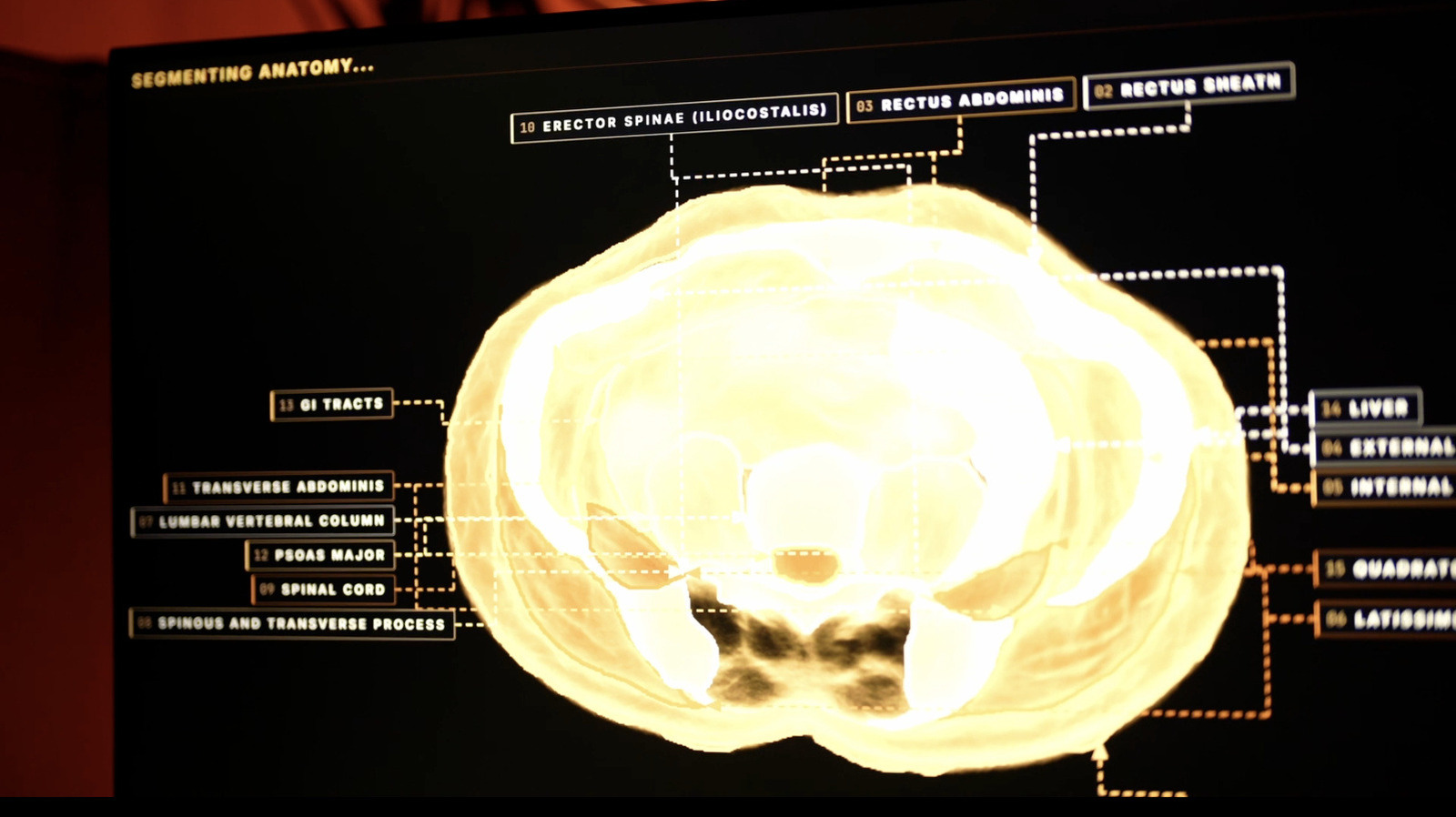
"We’ve dreamed of something as powerful as MRI, and as casual as a trip to the spa, and we’re unveiling a path to that today," the company stated in its official release.
Implications for the Future of Healthcare
The implications of this technology are profound, assuming the company can overcome the significant regulatory hurdles ahead.
1. The Death of Reactive Medicine
Midjourney’s stated goal is ambitious: the reduction of global healthcare costs by 50% and the prevention of 30% of all deaths. The logic follows that if an individual undergoes a 60-second scan every month or quarter, early markers for cancer, cardiovascular disease, and structural issues can be identified long before they become life-threatening.
2. The Data Privacy Dilemma
The transition from generating AI art to collecting deep-tissue biological data raises massive privacy concerns. While Midjourney has built its reputation on creative tools, it is now entering a space governed by strict healthcare regulations, such as HIPAA in the United States. Entrusting a tech company—one that has historically operated with a "move fast and break things" software ethos—with internal anatomical data will likely draw intense scrutiny from privacy advocates and government regulators.
3. Market Disruption
If successful, the Midjourney Scanner could severely disrupt the medical imaging market, currently dominated by multi-billion dollar conglomerates like GE Healthcare, Siemens, and Philips. A faster, cheaper, and more accessible alternative would fundamentally alter the business model of radiology departments globally. However, the company must first pass the stringent FDA clearance process for diagnostic accuracy. Currently, the "Scanner" is being positioned as a wellness and research tool; it will require significant clinical evidence to be accepted as a primary diagnostic device.
4. The Computational Challenge
While the hardware (the sensor ring) is a feat of engineering, the real challenge lies in the "software" of the scanner. Converting 500,000 streams of ultrasonic data into a coherent, 3D anatomical map in under a minute requires massive computational power. Midjourney’s experience in AI image generation—which involves pattern recognition, noise reduction, and high-speed data synthesis—may actually give them an edge in creating the algorithms necessary to interpret this raw sensor data.
The Road Ahead: Challenges and Skepticism
The path forward is fraught with obstacles. Industry experts have pointed out that "ultrasonic waves" have inherent limitations compared to the magnetic fields used in MRIs, particularly regarding bone density and deep-tissue visualization. Whether the Midjourney Scanner can achieve the same level of diagnostic granularity as a multi-million dollar MRI machine remains the single biggest technical question.
Furthermore, the "spa" model faces a regulatory gray area. Will these locations be classified as medical clinics? Will they require board-certified radiologists on-site to interpret the scans? Midjourney has yet to release details on how they intend to handle the "human" element of medical interpretation.
Despite these hurdles, the sheer audacity of the project has captured the attention of the global tech community. Whether Midjourney successfully revolutionizes healthcare or learns the hard way that medical hardware is far more complex than generative AI, one thing is clear: the company is no longer content to exist solely within the digital realm. The next frontier for the creator of the world’s most popular AI image generator is the human body itself.


 Rifan Muazin
 Azzam Bilal Chamdy