Jia Lissa
In the vast landscape of cinema criticism, few voices carried the weight, authority, and occasional eccentricity of Roger Ebert. While the late critic was celebrated for his ability to articulate the human condition through film, he was also famously prone to "contrarian" takes—instances where he stood diametrically opposed to the consensus of his peers. Perhaps the most baffling example of this phenomenon is his glowing, perfect-rating endorsement of the 2004 erotic drama When Will I Be Loved.
Directed by James Toback, the film remains a footnote in cinema history for all the wrong reasons. While it garnered a dismal 32% approval rating on Rotten Tomatoes, Ebert championed it as a masterwork of improvisation and psychological tension. To understand this divide is to examine not just a movie, but the complicated intersection of auteur theory, performer agency, and the shifting landscape of critical legacy.
The Genesis of a Controversial Project
Released in 2004, When Will I Be Loved was billed as an erotic drama that sought to push the boundaries of narrative structure. Written and directed by James Toback—a filmmaker already known for his volatile style and previous works like The Pick-Up Artist—the project was centered entirely on Neve Campbell.
At the time, Campbell was looking to shed the "Scream Queen" moniker she had earned through her iconic role as Sidney Prescott in Wes Craven’s Scream franchise. She sought roles that offered gravitas and artistic risk. According to production accounts, the script was intentionally lean, clocking in at only 35 pages. Toback’s vision relied heavily on the chemistry between the actors and an experimental, improvisational approach to dialogue.
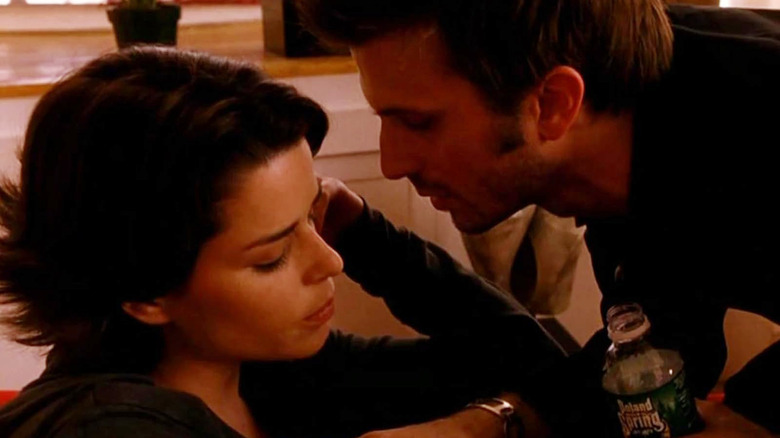
The plot follows Vera Barrie (Campbell), a woman trapped in a hollow relationship with her hustler boyfriend, Ford Welles (Frederick Weller). When Ford attempts to "pimp" Vera out to an Italian count (Dominic Chianese) for a six-figure sum, the film pivots from a standard drama into a cat-and-mouse game of manipulation. While the narrative premise sounds like a classic noir-thriller, the execution was, by almost every account other than Ebert’s, a disjointed failure.

A Critical Chasm: The Consensus vs. The Icon
The reception of When Will I Be Loved was swift and merciless. Critics across the industry viewed the film as a vanity project—a collection of pretentious choices masquerading as profound cinema.
Michael O’Sullivan, writing for The Washington Post, encapsulated the general sentiment when he argued that the film "collapsed under the weight of its own pretension." The criticism was not limited to the script; it attacked the very fabric of the film’s aesthetic. Stephanie Zacharek of Salon.com famously wrote that the entire picture seemed "coated with a slimy sheen of drool," a stinging rebuke of Toback’s directorial tone.
Conversely, Roger Ebert’s review was a glowing anomaly. He described the film as "a jazz solo that touches familiar themes on its way to a triumphant and unexpected conclusion." Where others saw a lack of structure, Ebert saw a bold, avant-garde choice. He lauded Campbell’s performance as "carnal, verbally facile, and physically uninhibited," arguing that her ability to navigate the improvisational nature of the dialogue was nothing short of a "breakthrough."
Chronology of the Controversy
The legacy of When Will I Be Loved cannot be separated from the man behind the camera. James Toback’s reputation, which was already polarizing in the early 2000s, has since collapsed under the weight of severe legal and ethical scandals.
- 2004: When Will I Be Loved premieres. The film is panned by mainstream critics, but receives a perfect four-star review from Roger Ebert, who calls it one of the most compelling films of the year.
- The Mid-2000s: The film fades into relative obscurity, becoming a trivia point for cinephiles regarding "Ebert’s worst takes."
- 2017–2025: A massive wave of allegations regarding sexual misconduct emerges against James Toback. The accusations, involving dozens of women, paint a picture of a director who used his position of power to manipulate performers.
- 2025: A landmark legal ruling orders Toback to pay $1.68 billion to 40 women who accused him of sexual assault. This verdict effectively finalized the public’s judgment on his career, casting a dark shadow over his filmography, including the very movies that were once subject to critical debate.
The Role of Improvisation and the "Scream Queen" Pivot
Neve Campbell’s transition from horror icon to serious drama was the central hook of the film. Ebert, in his interviews with Campbell, was clearly enamored with her willingness to strip away the artifice of a traditional script. He noted that "not many actresses could have played this character, and fewer still could give us the sense she’s making it up as she goes along."

For Campbell, the film was an exercise in vulnerability. By working with a 35-page script, she was forced to lean into the immediate, visceral reactions of her character. However, in hindsight, the "improvisational" nature of the film appears less like an artistic choice and more like a lack of narrative foundation. While Campbell’s performance was often cited as the only salvageable element, the surrounding film failed to provide a cohesive emotional arc.
Lisa Schwarzbaum of Entertainment Weekly famously summarized the disdain for this style, labeling the film a "ripe psychosexual compost heap of a drama that emits a provocative scent of rot and nonsense." The divide here is fundamental: where Ebert saw the "freedom" of improvisation, the rest of the critical establishment saw the "laziness" of a director who didn’t care enough to write a complete story.
Analyzing the "Ebert Effect"
How does one of the most respected critics in history arrive at such a different conclusion than the entire industry? This wasn’t the first time; Ebert had previously lavished praise on Hollywood Homicide and Lakeview Terrace, films that are now largely forgotten or maligned.
Ebert’s reviews of When Will I Be Loved reveal a specific type of critical obsession. He was often drawn to films that challenged conventional structure, even if they failed to deliver a coherent message. He was particularly fond of the "third act" of this film, calling it "spellbinding" for its portrayal of a woman regaining power through intelligence and manipulation.
However, critics like Wesley Morris of the Boston Globe argued that the film failed before it even started. "Most atrocious movies build into their badness," Morris wrote. "This one gets it out of the way up front." This highlights a classic tension in film criticism: the difference between admiring the ambition of a film and the reality of the viewing experience. Ebert often fell in love with the ambition.
The Modern Implications: Reevaluating the Legacy
Today, When Will I Be Loved serves as a case study for why critical consensus matters. In the current era, where the behavior of directors is scrutinized alongside their art, the film is almost impossible to view without the context of the $1.68 billion judgment against Toback.
The film has become a relic—a reminder of a time when "auteur" directors were given carte blanche to experiment, sometimes to the detriment of their cast and their audience. While Neve Campbell’s performance is still studied by fans of her acting range, the film itself has been effectively relegated to the dustbin of cinema history.
Roger Ebert’s defense of the movie remains a curiosity for film students. It serves as a reminder that even the most brilliant critics are susceptible to being charmed by a specific tone or a singular performance, even when the rest of the movie falls apart.
Conclusion: The Final Verdict
If one were to watch When Will I Be Loved today, they would likely find themselves aligning with the 32% consensus of 2004 rather than the glowing review of Roger Ebert. The film feels aimless, its eroticism borders on the uncomfortable, and the narrative structure feels less like a "jazz solo" and more like a series of disjointed scenes.
Yet, there is value in the disagreement. The gap between Ebert’s "perfect" rating and the scathing reviews of his contemporaries proves that cinema is a subjective experience. It highlights the power of a critic to see something—a spark, a moment of truth, or a bold performance—that everyone else missed. Whether that was a stroke of genius or a lapse in judgment remains a point of contention, but it is precisely this kind of debate that keeps the study of film alive. Ultimately, When Will I Be Loved remains a cautionary tale about the dangers of artistic pretension, the importance of narrative structure, and the complex, often messy, legacy of the films we choose to remember.


 Rifan Muazin
 Ali Ikhwan