Asep Darmawan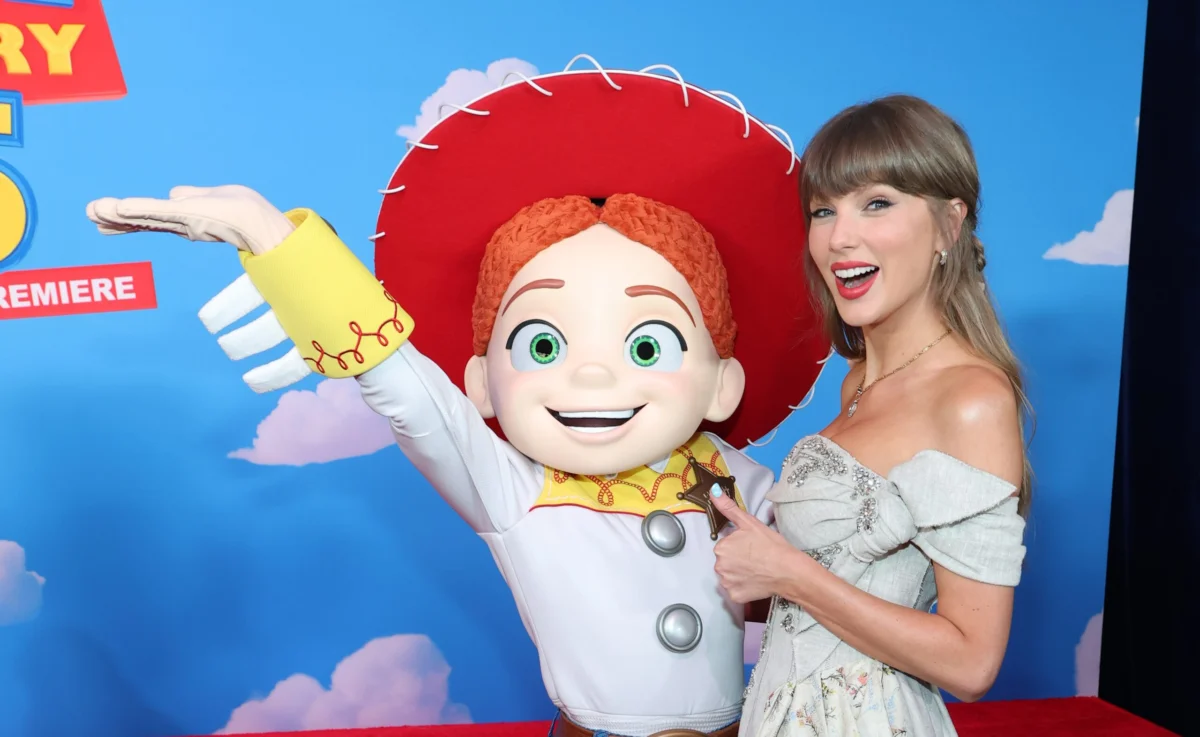
Editor’s note: This article contains major spoilers for "Toy Story 5."
As of Monday, June 22, 2026, Pixar’s "Toy Story 5" has cemented its status as the cinematic juggernaut of the year. Dominating the box office with the highest-grossing opening weekend of 2026, the film has sparked a cultural fervor not seen since the height of the franchise’s popularity. Yet, outside the multiplex, a parallel narrative is unfolding in the music industry. Taylor Swift’s original composition for the film, "I Knew It, I Knew You," has ascended to the pinnacle of the Billboard Hot 100.
For the average listener, this pairing seems like a match made in Academy Award heaven. The sheer ubiquity of the song, combined with the prestige of the Pixar brand, suggests that a Best Original Song nomination—and potentially a win—is all but guaranteed. However, a deeper analysis of the film’s narrative structure and the historically finicky nature of the Academy’s Music Branch suggests that the path to the podium may be more treacherous than the song’s chart success implies.
The Foundation of Pixar’s Musical Legacy
To understand why "I Knew It, I Knew You" faces an uphill battle, one must look at the history of music in the "Toy Story" universe. Randy Newman’s "You’ve Got a Friend in Me" remains the gold standard, a song so deeply embedded in the franchise’s DNA that it functions as a character unto itself. It was not merely a radio hit; it was a narrative anchor.
Similarly, the most transcendent moment in the franchise’s history—the heartbreaking montage in "Toy Story 2" featuring the cowgirl Jessie—was defined by "When She Loved Me." Again written by Newman and performed by Sarah McLachlan, the song was inextricably linked to the visual storytelling. It functioned as an emotional gut-punch that moved the plot forward and provided the audience with an intimate window into Jessie’s trauma and eventual growth.
When I entered the theater to see "Toy Story 5," I was struck by the film’s laser focus on Jessie, voiced once again by the incomparable Joan Cusack. Given the song’s title, "I Knew It, I Knew You," I was certain that it would serve as the emotional centerpiece of a similar montage. The scene eventually arrives: Jessie returns to the home of her original owner, the woman who once abandoned her, only to discover that her daughter has been named "Jessie." The cowgirl realizes that she did, in fact, make a difference. She knew her impact would endure. It is a moment of profound narrative catharsis.
Yet, there is no musical swell of the Taylor Swift track here. There is no montage. Instead, the song is relegated to the end credits.

The "Post-Credits" Problem: A Technical Hurdle
In the corridors of the Academy, "post-credits songs" are a polarizing subject. So much so that the issue has been addressed in the newest round of rule changes for the 99th Academy Awards. While the team behind the "Toy Story 5" Oscar campaign maintains that "I Knew It, I Knew You" meets all eligibility criteria, the Music Branch’s internal bias is well-documented.
Historically, voters prefer songs that are "diegetic" or at least functionally essential to the film’s progression. Think of "Shallow" from "A Star Is Born," which serves as the film’s climax, or "What Was I Made For?" from "Barbie," which crystallizes the film’s central philosophical inquiry. These songs aren’t just attached to the film; they are the film.
"I Knew It, I Knew You" is a beautiful, bouncy, and quintessentially "Swiftian" track, reminiscent of the production style she has perfected with collaborator Jack Antonoff. It feels timeless, but within the strict confines of the Academy’s voting criteria, it risks being viewed as an "add-on" rather than a narrative engine.
Taylor Swift’s Oscar Journey: A History of Near-Misses
Swift is no stranger to the Academy’s periphery. Her foray into film music began with the haunting "Safe and Sound," a collaboration with The Civil Wars for "The Hunger Games." That track remains a fan-favorite and a precursor to the stripped-back, folk-driven aesthetic she would later master.
Her transition into the Oscar conversation has been steady. In 2022, she was shortlisted for "Carolina" from "Where the Crawdads Sing." While she didn’t take home the statue, the campaign succeeded in securing her an invitation to join the Academy’s Music Branch the following year. This was a significant signal of intent, suggesting that the industry views her as a serious songwriter rather than just a pop star dabbling in soundtracks.
However, Swift has proven in the past that she understands the value of a "narrative song." Her work on the "Hannah Montana: The Movie" soundtrack—specifically "You’ll Always Find Your Way Back Home"—served as a perfect finale, tying the narrative threads together in a way that resonated deeply with the target audience. The Music Branch, however, operates on a different frequency than the "Zillennial" fans who championed her early work.
The Competitive Landscape of 2026
At this juncture, Swift remains the frontrunner by default, simply because no other song has commanded the same level of cultural gravity this year. We have seen other artists attempt to bridge the gap between chart success and film relevance with varying degrees of success.

For instance, Lady Gaga’s contributions to "The Devil Wears Prada 2" were heavily integrated into the plot, yet neither track cracked the Top 40, effectively removing them from the conversation. Similarly, Charli XCX’s work on the "Wuthering Heights" soundtrack has been largely overshadowed by the anticipation of her upcoming summer album.
The field is wide open. Rumors persist regarding Jesse Eisenberg’s latest project, "The Debut." Following the critical acclaim of his recent work, industry insiders are watching to see if his film contains a musical element that could disrupt the status quo. The Academy often looks for the "unexpected" contender—a song that emerges from a smaller, more intimate project to steal the spotlight from the blockbuster juggernauts.
Implications for the 99th Academy Awards
The "Toy Story 5" campaign must grapple with a harsh reality: The Music Branch is not easily swayed by star power. If it were, we would have seen nominations for Ariana Grande’s "Wicked: For Good" or the high-profile work of Miley Cyrus in last year’s "Avatar: Fire and Ash."
Voters are increasingly protective of the integrity of the Best Original Song category. They are looking for a song that demonstrates how music can elevate cinema. While "I Knew It, I Knew You" is a triumph of pop songwriting, the Academy may feel that placing it over the credits constitutes a "missed opportunity" to use the song as a tool for emotional resonance during the film’s runtime.
As we head into the second half of 2026, the playing field remains fluid. There are six months left in the eligibility window, providing ample room for another artist-director collaboration to emerge. Whether that project comes from a seasoned veteran or an indie darling remains to be seen.
Ultimately, Taylor Swift is in the enviable position of being the person to beat, but she is also a victim of her own success. The bar for her is higher than it is for any other songwriter in the industry. If she is to walk away with an Oscar this year, she must hope that the Academy looks beyond the placement of the song and recognizes the brilliance of the composition itself.
But if the history of the Oscars tells us anything, it is that "the song that fits" almost always beats "the song that hits." For now, the race is far from a cakewalk. The narrative, like the film itself, still has a few chapters left to write.

 Lina Hope
 Azzam Bilal Chamdy