Iffa Jayyana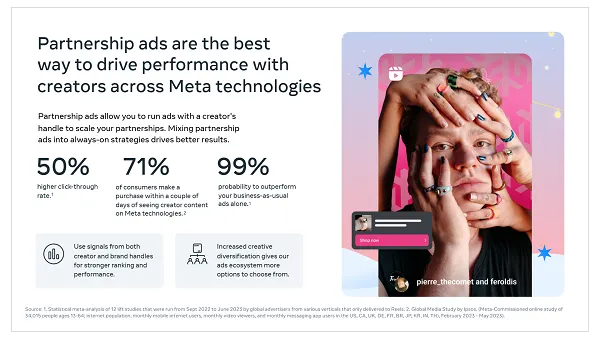
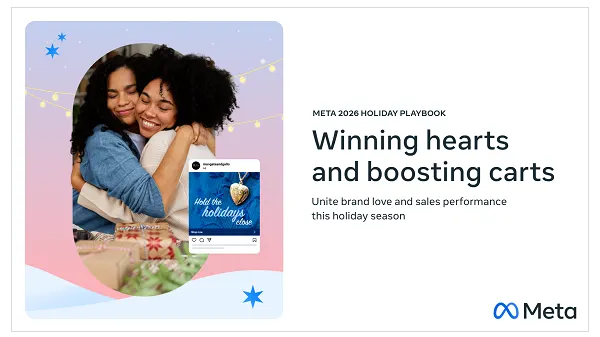
As the calendar turns toward the second half of the year, the retail and digital marketing sectors are entering their most critical phase: the preparation for the holiday season. With consumer behaviors shifting toward rapid discovery and seamless digital commerce, Meta has released its highly anticipated 2026 Holiday Marketing Playbook. Spanning 34 pages, this comprehensive guide serves as a strategic roadmap for brands looking to navigate the complexities of the modern customer journey, offering a data-backed approach to maximizing visibility and sales during the year’s most competitive retail window.
The Strategic Landscape: Why Early Planning Matters
For modern brands, the "holiday season" is no longer a Q4-exclusive event. The window for customer acquisition begins months in advance, as savvy shoppers start browsing, comparing, and wish-listing items long before the first snow falls. Meta’s latest publication emphasizes that the brands which succeed are those that view the holiday period as a continuous, three-to-four-month cycle rather than a sudden burst of activity in late November.
The playbook is designed to help marketing teams move away from reactive, last-minute spending and toward a cohesive, long-term narrative that builds brand equity throughout the year. By focusing on three pillars—leveraging the power of Reels, fostering authentic creator partnerships, and eliminating friction in the checkout process—Meta aims to provide a blueprint for brands to stay top-of-mind during the high-stakes end-of-year push.
Supporting Data: The Consumer Behavior Shift
Meta’s 2026 guide is anchored in proprietary data that highlights the immense scale of its ecosystem. The figures underscore the reality that for a significant portion of the global population, Meta’s platforms (Facebook, Instagram, and WhatsApp) are the primary engines for product discovery.
Key Performance Metrics
The data points presented in the playbook offer a stark reminder of the influence wielded by the Meta ecosystem:
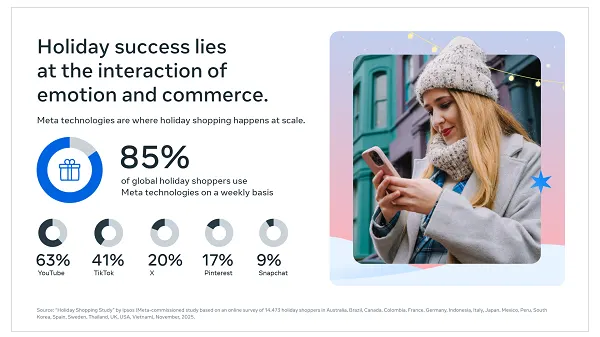
- High Engagement Frequency: A staggering 85% of global holiday shoppers interact with Meta technologies on a weekly basis, creating a constant touchpoint for brand messaging.
- Premium Spending Power: Meta’s internal analytics indicate that these users are not merely passive browsers; they spend 1.2 times more than the average shopper, making them a high-value demographic for advertisers.
- In-App Conversion: The trend toward "frictionless" shopping is confirmed by the finding that 78% of these shoppers have completed a purchase directly within a Meta app.
- The Omnichannel Effect: Even in the age of e-commerce, the physical store remains vital. Meta reports that 1 in 3 users frequently visit a physical retail location to finalize a purchase after first encountering the product through a social media advertisement.
These statistics suggest that social media is no longer just an awareness tool; it is a full-funnel ecosystem that drives both digital transactions and offline foot traffic.
A Chronological Roadmap for Holiday Success
To assist marketers in managing the volatility of the Q4 period, Meta has broken down the strategy into a quarter-by-quarter timeline. This chronological approach ensures that teams can maintain momentum without burning out their creative resources.
Q2 and Early Q3: The Foundation Phase
This is the time for testing and audience building. Meta suggests that brands use this period to refine their "Advantage+" campaigns—the company’s AI-powered advertising suite—to see which creative assets resonate best. The goal here is to establish a data baseline so that when the holiday rush begins, the machine learning algorithms are already optimized for your specific audience.

Mid-Q3: The Awareness Phase
As the holiday season approaches, the focus shifts to maximizing brand awareness. Meta’s playbook highlights the importance of Reels in this phase. With short-form video dominating user attention, brands that prioritize high-quality, authentic, and entertaining Reels are seeing higher engagement rates. During this phase, brands should also begin identifying and onboarding creators for their holiday campaigns.
Q4: The Conversion Phase
This is the "sprint." With the infrastructure and audience data prepared in the preceding months, Q4 is about removing friction. Meta advises using deep links to shopping pages, utilizing the "Shop" features in-app, and ensuring that promotional messaging is aligned with the specific shopping behaviors observed earlier in the year.
Leveraging Meta’s Strategic Pillars
The playbook outlines specific tactical approaches for brands to implement throughout their campaigns.
1. The Power of Reels
Reels have evolved from a trend into a necessity. Meta’s guide suggests that video content should feel native to the platform—less "commercial" and more "community-driven." Brands are encouraged to use Reels to showcase product utility, provide "how-to" demonstrations, or tap into viral audio trends to expand reach organically before layering on paid support.
2. Creator Partnerships
Influencer marketing remains a cornerstone of the holiday strategy. Meta’s guide includes specific tools for creator discovery, allowing brands to find partners whose audience demographics align perfectly with their own. The data shows that creator-led content often outperforms traditional brand-produced creative, as it carries the inherent trust and authenticity of a peer recommendation.
3. Frictionless Buying
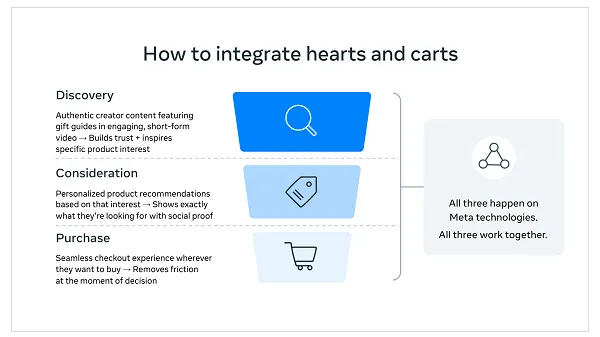
The most effective campaigns are those that lead the consumer to the "buy" button with the fewest possible clicks. Meta emphasizes the importance of mobile-optimized landing pages and the integration of native checkout experiences, which keep the user within the Meta environment and significantly reduce cart abandonment rates.
The Rise of Artificial Intelligence
Perhaps the most significant addition to the 2026 playbook is the increased focus on Artificial Intelligence. Meta notes that consumers are increasingly utilizing AI-driven tools to assist in product discovery—asking chatbots for gift ideas or using visual search to find products similar to those they have seen online.
To compete in this environment, Meta is championing its Advantage+ suite. By automating audience targeting, creative delivery, and bidding, Advantage+ allows brands to scale their campaigns dynamically. The playbook highlights that brands using these AI-powered tools see a significant increase in return on ad spend (ROAS) compared to manually managed campaigns, as the AI can pivot in real-time based on fluctuating consumer behavior and inventory availability.
Official Responses and Industry Implications
The release of this playbook comes at a time of increased scrutiny regarding digital advertising spend. By providing these tools, Meta is attempting to lower the barrier to entry for small and medium-sized businesses (SMBs) while providing sophisticated, data-driven strategies for global enterprises.
Industry analysts suggest that Meta’s move is a clear effort to retain advertising budget in an increasingly fragmented market, where platforms like TikTok and Amazon are also vying for holiday dollars. By positioning itself as a "partner" rather than just a "publisher," Meta is betting that the combination of its massive user data and AI-driven automation will make it the indispensable platform for the 2026 holiday season.
Conclusion: Turning Insights into Action
The 2026 Meta Holiday Playbook is not just a collection of tips; it is a reflection of a changing retail landscape. As consumers demand more convenience and more authenticity, brands must adapt their strategies to meet them where they are.
For marketing teams, the message is clear: the success of your holiday season is being determined right now. By utilizing the data provided by Meta, focusing on short-form video, embracing AI-driven ad products, and fostering genuine creator relationships, brands can transform the chaos of the Q4 shopping rush into a predictable, high-performing period of growth. As the year progresses, those who leverage this guide will be the ones best positioned to capture the attention—and the wallets—of the modern, digitally-native shopper.


 Nana Wu
 Nana
Nana