Ali Ikhwan
In the sprawling tapestry of DC Comics’ nine-decade history, few moments have resonated with as much visceral, lasting impact as the events of Alan Moore and Brian Bolland’s Batman: The Killing Joke. While modern comic book continuity often prioritizes accessibility for new readers—allowing writers to sidestep the weight of decades-old lore—the most compelling contemporary runs are those that acknowledge how the past continues to shape the present.
The latest limited series, Barbara Gordon: Breakout, serves as a masterclass in this approach. By placing Barbara Gordon in a precarious, high-stakes environment, the creative team has not only pushed the character into a fresh, dangerous narrative but has also forced her to confront the psychological and physical scars left by the Joker. As the series unfolds, it becomes clear that for Barbara Gordon, the past is never truly buried; it is a constant, haunting presence that defines her resilience and her vulnerabilities.
The Context: A Fresh Start for the Bat-Family
To understand the significance of Barbara Gordon: Breakout, one must look at the broader landscape of the current Batman title. Spearheaded by Matt Fraction and Jorge Jiménez, the current mainline Batman run was designed as an entry point, stripping away years of convoluted continuity to offer an inviting, high-octane narrative. By the ninth issue, however, the scope widened, bringing back essential elements of the Bat-Family: the tactical brilliance of Oracle, the investigative grit of Stephanie Brown’s Batgirl, and the distinct presence of Duke Thomas, the Signal.
This reintroduction sets the stage for Barbara Gordon: Breakout, a 12-issue limited series that pulls Barbara from her usual high-tech sanctuary and drops her into the deep end of a volatile, claustrophobic setting: Vandal Savage’s Supermax island prison. The series functions as both a standalone thriller and a deep psychological study, reminding readers that even as the DC Universe moves forward, the trauma of the past—specifically the night the Joker changed her life forever—remains a foundational element of her character.
Chronology of Crisis: From GCPD to the Supermax Infirmary
The narrative tension in Breakout is established immediately. Barbara finds herself incarcerated within the walls of a prison controlled by one of DC’s most formidable immortal villains, Vandal Savage. Within less than 24 hours of her arrival, the situation spirals into chaos.

Barbara awakens in the prison infirmary, cataloging a series of injuries that would sideline a lesser hero: a severe cranial fracture, two broken ribs, a fractured wrist, deep lacerations, and bruised vocal cords. The physical toll is immense, but it is the psychological fragmentation that defines the issue. As she drifts in and out of consciousness, drugged and disoriented, she becomes an unreliable narrator. The line between reality and hallucination blurs, leaving the reader to question the nature of the "Grim Reaper-esque" antagonist she perceives lurking in the shadows.
Is this entity a manifestation of her PTSD, a side effect of the mysterious pills being administered by her supposed "help," or a genuine threat within the prison walls? This uncertainty drives the suspense, forcing the reader to view the prison through the lens of a survivor struggling to maintain control over her own mind.
The Eternal Specter: The Killing Joke as a Living Memory
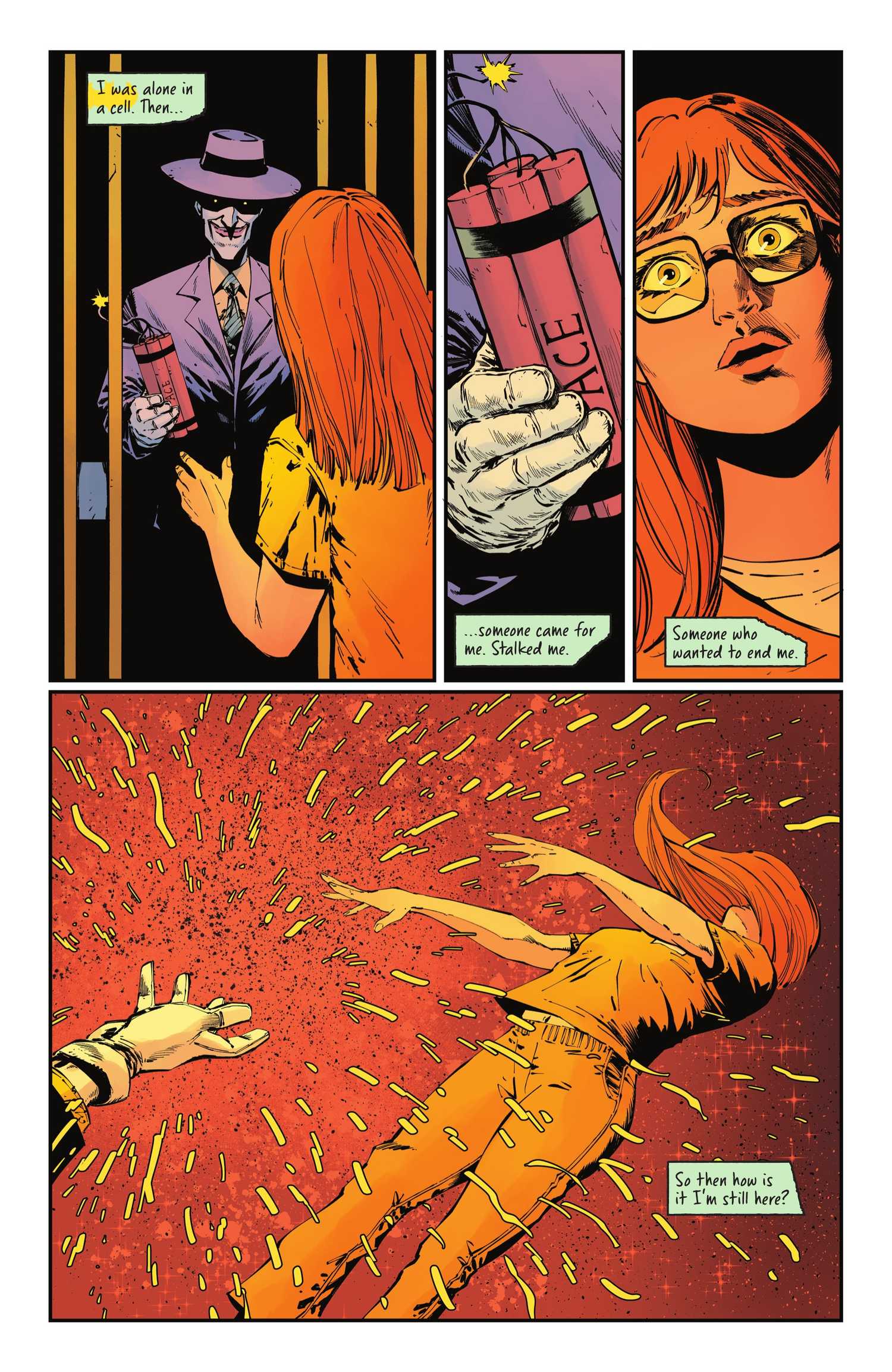
The core of Barbara Gordon: Breakout #2 lies in its willingness to revisit the trauma of The Killing Joke. For decades, the Joker’s assault on Barbara—which resulted in her paralysis and the end of her initial career as Batgirl—has been a cornerstone of her narrative arc. In this new series, that trauma is not treated as a mere historical footnote; it is a recurring nightmare that refuses to subside.
Through a series of harrowing hallucinations, the narrative parallels her current, brutalized state with that fateful night in her apartment. The sensory details of the attack in the infirmary—the helplessness, the sudden violence, the feeling of being trapped—act as a mirror to her past. Even as she has reclaimed her mobility through the neural spinal implant introduced in the New 52, the memory of her spinal injury remains a physical and emotional anchor.
The narrative suggests that the Joker is not just a villain in her past, but a permanent architect of her fears. When Sparrow, an individual ostensibly sent to assist her, arrives with more medication, the visual cues and the lingering sense of dread evoke the Joker’s presence, suggesting that for Barbara, the "Joker" is a state of being—a constant reminder of the fragility of safety.

Supporting Data: The Mechanics of Survival
While the plot is driven by mystery and psychological horror, the series also pays close attention to the mechanics of Barbara’s recovery. The fact that the brutal beating she endured has not compromised the neural spinal implant is a testament to her durability. However, it also serves as a point of irony; her ability to move and fight is a triumph of modern science, yet it also keeps her in the line of fire.
The presence of "Sparrow" and "Die" within the prison adds a layer of conspiracy that challenges the reader’s perception of authority. The narrative suggests that Sparrow was sent by Jim Gordon and Nightwing as an act of protection. Yet, as the story progresses, the reliability of this "help" becomes increasingly dubious.
Key evidence suggests that the power dynamics within the Supermax are far from what they appear. The transition from the familiar, reliable world of GCPD and Blüdhaven to the unpredictable, high-stakes environment of the island suggests that Barbara has been isolated by design. Whether Sparrow and Die are working for Jim Gordon, or whether they have their own, more sinister objectives, remains the central mystery that will likely define the remaining ten issues of the series.
Implications for the DC Universe
The implications of Barbara Gordon: Breakout extend beyond the immediate plot. By centering a 12-issue story on the long-term effects of past trauma, DC is signaling a commitment to character-driven storytelling that honors legacy while embracing modern stakes.
- The Evolution of Oracle: Oracle is often depicted as the mastermind of the Bat-Family, the eyes and ears of Gotham. By removing her from her tech-heavy environment and forcing her to rely on her wits and physical endurance, the series explores a more vulnerable version of the character. This evolution is essential for maintaining the relevance of a legacy character in a changing landscape.
- The Nature of Villainy: The use of Vandal Savage as the warden of a Supermax facility provides a fresh spin on classic villain dynamics. It elevates the prison from a simple holding cell to a theater of operations for global power players, increasing the stakes for everyone involved.
- Trauma as a Narrative Tool: The series avoids the pitfall of "trauma porn." Instead, it uses Barbara’s past to inform her decision-making and her survival instincts. It acknowledges that healing is not a destination, but an ongoing process.
Final Analysis: A Must-Read for Modern Fans
Barbara Gordon: Breakout #2 serves as a reminder that the best comic book stories are those that understand the weight of history. By weaving the haunting memories of The Killing Joke into a contemporary, high-octane thriller, the creative team has delivered a compelling narrative that feels both fresh and deeply rooted in the character’s core identity.
As Barbara Gordon navigates the treacherous waters of Vandal Savage’s prison, the audience is left with more questions than answers. Who are Sparrow and Die? What is the true purpose of the Supermax facility? And can Barbara ever truly escape the shadows of her past?
For fans of DC Comics, this series is an essential read. It offers a sophisticated look at one of the publisher’s most resilient heroes, proving that even after nearly nine decades, there are still new, profound stories to be told about the people behind the masks. As the series progresses, it will undoubtedly continue to challenge our understanding of what it means to be a hero in the face of insurmountable odds. Barbara Gordon: Breakout is available now, and it is a testament to the enduring power of the Bat-Family’s most brilliant tactician.


 Laily UPN