Evan Lee Salim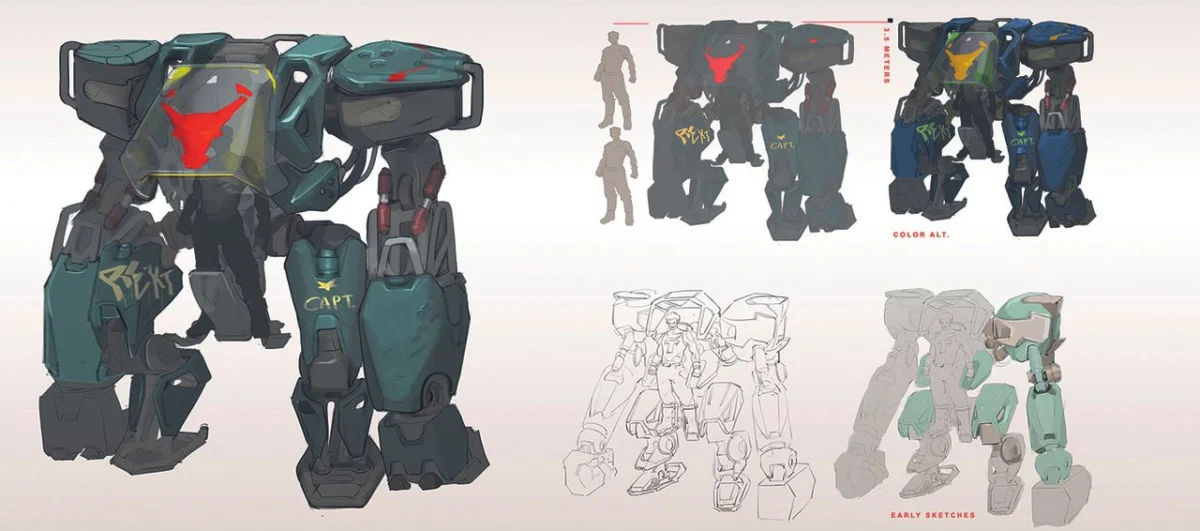
In the rapidly evolving landscape of digital concept art, few artists manage to strike a balance between the gritty realism of military hardware and the ethereal quality of visual storytelling as effectively as Aedel Fakhri. Based in Indonesia, the freelance concept artist has carved out a distinct niche for himself, specializing in complex mech design that feels simultaneously grounded in historical precedent and futuristic invention. By synthesizing retro-tech aesthetics with the raw, unpredictable nature of organic design, Fakhri creates worlds that invite the viewer to look closer at every bolt, seam, and hydraulic joint.
This profile explores the creative methodology of an artist who is redefining the mechanical genre, looking at his technical workflow, his philosophy on design, and the inspirations behind his most iconic pieces.
The Technical Foundations: A Workflow Built for Complexity
To execute designs that possess such mechanical density, Fakhri relies on a robust digital pipeline. He views software not as a creative crutch, but as an extension of the industrial design process. His primary toolkit consists of Adobe Photoshop for final rendering and detail work, Procreate for mobile sketching and ideation, and Blender for establishing the complex 3D forms that serve as the backbone for his mechs.
For aspiring artists looking to emulate his style, the choice of hardware is as critical as the software itself. Fakhri’s workflow underscores the necessity of high-precision drawing tablets, which allow for the nuanced line work required to render intricate machinery. His process typically begins with rapid iterations in Procreate, where he focuses on "readability"—the ability of the viewer to immediately comprehend the function of a piece of gear—before moving to Blender to ensure that the proportions and perspective remain physically plausible.
Chronology of a Visionary: From Inspiration to Execution
Aedel Fakhri’s career is marked by a progression from simple mechanical studies to the creation of expansive, narrative-driven intellectual properties (IP).
1. The Genesis of the Caribbean Terror Duo
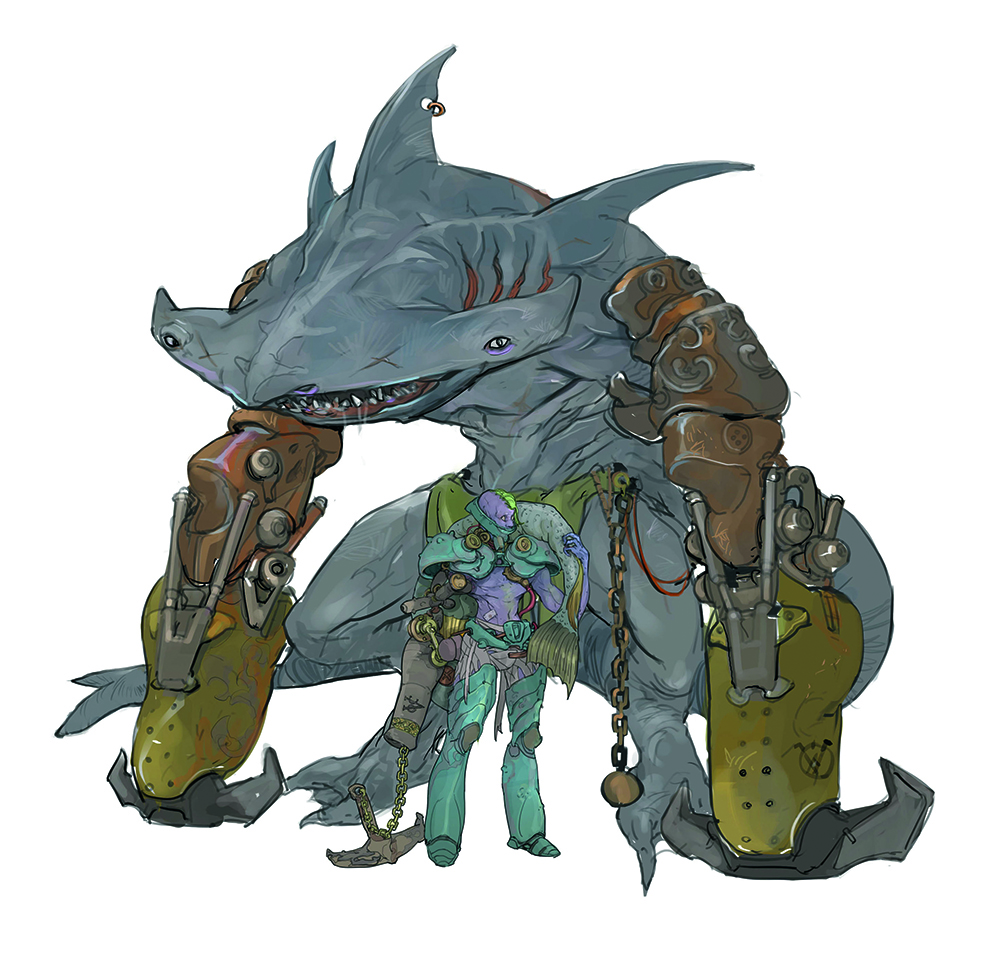
Early in his development of original IP, Fakhri sought to bridge the gap between two vastly different temporal aesthetics: the 16th-century Age of Discovery and high-concept mechanical science fiction. The "Caribbean Terror Duo" project serves as a cornerstone of this philosophy. By layering complex mechanical armor onto creatures that evoke the swashbuckling era, he challenged himself to create a "period-accurate" aesthetic for technology that never existed. This project taught him how to blend historical texture—such as weathered wood, rusted iron, and frayed rigging—with the sleek lines of modern mech design.
2. The VR Breakthrough: Underdogs and the Bull
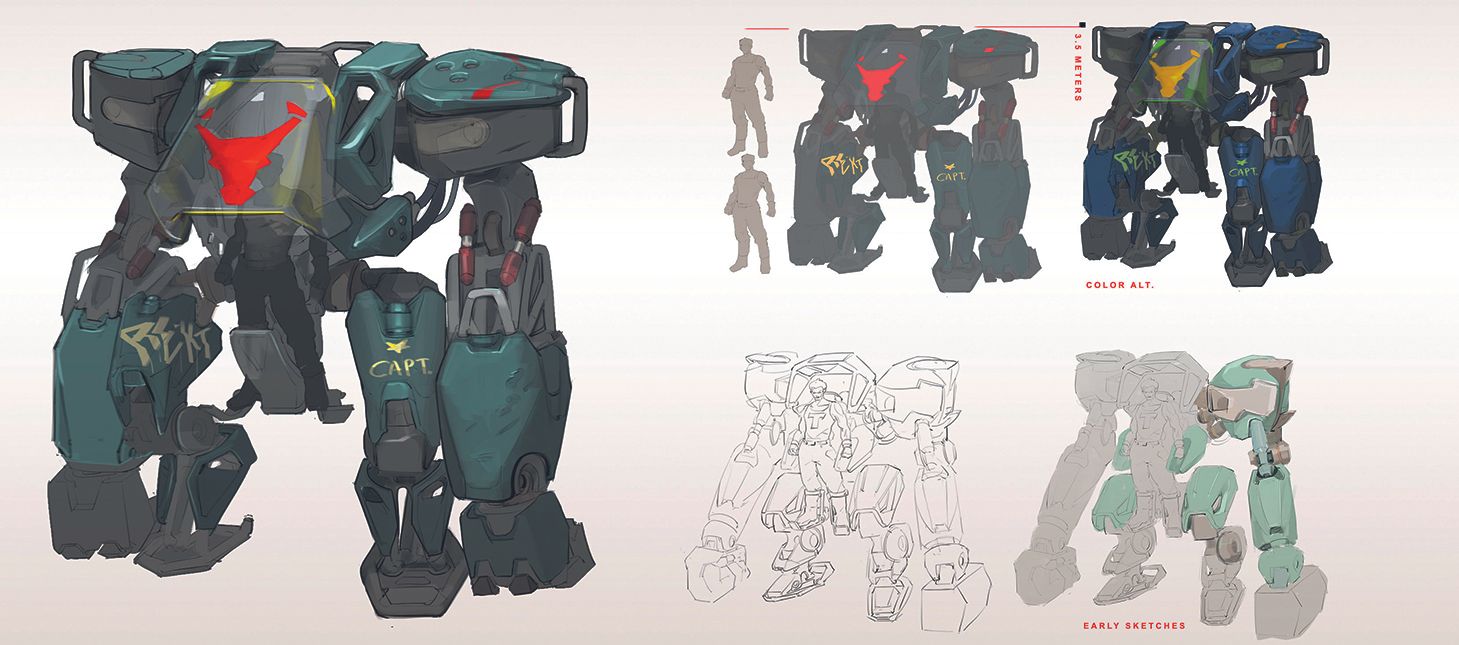
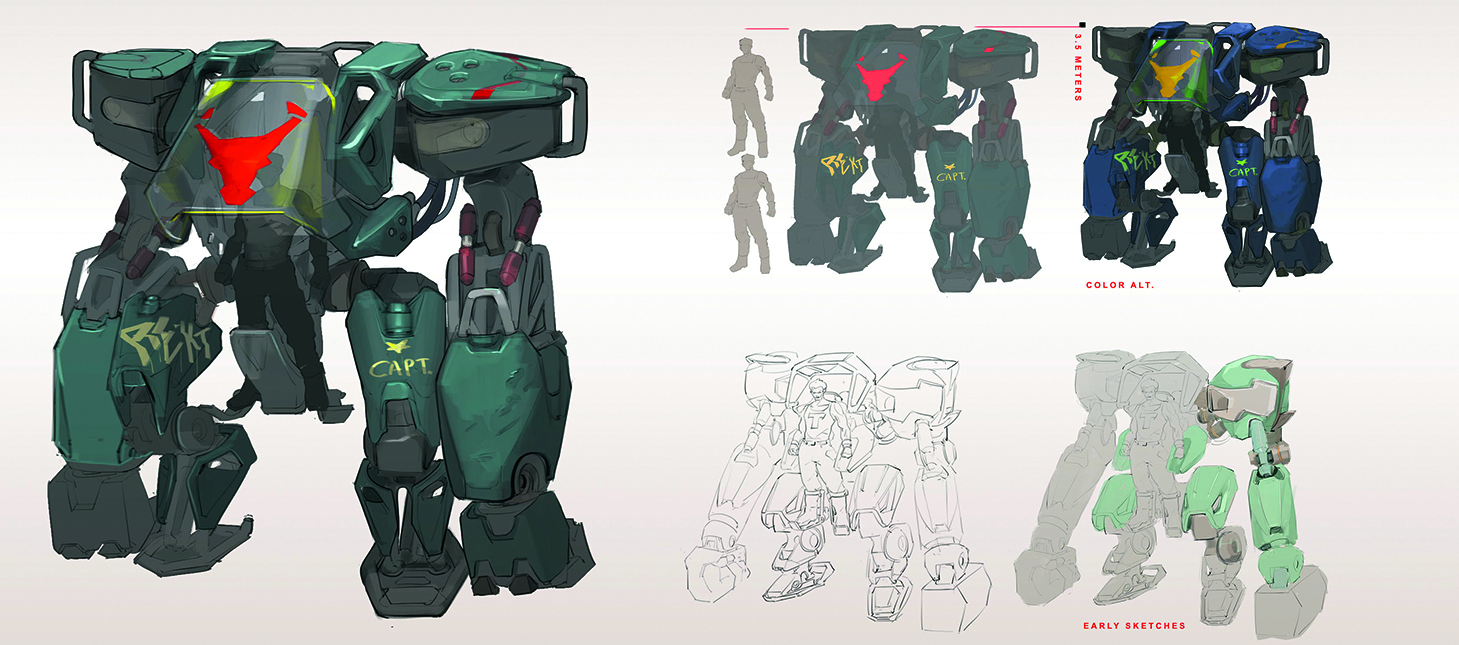
Perhaps the most significant milestone in his professional trajectory was his collaboration on the VR game UNDERDOGS. For nearly a year, Fakhri was tasked with designing the mechs that define the game’s brutal, high-stakes aesthetic. This project pushed him to consider how a machine moves in a virtual, three-dimensional space. "The Bull" remains a highlight of his portfolio, representing a culmination of his ability to design for both aesthetic impact and functional utility. The process of working with a game development studio helped refine his ability to create assets that are both visually complex and optimized for real-time engines.
3. The Krakatoa Influence: Boat
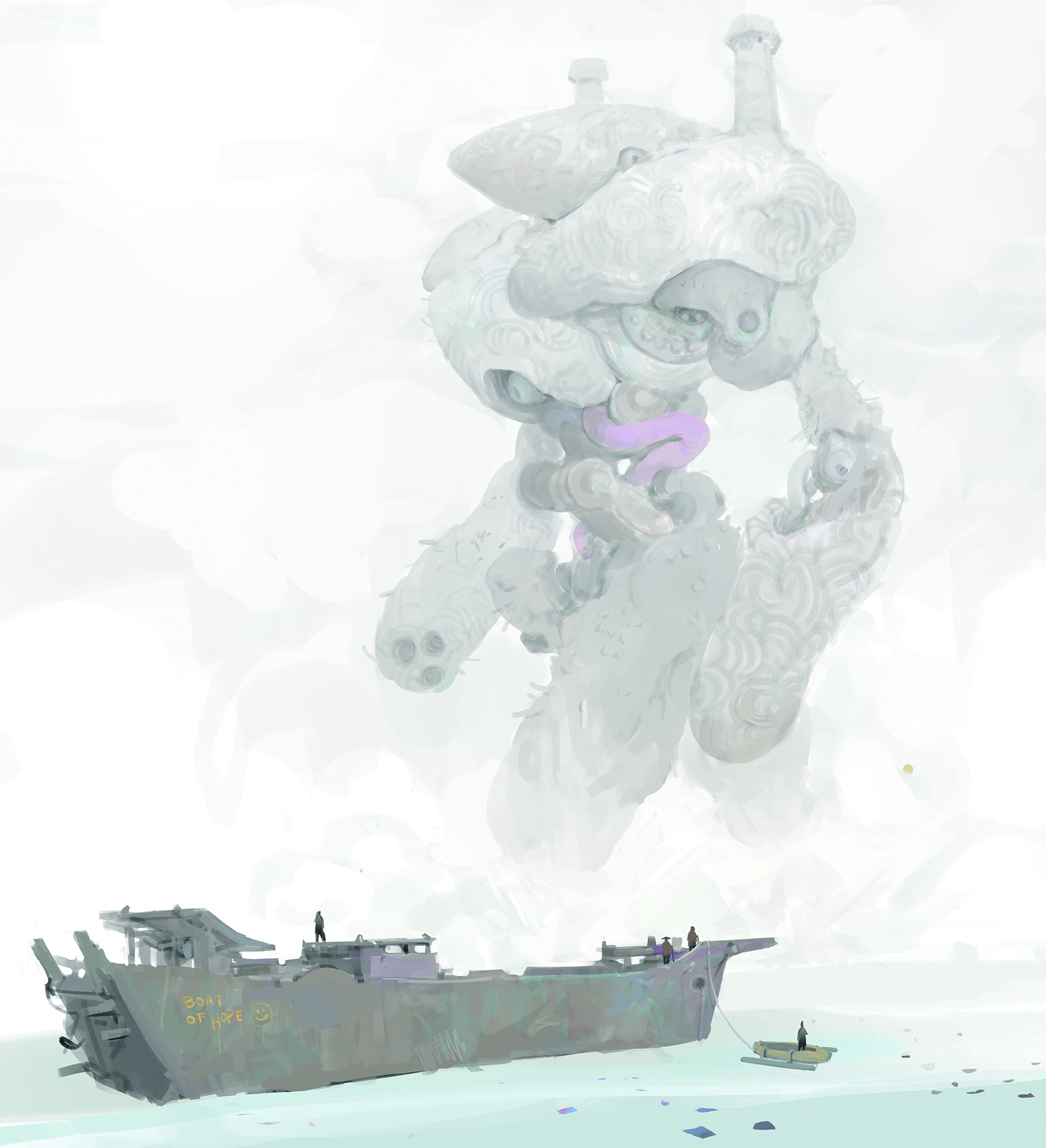
Fakhri’s work often draws from personal memory, a practice that infuses his sci-fi landscapes with a sense of genuine lived experience. The piece titled "Boat" is a prime example of this. Inspired by a boating trip near Mount Krakatoa taken 15 years prior, the piece depicts a colossal, extraterrestrial machine emerging from a post-apocalyptic flood. It is a testament to how Fakhri uses landscape as a character, grounding his surreal, high-tech inventions in the visceral reality of nature.
The Philosophy of Mechanical Storytelling
What sets Fakhri apart is his rejection of the "cool factor" as a singular goal. For him, a mech must have a history. This is evident in his piece "Mekakuma," a cyborg assassin imbued with the memories of an ancient warrior.
In this design, the mechanical elements are not merely armor; they are vessels for the character’s history. The cyborg’s design elements reflect its role as a mercenary—a lethal, efficient, and cold-blooded entity. By imbuing his machines with the "memories" of past lives, Fakhri creates a narrative layer that compels the viewer to wonder about the world in which these characters exist. His designs are rarely static; they are glimpses into a kinetic, unfolding story.
Supporting Data: The Rise of Mechanical Concept Art
The demand for specialized concept artists like Fakhri has grown exponentially with the rise of the metaverse and immersive gaming. Market data suggests that the digital art industry is increasingly prioritizing "narrative design"—the ability to communicate a character’s background through their physical design.
- Industry Trends: Studies from industry publications indicate that AAA game studios are moving away from generic sci-fi tropes in favor of "lived-in" aesthetic worlds.
- Skill Requirements: Technical proficiency in 3D modeling software (like Blender) is now a baseline requirement for professional concept artists, as it ensures spatial accuracy that 2D drawing alone cannot guarantee.
- Artist Profiles: Artists who can demonstrate an understanding of historical context—incorporating military history, engineering principles, and cultural aesthetics—are seeing higher rates of commission and industry engagement.
Official Responses and Industry Impact
Professional peers and art directors frequently cite Fakhri’s ability to "balance the weight" as a defining trait of his work. In the gaming industry, where visual noise can often overwhelm the player, Fakhri’s focus on readability ensures that his designs remain iconic even in fast-paced gameplay.
"The ability to take a complex machine and make it feel like it belongs in a specific historical context is a rare skill," says a lead designer from the UNDERDOGS production team. "Aedel doesn’t just draw robots; he builds history into the chassis."
Implications for the Future of Digital Art
Aedel Fakhri’s trajectory suggests a shifting paradigm in the world of digital illustration. As AI-generated imagery becomes more prevalent, the value of the "human touch"—the ability to weave personal memories, historical research, and narrative intent into a design—becomes more critical than ever.
Fakhri’s work serves as a blueprint for the next generation of artists. His success confirms that the future of concept art lies not in the speed of generation, but in the depth of conceptualization. Whether he is drawing from a childhood memory of a boat trip or a deep-dive into 16th-century military equipment, his work proves that the most compelling technology is that which feels rooted in the human experience.
As he continues to expand his own original IPs and consult for global game studios, Fakhri remains a vital voice in the digital art community. His commitment to the marriage of the mechanical and the emotional ensures that his machines will continue to resonate, evolve, and inspire.
This article originally appeared in ImagineFX magazine. For more insights into the world of digital art and to keep up with the latest techniques in concept design, subscribe to ImagineFX for monthly tutorials, artist profiles, and industry news.

 Basiran
 Asro
Asro