

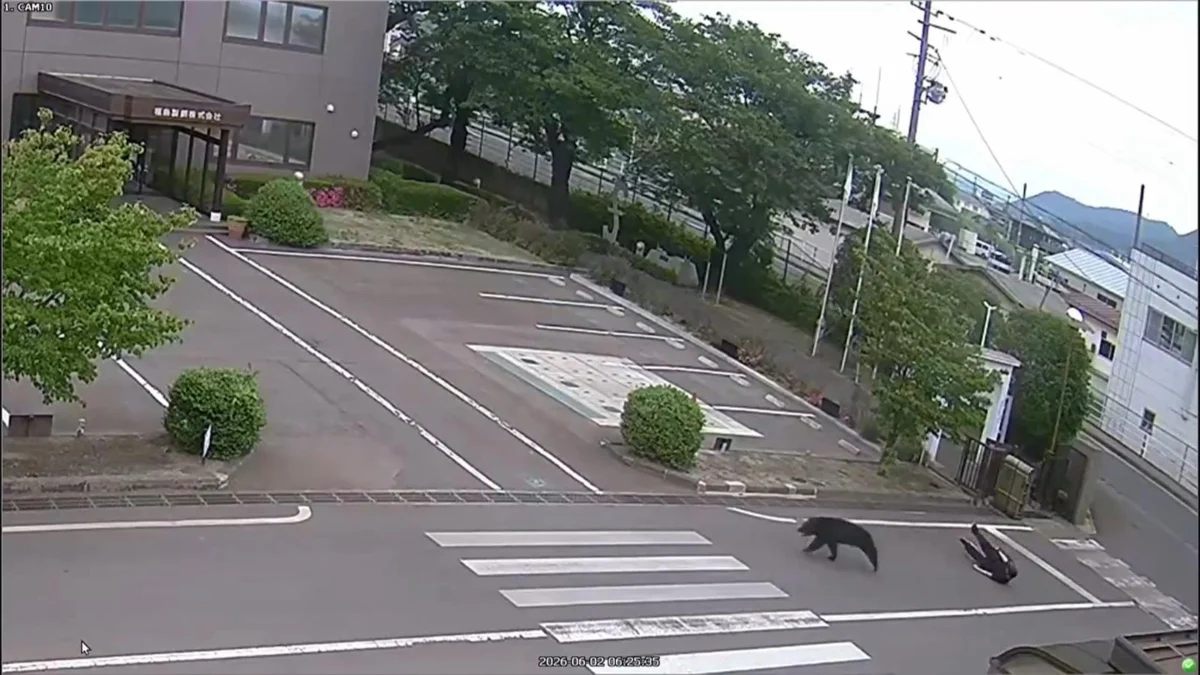
FUKUSHIMA, Japan — A quiet Tuesday morning in Fukushima City was shattered by a series of harrowing wildlife encounters as a wild bear embarked on a violent, multi-site rampage, leaving four people hospitalized and forcing local authorities to lock down neighborhoods. The unprecedented string of attacks has paralyzed the city, prompting school closures and urgent discussions regarding lethal intervention to protect the public.
According to the Fukushima Prefectural Police and local fire department officials, the string of assaults began shortly after sunrise, triggering a massive emergency response. While all four victims remain conscious and are receiving medical treatment for their injuries, the bear remains at large, casting a pall of fear over the region.
The Chronology of Terror: A Three-Kilometer Trail of Attacks
The sequence of events began on Monday evening, when reports of bear sightings started trickling into police stations from residents in the northwestern quadrant of the city. However, the situation escalated rapidly into a crisis early Tuesday morning.
The Initial Strike
At approximately 6:30 a.m., the Fukushima City Fire Department received a frantic distress call from the premises of Fukushima Steel Works Co. The caller reported that two employees—a man in his 20s and a man in his 60s—had been intercepted and mauled by a bear while on company grounds. The suddenness of the encounter left the workers with little time to react, resulting in significant injuries before the animal retreated from the factory site.
The Residential and Commercial Spree
Following the steel mill incident, the bear moved with frightening speed through the local geography, heading into a nearby residential district. Moments later, the animal attacked a woman in her 80s at her private residence. Local authorities believe the bear’s trajectory then shifted toward a second office building located within the same vicinity, where a man in his 60s was targeted.
The geographical spread of these attacks—spanning a roughly three-kilometer radius northwest of the JR Fukushima Station—suggests an animal that was either disoriented, highly aggressive, or desperately searching for food. By 8:00 a.m., the area had become a restricted zone as police cordoned off streets, warning residents to stay indoors.
Supporting Data: Rising Wildlife-Human Conflict in Japan
This incident is not an isolated anomaly but rather the latest, most dramatic data point in a growing trend of human-bear encounters across northern Japan.
Changing Ecosystems and Human Encroachment
Wildlife experts suggest that the increasing frequency of these attacks is linked to a combination of environmental and demographic shifts. In recent years, Japan’s rural populations have shrunk, leading to a phenomenon known as satoyama abandonment. As farming villages age and depopulate, cultivated lands are being reclaimed by forests, creating an ideal, food-rich buffer zone that draws bears closer to human infrastructure.
Furthermore, climate change has caused massive fluctuations in the availability of natural forage—specifically wild nuts like acorns and beechnuts. When natural food sources fail, bears are increasingly forced to forage in urban settings, where trash, gardens, and industrial sites provide easy, caloric-dense alternatives.
Statistical Context
According to recent data from the Ministry of the Environment, the number of bear-related injuries in Japan has hit record highs over the last three years. Fukushima, while historically less prone to massive bear incursions than the mountainous regions of Akita or Iwate, has seen a steady uptick in sighting reports. The proximity of these attacks to a major urban hub—just kilometers from a bustling transit station—marks a significant escalation in the severity of these encounters.
Official Responses: Emergency Protocols and Public Safety
The response from Fukushima officials was swift, prioritizing the immediate containment of the threat and the protection of the student population.
Educational Lockdown
As reports of the bear’s location remained fluid throughout Tuesday, the Fukushima Board of Education made the decision to cancel classes at all elementary and junior high schools in the affected area. Local administrators issued a directive for parents to pick up their children from supervised locations only, and all outdoor after-school activities were indefinitely suspended.
The Decision to Use Lethal Force
Perhaps the most significant development in the official response is the ongoing deliberation by the prefectural police regarding the use of firearms. In Japan, the discharge of weapons in public spaces is heavily regulated and generally avoided. However, given the unpredictable nature of the animal and its demonstrated aggression toward four individuals, police are now considering declaring an official state of emergency.
If this declaration is formalized, it would grant specialized wildlife control officers and police units the legal authority to hunt and lethally neutralize the bear. "Public safety is our absolute priority," a spokesperson for the Fukushima Police Department stated during a press briefing. "We are working with local hunters and wildlife experts to assess the threat level. We urge all citizens to remain indoors and report any sightings immediately via the emergency number."
Implications: The Future of Coexistence
The Fukushima rampage serves as a grim wake-up call for urban centers across Japan. It highlights the failure of existing warning systems and the need for a more robust approach to wildlife management.
Rethinking Urban Planning
Urban planners are now under pressure to evaluate how "green corridors" and city expansion projects might be contributing to these encounters. The fact that a bear could navigate three kilometers into a residential and industrial hub suggests that the city’s current wildlife management strategies—often limited to simple sign-posting and periodic alarms—are insufficient for modern realities.
The Ethics of Intervention
The prospect of shooting the bear has sparked a quiet, yet inevitable, debate within the community. While the majority of residents prioritize the safety of their families, animal welfare advocates argue that the animal’s behavior may be a symptom of human-induced environmental pressure. They suggest that focus should shift toward long-term solutions, such as bear-proof waste management, the installation of electrified fencing around critical infrastructure, and better public education on how to avoid encounters.
Looking Ahead
For the people of Fukushima, the immediate future is defined by vigilance. As night falls, the presence of thermal imaging drones and specialized patrol teams will likely remain a fixture in the northwest of the city. The four victims are currently in stable condition, but the psychological impact on the community—and the lingering fear of the animal still roaming the nearby shadows—will take much longer to heal.
The incident serves as a stark reminder of the fragile boundary between the civilized world and the wild. As Japan continues to grapple with an aging population and a shifting climate, the "bear problem" may no longer be a rural inconvenience, but a permanent, pressing challenge for the safety and security of its urban centers.
This report is based on information provided by the Fukushima Prefectural Police, the local fire department, and preliminary accounts from witnesses in the affected area. Updates will be provided as the situation develops.












No comments yet. Be the first to join the conversation!