Neng Nana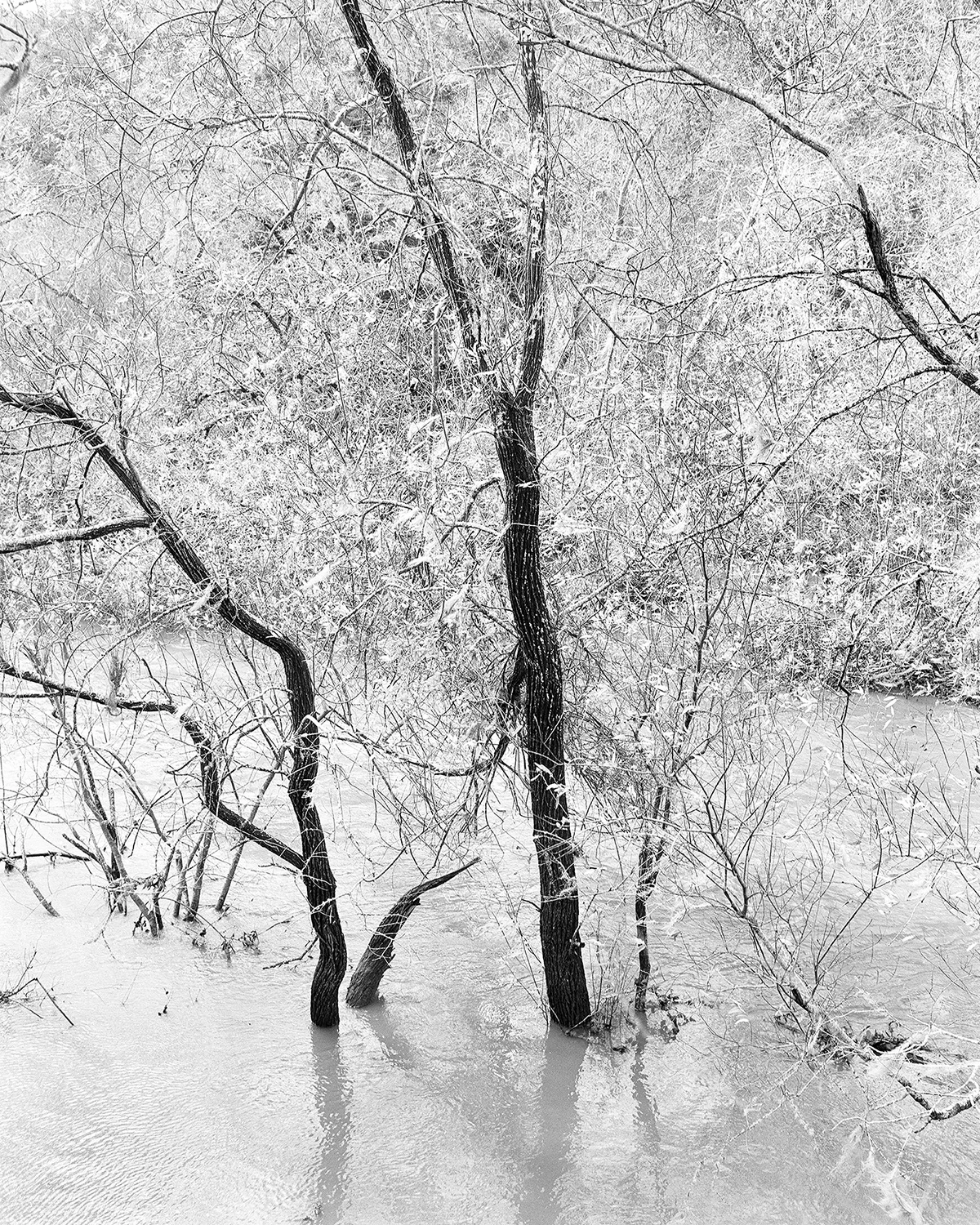
In the shifting light of Northern California’s coastal geography, photographer Benjamin Young seeks to map more than just coordinates; he maps a lineage. His latest body of work, Eternal Return, currently on exhibition at Woods Lowside in San Francisco, serves as a monochromatic meditation on the intersection of human memory and the stubborn endurance of the natural world. By grounding his practice in the specific, rain-washed terrain of Marin County and Sonoma, Young has crafted a series that functions as both a personal memoir and a universal exploration of what it means to belong to a place.
The Genesis of a Poetic Documentary
Benjamin Young is a product of the landscape he documents. Born and raised in Northern California, he honed his technical and conceptual foundation at the California College of the Arts (CCA) in San Francisco, earning his BFA before establishing himself as a prominent voice in contemporary landscape photography. His work is frequently categorized as "poetic documentary"—a style that prioritizes mood, atmosphere, and subjective truth over the purely objective documentation often associated with traditional photojournalism.
For Young, the camera is a tool of excavation. His relationship with the land is not that of a tourist or a transient observer, but of a resident whose identity is woven into the geography. Eternal Return is the culmination of years of traversing the backroads of Marin County, moving between his former home in Fairfax and the landscapes of his childhood in Sonoma. These photographs are not merely captures of scenery; they are visual manifestations of a deep-seated connection to a place that feels simultaneously eternal and perpetually in flux.
A Chronology of Place: The Geography of "Eternal Return"
The development of Eternal Return spans years of intentional wandering. The project did not emerge from a single trip or a commissioned assignment, but rather from the "countless day trips" and mundane commutes that make up the rhythm of life in Northern California.
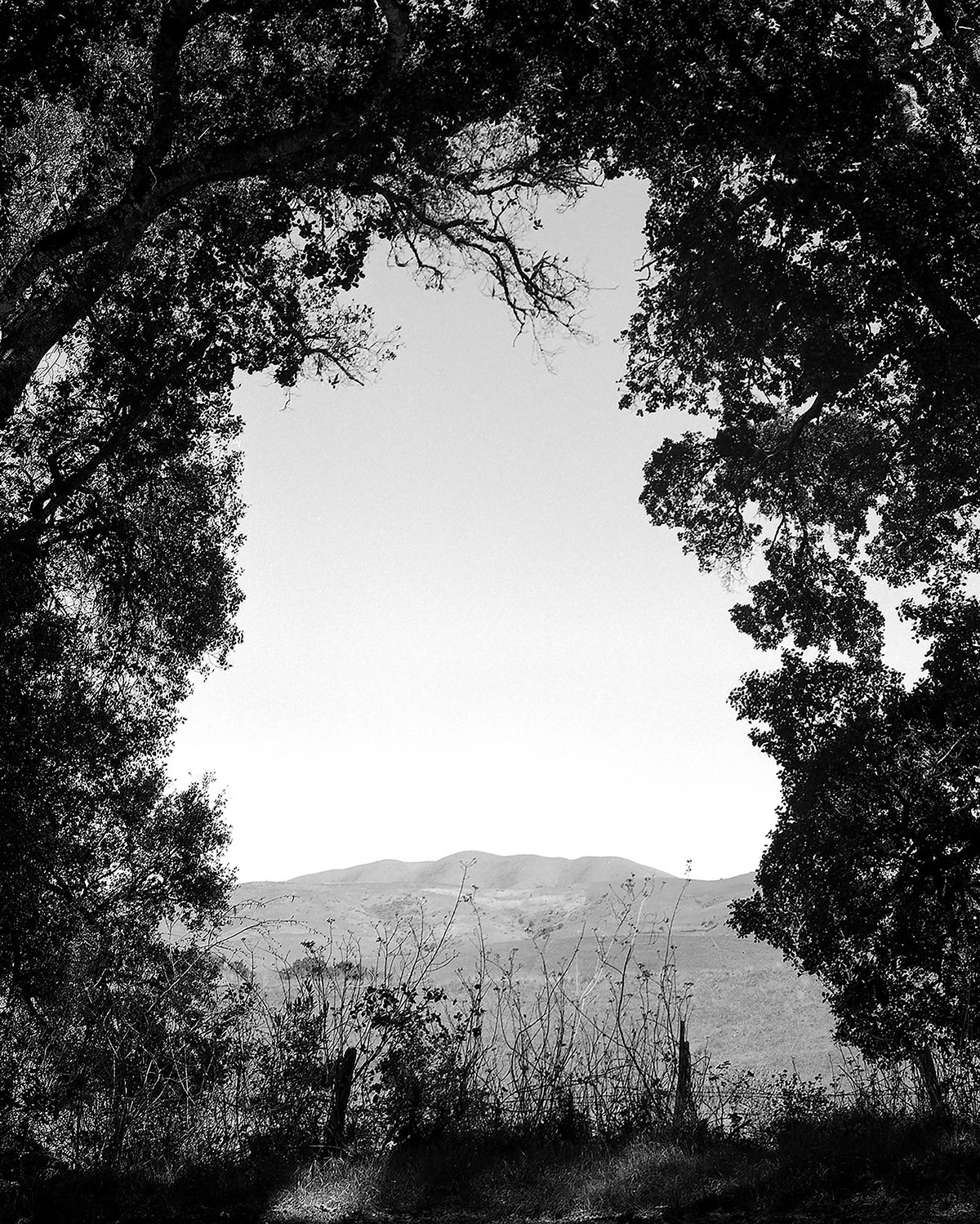
- The Early Years (Childhood in Sonoma): The conceptual seeds for this work were sown in the Sonoma County of Young’s youth. These early experiences established the visual vocabulary—the specific quality of the fog, the texture of the flora, and the particular silence of the rural roads—that would later define his aesthetic.
- The Fairfax Period: As Young moved into adulthood and settled in Fairfax, the project began to coalesce. The proximity to the dense, lush forests of Marin allowed for a deeper study of the blurred boundaries between the domestic sphere and the wild.
- The Present Exhibition: Culminating in the current show at Woods Lowside, which runs through July 24th, the collection presents a curated selection of images that weave together these temporal threads. The exhibition is designed to guide the viewer through a narrative arc that mimics the cyclical nature of the seasons and the generational movement of his own family.
Supporting Data: The Anatomy of the Landscape
To understand the significance of Eternal Return, one must analyze the specific environment Young captures. Marin County is defined by its distinct ecological character: a convergence of redwood forests, coastal grasslands, and a humid, temperate climate that creates a perpetually atmospheric environment.
The Aesthetics of Monochrome
Young’s decision to shoot in black and white is a deliberate choice to strip away the distractions of color, focusing instead on the interplay of light and shadow—the "minutiae" of the landscape. By removing the vibrant green palette typically associated with Northern California, he emphasizes the structural integrity of the landscape: the skeletal branches of trees, the heavy weight of the fog, and the rugged textures of stone and earth.
Thematic Pillars
The exhibition explores several recurring motifs that anchor the work:
- Domestic vs. Natural: Young’s work highlights how human structures—fences, roads, and houses—are slowly reclaimed or overshadowed by the natural world. This suggests a dialogue between human transience and environmental longevity.
- Seasonal Cycles: The images capture the transition of the land through the wet winters and dry summers, reminding the viewer that even a landscape that appears static is in a constant state of decay and rebirth.
- Familial Echoes: A poignant aspect of the work is the awareness of ancestry. Young speaks to the realization that he is observing the same seasonal shifts as his relatives before him, creating a sense of ancestral continuity that transcends individual experience.
Official Responses and Conceptual Intent
In his artist statement, Young offers a rare glimpse into the philosophy driving Eternal Return. He notes, "Having nearly a century of familial roots in Marin County, I often found myself imagining relatives traveling the same roads and noticing some version of the same gradual, seasonal shifts and minutiae in the landscape as I did while out making these photographs."
This reflection positions the photographer not as a creator of a scene, but as a witness to a recurring history. The title, Eternal Return, is a philosophical nod to the Nietzschean concept of cyclical time—the idea that the universe and all events in it will recur in the same sequence, infinitely. By applying this to the landscape of Northern California, Young suggests that our connection to the earth is a ritualized, repetitive experience that defines our existence.
The reception of the work at Woods Lowside has been marked by praise for its quiet intensity. Critics have noted that while the photographs are undeniably "Californian," they avoid the clichés of the state’s sun-drenched, saturated imagery, opting instead for a somber, reflective, and deeply introspective gaze.
The Implications of a Deep-Rooted Practice
The implications of Benjamin Young’s work are twofold: they speak to the importance of "place-based" art in an increasingly globalized world, and they highlight the evolving role of landscape photography as a vehicle for personal history.
Preservation of Memory
In a time of rapid urban development and climate change, Young’s documentation of the subtle, quiet corners of Marin serves as an informal archive. His work posits that the "landscape" is not just a collection of trees and hills, but a repository of human memory. When we protect a place, we are protecting the stories and the familial ghosts that reside within it.
The Future of Poetic Documentary
Young’s success with Eternal Return reinforces the validity of slow, observational photography. At a time when digital saturation encourages high-volume, disposable content, projects like his remind the audience that profound meaning is often found in the patient observation of one’s own backyard. His career trajectory, from student at CCA to a featured artist in a San Francisco gallery, serves as a blueprint for emerging photographers interested in exploring their own geographic roots.
Conclusion: A Legacy in Light
As Eternal Return continues its run at Woods Lowside, it stands as a testament to the power of a singular vision. Benjamin Young has successfully navigated the thin line between the intimate and the universal, inviting viewers to see the Northern California landscape not just as a location, but as a living, breathing participant in our lives.
Whether it is the play of light on a moss-covered wall or the winding path of a familiar road, Young’s work forces us to pause and consider our own relationship to the ground beneath our feet. He captures the ephemerality of our time here, while simultaneously acknowledging that, in the grand cycle of the landscape, we are but one iteration of a story that has been told for centuries—and will be told for many more to come.
For those in the San Francisco area, the exhibition provides a rare opportunity to engage with a body of work that is as intellectually rigorous as it is visually haunting. Through July 24th, Eternal Return remains an essential visit for anyone interested in the intersection of memory, landscape, and the enduring beauty of the California coast.

 Asep Darmawan
 Layla Zulfa