Lina Hope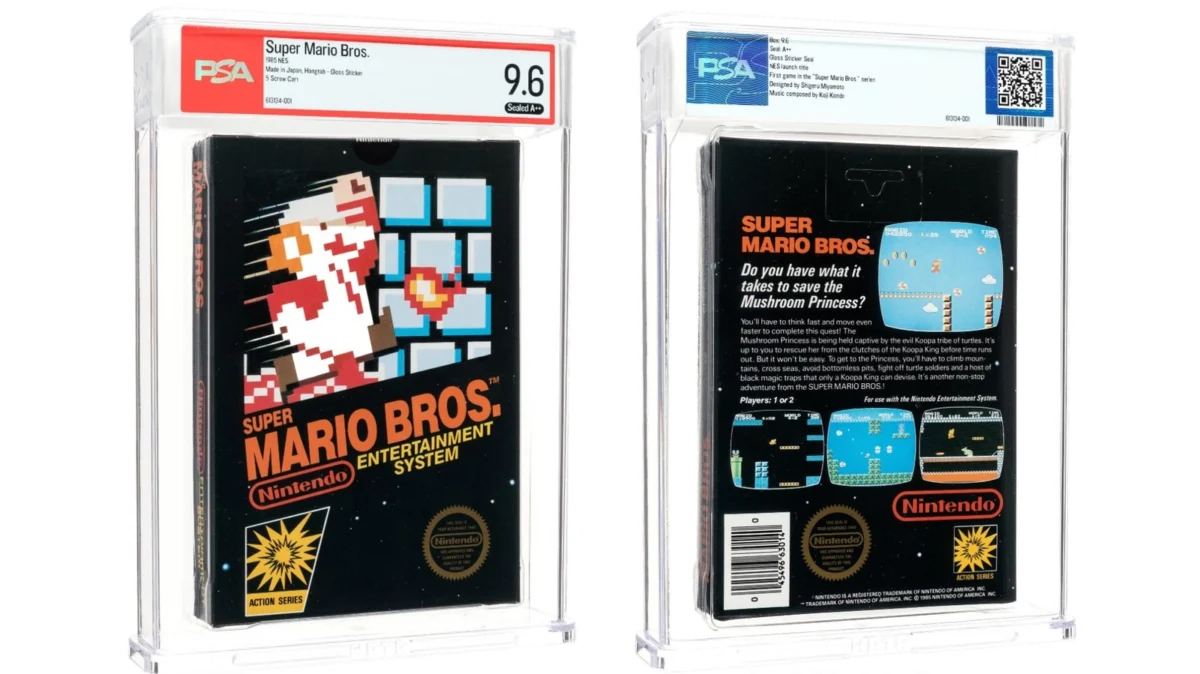
In the rarefied world of high-end collectibles, where rare stamps, classic automobiles, and Impressionist paintings have long dominated the headlines, a new titan has emerged: the video game. On a landmark Friday, Heritage Auctions shattered records once again when a rare, sticker-sealed copy of the original Super Mario Bros. for the Nintendo Entertainment System (NES) sold for a staggering $3 million.
This sale is not merely a transaction; it is a profound statement on the maturation of video game collecting as a legitimate asset class. The item in question—a second-production copy of the 1985 classic—was not sold as a standalone cartridge, but as part of a preserved relic from the dawn of the American home console era.
The Anatomy of the Record-Breaking Lot
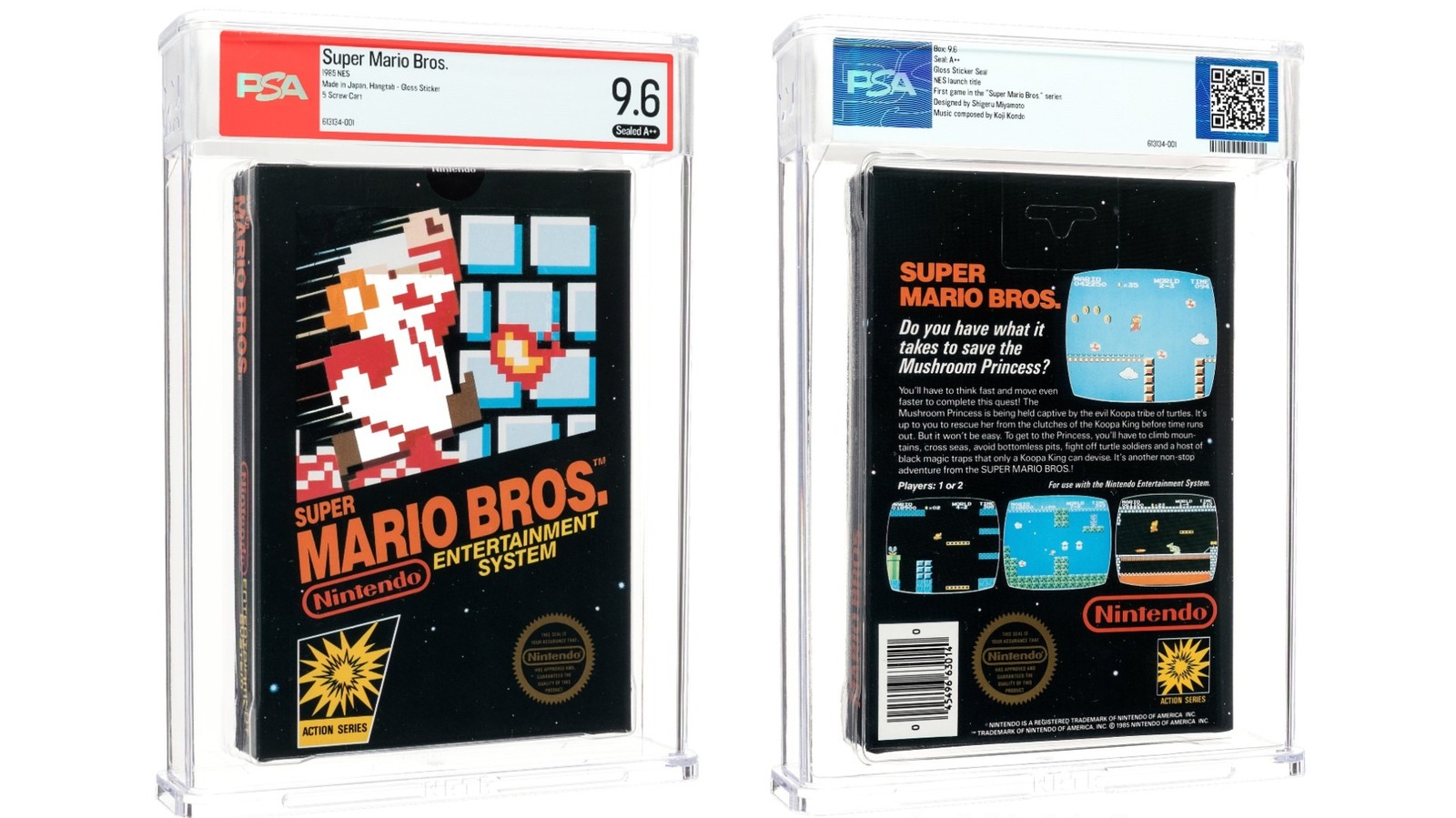
What separates this specific copy of Super Mario Bros. from the thousands of other vintage games languishing in attics or being traded on secondary markets is its remarkable state of preservation. According to Heritage Auctions, the game was discovered alongside a launch-edition NES Control Deck console, both encased in their original packaging with the factory seals miraculously intact after four decades.
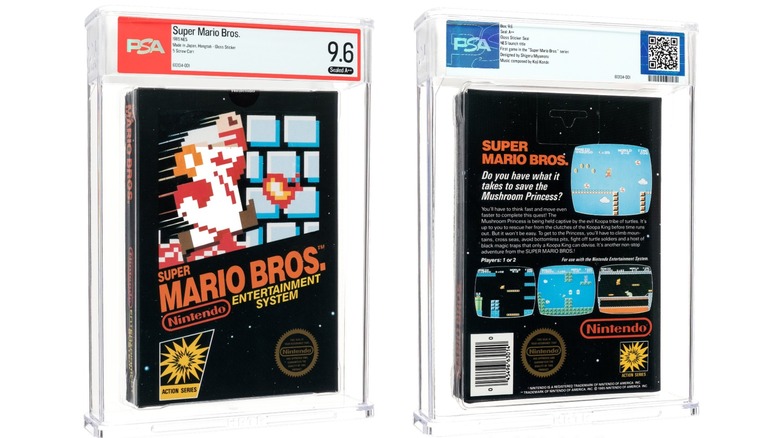
The technical specifications of the item explain the astronomical price tag. The game features an "unbroken glossy sticker seal." In the mid-1980s, Nintendo had not yet transitioned to the industry-standard shrink-wrap packaging that collectors are familiar with today. Instead, they utilized a glossy paper sticker to seal the boxes. This configuration was used for a very brief period in 1986, making it an incredibly scarce variant.
Heritage Auctions notes that only three second-production copies featuring this specific gloss-sticker format are known to exist worldwide. Of those three, this particular unit is the crown jewel, boasting a grade of PSA 9.6 A++. In the world of professional grading, a 9.6 is near-mint, and an A++ rating for the seal indicates that the integrity of the packaging is virtually flawless.
A Chronology of the "Lost" Nintendo Era
To understand why this item commands such a price, one must look at the specific history of Nintendo’s entry into the United States market.
1985: The Test Market Launch
Following the infamous "video game crash" of 1983, which had decimated the American industry, retailers were wary of stocking electronic gaming hardware. Nintendo, however, was undeterred. They launched the NES in a limited test market in New York City and Los Angeles in late 1985. The console was sold in bundles, often alongside the game that would become the cornerstone of the company’s success: Super Mario Bros.
1986: The Transitional Period
The period between 1985 and 1986 was a time of rapid iteration for Nintendo. The company was still experimenting with how to package and distribute their software. The "sticker seal" was a transitional design choice, a short-lived precursor to the shrink-wrapping technology that would eventually become the norm for mass-market media. Because these paper stickers were fragile and prone to tearing or peeling, the existence of an "unbroken" seal today is a statistical anomaly.
2024: The Auction Block
After spending nearly 40 years in a controlled environment, the item was brought to the public eye. As the auction house stated in its catalog, "This specific variant has never appeared in a public auction in sealed condition, underscoring just how elusive it is." When the hammer fell, the $3 million price tag cemented this copy as the most significant video game ever offered at public auction.
Supporting Data: The Rise of Video Game Investing
The sale of this Super Mario Bros. cartridge is the latest in a series of record-breaking auctions that have seen prices for vintage games escalate from thousands to millions of dollars in less than a decade.
Comparative Market Trends
- 2019: A copy of Super Mario Bros. sold for $100,150.
- 2020: A sealed copy of Super Mario Bros. 3 fetched $156,000.
- 2021: A pristine copy of The Legend of Zelda sold for $870,000, followed shortly by another Super Mario Bros. reaching $2 million.
- 2024: The current $3 million sale demonstrates a consistent upward trajectory, fueled by institutional investors and high-net-worth collectors who view these games as "blue-chip" historical artifacts.
The logic behind these valuations is driven by scarcity and cultural impact. Unlike physical commodities that can be replicated, these specific, early-production variants are finite. As the pool of available high-grade sealed games shrinks, the competition among elite collectors intensifies.
Official Perspectives from Heritage Auctions
The narrative curated by Heritage Auctions throughout the bidding process emphasized the "moment in time" encapsulated by this specific bundle. According to the auction house’s official statement, the item serves as a time capsule for the exact moment when the industry shifted.
"In many ways," the auction house stated in its listing, "it represents the closest a collector can come to owning the very moment Super Mario Bros. transformed console video games from a struggling novelty into a permanent part of cultural history."
The auction house argues that this is not merely a toy; it is an artifact of media history. By including the original NES Control Deck, the lot provides a complete historical context. It is a snapshot of the hardware and software that saved the industry, effectively acting as the "Big Bang" of modern interactive entertainment.
The Implications: Is Gaming the New Fine Art?
The $3 million sale carries significant implications for the future of the collectibles market.
1. Legitimacy of the Asset Class
For years, skeptics questioned whether video games could ever attain the status of classic stamps, coins, or baseball cards. This sale effectively ends that debate. The involvement of professional grading services like PSA (Professional Sports Authenticator) has provided the necessary framework of trust and authentication required for high-stakes investment.
2. Preservation vs. Playability
The rise of this market has sparked an ongoing debate within the gaming community. Purists often argue that games are meant to be played, not locked away in climate-controlled vaults. However, the record-breaking price serves as a powerful incentive for preservation. If these items remained in the hands of casual collectors, many would have been opened, discarded, or damaged. The "sealed" market, for better or worse, acts as an insurance policy for the longevity of these physical objects.
3. Institutional Interest
With prices reaching the multi-million dollar mark, the market is no longer driven solely by nostalgic hobbyists. It is attracting wealth managers, private museums, and investment funds. These entities treat video games as tangible assets that are largely uncorrelated with traditional stock market volatility.
Conclusion
The $3 million sale of this sticker-sealed Super Mario Bros. is a watershed moment. It signifies the transition of the video game from a disposable electronic product to an enduring piece of cultural heritage. While the price may seem incomprehensible to the average consumer, for the collector, it is a small price to pay for a tangible link to the beginning of the digital age. As we look toward the future, one thing is clear: the history of gaming is no longer just on our screens; it is a permanent fixture in the annals of global collecting.


 Siti Muinah
 Layla Zulfa