

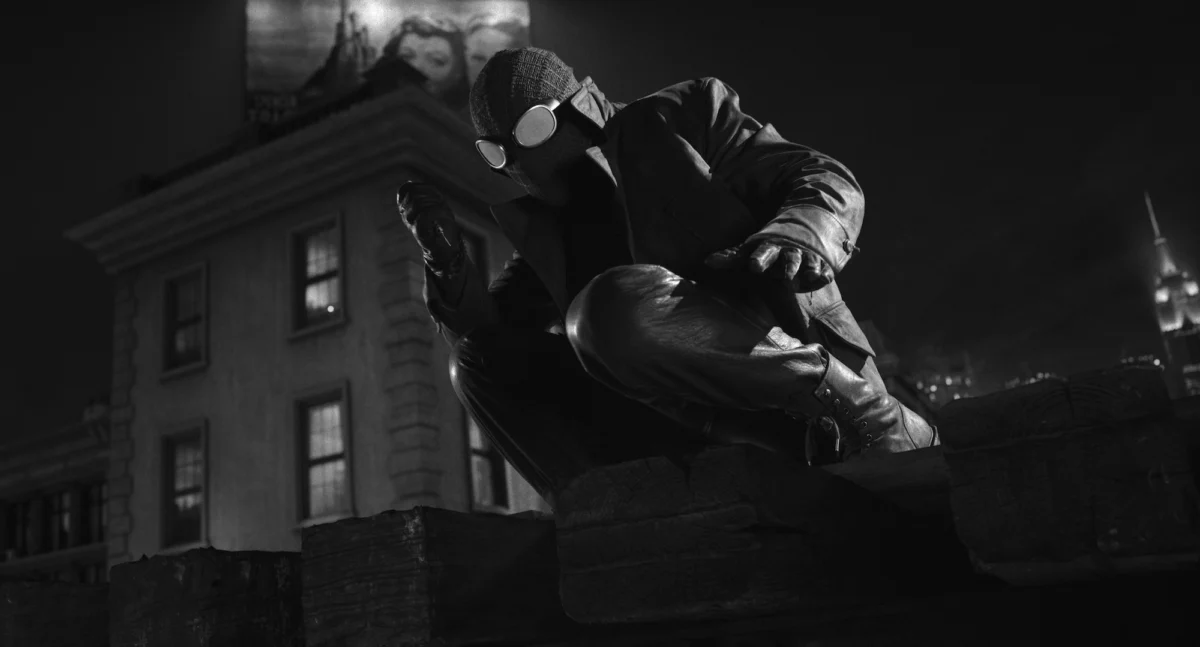
From his humble beginnings as a live-action skit on The Electric Company to the short-lived but cult-favorite The Amazing Spider-Man television series of the 1970s, the web-slinger has always occupied a strange, often experimental space in non-animated media. While the Japanese Supaidā-Man series of the late 70s famously diverged from Marvel source material to birth the modern Tokusatsu genre, the character has rarely been afforded a grounded, adult-oriented live-action television treatment. That changes today with the debut of Spider-Noir on Prime Video.
Anchored by the inimitable Nicolas Cage, Spider-Noir represents a bold, stylistic departure for the Marvel mythos. It is not merely another superhero procedural; it is a pulp-inspired, monochrome descent into the moral ambiguity of 1930s New York, proving that the Spider-Man legacy is flexible enough to survive—and thrive—outside of the traditional colorful comic book lens.
A New Mythology: The Genesis of Ben Reilly
It is essential to clarify that the Ben Reilly portrayed by Nicolas Cage in Spider-Noir is a distinct departure from the version seen in the 2018 animated masterpiece Spider-Man: Into the Spider-Verse. While that film introduced audiences to a noir-inflected Spider-Man with a penchant for dry humor and monochrome fashion, this television series carves out its own pocket dimension.
Set in the Great Depression-era New York City, the series follows an aging, world-weary private investigator named Ben Reilly. Unlike the quintessential Peter Parker, whose story is often defined by youthful idealism, Reilly is five years removed from his life as "The Spider." A deeply personal tragedy forced him to hang up the suit, leaving him to wallow in the cynical realities of a city plagued by corruption. When a new case entangles him with a dangerous femme fatale and a shadowy syndicate, Reilly is thrust back into the fray, forced to reconcile his past trauma with the necessity of his vigilante identity.
The Chronology of the Spider-Noir Concept
The evolution of the "Noir" version of the wall-crawler has been a multi-decade journey:
- 2009: The Marvel Noir universe is born, spearheaded by creators David Hine and Fabrice Sapolsky. This reimagined Marvel landscape placed familiar characters into the gritty, atmospheric setting of the 1930s.
- 2018: The release of Spider-Man: Into the Spider-Verse brings Spider-Man Noir to global prominence. Nicolas Cage’s voice acting, characterized by cynical one-liners and a world-weary cadence, became an instant cultural touchstone.
- 2023–2024: Amazon and Sony confirm the development of a live-action series, with Nicolas Cage officially tapped to lead the production, marking his first starring role in a scripted television series.
- 2026: The official premiere of Spider-Noir on Prime Video, serving as a standalone narrative that expands the scope of live-action superhero television.
Production Design: Aesthetic Choices and Atmospheric Depth
One of the most striking elements of the series is its commitment to the noir aesthetic. Under the guidance of cinematographers Darran Tiernan and Peter Deming, the show utilizes a stark, high-contrast visual language. While viewers have the option to watch the series in color, the intentional black-and-white presentation—a deliberate stylistic choice for this review—elevates the material, grounding it in the visual vocabulary of 1940s detective cinema.
The showrunners, Oren Uziel and Steve Lightfoot, have successfully managed to blend the "superhero" spectacle with the grounded, claustrophobic nature of classic pulp fiction. By incorporating elements of Universal Monsters-style horror, the production team manages to navigate the budget limitations inherent in live-action television. Rather than relying on massive, CGI-heavy set pieces that often feel hollow, the series focuses on shadows, atmosphere, and tension.
The Supporting Cast: A Pulp-Inspired Ensemble
The show’s attempt to re-invigorate classic Spider-Man rogues is a high-wire act that mostly succeeds. Li Jun Li’s portrayal of Black Cat and Jack Huston’s Sandman are clearly designed to mirror the archetypal characters of the era, though some performances lean perhaps too heavily into the Dick Tracy-esque caricatures.
However, the standout performance belongs to Brendan Gleeson, who plays the Irish mob boss Silvermane. Gleeson avoids the traps of genre excess, opting instead for a grounded, menacing performance that provides the necessary gravity for the protagonist to play against. His presence anchors the show, ensuring that even when the plot teeters toward the fantastical, the emotional stakes remain firmly rooted in the grit of the underworld.

The Cage Factor: A Performance Beyond Memes
It is impossible to discuss Spider-Noir without addressing the elephant in the room: Nicolas Cage. Having evolved into an internet icon, Cage is a performer who is acutely aware of his own image, yet he manages to bypass the "meme-ification" of his persona to deliver a genuinely nuanced performance as Ben Reilly.
In Spider-Noir, Cage is allowed to operate in two modes simultaneously. There is the dramatic, introspective Reilly, who grapples with the morality of his past and the futility of his vigilante mission. Then, there is the "Full-Cage" persona, where the actor leans into the eccentricities of the role, delivering frantic comedic beats, stumbling through detective work, or channeling the legendary voices of Humphrey Bogart and Edward G. Robinson to navigate precarious situations. It is a performance that highlights why he remains one of the most watchable actors in the industry—he brings a sense of unscripted danger to every frame.
The Shift in Superhero Television
Unlike the more graphic, hyper-violent superhero content that has defined the Prime Video landscape through series like The Boys and Invincible, Spider-Noir feels like a distinct departure. While those shows often lean into the "edginess" of their R-rated foundations, Spider-Noir finds its edge in its tone and atmosphere rather than gratuitous violence.
This is a critical distinction. In an era where audiences are increasingly experiencing "superhero fatigue" due to repetitive, formulaic content, Uziel and Lightfoot provide a narrative that is actually interested in the mythos of the hero rather than the spectacle of the powers. It manages to sustain its eight-episode arc without the typical "padding" that often plagues modern streaming series. Even the mandatory flashback episode, which serves to explain the origin of The Spider in this universe, feels earned rather than obligatory.
Implications for the Future of the Marvel-Sony Partnership
The success of Spider-Noir signals a potential shift in how legacy intellectual properties are handled. By allowing creators to experiment with genre-blending—mixing noir, monster horror, and classic detective tropes—Sony and Amazon have proven that there is a significant audience for "out-there" takes on established characters.
If this series proves to be a long-term hit, it may pave the way for more isolated, tonally distinct projects that don’t require a viewer to have seen twenty other films to understand the stakes. Spider-Noir proves that you don’t need a massive, interconnected universe to tell a compelling story about a person in a mask; sometimes, all you need is a rainy street, a trench coat, and a lead actor who is willing to take big risks.
Conclusion: Why It Works
Spider-Noir is not a perfect show. At times, its commitment to pulp tropes can feel slightly jarring, and the constraints of the budget are occasionally visible in the action sequences. Yet, it succeeds precisely because it is willing to be different. It is a show that understands the core of the Spider-Man dilemma—the struggle between personal desire and the responsibility to act—and transposes it into a world that feels both dangerous and refreshing.
Whether you choose to view it in its intended monochrome glory or in color, Spider-Noir stands as a testament to the versatility of the Spider-Man brand. It is moody, it is funny, and most importantly, it is a showcase for Nicolas Cage to deliver a performance that is as soulful as it is eccentric. For those looking for a superhero story that prioritizes character over spectacle, Spider-Noir is a mandatory watch.









No comments yet. Be the first to join the conversation!