Neng Nana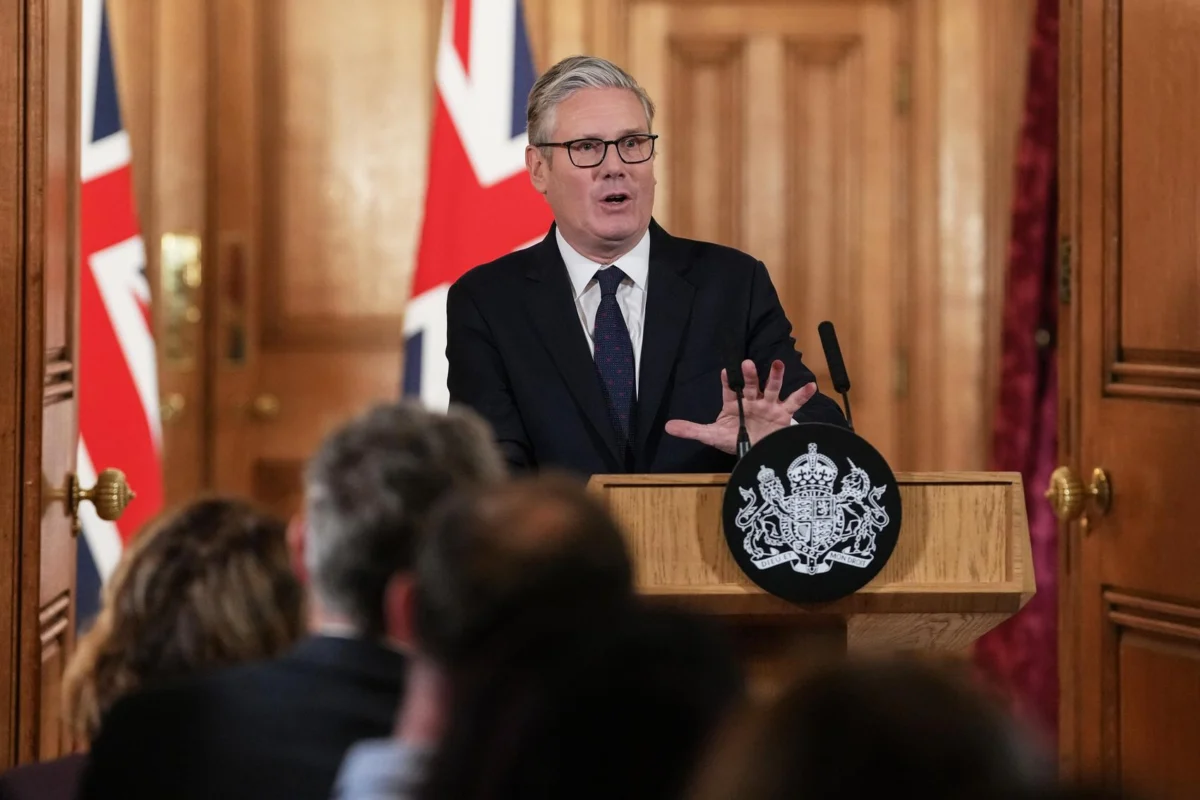
By Political Correspondent
In a move that promises to redefine the digital landscape for the next generation, Prime Minister Keir Starmer announced on Monday that the United Kingdom will implement a comprehensive ban on social media access for children under the age of 16. The policy, which targets industry giants including TikTok, Snapchat, Instagram, Facebook, and X, aims to curb the rising tide of mental health issues, cyberbullying, and exposure to harmful content that has plagued British youth.
The announcement marks one of the most significant legislative interventions in the history of the internet, positioning the U.K. at the vanguard of a global movement to reclaim childhood from the algorithms of Silicon Valley.
The Core Mandate: Protecting the Next Generation
Prime Minister Starmer, speaking at a press conference on Monday, framed the decision as a moral imperative rather than a mere regulatory adjustment. "Every parent can see it with their own eyes. Social media is making children unhappy," said Starmer, who has two teenage children of his own. "I’ve heard firsthand from families crying out for change, and we will do right by them. I am not prepared to compromise on the safety and happiness of our children."
The legislation, expected to take effect early next year, will impose strict liability on tech platforms. Companies that fail to implement "reasonable steps" to prevent minors from accessing their services will face severe penalties, including multimillion-dollar fines. Unlike messaging apps such as WhatsApp and Signal, or curated platforms like YouTube Kids, mainstream social networks will be required to fundamentally alter their onboarding processes.
Starmer emphasized that the burden of enforcement will rest squarely on the shoulders of the tech companies, not the children themselves. "We are not criminalizing the child; we are holding the platforms accountable for the environments they have engineered," he stated.
A Global Wave of Regulation
The U.K.’s decision is not an isolated incident but rather the latest development in an accelerating international effort to mitigate the influence of "Big Tech" on minors. The British model draws heavily from Australia, which gained international attention last year by becoming the first nation to successfully legislate a ban on social media accounts for those under 16.
The global shift toward restrictive online safety is gaining momentum:
- Early Adopters: Australia has already set the regulatory template, proving that state-level pressure can force compliance from multinational corporations.
- Legislative Momentum: Countries such as Canada, Brazil, and Indonesia have introduced or finalized similar age-based restrictions.
- Developing Frameworks: Nations including France, Spain, Denmark, Thailand, and South Korea are currently in the advanced stages of researching or drafting legislation that mirrors the U.K.’s proactive stance.
This international consensus suggests that the "Wild West" era of social media is reaching a turning point, with governments increasingly willing to challenge the profit models of platforms that prioritize engagement over user well-being.
Public Sentiment and the Path to Legislation
The government’s decision follows an extensive public consultation period that generated 116,000 responses—the second-highest level of engagement in the history of British public consultations, surpassed only by the 2012 inquiry into same-sex marriage.
Data released by the government reveals a clear mandate from the public: over 90% of respondents expressed support for an under-16 social media ban. This overwhelming consensus reflects a growing anxiety among parents, educators, and mental health professionals regarding the long-term impacts of addictive scrolling and digital exposure on adolescent brain development.
The Human Cost
The conversation surrounding the ban has been deeply influenced by personal tragedies. Esther Ghey, the mother of Brianna Ghey—the 16-year-old girl murdered in 2023 by two teenagers who had been exposed to extreme content online—has been a vocal advocate for tighter controls. Ghey stated that while the ban is a vital step that could "potentially save so many children’s lives," it must be part of a broader strategy, including better education and resources for mental health.
The Tech Industry’s Rebuttal
The reaction from major tech players has been predictably defensive. A spokesperson for YouTube issued a statement warning that a "blanket ban" could prove counterproductive. The company argued that such measures might force children out of "curated, supervised, beneficial experiences" and push them toward less-regulated, anonymous, and significantly more dangerous corners of the internet.
Furthermore, civil liberties organizations, such as the Open Rights Group, have raised significant concerns regarding the infrastructure required for such a ban. Critics point to the potential for invasive "age verification" technologies that could undermine user privacy and require the collection of sensitive biometric or identity data, creating new security risks for the very children the law aims to protect.
Jon Crowcroft, a professor of communications systems at the University of Cambridge, remains skeptical of the technical feasibility. "There is a real risk this will drive some users to worse sites, and policing devices is close to impossible technically," Crowcroft noted. "Policing platforms is far easier, if only regulators would bother."
Geopolitical Implications and Future Challenges
The U.K. government is aware that this policy may spark friction with the United States. The U.S. Embassy in London has previously warned that such regulations should remain narrow to avoid violating free speech protections and placing an undue, discriminatory burden on American technology companies.
Prime Minister Starmer is set to address these concerns directly during the upcoming Group of Seven (G7) summit in France. "I honestly think that across world leaders, there has always been a recognition that leaders have to take steps to protect children," Starmer said. "I don’t think that’s controversial."
Beyond the diplomatic challenges, the U.K. government is already planning to go further than Australia. Officials are currently drafting supplementary measures that include:
- Gaming and Livestreaming Protections: New rules to prevent strangers from initiating contact with minors on interactive platforms.
- Digital Curfews: Potential requirements for platforms to disable features like "infinite scrolling" or implement overnight lockouts for users under 18.
- Enhanced Monitoring: A commitment to review the effectiveness of these measures every six months, with further details expected next month.
A Political Legacy in the Making
For Prime Minister Starmer, who has served for just under two years, this policy represents a defining moment in his premiership. Facing internal party pressure and calls for his resignation from critics who cite poor leadership, Starmer is clearly aiming for a "legacy piece" of legislation—a policy that transcends the daily churn of partisan politics and resonates with the long-term needs of British families.
Whether this policy will result in a "massive drop-off" of children on social media and a fundamental "cultural change," as Starmer hopes, remains to be seen. The technical, legal, and social hurdles are immense. However, the government remains undeterred. As Starmer declared, the goal is to create a society where children can "grow up differently," shielded from the relentless, algorithmic pressures that have come to dominate their formative years.
As the U.K. prepares to enter this new regulatory era, the world will be watching to see if the British government can successfully navigate the tension between digital freedom and child protection—or if it has embarked on an impossible mission in an increasingly interconnected age.
© Copyright 2026 The Associated Press. All rights reserved. This material may not be published, broadcast, rewritten or redistributed without permission.



 Asro
Asro