Azzam Bilal Chamdy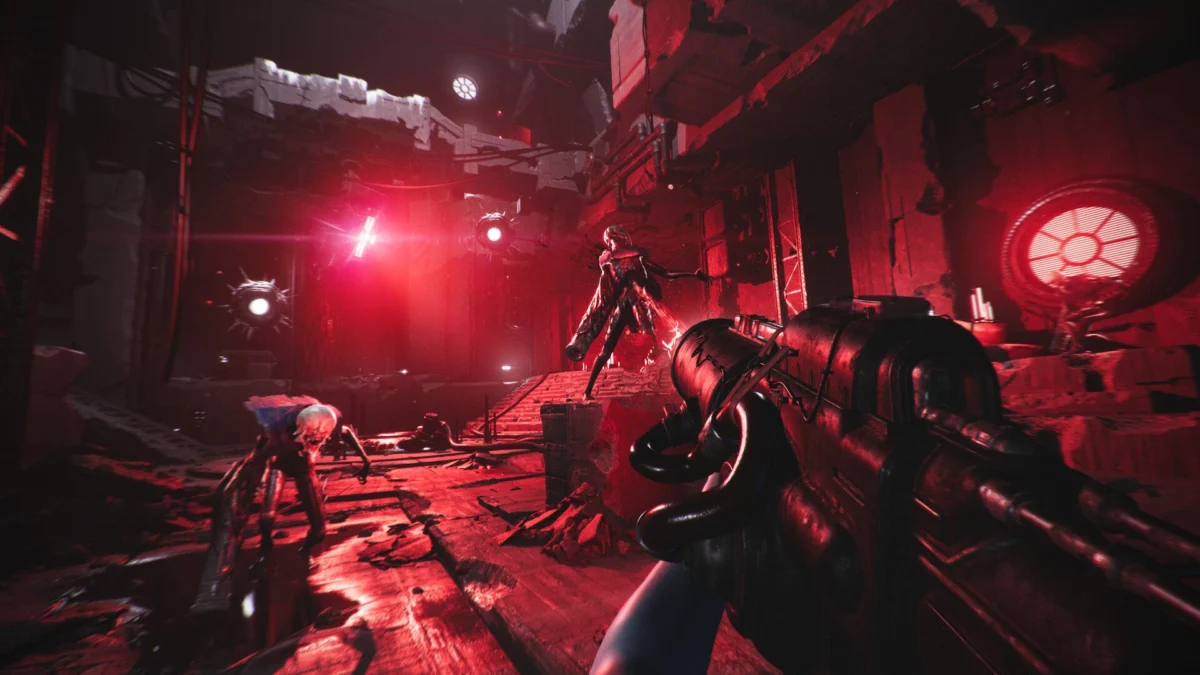
In a stark reminder of the volatility currently gripping the video game industry, the internal development arm of publisher Kwalee, known as Kwalee Labs, has been shuttered. The closure comes just one month after the studio successfully launched its debut project, Luna Abyss, a high-octane, first-person bullet-hell platformer that had garnered critical praise for its bold art direction and ambitious scope.
Despite the positive reception from both players and media, the entire development team has been made redundant. This development highlights the growing disconnect between creative achievement and corporate sustainability in a market increasingly dominated by ruthless performance metrics.
The Core Facts: A Studio Disbanded
The news broke via a LinkedIn statement from Hollie Emery, the studio head of Kwalee Labs. Emery confirmed that the entire team behind Luna Abyss was laid off effective immediately. Describing the closure as a "decision that was completely outside of our control," Emery’s post served as a final, bittersweet sign-off for a team that had successfully navigated the grueling development cycle of a debut title.
The closure effectively marks the end of Kwalee Labs as a functioning entity. While the publisher, Kwalee, remains operational, the specific talent pool responsible for the studio’s internal development efforts has been dispersed. In the wake of the announcement, industry peers and colleagues have mobilized to circulate the portfolios of the affected developers, a common and heart-wrenching ritual in an industry that has seen tens of thousands of layoffs since the start of 2023.
A Chronology of the Rise and Fall of Luna Abyss
The timeline of Luna Abyss is one of high ambition followed by abrupt termination.
- Development Phase: Kwalee, traditionally known as a publisher of mobile and hyper-casual games, sought to pivot toward PC and console development by establishing Kwalee Labs. Luna Abyss was designed as their flagship "prestige" project, intended to signal the publisher’s transition into more complex, narrative-driven action games.
- The Launch (September 2024): After years of anticipation and a successful marketing push, Luna Abyss was released to the public. The game was praised for its brutalist, dark-sci-fi aesthetic and a punishing, rhythmic combat loop that drew favorable comparisons to titles like Returnal and Nier.
- Post-Launch Silence: Following the game’s release, there was a period of standard post-launch support and community engagement. The team celebrated the milestone of bringing their vision to life.
- The Announcement (October 2024): Barely four weeks after the game hit store shelves, the internal team was informed of their redundancy. The transition from a celebration of the game’s completion to the total dissolution of the team occurred in the span of just a few days.
Supporting Data: The "Prestige" Trap
To understand why such a talented team was let go, one must look at the current economic climate of the game industry. Luna Abyss entered a crowded, highly competitive genre. The "bullet-hell" platformer space is notoriously difficult to monetize and sustain, as it requires a high degree of technical polish and player skill, which can sometimes alienate a broader, more casual audience.
While specific sales figures for Luna Abyss have not been disclosed by Kwalee, the industry trend suggests that "critical success" is no longer a sufficient shield against closure. In the current fiscal environment, publishers are increasingly focused on "live-service" potential and recurring revenue models. A single-player, linear experience—no matter how artistically refined—often fails to meet the aggressive growth targets set by parent companies.
The difficulty of "hitting a good review score" in this genre is immense. The team at Kwalee Labs achieved what many studios strive for: a game that feels unique, polished, and mechanically sound. However, in the eyes of corporate stakeholders, if the game did not achieve "breakout" status (a feat typically reserved for massive, AAA franchises or viral indie hits), the return on investment is often deemed insufficient to justify the ongoing costs of a specialized development studio.
Official Responses and the Human Element
Hollie Emery’s public statement was marked by professional grace and palpable sadness. "We’re enamoured by the love and support it received both by our industry and critically by journalists and media," she wrote. "Whilst we faced many challenges along the way, it has been the highlight of our careers—and we are incredibly proud that it has finally seen the light of day."
The language used by Emery—specifically the note that the decision was "outside of our control"—suggests a disconnect between the creative leadership of the studio and the executive board of the parent company, Kwalee. This phrasing is frequently used when a studio is shuttered not due to failure of product quality, but due to a change in corporate strategy or a desire to cut operational overhead to appease shareholders.
Emery’s efforts to highlight individual team members on LinkedIn served as a final act of leadership, ensuring that her former colleagues have the best possible chance of finding new employment. The community response has been one of solidarity, with many highlighting that the quality of Luna Abyss is a testament to the talent of the individuals involved, regardless of the financial performance of the title.
The Broader Implications: What Does This Mean for the Industry?
The closure of Kwalee Labs is a symptom of a larger, systemic issue in the gaming industry. There is a growing narrative that "mid-tier" development is becoming unsustainable.
1. The Death of the Mid-Budget Project
Games that sit between the "indie darling" (low budget, high innovation) and the "AAA blockbuster" (massive budget, safe bets) are being squeezed out. Luna Abyss was a game with a strong identity and significant production value, but it lacked the massive, infinite-replayability hooks that publishers currently demand.
2. The "Disposable" Studio Model
There is an increasing tendency for publishers to spin up "Labs" or internal divisions to develop a specific project, only to dissolve them if that project does not become a global phenomenon. This creates a culture of extreme job insecurity, where the successful completion of a game is no longer a guarantee of continued employment, but rather an invitation to the chopping block.
3. Impact on Creative Risk-Taking
When studios are shuttered after delivering high-quality, unique titles, the chilling effect on the industry is profound. Developers will become increasingly hesitant to pitch original, risk-heavy concepts like Luna Abyss, fearing that if their game doesn’t achieve "hit" status, their entire livelihood will be liquidated. This creates a feedback loop of homogenization, where studios only feel safe producing sequels, remakes, or clones of proven market winners.
4. The Loss of Institutional Knowledge
By disbanding the entire team, Kwalee has lost the "tribal knowledge" built up during the development of Luna Abyss. The workflows, the engine optimizations, and the collaborative synergy that the team developed over years of work are now gone. Should the publisher choose to revisit the Luna Abyss IP in the future, they will be starting from scratch with a new team, which is a significantly more expensive and risky proposition.
Conclusion: A Bitter Milestone
Luna Abyss will be remembered as a technically impressive, stylish game that deserved a better fate. It stands as a prime example of the disconnect between creative success and corporate viability. While the team at Kwalee Labs can look back on their work with pride, the industry at large must look at the closure of this studio as a warning.
As long as the industry prioritizes short-term fiscal targets over the long-term cultivation of talent and artistic output, stories like this will continue to repeat. The developers behind Luna Abyss are currently on the job market, and their combined experience, discipline, and artistic vision represent a significant loss for their former employer, but a potential gain for any studio willing to invest in creators who have proven they can ship a quality product in a challenging market.
The closure of Kwalee Labs is not just a story about a single game; it is a story about the fragile nature of creation in an industry that has forgotten how to nurture the very people who define it. Solidarity with the affected developers is not just a gesture of support; it is a recognition that the industry’s greatest asset—its people—are being treated as an expendable resource in an increasingly cold economic climate.


 Asro
Asro
 Muslim