Muslim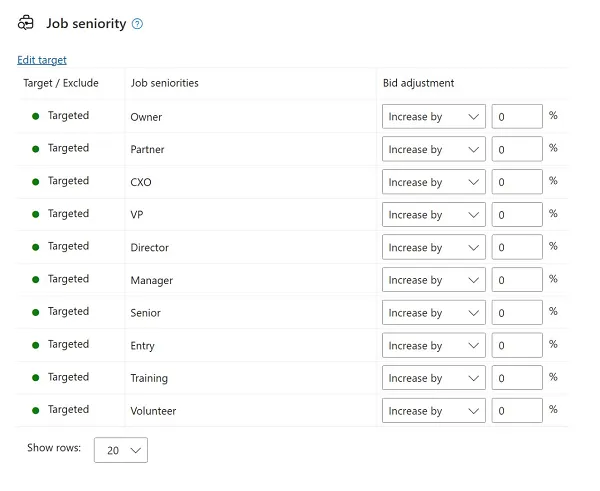
In a significant move to sharpen the efficacy of digital advertising, Microsoft has announced a major expansion of its targeting capabilities, allowing advertisers to refine their Search and Audience campaigns using granular LinkedIn profile data. By integrating LinkedIn’s robust professional insights into the broader Microsoft Advertising ecosystem, the company is providing marketers with a sophisticated toolset designed to reach specific corporate decision-makers with unprecedented precision.
This development, first identified by industry analysts at Search Engine Land, marks a pivotal shift in how B2B advertisers can leverage the unique synergy between Microsoft’s search engine reach and LinkedIn’s professional network. As the digital landscape faces increasing pressure regarding data privacy and the degradation of traditional third-party cookies, this first-party data integration offers a stable, high-intent alternative for brands looking to maximize their return on ad spend (ROAS).
The Core Update: Granular Seniority Filters
At the heart of this update is the ability for marketers to filter their audience reach based on 10 distinct levels of professional seniority. Previously, targeting options were often broad, forcing advertisers to cast wide nets that frequently included junior employees or non-decision-makers. With this enhancement, Microsoft Ads now allows for a surgical approach to campaign deployment.
By utilizing the self-reported data within LinkedIn profiles, Microsoft is enabling advertisers to target specific cohorts, ranging from entry-level staff and associates to senior-level executives, directors, and C-suite leaders. This level of granularity is particularly beneficial for high-ticket B2B services, enterprise software providers, and executive recruitment firms that require access to specific tiers of organizational hierarchy.
Chronology of Integration: From LinkedIn to Microsoft
The relationship between LinkedIn’s professional data and Microsoft’s ad platform has evolved significantly since Microsoft’s $26.2 billion acquisition of LinkedIn in 2016. The integration did not happen overnight; rather, it has been a methodical, multi-year process of aligning disparate advertising infrastructures.
- 2016–2018: Foundation Building: Following the acquisition, the immediate focus was on internal data alignment. Microsoft began testing the waters by allowing limited LinkedIn profile data to influence Bing search results and Microsoft-owned properties.
- 2019–2021: The Introduction of Audience Targeting: Microsoft Ads formally introduced LinkedIn profile targeting for specific campaign types. This allowed advertisers to target by "Company," "Industry," and "Job Function," providing the first real glimpse into the power of the cross-platform ecosystem.
- 2022–2023: Optimization and Scaling: During this period, Microsoft worked to stabilize the data pipelines between LinkedIn and the Microsoft Advertising platform. The focus shifted toward reducing latency and ensuring that the targeting criteria were applicable to a wider range of campaign objectives.
- 2024: The Seniority Expansion: The current rollout represents the next logical step in this evolution. By adding "Seniority" to the existing mix of Industry and Company filters, Microsoft has completed the "trifecta" of professional targeting, making it arguably the most powerful B2B advertising platform currently on the market.
Supporting Data: Why Seniority Matters in B2B
The demand for this update is driven by the stark reality of modern B2B purchasing cycles. Research consistently indicates that the average B2B purchase involves between six and ten decision-makers. Marketing to this group requires a "nurture" approach where different tiers of the organization are exposed to different messaging.
For example, a cloud infrastructure provider might want to target IT managers with technical whitepapers, while simultaneously serving cost-benefit analyses to CFOs. Before this update, a general search ad for "Cloud Solutions" would reach both audiences indiscriminately, leading to wasted impressions and diluted messaging.
Data from the B2B marketing sector suggests that companies utilizing seniority-based targeting experience, on average, a 20% to 30% increase in conversion rates for lead-generation campaigns. By focusing the ad budget on individuals who have the actual authority to sign off on expenditures, marketers can reduce their Customer Acquisition Cost (CAC) and improve the quality of their sales pipeline.

The Challenge of Data Integrity
While the technological leap is impressive, it does not come without caveats. The effectiveness of this targeting is fundamentally reliant on the accuracy of the data users choose to input into their LinkedIn profiles.
The Problem of Self-Reported Data
Unlike credit bureau data or governmental records, LinkedIn profile information is entirely self-reported. While the vast majority of professionals keep their profiles updated, there is a non-trivial percentage of users who fail to update their job titles or seniority levels after a promotion or a job change. Furthermore, there is the issue of "title inflation," where users may list themselves as "Directors" or "VPs" at small companies or startups to boost their professional standing.
LinkedIn’s Verification Efforts
To address these concerns, LinkedIn has been aggressively pushing its free profile verification process. By allowing users to verify their identities through third-party partners and organizational email verification, LinkedIn is working to create a "trusted" ecosystem. While this doesn’t strictly verify a user’s job role or seniority, it significantly reduces the presence of bot accounts and fake profiles that have plagued other social advertising platforms.
Microsoft’s reliance on this verified user base ensures that even if a job title is slightly outdated, the individual behind the screen is at least a legitimate, real-world professional. This is a massive upgrade over the "probabilistic" targeting used by many ad-tech platforms, which often rely on cookies that may be linked to multiple users in a single household.
Official Stance and Market Availability
Microsoft has confirmed that these new categories are available at both the campaign and ad group levels. This flexibility allows for A/B testing, where advertisers can run identical creative sets targeting different seniority levels to determine which tier provides the best engagement for their specific product or service.
The update is currently being rolled out across selected markets in the Americas, EMEA (Europe, Middle East, and Africa), and APAC (Asia-Pacific) regions. Advertisers should check their Microsoft Advertising dashboard under the "Targeting" tab to see if the "Seniority" option has been enabled for their active campaigns.
In a brief statement, a spokesperson for Microsoft Advertising noted: "Our goal is to provide marketers with the most relevant, high-intent targeting tools available. By bringing LinkedIn’s unique professional insights into the search environment, we are enabling our partners to reach the right person at the right time, regardless of where they are in their professional journey."
Strategic Implications for B2B Marketers
The rollout of seniority-based targeting has several profound implications for the future of B2B digital strategy.

1. The Death of "Spray and Pray"
The era of broad-match keyword bidding without audience refinement is rapidly coming to an end. Advertisers who continue to ignore these demographic filters will find themselves paying significantly more for leads that are lower in quality. The ability to layer LinkedIn data over search intent means that a search for "enterprise software" can now be tailored to only show ads to users who are identified as "Managers" or above.
2. The Rise of Account-Based Marketing (ABM)
For organizations that utilize Account-Based Marketing, this update is a godsend. ABM requires a highly personalized approach to a specific set of target accounts. By combining company-level targeting (already available) with this new seniority-level targeting, firms can essentially create a "surround sound" effect, ensuring that the key stakeholders at their target accounts are the only ones seeing their ads.
3. Increased Competition for Top-Tier Audiences
While this is a boon for advertisers, it also suggests an increase in competition for "senior" impressions. As more marketers adopt these tools, the Cost Per Click (CPC) for senior-level demographics will likely rise. Savvy advertisers will need to balance their targeting criteria—if they make the audience too narrow, they may fail to get enough volume to satisfy the search engine’s machine-learning algorithms, which generally require a certain amount of data to optimize effectively.
4. Integration with AI and Automation
Microsoft’s recent push toward "Performance Max" style campaigns and AI-driven bidding will also benefit from this data. By feeding the AI more specific information about who is clicking on an ad, the machine learning models will become significantly better at predicting which users are likely to convert. This creates a positive feedback loop where the targeting improves the AI, and the AI, in turn, helps the advertiser find more of the right people.
Looking Ahead: A New Standard for Ad Targeting
As the industry moves away from third-party tracking, the value of platforms that own their own first-party data ecosystem—such as Microsoft and LinkedIn—will continue to soar. This integration serves as a blueprint for the future of digital advertising.
The expansion of seniority targeting is more than just a minor feature update; it is a fundamental reconfiguration of how digital advertising intersects with professional identity. For the B2B marketer, the task is no longer just about bidding on the right keywords; it is about bidding on the right people.
As these tools continue to mature, we can expect to see further integration between the two platforms, potentially allowing for even more complex targeting scenarios, such as "users who have visited your LinkedIn company page in the last 30 days" or "users who follow your company on LinkedIn."
For now, the focus remains on the current rollout. Advertisers are encouraged to audit their existing campaigns, identify high-priority segments that could benefit from this increased focus, and begin testing these new filters. The data is available; the question remains how effectively the industry will utilize it to drive meaningful business outcomes. In an increasingly crowded digital marketplace, the ability to discern the decision-maker from the crowd is the ultimate competitive advantage.


 Laily UPN
 Ammar Sabilarrohman