Asro
Asro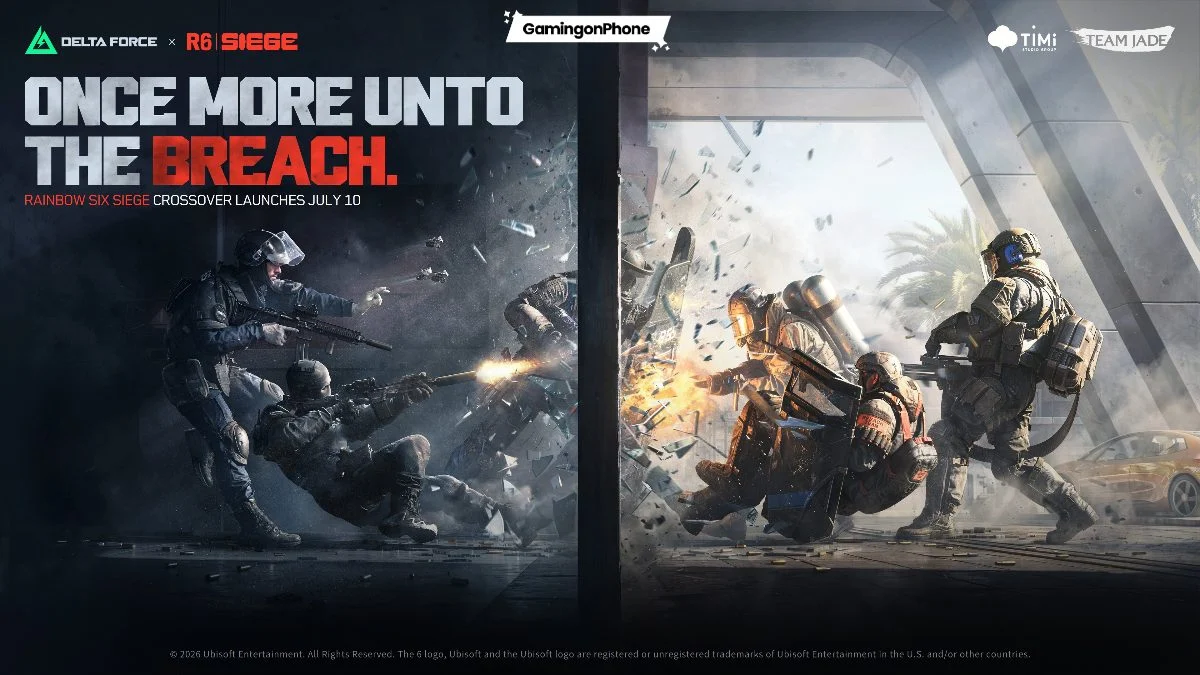
[City, State] – [Date of Article Publication] – In a move set to send shockwaves through the tactical shooter community, Team Jade has officially announced an exhilarating collaboration between their acclaimed extraction shooter, Delta Force, and Ubisoft’s enduringly popular tactical squad-based title, Tom Clancy’s Rainbow Six Siege. This landmark crossover, scheduled to launch on July 10, 2026, marks the first time these two titans of tactical warfare will converge, promising an unparalleled experience for fans of both franchises and a significant expansion for Delta Force‘s next season.
The announcement positions this event not merely as a cosmetic integration but as a major strategic play designed to inject new life, content, and a broader player base into Delta Force, while simultaneously celebrating the iconic characters and tactical depth that Rainbow Six Siege has cultivated over years of competitive play. The sheer scale of this partnership underscores a growing trend in the gaming industry where established intellectual properties merge to create fresh, engaging content and foster cross-community engagement.
A Deep Dive into the Collaboration: What We Know So Far
The revelation arrives at a particularly opportune moment for Delta Force, as Team Jade gears up for what is heralded as the game’s most substantial update to date. The upcoming season, within which this crossover will be embedded, is already poised to deliver a massive wave of new content. This includes the introduction of a new Operations map, a new Warfare map, and a brand-new Operator, among other undisclosed enhancements. The integration of Rainbow Six Siege elements serves to amplify the anticipation surrounding an already packed content roadmap, elevating the upcoming season from a mere update to a potential watershed moment for Delta Force.
While Team Jade has, at this preliminary stage, remained tight-lipped regarding the granular details of the crossover’s in-game content and specific rewards, they have confirmed that more comprehensive information will be disseminated closer to the July 2026 launch date. However, an exciting initial reveal, shared via official channels on X (formerly Twitter), offered a tantalizing glimpse into the character integrations. Players can anticipate seeing three iconic Rainbow Six Siege Operators re-imagined and integrated into the Delta Force universe: Vigil will assume the persona of Nox, Montagne will embody Sineva, and Doc will be introduced as Stinger. This initial roster selection suggests a thoughtful approach, bringing in characters known for their distinctive abilities and fan appeal, which could potentially translate into unique gameplay dynamics within Delta Force.
Shadow, the esteemed Game Director at Team Jade, succinctly captured the prevailing excitement surrounding the initiative. In a brief but impactful statement, he hinted at the ambitious scope of the season, declaring, "There’s a lot more coming in our biggest season yet, and we can’t wait for players to see it." This official response not only reaffirms the developer’s commitment to delivering a monumental update but also acts as a promise of deeper, more intricate integrations beyond the initially teased operator appearances. The anticipation is palpable, as players eagerly await further announcements that will illuminate the full extent of this unprecedented tactical alliance.
A Legacy of Tactical Excellence: Understanding the Powerhouses
To fully appreciate the magnitude of this crossover, it is essential to understand the individual legacies and distinct identities of the two franchises involved. Both Delta Force and Rainbow Six Siege represent different, yet complementary, facets of the tactical shooter genre, each having carved out a significant niche in the gaming landscape.
Delta Force: The Resurgence of the Extraction Shooter
The Delta Force franchise holds a storied place in the history of PC gaming, with its roots tracing back to the late 1990s. The original games, developed by NovaLogic, were renowned for their large-scale maps, emphasis on open-world combat, and a sense of realistic military operations that was groundbreaking for its time. Players often operated as elite special forces operatives, engaging in missions that required stealth, precision, and tactical planning across expansive terrains. The franchise largely faded from prominence in the 2010s, but its recent revival by Team Jade has re-energized the brand, adapting its core tenets for a modern audience and re-positioning it within the burgeoning "extraction shooter" subgenre.
Modern Delta Force, under Team Jade’s stewardship, focuses on the high-stakes, player-versus-environment-versus-player (PvPvE) gameplay loop characteristic of extraction shooters. Players deploy into dangerous zones, complete objectives, gather valuable loot, and then must successfully extract to secure their gains. This genre demands a blend of tactical gunplay, resource management, risk assessment, and often, a keen awareness of other player teams operating in the same area. For Delta Force, this crossover represents a significant opportunity to attract a new wave of players, particularly those accustomed to the intense, strategic engagements of Rainbow Six Siege, and to firmly establish its presence in a competitive market dominated by titles like Escape from Tarkov and Marauders. The collaboration is not just about adding content; it’s about leveraging the brand power of a global phenomenon to elevate Delta Force‘s profile and potentially redefine its trajectory.
Rainbow Six Siege: A Decade of Competitive Dominance
Tom Clancy’s Rainbow Six Siege, developed by Ubisoft Montreal, launched in 2015 to a somewhat lukewarm reception but rapidly evolved into one of the most celebrated and enduring competitive tactical shooters in gaming history. Its success is a testament to Ubisoft’s commitment to post-launch support, continuous content updates, and a dedicated esports ecosystem. Siege redefined the tactical shooter by introducing a groundbreaking destruction engine, a diverse roster of "Operators" each with unique gadgets and abilities, and an emphasis on asymmetrical attack-and-defend gameplay that rewards strategic planning, team coordination, and precise execution.
Unlike the open-world extraction mechanics of Delta Force, Rainbow Six Siege focuses on tight, claustrophobic indoor environments where every wall, floor, and ceiling can be breached or reinforced. Its competitive scene is robust, with professional leagues and a massive casual player base that thrives on its complex meta, constant updates, and the thrill of clutch plays. Operators like Vigil, Montagne, and Doc are not just characters; they are integral components of strategic team compositions, each bringing a distinct utility to the battlefield. Vigil’s electronic rendering cloak, Montagne’s extendable shield, and Doc’s stim pistol are all iconic elements that have shaped Siege‘s gameplay. The involvement of these particular operators in the Delta Force crossover suggests an intent to transfer not just their likenesses, but potentially their core functionalities, into a new gameplay context, promising an intriguing fusion of tactical approaches. This collaboration also reinforces Ubisoft’s strategy of expanding its IPs into new gaming experiences, maintaining brand relevance, and exploring cross-platform synergy.
The Art of the Crossover: Gaming’s Collaborative Landscape
Gaming crossovers have become an increasingly prevalent and potent tool for developers and publishers alike. They serve multiple strategic objectives, from injecting fresh content and maintaining player retention to attracting new demographics and fostering cross-brand exposure. The underlying appeal lies in the inherent excitement of seeing beloved characters or iconic elements from one universe integrated into another, creating novel gameplay scenarios and fan-pleasing moments.
Successful examples abound across the industry. Fortnite, Epic Games’ battle royale behemoth, has become a masterclass in brand collaboration, featuring characters from Marvel, DC, Star Wars, and countless other franchises, demonstrating the immense power of crossovers to keep a game feeling fresh and relevant. Call of Duty has also embraced this trend, bringing in movie characters and pop culture icons into its battle pass systems. Even more niche titles like Dead by Daylight thrive on their constant stream of licensed horror movie killers and survivors. These collaborations are not merely cosmetic; they often introduce new gameplay mechanics, limited-time modes, or narrative events that deepen the integration and provide substantive new experiences for players.
For Team Jade, partnering with a powerhouse like Rainbow Six Siege is a strategic masterstroke. It immediately grants Delta Force access to Siege‘s vast and dedicated player base, many of whom are undoubtedly open to exploring another tactical shooter, especially one featuring their favorite operators. This kind of cross-promotion can significantly boost player acquisition and visibility, which is crucial for a relatively newer title or a revived franchise seeking to establish a strong foothold. For Ubisoft, it represents an opportunity to extend the Rainbow Six brand’s reach without necessarily developing a new standalone title, testing the waters for potential future collaborations or even deeper IP integrations. The strategic value for both parties is immense, promising mutual benefits in terms of player engagement, market presence, and overall brand strength. However, successful crossovers also face challenges, primarily balancing the distinct identities and gameplay mechanics of each franchise while ensuring the integration feels natural and respectful to both fan bases.
Speculating on the Integration: Beyond Operator Skins
While specific details remain under wraps, the mere announcement of Vigil, Montagne, and Doc making their way into Delta Force as Nox, Sineva, and Stinger, respectively, opens a floodgate of exciting speculation regarding the depth of their integration. This crossover is unlikely to be confined to simple cosmetic alterations; the tactical nature of both games strongly suggests a more meaningful infusion of gameplay elements.
Operator Abilities and Gadgets: A New Tactical Layer?
The most intriguing aspect revolves around how the signature abilities of these Rainbow Six Siege Operators might translate into Delta Force‘s extraction shooter framework.
- Vigil’s ERC-7 (Electronic Rendering Cloak): In Siege, Vigil’s gadget makes him invisible to drones and cameras, providing invaluable stealth and flanking capabilities. If adapted to Delta Force, Nox could possess a similar ability, allowing players to briefly become undetectable by enemy AI, player-controlled drones, or even radar systems, providing a crucial edge in reconnaissance or evasion during extraction. This would introduce a unique stealth element not typically seen in the current Delta Force meta.
- Montagne’s Extendable Shield: Montagne is Siege‘s ultimate point-man, capable of extending his ballistic shield to cover his entire body. In Delta Force, Sineva could offer unparalleled defensive capabilities, allowing players to push objectives or extract under heavy fire with a mobile, impenetrable cover. This could drastically alter engagement dynamics, creating opportunities for coordinated pushes or desperate retreats that rely on the shield’s protection.
- Doc’s Stim Pistol: Doc’s ability to heal and revive teammates from a distance is a cornerstone of Siege‘s support meta. Stinger in Delta Force could bring similar life-saving utility, providing instant health boosts or even remote revives, which would be invaluable in high-stakes extraction scenarios where medical supplies are scarce and combat is unforgiving. This would significantly enhance team survivability and strategy.
The challenge for Team Jade will be to integrate these abilities in a balanced way that complements Delta Force‘s existing mechanics without making the Siege operators feel overpowered or out of place. This could involve cooldowns, limited charges, or specific environmental dependencies.
Weaponry and Gear: Iconic Arsenals Join the Fray
Beyond operator abilities, the crossover could extend to the introduction of iconic Rainbow Six Siege weaponry. Weapons like the MP5, F2, P90, or even unique gadgets like breach charges or frag grenades from the Siege universe could be introduced as special loot or unlockable items in Delta Force. This would provide players with fresh loadout options and a sense of familiarity, bridging the gap between the two game worlds. Imagine securing an objective in Delta Force with Montagne’s P90 or Doc’s MP5 – these small details can significantly enhance the crossover experience.
Map Elements and Environmental Storytelling: A Touch of Siege
While a full Rainbow Six Siege map might be difficult to adapt to Delta Force‘s large-scale environments, elements inspired by Siege‘s destructible environments or distinctive architectural styles could feature in new Delta Force maps. Perhaps a new Operations map includes a section reminiscent of a Siege interior, with reinforced walls, breachable surfaces, or even Easter eggs like defunct Operator gadgets. Lore fragments, in-game documents, or audio logs could also be scattered across maps, subtly weaving a narrative explanation for the presence of Rainbow Six operatives in the Delta Force universe, enriching the overall experience for lore enthusiasts.
Limited-Time Game Modes and Cosmetic Customization
The collaboration could also introduce limited-time game modes in Delta Force that draw inspiration from Siege‘s unique attack-and-defend scenarios. Imagine a special extraction zone that requires a Siege-like breach and clear, or a defense objective where players must hold out against waves of AI and rival players using Siege-inspired tactics. Furthermore, cosmetic customization options beyond the initial operator re-imaginings are highly probable. Weapon skins, charms, uniforms, and player banners themed around Rainbow Six Siege could become highly sought-after rewards, allowing players to personalize their Delta Force experience with a touch of Siege flair.
Strategic Implications and Future Outlook
The Delta Force and Rainbow Six Siege crossover is more than just a content update; it’s a strategic maneuver with far-reaching implications for both franchises and the broader tactical shooter genre.
Elevating Delta Force’s Profile
For Delta Force, this partnership is a game-changer. Associating with a globally recognized and critically acclaimed title like Rainbow Six Siege instantly elevates its visibility and prestige. It signals to the gaming world that Team Jade is serious about establishing Delta Force as a major player in the extraction shooter market. The influx of Rainbow Six Siege veterans, drawn by the familiar characters and potential gameplay synergies, could significantly boost Delta Force‘s active player base, foster a more vibrant community, and provide valuable feedback for future development. This could be the catalyst that transforms Delta Force from a promising title into a genre leader.
Reinforcing the Tactical Shooter Genre
The collaboration also serves as a powerful testament to the enduring appeal and versatility of the tactical shooter genre. In an era dominated by battle royales and hero shooters, this crossover highlights the continued demand for games that prioritize strategy, coordination, and realistic combat. It demonstrates that there’s ample room for innovation and cross-pollination within this niche, potentially inspiring other developers to explore similar collaborations or to infuse tactical depth into their own titles. The melding of extraction mechanics with operator abilities could even pave the way for entirely new subgenres of tactical gameplay.
The Future of Brand Collaborations
This unprecedented alliance sets a high bar for future brand collaborations in the gaming industry. It moves beyond superficial cosmetic integrations, hinting at a deeper fusion of gameplay elements and character identities. If successful, it could encourage other developers to pursue more ambitious and creative crossovers, blurring the lines between different game universes and delivering richer, more immersive experiences for players. The strategic intent behind this partnership suggests a future where gaming IPs are increasingly seen as interconnected ecosystems, capable of cross-pollinating ideas and content to mutual benefit.
Player Engagement and Community Reaction
The initial reaction from the gaming community is expected to be overwhelmingly positive, especially among fans of both titles. Social media platforms, forums, and streaming communities will undoubtedly be abuzz with discussions, speculations, and analyses of what this crossover truly means. The excitement generated by the prospect of familiar Siege operators engaging in Delta Force‘s high-stakes extractions is a powerful marketing tool in itself. Team Jade will need to carefully manage player expectations, ensuring that the final content delivers on the immense promise of this collaboration, fostering continued engagement and positive sentiment.
Conclusion: A New Era for Tactical Warfare
The announcement of the Delta Force and Rainbow Six Siege crossover, launching on July 10, 2026, is a momentous occasion that promises to redefine the tactical shooter landscape. By bringing together the large-scale, high-stakes extraction gameplay of Delta Force with the iconic characters and tactical depth of Rainbow Six Siege, Team Jade is poised to deliver an experience that is both novel and deeply satisfying for fans of both franchises.
As the industry eagerly awaits further revelations regarding the in-game content and rewards, the strategic implications of this partnership are already clear. It represents a significant opportunity for Delta Force to solidify its position in the competitive gaming market, while reinforcing the enduring appeal of tactical gameplay for a global audience. The fusion of these two distinct yet complementary universes heralds a new era of collaborative storytelling and innovative gameplay, setting a compelling precedent for the future of gaming crossovers. Players across the globe will undoubtedly be marking their calendars for July 2026, ready to witness the dawn of this unprecedented tactical alliance.


 Lina Irawan
 Sagoh
Sagoh