Siti Muinah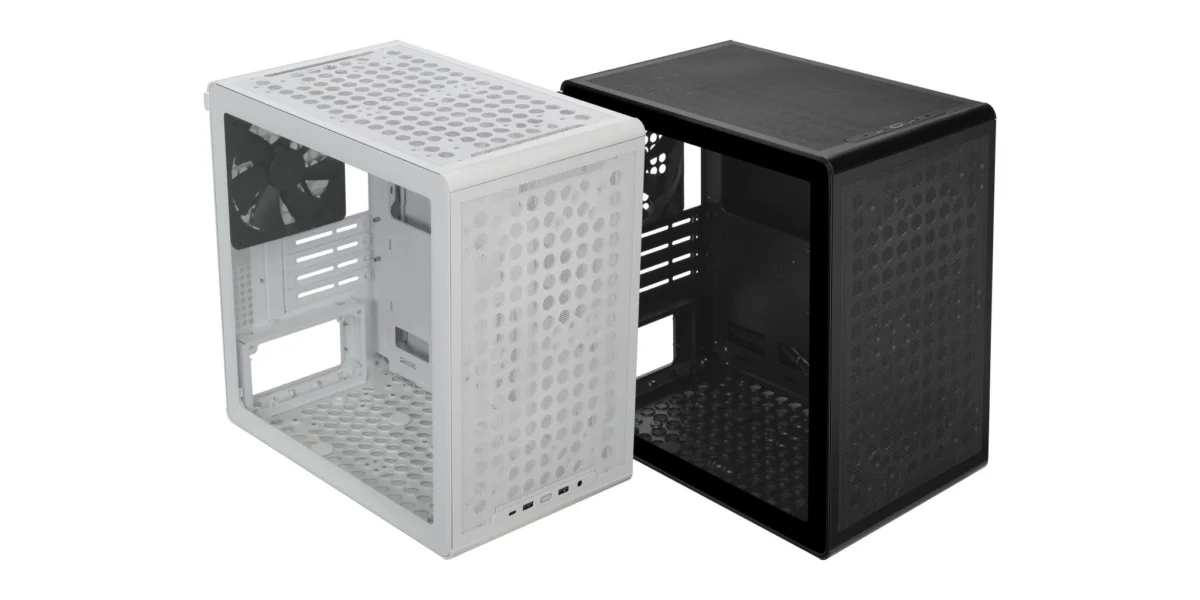
Cooler Master has long held a commanding position in the PC component market, particularly within the budget-friendly chassis segment. For years, the MasterBox Q300L has been a go-to choice for first-time builders and enthusiasts seeking a functional, compact, and affordable microATX enclosure. Today, the company is signaling a new chapter for this series, announcing the highly anticipated Q300L V3 alongside a fresh, highly customizable sibling: the modular Qube 340.
These releases represent more than just a minor aesthetic refresh; they reflect a deliberate shift toward addressing the evolving demands of modern PC builders who require high-performance hardware compatibility, premium connectivity, and modular flexibility—all while maintaining the small footprint that made the original Q300L a household name.
Main Facts: A New Standard for Small Form Factor (SFF)
The Q300L V3 arrives as a significant evolution of its predecessor. Designed for users who prioritize space-saving without sacrificing internal component capacity, the V3 supports both Mini-ITX and microATX motherboards. Perhaps most impressive is the case’s ability to house high-end hardware; it accommodates graphics cards up to 366mm in length and CPU air coolers up to 178mm in height.
The Q300L V3 Technical Overview
The V3 introduces several structural refinements that address long-standing user requests. Key specifications include:
- Cooling Versatility: Support for up to six total cooling fans.
- Thermal Efficiency: An upgraded front panel with significantly enlarged perforations to maximize intake airflow.
- Enhanced Build Quality: A reinforced motherboard tray and improved fan mounting brackets.
- Aesthetics: The inclusion of a tempered glass side panel as a standard feature, providing a clear view of the internals.
- Connectivity: A massive overhaul of the front I/O panel, now featuring three USB 3.2 Gen 2×2 Type-C ports, dual USB 3.2 Gen 1 Type-A ports, and a unified combo audio jack.
The Qube 340: The Modular Alternative
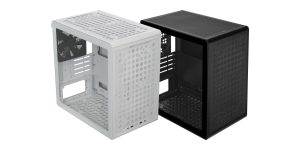
While the Q300L V3 focuses on refining the classic aesthetic, the Qube 340 is built for the "maker" community. Sharing the core microATX foundation, the Qube 340 introduces a modular paradigm that allows builders to dictate the case’s orientation. Whether the user prefers a vertical tower or a horizontal desktop orientation, the Qube 340 adapts. Furthermore, it introduces customizable front I/O placement and support for 3D-printable accessories, allowing for a level of personalization rarely seen at this price point.
Chronology of a Classic: The Evolution of the Q-Series
To understand the significance of the V3, one must look at the trajectory of the MasterBox line. When the original Q300L debuted, it disrupted the market by offering a unique "patterned" magnetic dust filter and a versatile internal layout at a sub-$50 price point. It became an instant cult classic, frequently featured in "best budget build" guides across the globe.
- The Origin (Q300L V1): Focused on extreme affordability, featuring a plastic window and basic connectivity. It proved that budget cases didn’t have to be boring or restrictive.
- The Iteration (Q300L V2): This version refined the build quality, improved the I/O, and cleaned up the cable management options, solidifying the series’ reputation for high value-per-dollar.
- The Modern Era (V3 & Qube 340): The announcement today marks the transition from "budget-essential" to "modern-capable." By adding high-speed USB-C connectivity and modularity, Cooler Master is ensuring the series remains competitive in an era where even entry-level builds are pushing higher power and bandwidth requirements.
Supporting Data and Hardware Compatibility
One of the most critical aspects of small-form-factor (SFF) design is component clearance. A case can be as beautiful as one likes, but if it cannot accommodate modern, oversized GPUs, it fails its primary purpose.
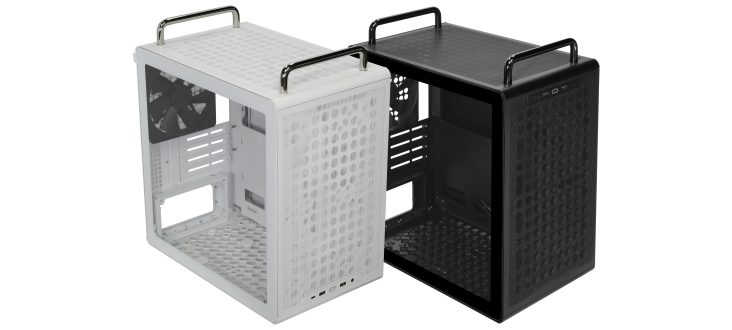
The Q300L V3’s support for 366mm GPUs is a massive upgrade over the industry standard for this form factor. Modern graphics cards, such as the NVIDIA GeForce RTX 4080 or 4090 (and their AMD equivalents), often exceed 330mm in length. By providing 366mm of clearance, Cooler Master has effectively future-proofed the V3 for the next generation of enthusiast hardware.
Regarding thermal management, the emphasis on a 140mm rear exhaust fan is a strategic choice. In a compact space, moving heat away from the CPU and VRM area is critical. The combination of the new, highly perforated front panel and the larger rear exhaust fan suggests that the V3 will likely handle high-TDP processors far better than its predecessors.
Official Responses and Strategic Vision
In internal discussions regarding the product launch, Cooler Master’s design team emphasized the "User-Centric Approach." According to the company, the feedback loop from the PC building community was the primary driver for the Q300L V3’s specific feature set.
"We listened to what the users wanted," a representative noted. "They didn’t want to lose the compact size, but they were tired of choosing between budget pricing and modern connectivity like high-speed USB-C. With the V3, we’ve removed that compromise."
Regarding the Qube 340, the company identified a growing demographic of hobbyists who want to 3D-print custom brackets, fan shrouds, and aesthetic mods. By providing a base that is specifically designed to accept 3D-printable parts, Cooler Master is leaning into the DIY ethos that originally fueled the PC building revolution.
Implications: What This Means for the Market
The launch of these two cases has significant implications for the DIY PC market:
1. The Death of the "Budget-Restriction" Myth
For years, budget builders had to accept "old" technology in cheaper cases—USB 2.0 ports, limited airflow, and lack of glass panels. By including USB 3.2 Gen 2×2 Type-C ports on the Q300L V3, Cooler Master is forcing the hand of competitors. The industry standard for entry-level chassis will likely have to shift to match these connectivity specs.
2. Modularity at Scale
The Qube 340’s modularity suggests that manufacturers are beginning to see the "case" not as a static box, but as a customizable platform. If this product succeeds, we may see a wider adoption of swappable panels and orientation-agnostic designs, allowing users to keep the same case through multiple system upgrades.
3. Sustainability through Longevity
By building a more robust chassis with better compatibility for future hardware, Cooler Master is promoting a form of sustainability. A case that fits a 366mm GPU today will likely fit the components of 2028. This reduces the need for users to discard their chassis every time they upgrade their motherboard or graphics card, a win for both the consumer’s wallet and the environment.
Conclusion: A New Benchmark
Cooler Master has successfully navigated the difficult path of updating a legendary product. The Q300L V3 does not deviate from the core design language that users loved, but it fixes the modern deficiencies that had started to show with age. Meanwhile, the Qube 340 offers a bold, exciting direction for those who want their PC to be an extension of their personal creativity.
As the market continues to lean toward smaller, more efficient systems, the Q300L V3 and Qube 340 arrive at the perfect time. Whether you are a first-time builder looking for an easy, high-value starting point, or a seasoned enthusiast looking for a modular base for your next project, these cases offer a compelling mix of form, function, and future-proof design.
KitGuru continues to monitor the release dates and localized pricing for these units. Given the aggressive feature sets, these are likely to be among the most sought-after cases in the sub-100 USD segment for the remainder of the year.


 Layla Zulfa
 Nana Muazin