Layla Zulfa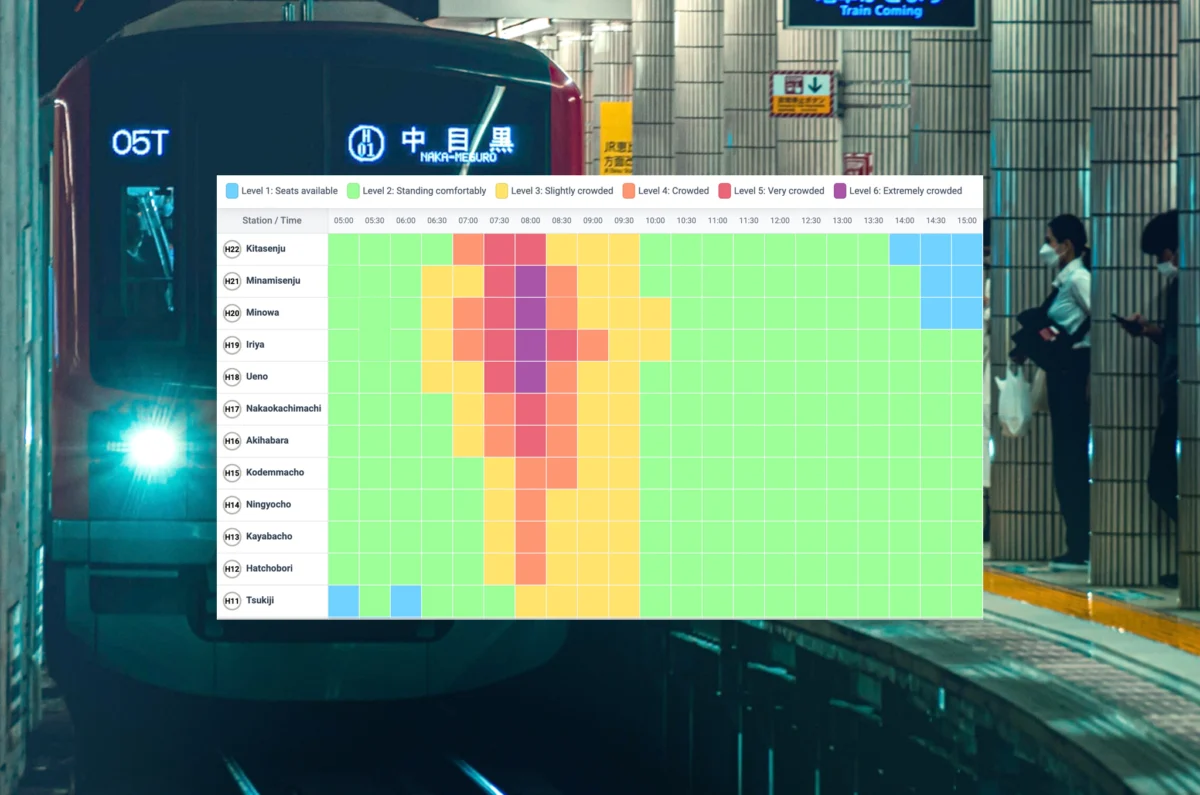
For millions of commuters navigating the labyrinthine arteries of Tokyo, the daily transit experience is often defined by a single, persistent challenge: finding space. As one of the world’s most sophisticated and heavily utilized transit systems, the Tokyo Metro has long been a marvel of efficiency, yet the physical constraints of rush-hour capacity remain a source of daily friction. On Tuesday, Tokyo Metro Co., Ltd. took a significant step toward alleviating this perennial stressor with the official launch of Metro CrowdNavi, a comprehensive digital platform designed to provide passengers with unprecedented visibility into network congestion.
The Core Innovation: Data-Driven Commuting
The Metro CrowdNavi website serves as a sophisticated analytical tool, offering passengers the ability to check real-time and historical congestion levels across the entirety of the Tokyo Metro rail network. Unlike traditional transit apps that might focus solely on arrival times, this web-based service empowers users to make informed decisions about their travel patterns.
By aggregating average crowding data from the previous five days—categorized by station, specific time intervals, and individual train services—the platform provides a reliable predictive model for commuters. The interface features an intuitive heatmap that allows users to visualize congestion levels across an entire line at a glance. To ensure accessibility for the diverse demographic of Tokyo’s ridership, the service is available in both Japanese and English, requiring no account registration or personal data, thereby lowering the barrier to entry for tourists and residents alike.
Chronology: From Pilot Program to Network-Wide Deployment
The journey to the launch of Metro CrowdNavi was one of cautious, data-backed development. Tokyo Metro initiated a trial version of the service in March, focusing its early efforts on three of the system’s most notoriously congested arteries: the Hibiya, Tozai, and Chiyoda lines. These lines, which serve as vital connectors for the city’s business districts, provided the ideal proving ground for the algorithm’s accuracy and the interface’s usability.
Following a successful testing phase, during which the system gathered user feedback and refined its data visualization capabilities, Tokyo Metro moved to scale the project. The full rollout now covers the network’s remaining six lines: the Ginza, Marunouchi, Yurakucho, Hanzomon, Namboku, and Fukutoshin lines. This expansion marks a complete transition from a localized pilot program to a comprehensive, network-wide digital infrastructure.
Supporting Data: Understanding the Color-Coded Grid
At the heart of the Metro CrowdNavi system is a rigorous, six-tier color-coded scale designed to translate raw transit data into actionable insights for the average commuter. The scale is calibrated to provide immediate clarity:
- Light Blue: Indicates that seats are generally available, ideal for those seeking a more comfortable journey.
- Graduated Indicators: Intermediate colors reflect increasing passenger loads.
- Purple: Signifies extremely crowded conditions, advising passengers that they may experience significant physical density.
By utilizing this visual shorthand, Tokyo Metro allows users to quickly assess whether delaying a trip by 15 or 30 minutes might result in a significantly more comfortable commute. The platform’s ability to break down data by specific train service is particularly valuable for commuters who have flexibility in their schedules, allowing them to shift their departure times to avoid the "peak-of-the-peak" congestion.
Tokyo Metro’s Broader Digital Strategy
The launch of Metro CrowdNavi is not an isolated development but rather the latest iteration of Tokyo Metro’s broader digital transformation strategy. Over the past several years, the operator has aggressively pursued a "Smart Transit" agenda aimed at integrating its rail services into the wider urban mobility ecosystem.
The ‘my!’ App Ecosystem
Central to this strategy is the Tokyo Metro my! app. This application acts as a digital concierge for the modern traveler, offering multi-modal routing that seamlessly integrates train travel with taxi services, local bus routes, and shared bicycle schemes. Beyond simple navigation, the app provides:
- Indoor Navigation: Detailed guidance for complex, multi-level station buildings, helping commuters navigate transfers with ease.
- Real-time Operational Updates: Instant notifications regarding train locations and service delays.
- Carriage-Specific Data: The app features a four-level color-coded system that indicates congestion levels for specific carriages on approaching trains—ranging from blue (available seats) to red (heavily crowded).
While the my! app focuses on the "micro" level—helping a passenger find a seat on the train standing directly in front of them—Metro CrowdNavi operates on a "macro" level. It provides the bird’s-eye view necessary for planning an entire journey across the city, bridging the gap between real-time train status and long-term commuter behavior.
Official Perspectives: The Value of Transparency
While Tokyo Metro has not released specific financial figures regarding the development of the tool, representatives have emphasized that the investment is driven by a commitment to "customer-centric service." By providing transparency, the operator aims to distribute passenger flow more evenly across the day.
Transit analysts have noted that such digital interventions are critical for the post-pandemic era. As hybrid work models remain prevalent in Tokyo, the traditional "9-to-5" rush hour has become more fluid. By providing commuters with the tools to visualize their environment, Tokyo Metro is effectively encouraging "time-shifting"—the practice of traveling outside of peak hours—which can reduce stress on the infrastructure and improve the overall quality of life for the urban workforce.
Implications for the Future of Urban Mobility
The implications of the Metro CrowdNavi launch extend well beyond convenience. In a city where transit density is a defining characteristic, managing the "human flow" is as important as managing the mechanical flow of the trains themselves.
1. Enhancing Resilience and Safety
High-density congestion can lead to significant station bottlenecks, particularly during rush hours or following unexpected service delays. By providing passengers with data that encourages them to space out their travel, Tokyo Metro is proactively enhancing station safety and reducing the risk of platform overcrowding.
2. The Shift to "Smart" Urbanism
Tokyo’s transit systems are often held up as the gold standard for punctuality and reliability. However, as the population ages and the city faces evolving labor shortages, digital tools like Metro CrowdNavi represent a transition toward automated, data-driven management. By empowering the passenger to act as their own navigator, the burden on station staff is reduced, and the system becomes more resilient to fluctuations in demand.
3. Economic and Social Impact
For the average resident, the time saved by avoiding a "red" or "purple" crowded train is not merely a matter of comfort; it is a matter of productivity and well-being. A less stressful commute translates to higher morale and better mental health for the city’s millions of office workers. Furthermore, for the growing number of international tourists, the English-language support provided by the service removes a significant barrier to navigating the world’s most complex rail network, ultimately supporting Tokyo’s status as a global hub for tourism and business.
Conclusion: A New Standard for Transit
As Tokyo continues to evolve, the integration of digital tools like Metro CrowdNavi into the daily lives of citizens demonstrates that the future of transit is not just about faster trains or more frequent service. It is about transparency, empowerment, and the intelligent use of data to improve the human experience of the city.
By launching Metro CrowdNavi, Tokyo Metro has moved one step closer to solving the perennial problem of the "crush." Whether it leads to a more balanced distribution of passengers or simply provides the peace of mind that comes with knowing what to expect on the platform, the platform represents a significant leap forward in the digital modernization of one of the world’s greatest transit networks. As passengers begin to incorporate this data into their daily routines, the ripples of this change will likely be felt in the quieter, more comfortable carriages of the future.


 Neng Nana
 Asro
Asro