Iffa Jayyana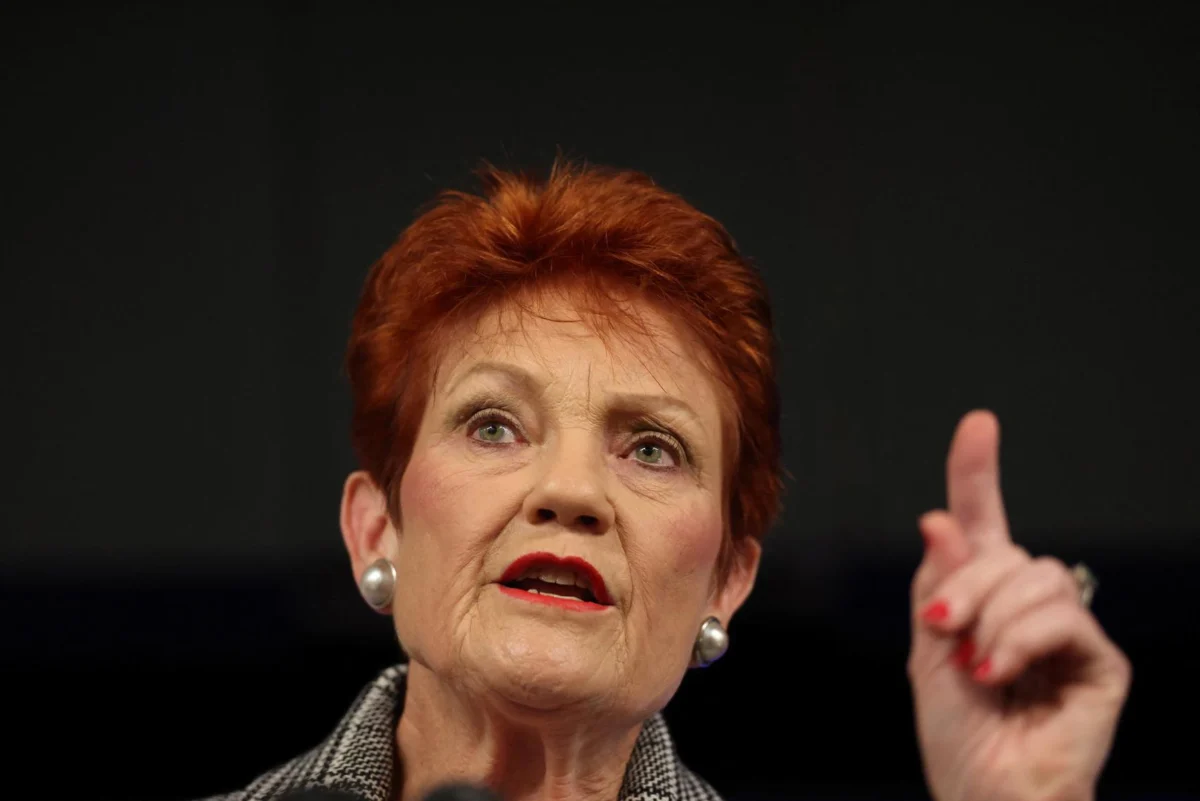
CANBERRA – In a high-stakes address at the National Press Club that has reverberated across the Australian political landscape, One Nation leader Pauline Hanson has delivered a blistering indictment of the nation’s long-standing multicultural framework. As her party experiences a dramatic surge in public support, Hanson has framed the current immigration system as an "utterly flawed" catastrophe, arguing that Australia is in the midst of a profound national crisis.
Her remarks, which have drawn sharp comparisons to the populist movements of Donald Trump in the United States and Nigel Farage in the United Kingdom, represent a significant hardening of rhetoric in a country that has historically prided itself on its diverse demographic tapestry.
The Core Argument: A Call for Monoculturalism
During her address in the nation’s capital, Hanson articulated a vision for Australia that stands in stark opposition to the policies pursued by the ruling Labor government. She explicitly rejected the notion of a multicultural society, declaring that the current trajectory of migration is unsustainable and detrimental to the Australian way of life.
"Undeniably, immigration policy has placed our country in a state of crisis," Hanson stated. "At the centre of this crisis is the utterly flawed policy of multiculturalism. We cannot be a multicultural society. We are a multiracial society. But we must be monocultural."
Hanson’s definition of "monoculturalism" centers on a cohesive national identity, though she provided few policy specifics on how such a state would be maintained. She emphasized that her primary concern remains the preservation of national values, citing "radical Islam" as a specific point of anxiety—a recurring theme in her political career since she first entered the public eye in the 1990s.
Chronology of a Political Comeback
The rise of One Nation from a fringe movement to a formidable political force is a narrative of persistence. Founded in 1997, the party was initially dismissed by major political analysts as a temporary protest movement. However, the current political climate—defined by cost-of-living pressures and housing shortages—has provided fertile ground for Hanson’s populist appeal.
- 1997: Pauline Hanson founds the One Nation party, emphasizing anti-immigration and protectionist platforms.
- Early 2000s–2023: The party fluctuates in popularity, often playing the role of a "kingmaker" in the Senate, but failing to secure significant traction in the lower house.
- May 2026: One Nation secures a historic victory in the rural New South Wales seat of Farrer, defeating a Liberal Party candidate in a traditional conservative stronghold. This win serves as a catalyst for the party’s current momentum.
- July 2026: A Sydney Morning Herald poll reveals that Hanson has overtaken Prime Minister Anthony Albanese in preferred leader ratings, signaling a potential seismic shift in the Australian two-party system.
Supporting Data: The Demographic Context
The tension fueling Hanson’s rhetoric is set against a backdrop of significant demographic shifts. According to the Australian Bureau of Statistics (ABS), nearly one-third of the nation’s 28 million residents were born overseas. This figure is double the proportion found in the United States or France, a statistic Hanson frequently cites to argue that the current intake is "unprecedented and unmanageable."
The economic argument underpinning her stance focuses heavily on housing affordability. Hanson claims that the rapid influx of migrants has outpaced infrastructure development, driving up property prices and leaving Australian families struggling to enter the housing market. While economists often point to supply-side issues, such as planning laws and labor shortages, as the primary drivers of the housing crisis, Hanson’s narrative has found a receptive audience among voters feeling the squeeze of the current economic downturn.
Furthermore, the party’s policy platform is modeled on international populist trends. One Nation is actively advocating for:
- Mandatory Visa Cancellation: A policy mirroring U.S. deportation strategies for non-citizens who commit criminal offenses.
- Withdrawal from the U.N. Refugee Convention: An attempt to assert greater national sovereignty over border control.
- Stringent Visa Rules: Implementing longer waiting periods for citizenship and higher bars for entry.
Official Responses and Political Friction
The response to Hanson’s speech was immediate and polarized. Outside the National Press Club, protesters gathered to voice their opposition to her platform. Inside the venue, a protest banner—highlighting Hanson’s opposition to specific pay-rise initiatives—was briefly displayed behind her before being removed by organizers.
Hanson also drew criticism for her decision to bypass the customary acknowledgment of Australia’s Indigenous communities. In her speech, she described the practice as "divisive," a move that has been decried by Indigenous advocates and various political opponents as a deliberate attempt to alienate First Nations people.
The major parties have largely struggled to contain the "Hanson effect." While Labor and the conservative Coalition have long dominated Australian politics, recent polling suggests that One Nation is siphoning votes from both sides. Analysts suggest that the electorate is increasingly disillusioned with the traditional two-party duopoly, which is being perceived as detached from the daily struggles of rural and suburban Australians.
Implications: The Structural Challenge
Despite the surge in support, the Australian electoral system presents a significant barrier to One Nation’s path to government. The "preferential voting" system, which distributes votes until a majority is achieved, is designed to favor the established parties. Most political analysts agree that if an election were held today, the Labor Party would likely retain power through coalition and preference arrangements.
However, the political implications are profound. Even if One Nation does not secure a majority, its ability to shift the national conversation is undeniable. By forcing the major parties to adopt more conservative stances on immigration to stop the flow of voters toward One Nation, the party is effectively dragging the entire political spectrum to the right.
The Legislative Landscape
Currently, One Nation holds four of the 76 seats in the Senate, providing them with a strategic veto power over legislation that requires cross-bench support. Their single lower-house seat, gained in Farrer, serves as a proof-of-concept that the party can win in conservative heartlands. This success has prompted urgent strategy sessions within both the Liberal Party and the National Party, as they grapple with the loss of their traditional rural base.
Global Parallels
The rise of One Nation is not an isolated event. It is part of a broader, global shift toward nationalism. Similar to the rise of Reform UK under Nigel Farage or the enduring influence of Donald Trump’s base in the U.S., One Nation’s success is rooted in a sense of "lost sovereignty" and economic anxiety. The party’s platform appeals to a demographic that feels ignored by the "metropolitan elite," providing a sense of agency to those who feel that the traditional social contract has been broken.
Conclusion: A Nation at a Crossroads
As Australia approaches its next electoral cycle, the discourse surrounding immigration and national identity will undoubtedly remain the primary fault line in the national debate. Pauline Hanson’s explicit rejection of multiculturalism marks a new, more aggressive phase in Australian politics.
Whether this movement will lead to a fundamental restructuring of the Australian state or remain a potent, yet contained, protest movement remains to be seen. What is certain, however, is that the consensus of the last several decades—a belief in the benefits of a diverse, multicultural, and open society—is facing its most significant challenge in modern history. The electorate, caught between economic pressure and shifting cultural tides, now holds the balance of power in determining which version of Australia will prevail in the coming decade.


 Neng Nana
 Asro
Asro