Nana Wu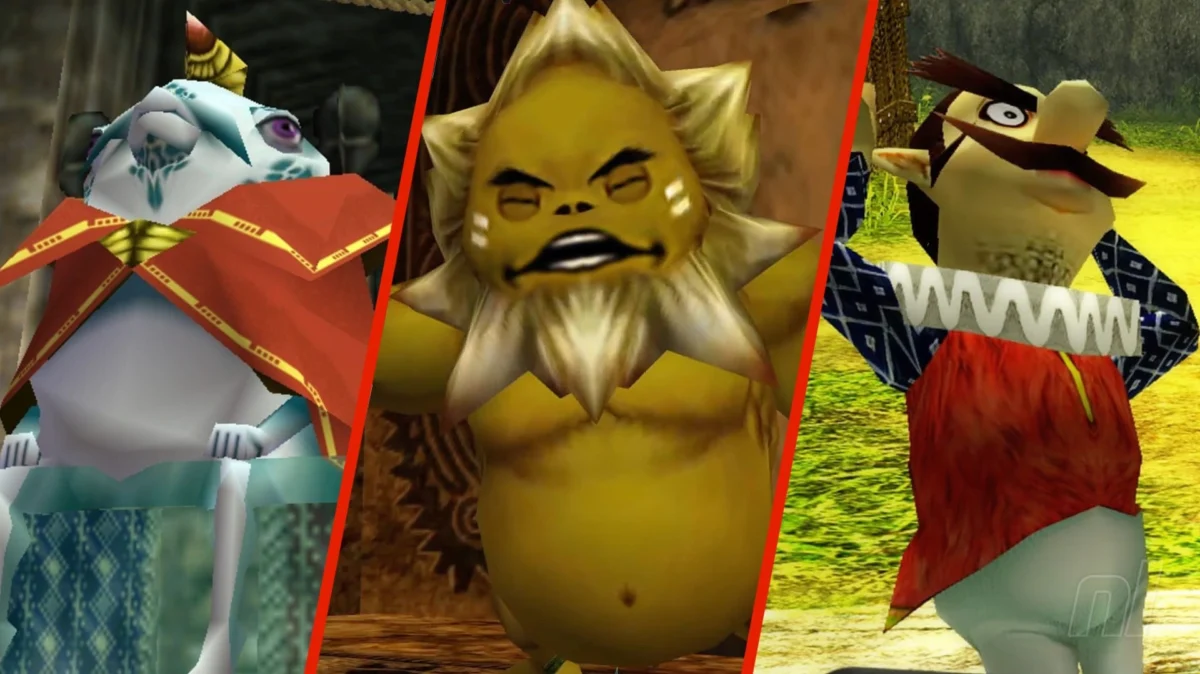
The impending announcement of a remake of the seminal Nintendo 64 title, The Legend of Zelda: Ocarina of Time, for the forthcoming Nintendo Switch 2 console has ignited a fervent desire among fans to revisit the original masterpiece. As players prepare to embark on Link’s epic journey once more, many are rediscovering a facet of the game that often gets overshadowed by its grand narrative and groundbreaking gameplay: its surprising and enduring sense of humor.
While Ocarina of Time is widely celebrated for its epic scope, its intricate dungeons, and its pivotal role in shaping the 3D adventure genre, a closer inspection reveals a wealth of moments that elicit genuine chuckles and hearty grins. This comedic undercurrent, often born from the game’s inherent charm, character quirks, and occasional moments of delightful absurdity, stands in stark contrast to the darker, more oppressive narrative of Ganondorf’s tyranny. As the gaming world anticipates how these beloved, often overlooked, humorous sequences will be reimagined with vastly improved visuals on the Switch 2, a retrospective look at some of the game’s most hysterical moments offers a compelling glimpse into its multifaceted appeal.
The Legacy of Laughter: Why Ocarina of Time Still Tickles Our Funny Bones
The enduring appeal of Ocarina of Time is undeniable. Released in 1998, it didn’t just redefine the action-adventure genre; it set a benchmark for storytelling, world-building, and player immersion that continues to influence game design today. However, amidst the sweeping vistas of Hyrule Field, the tense encounters with formidable bosses, and the poignant narrative of a hero destined to save the world, lies a surprising vein of comedic gold.
For many, the memory of Ocarina of Time is colored by its darker themes – the impending doom of Hyrule, the grim determination of Link, and the sheer menace of Ganondorf. Yet, it is precisely this juxtaposition of lightheartedness against a backdrop of peril that makes the game’s humor so effective and memorable. These moments, often born from character interactions, unexpected animations, or cleverly designed gameplay mechanics, serve as welcome respites, reminding players that even in the face of overwhelming darkness, there is room for levity and joy.
The prospect of a Ocarina of Time remake on the Switch 2 raises fascinating questions about how these comedic scenes will translate. Will the enhanced graphical fidelity amplify the humor, or could it inadvertently strip away the charm that made these moments work in the first place? For instance, the thought of a hyper-realistic King Zora, a character whose comical, slow-moving shuffle is a highlight for many, potentially appearing unsettling in a modern engine, is a testament to the unique artistic choices that defined the N64 era. It is a delicate balance between modernization and preservation, a challenge that Nintendo developers will undoubtedly be keenly aware of.
This exploration delves into seven such hysterical moments that have stood the test of time, moments that players are eagerly anticipating seeing reimagined. These are the scenes that, despite the game’s serious undertones, consistently bring a smile to players’ faces, and which we hope will retain their comedic impact in the upcoming remake.
Seven Hilarious Moments Reimagined for a New Generation
As anticipation for the Switch 2 remake builds, it’s worth revisiting the moments that have consistently brought laughter to players’ faces. These are not mere footnotes in the grand tapestry of Hyrule, but integral parts of the game’s character and charm.
1 Darunia’s Unbridled Joy: The Goron Leader’s Dance
Upon first meeting Darunia, the stoic leader of the Gorons, he is a figure burdened by the weight of his people’s plight and the oppressive presence of King Dodongo. His initial demeanor is one of gruffness and disinterest. However, the game masterfully reveals that music is not only a key to unlocking Hyrule’s secrets but also a powerful conduit to Darunia’s heart.
The moment Link plays Saria’s Song on his Ocarina is a pivotal turning point. Darunia, visibly moved, erupts into an impromptu dance that is nothing short of spectacular. His movements, characterized by wild head-bobbing, enthusiastic arm-waving, and exclamations of "C’mon!" and "WHOOOOAH!", are a pure, unadulterated expression of joy. This scene perfectly encapsulates the game’s ability to inject personality and humor into its characters, transforming a seemingly gruff warrior into a jubilant dancer. The raw, uninhibited nature of his dance, coupled with his vocalizations, creates a moment of pure, unadulterated fun that is both endearing and laugh-out-loud funny. The sheer energy and unexpectedness of this outburst are what make it so memorable.
The potential for this scene in a remake is immense. Imagine Darunia’s enthusiastic movements rendered with fluid, expressive animation, his roars of joy echoing with a newfound resonance. The detail in his facial expressions, the subtle nuances in his body language – all could contribute to an even more impactful and humorous rendition of this iconic moment. The contrast between his initial stoicism and this explosion of mirth is a comedic goldmine, and its reimagining is a prospect that many fans are eagerly awaiting.
2 The Goron Group Hug: A Crushing Welcome
Following Link’s triumph over King Dodongo, a rather peculiar yet hilarious exchange takes place. While Darunia’s hearty pat on Link’s head is a gesture of gratitude, it’s the subsequent arrival of two other Gorons that truly elevates the scene’s comedic value. These two Gorons descend from above, seemingly with the sole intention of engulfing Link in a massive, boulder-like embrace.
The absurdity of this "Goron group hug" is amplified by the sheer unexpectedness and the slightly unsettling manner in which they approach. Link, understandably, is not keen on being crushed by these rolling behemoths. His immediate, panicked reaction – a desperate sprint to escape their crushing affection, punctuated by a scream of sheer terror – is the comedic punchline that seals the deal. The visual of Link scrambling away from his well-meaning, albeit overly enthusiastic, Goron allies is a masterclass in slapstick.
The "creepy" nature of their descent, coupled with Link’s visceral, over-the-top reaction, creates a perfect storm of comedic timing. The visual gag of being ambushed by affectionate, giant rock creatures, and Link’s frantic escape, is a testament to the game’s knack for weaving humor into unexpected situations. In a remake, the physics and animation could lend an even greater sense of peril and panic to Link’s escape, making the visual of him fleeing from these well-intentioned but terrifyingly strong Gorons even more comical. The exaggerated scream, a hallmark of early 3D gaming, could be further enhanced to heighten the comedic effect.
3 Kaepora Gaebora’s Punishing Patience: The Owl’s Devious Design
While not a laugh-out-loud moment in the traditional sense, the recurring interactions with Kaepora Gaebora, the wise old owl, offer a unique brand of humor rooted in player frustration and developer ingenuity. Kaepora Gaebora is notorious for his lengthy, often redundant, exposition. However, the true comedic brilliance lies in the game’s subtle, yet effective, method of punishing impatient players.
Nintendo’s clever design choice to mix up the confirmation options when cycling through Kaepora Gaebora’s dialogue is a stroke of mischievous genius. For players who are eager to press forward and mash the ‘A’ button, repeatedly selecting the "wrong" confirmation can lead to being forced to listen to the entire spiel all over again. This deliberate design choice feels less like an error and more like a calculated move to teach players the virtue of patience.
The humor here is derived from the shared experience of countless players who have fallen prey to this seemingly simple, yet utterly devious, trap. It’s a moment of "aha!" realization, followed by a chuckle of acknowledgment at Nintendo’s playful trickery. The question, "Did you get all that?" posed by Kaepora Gaebora, takes on a new, ironic meaning when the player has just been subjected to a repetitive lecture due to their own haste. This subtle meta-humor, playing on the player’s desire for efficiency, is a testament to the game’s clever writing and understanding of player psychology. A remake could potentially lean into this by offering subtle visual cues or even a brief, comical animation of the owl smirking as the player is forced to endure his pronouncements yet again.
4 Koume and Kotake’s Petty Demise: The Gerudo Twins’ Squabble
The defeat of Koume and Kotake, the twin Gerudo sorceresses and adoptive mothers of Ganondorf, at the climax of the Spirit Temple, is marked by a surprisingly humorous exchange in their final moments. Rather than a dignified fade into oblivion, the twins engage in a petty, bickering argument about their age and impending demise.
Their lament that they are "too young to die," immediately followed by a squabble over who is older, injects a layer of absurd humor into their villainous exit. This back-and-forth escalates until they both seem to simply give up, floating away into the ethereal unknown while promising to haunt Link. This interaction is a brilliant showcase of Ocarina of Time‘s sharp writing, which, for its time, was remarkably nuanced and often humorous.

The humor lies in the unexpected banality of their final moments. Despite their power and malevolent intentions, their final exchange devolves into a petty sibling rivalry. The image of these formidable sorceresses squabbling like children over their age as they perish is both dark and undeniably funny. It humanizes them in a peculiar way, making their defeat all the more memorable. A remake could amplify this by adding more expressive animations to their bickering, perhaps with subtle visual cues of their growing frustration with each other, making their final moments even more comically pathetic.
5 Ingo’s Humiliation: The Lon Lon Ranch Meltdown
Ingo, the conniving caretaker of Lon Lon Ranch, is an antagonist who is universally disliked. His betrayal of Talon and his allegiance with Ganondorf make him a truly despicable character. This makes his eventual downfall all the more satisfying, and, crucially, hilarious. After Link defeats him in two consecutive horse races to reclaim Epona and freedom for the ranch, Ingo’s reaction is a sight to behold.
He clutches his head in disbelief and moans about his defeat, his composure completely shattering. The visual of his meltdown, his once arrogant demeanor replaced by sheer, unadulterated despair, is a moment of pure comedic schadenfreude. The game offers a perfect payoff for the player’s efforts, allowing them to revel in the humiliation of a truly detestable character.
The satisfaction derived from Ingo’s defeat is amplified by the sheer theatricality of his breakdown. His dramatic clutching of his head and his anguished moans are exaggerated to the point of being comical. The player’s triumph is not just in winning the races, but in witnessing the complete unraveling of Ingo’s ego. The wish for more opportunities to humiliate him, expressed by many players, is a testament to how effectively this scene lands its comedic punch. A remake could enhance this by adding more expressive facial animations and vocalizations to Ingo’s meltdown, making his despair even more comically over-the-top.
6 Princess Ruto’s Amorous Advances: A Shocking Embrace
When Link first encounters Princess Ruto within the cavernous depths of Lord Jabu-Jabu’s belly, she presents herself as a spoiled and demanding princess, insistent that Link carry her to retrieve the Zora’s Sapphire. However, as their shared ordeal concludes and they emerge back into the daylight, Ruto’s demeanor takes a surprising and comedic turn.
Upon their return to the surface, Ruto, seemingly smitten by Link’s heroic actions, decides that he is the one for her. Her immediate and unusually intimate approach towards Link catches him completely off guard. Link’s reaction is a perfect embodiment of youthful awkwardness and alarm. He recoils in horror, stumbles backward, and falls unceremoniously into the water, letting out that characteristically over-the-top scream that has become a beloved staple of the game.
The humor in this scene stems from the stark contrast between Ruto’s sudden romantic overtures and Link’s pure, unadulterated panic. The visual of the young hero being aggressively pursued by a princess who has just declared her affection, leading to his clumsy fall and terrified shriek, is a masterclass in comedic timing and character reaction. The remake could amplify this by enhancing the animation of Link’s recoil and fall, making his panicked scream even more comically exaggerated, and perhaps adding a subtle, knowing smirk to Ruto’s expression as she witnesses his flustered reaction.
7 King Zora’s Prolonged Shuffle: The Unforgettable Farewell
Perhaps one of the most enduringly hilarious moments in Ocarina of Time is the encounter with King Zora. After Link presents Princess Ruto’s letter, the colossal Zora monarch slowly, deliberately, shuffles out of the way to allow passage. What begins as a simple movement quickly devolves into an extended, almost comically protracted, shuffle.
The humor lies in the sheer, unwavering persistence of King Zora’s shuffle. Just when you think he might be done, he continues to move, and move, and move. It’s an utterly ridiculous spectacle that stretches on, becoming increasingly absurd with each passing moment. This seemingly simple animation has garnered a reputation as one of the game’s funniest, a testament to its unexpected and prolonged silliness.
The fear among many fans is that a remake might, in an effort to streamline gameplay or modernize pacing, shorten this beloved sequence. The very notion of King Zora’s shuffle being anything less than gloriously, comically long is met with apprehension. The request is clear: if anything, Nintendo should consider making it even longer. The humor is derived from its sheer, unadulterated, and prolonged absurdity. A remake that shortens this would be a disservice to the game’s legacy of unexpected comedic gems.
The Implications for the Switch 2 Remake
The enduring humor of Ocarina of Time presents a unique challenge and opportunity for Nintendo’s development team tasked with its remake. The success of these comedic moments hinges not just on the visual fidelity, but on the subtle nuances of animation, voice acting (where applicable), and comedic timing.
Preserving the Essence: The primary concern for fans is that the remake will retain the spirit of these humorous scenes. The charm of Darunia’s dance, the slapstick of the Goron hug, the mischievousness of Kaepora Gaebora, the petty squabble of Koume and Kotake, the satisfying humiliation of Ingo, the awkwardness of Ruto’s advances, and the sheer, prolonged absurdity of King Zora’s shuffle are all deeply ingrained in the game’s identity. Over-polishing or attempting to "fix" these moments could inadvertently strip them of their comedic impact.
Enhancing Through Technology: Conversely, the advancements in technology offer the potential to elevate these moments. More sophisticated animation systems could bring greater expressiveness to character movements and reactions. Improved facial rendering could capture subtle comedic expressions with greater detail. High-fidelity audio could enhance the impact of vocalizations and sound effects, making Link’s screams even more comically frantic or Darunia’s roars of joy more boisterous.
The Risk of Over-Realism: A potential pitfall lies in the pursuit of hyper-realism. As mentioned, a highly realistic King Zora might indeed appear more unsettling than amusing. The developers will need to strike a delicate balance, ensuring that the visual style complements the comedic intent rather than undermining it. The quirky, somewhat stylized nature of the original N64 graphics contributed to the charm of these humorous moments.
Player Expectations and Nostalgia: The strong emotional connection players have with Ocarina of Time means that expectations for the remake are incredibly high. Nostalgia plays a significant role, and any deviation from the beloved original, particularly in these cherished comedic sequences, could be met with disappointment. Nintendo’s approach will need to be one of careful consideration, respecting the source material while also leveraging the capabilities of the new hardware.
A Testament to Enduring Design: Ultimately, the continued appreciation for Ocarina of Time‘s humor is a testament to the game’s timeless design. These moments, born from clever writing, characterful animation, and an understanding of what makes players laugh, have transcended generations. As we eagerly await the Switch 2 remake, the anticipation is not just for a visually stunning retelling of a classic story, but for the opportunity to revisit these hilarious encounters and experience them anew, hopefully with the same joy and laughter they have always provided.
Ocarina of Time is a game that, despite its epic narrative, understands the importance of a well-placed chuckle. These seven moments are just a glimpse into the rich tapestry of humor woven into its fabric. As the gaming world gears up for the Switch 2 remake, the hope is that Nintendo will honor this comedic legacy, delivering a reimagining that is not only a faithful recreation but a joyous celebration of all that made the original so unforgettable, laughter included.
If there are any other moments of levity or unexpected humor within the vast world of Hyrule that you believe have been egregiously missed in this discussion, please do share them in the comments below. The collective memory of the Zelda community is a treasure trove, and we are eager to hear your own favorite comedic recollections.


 Lina Irawan
 Sagoh
Sagoh