Neng Nana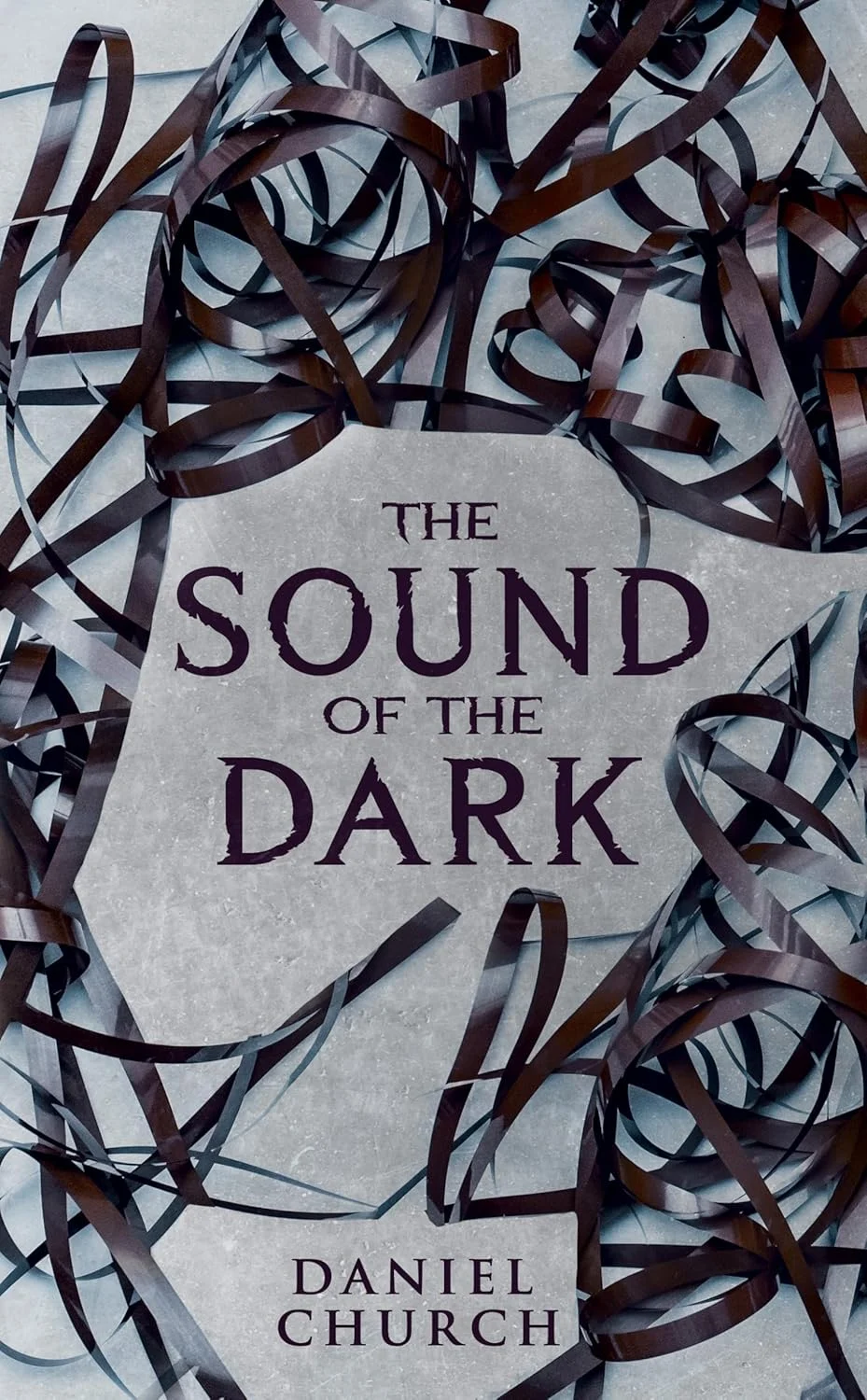
In the landscape of contemporary horror, few novels manage to bridge the gap between the grounded, investigative grit of true crime and the unfettered, reality-bending dread of cosmic horror. Daniel Church’s latest offering, The Sound of the Dark, achieves this volatile fusion with startling efficacy. By centering its narrative on a disillusioned podcaster who stumbles upon a decades-old, blood-soaked tragedy, Church crafts a story that is as much about the persistence of trauma as it is about the terrors that lurk in the static of an old cassette tape.
The Premise: When the Investigation Becomes the Infection
The protagonist, Cally Darker, is a character defined by her displacement. A depressed true crime podcaster living in Manchester, she finds herself stifled by an unsupportive partner and a life that feels increasingly stagnant. Her catalyst for change arrives in the form of an anonymous tip regarding a horrific 1983 family annihilation—a case where experimental artist Tony Mathias murdered his wife and children before taking his own life.
Driven by a need for purpose and a desire to escape her crumbling domestic life, Cally relocates to the quiet, ominous countryside near the site of the crime: the abandoned Warden Fell RAF base. What follows is a narrative that begins as a slow-burn investigative mystery before spiraling into a visceral, "gonzo" horror experience. As the tagline warns, "Don’t Press Play," a directive Cally eventually ignores, inadvertently inviting the same malevolent forces that consumed Mathias into her own psyche.
Chronology of a Descent
The structural evolution of The Sound of the Dark is central to its effectiveness. The novel can be segmented into three distinct phases:
Phase I: The Investigative Leisure (The Slow Burn)
The first quarter of the novel operates with the deliberate pacing of a classic Agatha Christie mystery. Cally interviews the survivors—Tony’s sister, his former agent, and the local landlady—to piece together why a "gentle soul" would commit such a heinous act. These early chapters are rich in atmosphere, utilizing regional UK accents and character-driven dialogue to ground the reader in a sense of place. While some interactions may feel repetitive, they serve to build the enigma of Tony Mathias, creating a foundation of normalcy that makes the subsequent supernatural intrusion feel more jarring.
Phase II: The Auditory Contagion
Midway through the book, the tone shifts dramatically. Upon digitizing Tony’s original audio tapes, Cally finds evidence of the paranormal. The horror here is both intimate and cosmic. As she listens to the tapes, she begins experiencing vivid, nightmarish hallucinations. This section marks the transition from investigative procedural to unchained horror. The pacing accelerates, the descriptions become increasingly bodily, and the threat moves from the historical past to the immediate present.
Phase III: The Lovecraftian Climax
The final act brings Cally and her allies to Warden Fell for a climactic showdown. Reminiscent of John Carpenter’s In the Mouth of Madness, the finale is a battle for the fate of reality. Cally’s journey, which began as a professional investigation, concludes as an existential struggle, mirroring her personal battle with mental health and the external threat of the Warden Fell entities.
Supporting Data: Examining the Mechanics of Fear
Church utilizes several literary devices to sustain the tension throughout the novel. Among these is the meta-fictional interplay between the reader and the text.
- The Podcast Framework: While Cally is a podcaster, the novel does not lean heavily into the ethics of the medium. Instead, the podcast serves as a structural scaffold for the narrative, allowing for the introduction of interview transcripts and historical background without stalling the forward momentum.
- The "Curse" Trope: Unlike many modern horror novels that rely on fourth-wall-breaking, "you are now cursed" tropes, Church opts for a more subtle approach. By focusing on the contagion spreading through audio recordings, the author leaves the reader with a lingering sense of unease. The suggestion of being cursed is treated as far more potent than an explicit statement, allowing the horror to feel "infectious" without resorting to gimmicks.
- Audio as a Medium of Terror: The focus on tapes—audio diaries and field recordings from the RAF base—suggests that the book might have found an equally successful home as a fictional podcast. The sensory nature of the horror makes the written descriptions of the "sounds of the dark" feel particularly intrusive and terrifying.
Official Critiques and Narrative Implications
Despite its strengths, The Sound of the Dark is not without its narrative idiosyncrasies. Critics have noted that the novel relies heavily on exposition dumps. The transition from mystery to horror is occasionally interrupted by sudden, long-winded dialogues with characters who appear only briefly to deliver essential, reality-shattering information.
For instance, the pivot point in the mid-section is triggered by a Skype call with a character who never reappears. Later, as the stakes hit their zenith, the narrative pauses for multiple chapters in a new character’s living room to detail a backstory. While these moments can be seen as an interruption to the tension, they serve the purpose of world-building in a Lovecraftian sense, grounding the cosmic threats in a history that feels ancient and insurmountable.
Thematic Resonance: Mental Health and Cosmic Horror
A defining feature of Cally’s journey is the parity between her internal struggle and the external evil. The novel does not treat Cally’s depression as a mere plot device; it is a lens through which the supernatural is viewed. The "dark" in the title is dualistic—representing both the literal shadows of Warden Fell and the internal abyss of the human mind. Her ability to face the horror is inextricably linked to her reconciliation with her own history, making the climax a satisfying, if harrowing, conclusion to her character arc.
Conclusion: A Leap of Faith into the Unknown
The Sound of the Dark is a rare example of a genre-hybrid that succeeds in its ambition to be both a haunting mystery and a full-throttle horror experience. It respects the reader’s intelligence, inviting them to theorize about the nature of Tony Mathias’s madness while providing a narrative that refuses to deflate once the curtain is pulled back.
While it is occasionally hindered by excessive exposition, these moments are outweighed by the sheer audacity of the book’s vision. For those who enjoy the investigative style of classic detective fiction but crave the high-stakes, Lovecraftian dread of modern cosmic horror, this novel is an essential read. It is a work that demands a "leap of faith" from its audience—one that, once taken, is unlikely to be forgotten. As Cally Darker learns, some tapes are better left unplayed, but for the reader, the risk of pressing play is entirely worth the reward.
About the Author:
This review and summary were prepared in light of the release of "The Sound of the Dark" by Daniel Church. The novel is currently available for readers seeking a deep, atmospheric dive into the intersection of modern technology and ancient, unknowable terror.


 Layla Zulfa
 Ali Ikhwan