Azzam Bilal Chamdy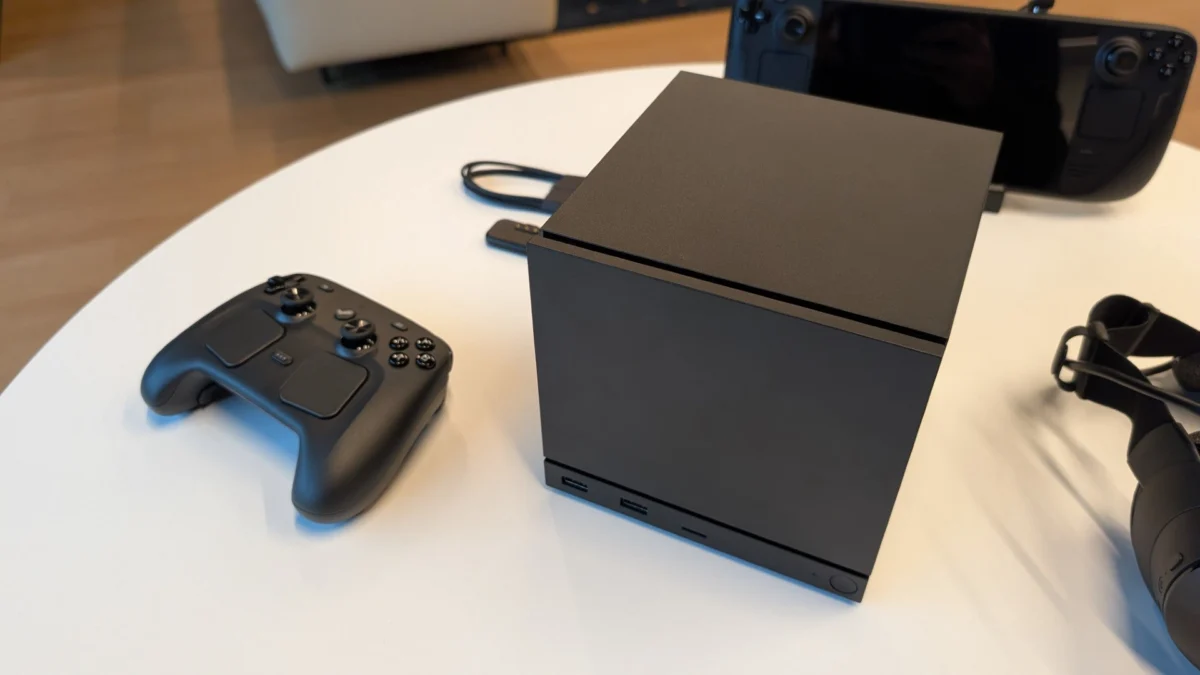
Valve Corporation has officially rolled out a significant update to SteamOS, marking a pivotal moment in the company’s hardware trajectory. While the update is immediately accessible to the millions of Steam Deck users worldwide, its underlying architecture signals a much broader ambition: the upcoming launch of the next-generation "Steam Machine" and a continued push into living-room gaming dominance.
This release, which follows an extensive beta testing period, serves as a bridge between the portable success of the Steam Deck and the future of Valve’s desktop-console hybrid hardware. As the industry grapples with supply chain volatility and the shifting demands of modern PC gaming, Valve’s latest software iteration demonstrates a sophisticated approach to hardware-agnostic platform development.
The Core Developments: What’s New in SteamOS?
The latest SteamOS patch is far more than a routine maintenance update; it is a foundational shift. For the average user, the most immediate benefits involve improved hardware compatibility and performance stability. However, beneath the surface, the update lays the technical groundwork for Valve’s 2026 hardware rollout.
Key Technical Enhancements
- Networking and Update Delivery: The OS now features a significantly optimized update delivery system. Valve has addressed the latency and throughput issues that previously hindered large system updates, ensuring that future firmware deployments—particularly for the resource-heavy Steam Machine—can be pushed via high-speed connections with minimal downtime.
- Display and Visual Fidelity: A major overhaul in the Linux display server protocol has unlocked native support for external HDR (High Dynamic Range) displays and VRR (Variable Refresh Rate) technology. This is a critical move for Valve, as it aligns their ecosystem with the current standards of high-end PC gaming monitors and living-room television sets.
- Desktop Mode Optimization: Users frequently report a discrepancy in performance between the curated "Game Mode" and the more flexible "Desktop Mode." This update directly addresses those bottlenecks, streamlining system resources to ensure that the transition between the two modes is seamless.
- Peripheral Support: In a nod to the growing community of simulation enthusiasts, the update introduces improved drivers for a wider array of USB racing wheels and specialized input devices, ensuring that the "Steam Machine" can function as a true high-end console replacement for diverse gaming genres.
Chronology: The Road to 2026
Valve’s journey toward this specific hardware iteration has been defined by a mix of innovation and well-documented delays.
- Early 2024: Rumors regarding a revival of the "Steam Machine" concept began to circulate as Valve signaled an interest in expanding beyond handheld hardware.
- Late 2024: Initial beta tests for the new SteamOS build surfaced, hinting at deeper integration for non-handheld configurations.
- Summer 2025: Valve officially confirmed that the new Steam Machine—and a revamped Steam Controller—were slated for a release the following year, though supply chain warnings began to dampen investor expectations.
- Early 2026: The current SteamOS update arrives as the final pre-launch "soft" test, ensuring that the software stack is battle-tested before the physical hardware reaches consumers.
Supporting Data and the "Hardware Crunch"
Valve’s hardware ambitions are currently navigating a turbulent technological landscape. The industry at large is facing significant pressure from global RAM shortages—a phenomenon exacerbated by the massive demand for generative AI infrastructure.
Industry analysts have pointed out that the cost of entry for a high-performance Steam Machine is currently a moving target. With the rising costs of silicon and specialized memory, Valve is facing the challenge of pricing its hardware competitively while maintaining the premium performance that the brand has become known for. While the company has not yet released official MSRPs, the industry consensus suggests that the upcoming Steam Machine will sit in the premium tier of the market, likely costing significantly more than a standard console but offering the modularity and power of a desktop workstation.
Official Responses and Developer Sentiment
In statements released alongside the update, Valve engineers emphasized that the "initial support" for the Steam Machine is a modular effort. By utilizing the same kernel for both the Steam Deck and the upcoming desktop hardware, Valve is creating a unified "Steam ecosystem."
"Our goal is to ensure that a game optimized for the Steam Deck is not just compatible, but enhanced, when played on a high-powered Steam Machine," said a representative close to the development team.
However, the response from the user community—as seen on the official Steam forums—is characteristic of the platform’s passionate, if critical, user base. While many users have praised the improved charging logic for the Steam Deck OLED and the new hibernation support for the LCD model, a vocal segment of the community has reported "regressions" in stability. Valve has historically been quick to address these via "hotfix" patches, and the company remains in a state of constant, iterative development.
Implications for the Future of Gaming
The implications of this update go far beyond a simple list of patch notes. Here is how this shift will likely impact the broader gaming industry:
1. The Death of the "Proprietary Console" Era
By standardizing SteamOS across different hardware form factors, Valve is effectively turning the "Console" concept on its head. Users are no longer tied to the performance ceiling of a single piece of hardware; instead, they are buying into a software service that scales with their investment. Whether you are playing on a handheld, a mini-PC, or a high-end gaming tower, the interface and library remain identical.
2. The VR/XR Question
A notable omission in this update is any substantial preparation for "Steam Frame," the rumored virtual reality peripheral. While the update improves HDR and VRR—technologies that are vital for high-end VR—there was no direct mention of the new VR hardware in the latest patch notes. This suggests that while the Steam Machine is nearing completion, Valve’s VR efforts remain in a separate, more secretive development track.
3. Linux as a Gaming Powerhouse
Valve has arguably done more for Linux gaming in the last five years than any other organization in history. By refining the display server protocols and memory management on discrete GPU platforms, Valve is making it easier for third-party developers to port games to Linux. This creates a virtuous cycle: more games on Linux leads to more users, which leads to more hardware sales, which ultimately bolsters the Steam Machine platform.
Conclusion: A Platform, Not Just a Product
The latest SteamOS update is a testament to Valve’s philosophy of "infinite iteration." By refusing to treat hardware as a static, once-and-done purchase, Valve is positioning itself to remain the dominant force in the PC gaming space for the next decade.
While the "eleventy thousand pounds" price tag remains a point of dark humor among the community, the value proposition is becoming clearer: Valve is offering a gateway to a platform that is platform-agnostic, open, and increasingly powerful. As we head toward the summer of 2026, the question is no longer whether Valve can build a console, but whether the industry is ready to accept a future where the hardware is merely a delivery mechanism for the all-encompassing Steam experience.
For now, users are encouraged to update their Steam Decks to the latest build, test the new features, and prepare for the next chapter of PC gaming. Whether the new Steam Machine will be the "god-feared" device that changes the market remains to be seen, but with this update, the foundation has been firmly laid.


 Asro
Asro
 Muslim