

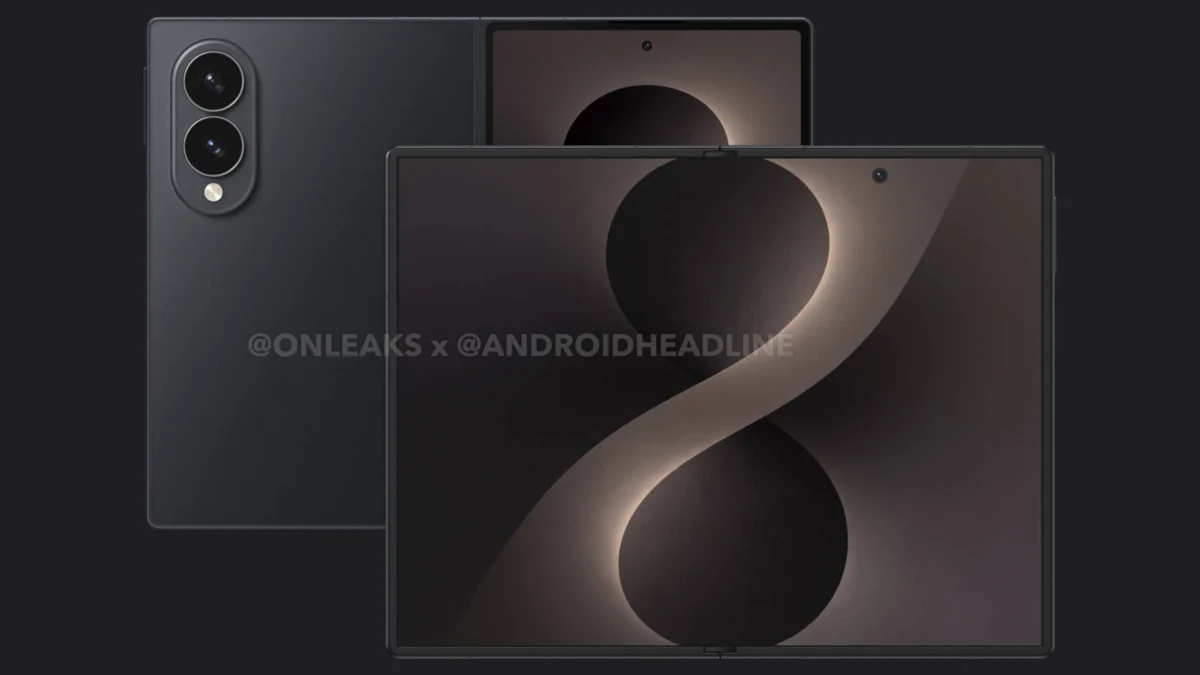
The smartphone industry is bracing for a significant transformation this July, as Samsung is widely expected to unveil its next generation of foldable devices. While the market has grown accustomed to the iterative updates of the Galaxy Z Fold and Z Flip series, the upcoming launch promises a divergence in strategy. Central to the chatter is the emergence of a new model, tentatively titled the "Galaxy Z Fold 8 Wide," which aims to challenge the ergonomic and functional limitations that have historically defined the foldable category.
According to a comprehensive leak from the Greek tech publication TechManiacs, Samsung is preparing to introduce a trio of devices: the standard Galaxy Z Fold 8, the compact Galaxy Z Flip 8, and the experimental, highly anticipated Galaxy Z Fold 8 Wide.
Main Facts: A New Direction for Form Factors
The primary differentiator for the Galaxy Z Fold 8 Wide lies in its aspect ratio and portability. For years, critics have noted that Samsung’s standard "Fold" series felt narrow when closed, making the cover screen somewhat cramped for typing or long-form reading. The "Wide" variant appears to be a direct answer to these consumer pain points.
The Galaxy Z Fold 8 Wide at a Glance
- Display: A 7.6-inch internal folding display with a more traditional 4:3 aspect ratio, optimized for media consumption and multitasking.
- Portability: A groundbreaking 200-gram chassis, making it lighter than the current flagship Galaxy S26 Ultra (214 grams) and remarkably close to the S26 Plus (190 grams).
- Performance: Powered by the cutting-edge Snapdragon 8 Elite Gen 5 processor, ensuring top-tier performance.
- Imaging: A dual 50MP setup for the main and ultrawide sensors, prioritizing image clarity and color accuracy.
- Battery and Charging: A 4,800mAh battery paired with 45W wired charging capabilities.
In contrast, the standard Galaxy Z Fold 8 is positioned as the "power user" device. It is rumored to feature a larger 8-inch internal display and a 6.5-inch cover screen, paired with a substantial 5,000mAh battery. The standout feature here is the inclusion of a 200MP main camera sensor, signaling that Samsung is not ready to compromise on sheer imaging hardware for its flagship foldable.
Chronology of Foldable Evolution
To understand the significance of this upcoming launch, one must look back at the trajectory of the Galaxy Z Fold line.
- 2019: The Genesis: The original Galaxy Fold introduced the concept of the hinge-based smartphone. While revolutionary, it was plagued by durability concerns and a clunky design.
- 2020-2022: Refinement Era: The Z Fold 2 through Z Fold 4 introduced the "Armor Aluminum" frames, water resistance (IPX8), and improved hinge mechanisms. Samsung solidified the "tall and narrow" aspect ratio as its signature look.
- 2023-2024: The Competition Heats Up: Competitors from China, including Honor, Xiaomi, and OnePlus, began releasing foldables that were thinner, lighter, and featured more "normal" aspect ratios than Samsung’s offerings.
- 2025: The Turning Point: Following the release of the Galaxy S26 series, Samsung faced pressure to harmonize its foldable user experience with its traditional flagship slab phones.
- 2026: The July Launch: The upcoming July 2026 event represents the most significant diversification of the brand’s portfolio to date, with the Z Fold 8 Wide serving as a direct competitor to the "thin-and-light" foldable trend.
Supporting Data: Why "Wide" Matters
The technical specifications revealed by the TechManiacs report suggest that Samsung has solved a major engineering hurdle: weight distribution. Achieving a 200-gram weight for a device with a 7.6-inch internal display suggests a significant advancement in hinge materials and battery-layering technology.
Comparison Table: Weight and Display
| Device | Weight (g) | Internal Screen | Primary Camera |
|---|---|---|---|
| Galaxy Z Fold 8 | ~245 (est) | 8.0-inch | 200MP |
| Galaxy Z Fold 8 Wide | 200 | 7.6-inch | 50MP |
| Galaxy S26 Ultra | 214 | N/A (Slab) | 200MP |
| Galaxy S26 Plus | 190 | N/A (Slab) | 50MP |
The data shows that the Wide variant bridges the gap between the ultra-premium S-series and the foldable series. By keeping the weight at 200 grams, Samsung is effectively removing the "bulk factor" that previously discouraged users from upgrading to a foldable. Furthermore, the 4:3 aspect ratio is a strategic choice; it is widely considered the "sweet spot" for video playback and document viewing, as it minimizes the letterboxing that occurs on taller, narrower displays.
Official Responses and Industry Context
While Samsung has not issued an official press release confirming these specific models, the company has frequently hinted at "expanding the foldable experience" in recent earnings calls. Samsung Mobile’s leadership has often emphasized that the "next phase" of foldable growth will rely on diversifying the form factor to meet different lifestyle needs.
Industry analysts suggest that Samsung is feeling the heat. In key markets like China and Europe, the brand has seen its market share among foldables slip as consumers opt for devices that feel more like standard smartphones when folded. By splitting the line into the "standard" powerhouse and the "wide" ergonomic device, Samsung is executing a classic segment-targeting strategy.
Implications: The Future of the Foldable Market
The implications of these leaks are profound for both the manufacturer and the end user.
1. Market Segmentation
Samsung is moving away from a "one-size-fits-all" foldable strategy. If successful, the Galaxy Z Fold 8 Wide could eventually replace the standard Fold, or coexist as a specialized tool for productivity-focused professionals who prioritize screen real estate and media consumption over maximum zoom capabilities.
2. The Death of the "Narrow" Fold
For years, the narrow cover screen was a trademark of the Galaxy Z Fold series. If the Z Fold 8 Wide is met with strong sales, it serves as an implicit admission from Samsung that the narrow design was a limitation. This shift will likely influence all future design languages for the company’s mobile division.
3. The Camera Trade-off
One of the most interesting observations in the leak is the downgrade from the 200MP sensor on the standard Z Fold 8 to a 50MP sensor on the Wide. This implies that the Wide model is being built with a "thin-first" philosophy. Engineering a camera module capable of 200MP resolution usually requires significant physical depth. By opting for a 50MP sensor, Samsung is likely saving millimeters of internal space, which is essential to achieving that 200-gram weight goal.
4. Software Optimization
The shift to a 4:3 ratio on the Wide variant necessitates significant software optimization. Samsung’s One UI will need to adapt its multitasking grid to better utilize the wider canvas. This suggests that the July launch will be as much about software innovation—specifically in how apps scale across the hinge—as it is about hardware.
Conclusion
The Galaxy Z Fold 8 and its "Wide" sibling represent a pivotal moment for Samsung. By listening to the criticisms regarding weight and aspect ratio, the tech giant is attempting to refine the foldable experience into something that is not just a technical marvel, but a practical daily driver for the average consumer.
As we approach July, the anticipation surrounding these devices continues to build. Whether you are a fan of the massive, camera-heavy standard Fold or the sleeker, more portable Wide version, the message from Samsung is clear: the era of the "experimental" foldable is over, and the era of the "essential" foldable has begun. Investors and tech enthusiasts alike will be watching closely to see if these hardware optimizations can truly capture the mainstream market that has remained hesitant to make the switch.










No comments yet. Be the first to join the conversation!