Lina Hope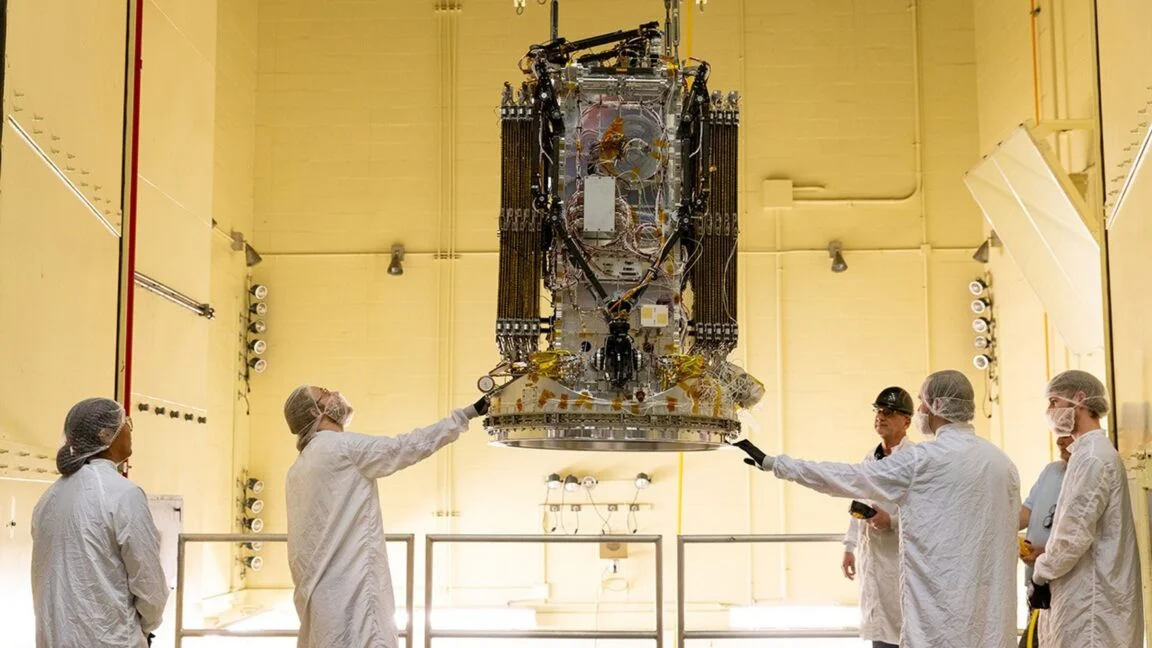
WALLOPS ISLAND, Virginia — In the high-stakes arena of orbital mechanics, gravity is the ultimate antagonist. For the Swift Gamma-Ray Burst Mission, an aging but vital astronomical observatory, that antagonist was winning. But in an unprecedented display of agility and engineering audacity, NASA and startup Katalyst Space Technologies have executed a rescue mission that defies the traditional, often glacial pace of space exploration.
Ten months ago, NASA presented an unconventional challenge to three private firms: Could they design, build, and launch a robotic servicing satellite to save a $500 million asset, all within a single year and on a shoestring budget? While the task seemed Herculean, Katalyst—a Colorado-based startup founded in 2020—stepped forward with a proposal that was as technically audacious as it was programmatically necessary.
The goal is to deploy the "Link" servicing spacecraft, a robotic vessel equipped with three specialized arms, to rendezvous with Swift, latch on, and boost its decaying orbit back to a safe altitude. If successful, it will be the first time a private entity has performed an emergency rescue of a non-cooperative, aging observatory.
The Clockwork Crisis: Why Swift Needed Saving
Launched in November 2004, the Swift observatory was designed to be the world’s premier sentinel for gamma-ray bursts—the most cataclysmic explosions in the known universe. By monitoring the sky in multiple wavelengths, Swift has provided astronomers with a "quick-response" capability, allowing them to pivot the observatory toward transient cosmic events within seconds.
However, after two decades of service, the observatory’s hardware is showing its age. More critically, Swift lacks the onboard propulsion systems necessary to counteract the subtle but relentless drag of the Earth’s upper atmosphere. Launched into an orbit roughly 363 miles (585 km) above the planet, the observatory has seen its altitude steadily decay.
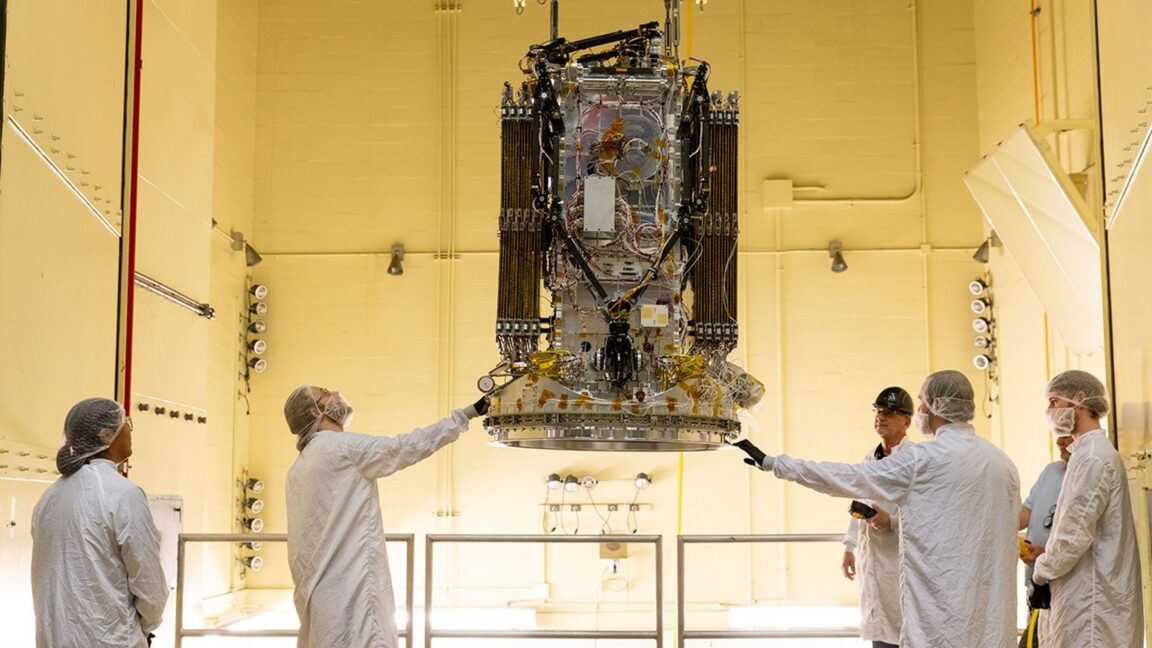
By mid-2026, Swift was flying at just 225 miles (363 km). The situation became dire due to an unexpected variable: the Sun. Current solar activity has been significantly more energetic than predicted, causing Earth’s atmosphere to "puff up" like a heated balloon. This increased atmospheric density creates higher drag, accelerating the decay of satellites in low-Earth orbit. Engineers calculate that by this autumn, Swift will dip below 186 miles (300 km), where the drag becomes so intense that a rescue mission would be physically impossible.
"This is not just any spacecraft," said Shawn Domagal-Goldman, director of NASA’s astrophysics division. "It is a swift observatory that can quickly pivot across the night sky to find things that go boom. We decided we wanted to save this one, but the window of time was rapidly closing."
Chronology of an Urgent Pivot
The timeline for this mission is a masterclass in risk management and rapid iteration. The project moved from concept to launch-readiness in less than a year—a timeframe that, under standard NASA protocols, would typically be consumed by paperwork and initial design reviews.
- August 2025: NASA identifies the critical decay of the Swift orbit and begins informal inquiries into potential recovery solutions.
- September 2025: NASA officially awards Katalyst a $30 million contract to develop the Link servicing spacecraft.
- March 2026: Engineering teams at Katalyst transition from component testing to full-scale assembly. Ars Technica reports on the feverish activity at the Colorado facility, where engineers were integrating fuel tanks, robotic arms, and thrusters in real-time.
- April 2026: The Link spacecraft undergoes rigorous vibration and thermal vacuum testing at NASA’s Goddard Space Flight Center in Maryland, simulating the brutal conditions of launch and the vacuum of space.
- June 2026: The spacecraft is transported to the Wallops Flight Facility for integration with the Pegasus XL rocket.
- June 27, 2026: The scheduled launch date for the rescue mission.
Engineering "The Link": A Case Study in Lean Innovation
Designing a spacecraft capable of "capturing" another, un-designed-for-docking object is a massive engineering challenge. Katalyst had to develop robotic systems that could securely grapple the Swift observatory without damaging its sensitive instrumentation.
To meet the deadline, Katalyst executives discarded the traditional bureaucratic playbook. "We didn’t send out a formal solicitation because we didn’t have the time," Domagal-Goldman admitted. Instead, NASA leveraged existing contracts for technology development, selecting partners who were already in the "work-ready" queue.
Katalyst, already working on a commercial servicing platform, effectively pivoted its internal R&D toward this mission. When suppliers couldn’t meet the aggressive delivery schedule for specific components, the team made the daring choice to manufacture those parts in-house.
"We are in an unusual situation where the schedule dictates how much risk we are willing to accept," said Kieran Wilson, the principal investigator for Link at Katalyst. "The clock is ticking on Swift’s descent, so we have had to find a balance between testing and problem-solving that gives the mission the best chance of success."
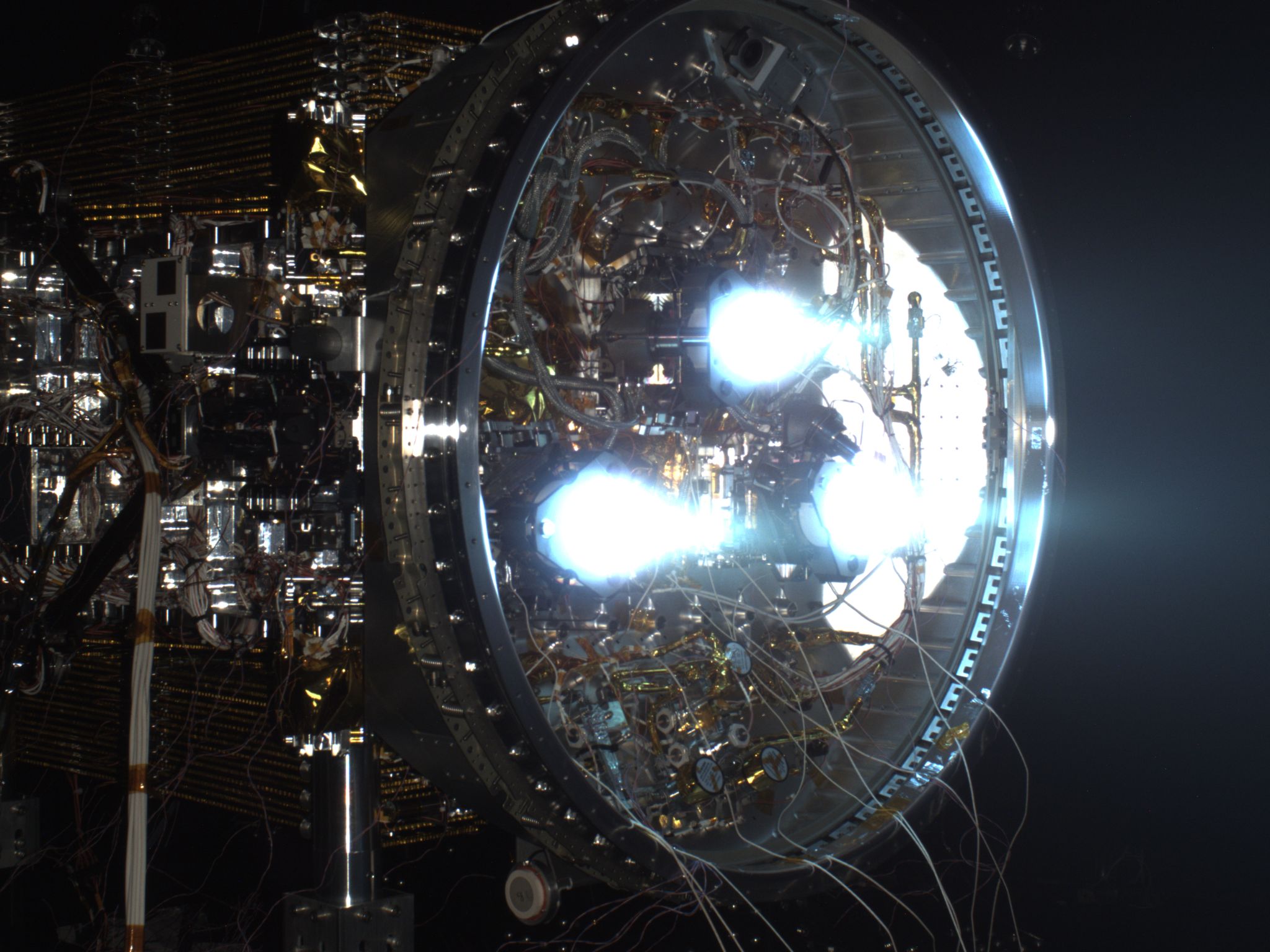
The hardware itself is a marvel of modern efficiency. The Link spacecraft is powered by three xenon-fueled Hall-effect thrusters. These electric propulsion systems are highly efficient, allowing the relatively small spacecraft to carry enough propellant to perform the rendezvous and the subsequent orbital boost without requiring a massive, heavy rocket for its own delivery.
The Pegasus Advantage
The choice of launch vehicle—the Northrop Grumman Pegasus XL—was as strategic as the spacecraft design. The Pegasus is an air-launched vehicle, carried to an altitude of 39,000 feet by a modified L-1011 commercial jet before igniting its three solid-fueled stages.
Because Swift travels in an unusual orbit, covering latitudes between 20 degrees north and south, it is notoriously difficult to reach from standard launch sites like Cape Canaveral without significant, expensive dog-leg maneuvers. The air-launch capability allows the rocket to be released near the equator, providing the perfect trajectory to reach the observatory.
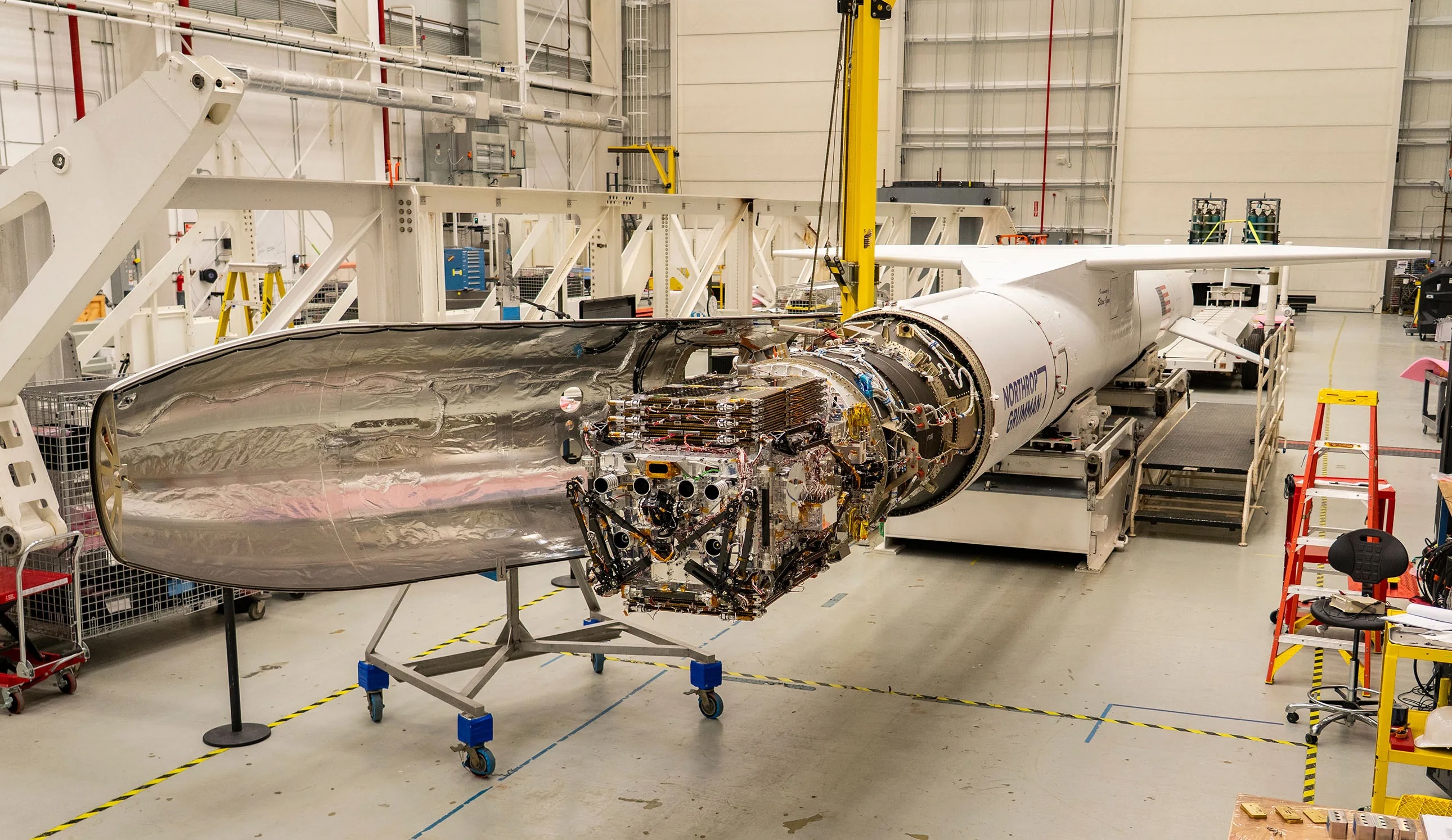
Notably, the rocket used for this mission is the final Pegasus XL scheduled to fly, marking the end of an era for the iconic air-launch system. The rocket was originally part of a pair purchased by the late Paul Allen’s company, Stratolaunch, and later acquired by Northrop Grumman. It represents a piece of aerospace history repurposed for a modern, critical mission.
Implications: A New Template for Space Operations
The success of this mission, regardless of the ultimate outcome once in orbit, has already sent shockwaves through the aerospace industry. By demonstrating that a mission of this complexity can be executed in under a year, NASA has effectively created a new "responsive space" template.
Robert Lamontagne, vice president for strategic partnerships at Katalyst, views the mission as a landmark for the commercial space sector. "Some would call it the first of its kind—a robotic spacecraft that can go and capture an unprepared satellite," Lamontagne said. "It is a commercial mission, first and foremost. It’s not just a demonstration; we’re doing this as a service. This is really a blueprint for future commercial and government partnerships."
The implications for "space debris mitigation" and "orbital servicing" are profound. If the Link mission succeeds, it proves that the life of expensive space assets can be extended significantly. Instead of decommissioning satellites once their fuel or altitude is depleted, future missions could rely on "gas stations in the sky" or "robotic tugs" to maintain orbits indefinitely.
A Residual Risk
Despite the optimism, the team remains clear-eyed about the dangers. "We still have to get the spacecraft on orbit and operate the spacecraft there successfully," Wilson noted. "As we’ve all seen before, that is a very challenging thing to do."

The final hurdle remains the delicate docking maneuver. The Link must approach Swift, navigate its potential tumble, and deploy its arms without causing a collision that could create more space debris. It is a high-wire act performed 200 miles above the Earth.
However, as the countdown to the June 27 launch continues, the mood at Wallops Island is one of cautious triumph. Even if the mission encounters unforeseen difficulties, the process itself has been a victory. As Domagal-Goldman put it, "I consider this a success already, just from the fact that we’re even going to try this."
For the astronomers waiting for the next gamma-ray burst to illuminate the sky, the rescue of Swift represents more than just the salvage of a machine. It represents the maturation of the space industry—a transition from a world of "one-and-done" missions to a future where we possess the agility to reach out and touch the stars, and the capacity to save them when they begin to fall.


 Ali Ikhwan
 Rifan Muazin