Lina Hope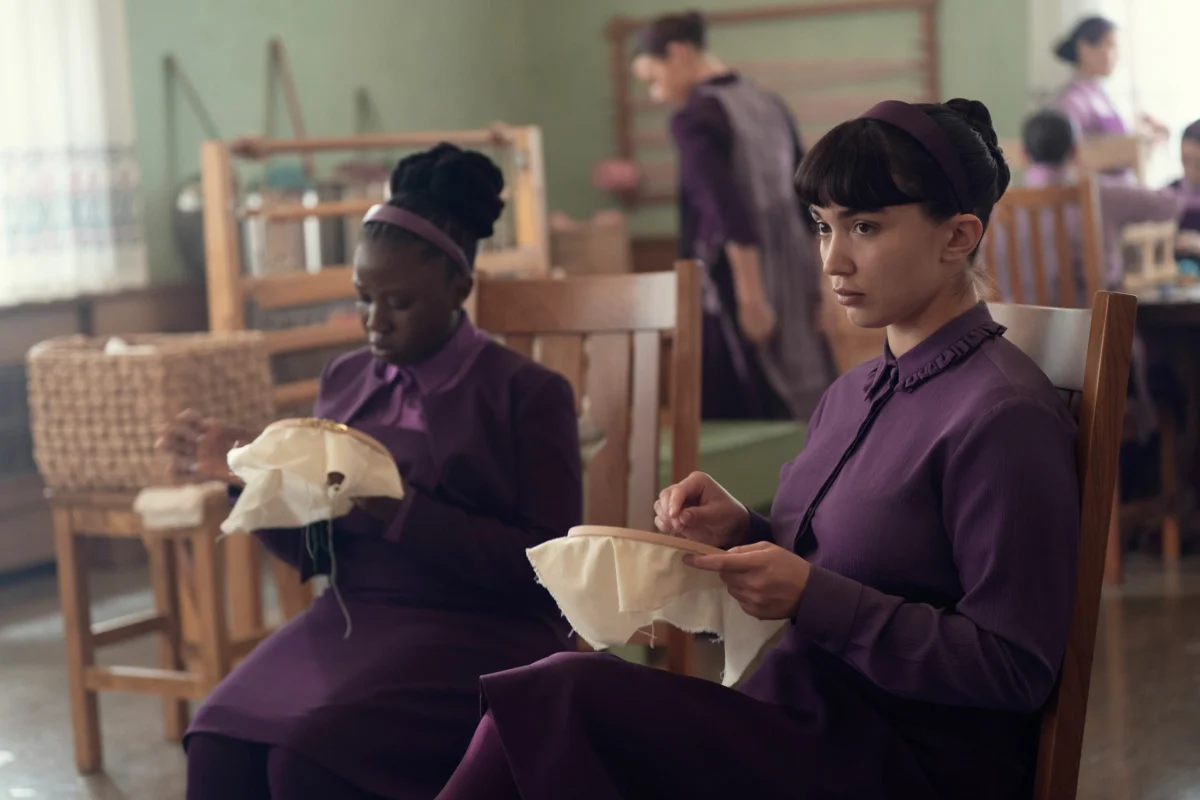
Few television worlds are as instantly recognizable—or as hauntingly iconic—as the bone-chilling landscape of Gilead. Since its 2017 debut, The Handmaid’s Tale has defined a specific visual lexicon: the saturated, oppressive crimson of the Handmaids’ cloaks, the stark, clinical whites of the Wives, and the muted, shadowed interiors that mirror the psychological claustrophobia of its characters.
When cinematographer Greta Zozula stepped into the world of Hulu’s highly anticipated sequel series, The Testaments, she faced a daunting creative paradox. How does one return to a universe so visually cemented in the public consciousness without merely imitating the past? For Zozula, the answer lay not in reproducing the aesthetic of the original, but in fundamentally dismantling it.
The Mandate of Evolution: Breaking the Visual Status Quo
Speaking during IndieWire’s 2026 Craft Roundtable for cinematography, Zozula revealed that her tenure on the series—where she served as the lead cinematographer for six episodes—was defined by a deliberate departure from the visual cues established by the Emmy-winning predecessor.
"The initial conversations were really about tone and color. Color was a big thing," Zozula explained. The creative team recognized that to tell a new story, they had to move away from the visual shorthand that had defined June Osborne’s journey. "When you think of handmaids, you think of red, and that was the color that we completely got rid of. And so those were the initial conversations."
This was not a decision made lightly. In the context of the original series, red was a primary narrative driver—a symbol of fertility, blood, and the literal objectification of women. By stripping that color from the palette of The Testaments, Zozula immediately signaled to the audience that this would be a different kind of experience. The goal, she noted, was to pivot from the survivalist, high-contrast intensity of The Handmaid’s Tale toward something more ambiguous.
A Chronology of a Shifting Perspective
To understand the visual evolution, one must first look at the narrative shift. The Handmaid’s Tale was a story of resistance told by a woman who remembered a world before the theocracy. It was a story of "the before" versus "the now." The Testaments, however, centers on a younger generation.

The protagonist, Agnes McKenzie (played by Chase Infiniti), represents a cohort of young women who have known nothing but the repressive theocracy of Gilead. For them, the regime is not an interruption of a normal life; it is the only reality they have ever breathed.
Phase 1: Conceptualization and "Softening" the Regime
In the early pre-production meetings, Zozula and the show’s creative directors explored the implications of this younger perspective. If a child grows up in a prison, the prison is not just a place of torture—it is home. This realization necessitated a softer visual approach. Zozula worked to introduce "more openness" into the frame, moving away from the tight, suffocating close-ups that characterized the original series.
Phase 2: Implementation of the New Palette
As shooting progressed, the crew experimented with lighting schemes that felt less like a dungeon and more like a carefully curated environment. By softening the light and expanding the depth of field, Zozula created a space that felt "brighter" to the casual observer, even as the thematic stakes remained just as harrowing. This contrast—a cleaner, more inviting visual surface hiding a rotten interior—serves as the primary engine of tension in the series.
Phase 3: Establishing the Language
Zozula, whose diverse filmography includes The Half of It, Three Women, and the visceral American Sports Story, brought a unique eye to the project. Her task was to ensure that while the show felt like a part of the established universe, it functioned as a distinct chapter. By the time the final frames of her six episodes were locked, a new visual vocabulary had been established: one that favors the psychological development of the youth over the raw survivalism of their elders.
Supporting Data: The Craft of Perception
The cinematography in The Testaments is a masterclass in how lighting and color temperature manipulate viewer perception. In cinematography, the "Look" of a show is determined by more than just the lens; it is a collaborative effort involving color grading, set design, and the intentional placement of shadows.
According to behind-the-scenes insights, Zozula utilized a more naturalistic lighting approach to emphasize the normalization of Gilead. By avoiding the highly stylized, dramatic shadows of the original series, she allowed the architecture of the sets to speak for themselves. The result is a clinical, almost eerie sterility.

- Color Temperature: Whereas The Handmaid’s Tale often leaned into warmer, candlelit interiors to highlight the "period" feel of the repression, The Testaments utilizes cooler, daylight-balanced tones. This suggests a world that is more efficient, more modern, and perhaps more dangerous because of its perceived normalcy.
- Camera Movement: The original series often utilized hand-held, kinetic energy to mirror the protagonist’s anxiety. In contrast, Zozula’s work on The Testaments relies more on static, steady compositions. This stillness reflects the indoctrination of the younger generation—the sense that their lives are choreographed by the state.
Official Perspectives: The Director’s Intent
Zozula’s work is emblematic of a larger trend in "prestige" television sequels: the need to honor the legacy of the original while asserting an independent identity. In her comments at the IndieWire roundtable, she emphasized that the goal was never to compete with the original series’ cinematography, but to complement it by exploring a different corner of the same map.
"We wanted to create a different perspective entirely," Zozula said. By focusing on the "softness" of the environment, she aimed to capture the terrifying reality of a child raised in a fundamentalist cult who believes that their environment is the height of virtue. It is a subtle shift, but one that dramatically changes how the audience relates to the world of Gilead.
Implications: The Future of the Franchise
The visual success of The Testaments has profound implications for how the Handmaid’s Tale universe will continue to evolve. By demonstrating that the franchise can withstand a radical aesthetic shift, the producers have opened the door for future spin-offs or sequels that can tackle different thematic elements of this dystopian world without becoming repetitive.
Furthermore, Zozula’s approach highlights the growing importance of the cinematographer as a primary storyteller. In an era where "world-building" is a marketing buzzword, Zozula proves that true world-building happens in the subtle calibration of light, the strategic removal of color, and the conscious decision to frame a subject not as a survivor, but as a product of their environment.
As The Testaments continues to unfold, viewers are invited to look past the red, past the familiar silhouettes of the Handmaids, and into a world that is increasingly bright, increasingly sterile, and—perhaps most chillingly—increasingly comfortable.
IndieWire’s TV Craft Roundtables, featuring in-depth conversations with the industry’s leading cinematographers, editors, and production designers, are now available for streaming on PBSSoCal, the PBS App, and on IndieWire.com.

 Asro
Asro
 Basiran