Rifan Muazin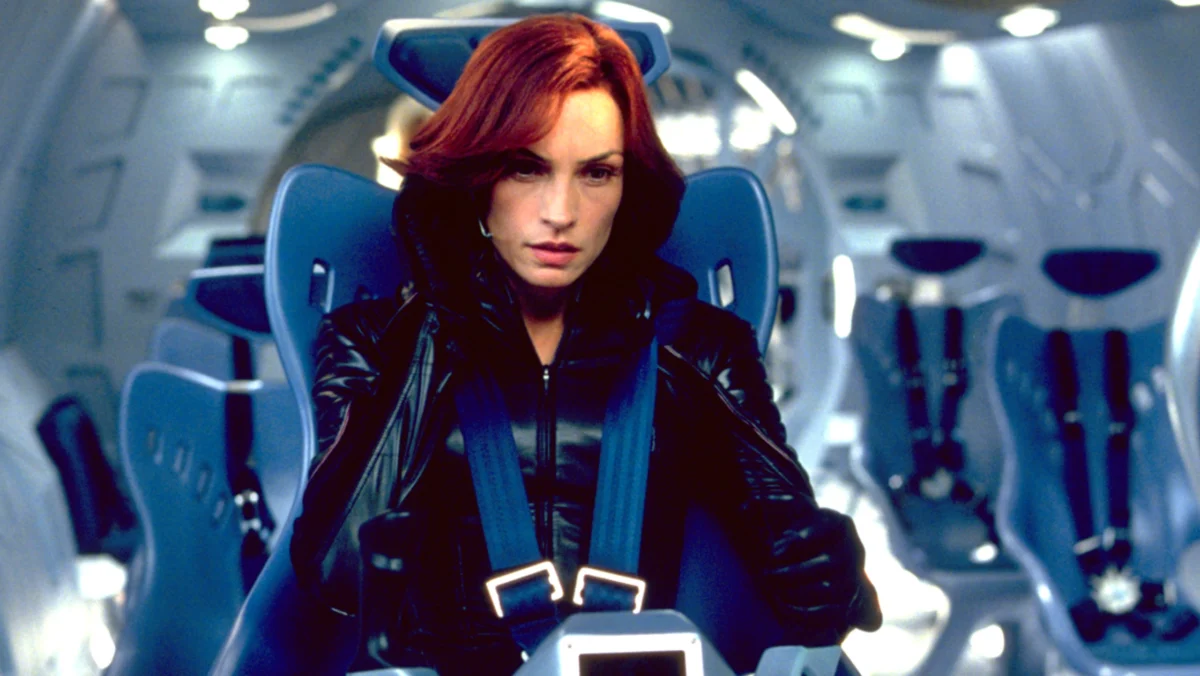
As the hype cycle for Marvel Studios’ Avengers: Doomsday reaches a fever pitch, the list of returning legends from the Fox-era X-Men franchise continues to grow. Yet, one name remains conspicuously absent from the call sheet: Famke Janssen. The actress, who defined the role of Jean Grey—and later the formidable Phoenix—for over a decade, has made it clear that she has not been invited to the party.
With the film set to premiere on December 18, 2026, the omission of such a pivotal character has sparked a debate among industry insiders and fans alike. While the MCU has made a sport of "legacy casting," Janssen’s exclusion highlights the complex, often messy logistical puzzle of folding two decades of cinematic history into a singular, cohesive multiverse.
The Current State of the Mutants in the MCU
The integration of the X-Men into the Marvel Cinematic Universe has been the most anticipated development since Disney’s acquisition of 20th Century Fox. With the Multiverse Saga in full swing, Marvel Studios has leveraged the concept of variants and alternate realities to bring back iconic faces.
In Avengers: Doomsday, a significant portion of the original X-Men ensemble is expected to appear. Confirmed or heavily linked reports suggest that heavyweights such as Patrick Stewart (Professor X), Ian McKellen (Magneto), Rebecca Romijn (Mystique), James Marsden (Cyclops), Alan Cumming (Nightcrawler), and Kelsey Grammer (Beast) will be reprising their roles.
For many fans, the absence of Jean Grey feels like a narrative hole. As one of the original five X-Men and the central figure of the iconic "Dark Phoenix" arc, her exclusion feels intentional rather than accidental. Janssen herself hasn’t been shy about expressing her feelings on the matter, noting in a recent interview with Nerdtropolis that she believes the studio "made a mistake."
A Chronology of the Phoenix: From 2000 to 2026
To understand the weight of Janssen’s exclusion, one must look at the historical trajectory of her portrayal of Jean Grey.
- 2000: Famke Janssen makes her debut as Dr. Jean Grey in Bryan Singer’s X-Men, establishing a grounded, empathetic version of the character that served as the emotional anchor for the team.
- 2003: In X2: X-Men United, Janssen’s character arc culminates in her sacrifice, setting the stage for the transformation into the Phoenix.
- 2006: X-Men: The Last Stand attempts to tackle the "Dark Phoenix Saga," a move that remains divisive among fans but solidified Janssen’s status as a powerhouse in the franchise.
- 2014: Janssen makes her final franchise appearance in X-Men: Days of Future Past, appearing in a cameo that served as a touching coda for the original cast.
- 2025: Throughout the year, speculation regarding the Avengers: Doomsday cast reaches a fever pitch. Janssen confirms in multiple interviews, including with Entertainment Weekly, that she has had zero contact with Disney or Marvel Studios regarding a return.
- December 2026: The scheduled release of Avengers: Doomsday, which serves as the current terminus for the Multiverse Saga’s narrative threads.
The "Mistake" of Exclusion: An Analysis
Janssen’s comments, while polite, carry a sting of professional disappointment. "I am so bad at keeping secrets that I always say to everyone I’m the worst actor in the world," she told Nerdtropolis. "It’s all on my face. You right away will read it."
When asked directly about the MCU, she was candid: "I think they made a mistake, but hey, who am I? I’m just a little me who thinks that."
From a narrative perspective, excluding the Phoenix is a bold choice. In the comics, the Phoenix Force is a cosmic entity of near-infinite power, often serving as a catalyst for world-ending events—making her a logical inclusion for a film titled Doomsday. However, Hollywood production cycles are rarely driven by narrative completeness alone. Contract negotiations, scheduling conflicts, and the specific vision of screenwriters and directors often dictate who returns and who is left on the cutting room floor.
The Professional Toll of Legacy Casting
The phenomenon of legacy casting—bringing back actors from defunct franchises—has become a hallmark of modern blockbusters. While it provides fans with "fan-service" moments, it can also place actors in an awkward position.

Janssen expressed a level of fatigue regarding the constant questioning about her potential return. "Every time I do an interview, it’s mentioned. It’s interesting," she told Entertainment Weekly. "I didn’t realize that was such a big part. Every interview I do, that will come up, and of everything I say, that is the only thing that’s gonna be printed."
Yet, despite the frustration, she remains undeniably attached to the character. When asked if she still has the "Phoenix" within her, her answer was immediate: "Oh, yes. I am ready. I am ready to show you some Phoenix, some very dark Phoenix." This indicates that the lack of communication is entirely on the side of the studio, not the actress’s availability or interest.
Behind the Scenes: The MCU’s X-Men Strategy
While the Avengers films take precedence, the long-term future of the mutants lies in the upcoming X-Men reboot. Director Jake Schreier, who has been tapped to helm the project, recently provided a brief, albeit vague, update to Empire magazine.
"I can’t say anything about it, but we’ve started work on X-Men, and that’s obviously very, very exciting," Schreier stated. This suggests that Marvel Studios is operating under a two-pronged strategy: using legacy actors as "multiversal cameos" in the Avengers films while simultaneously building a "clean slate" version of the team for the future.
The decision to exclude Janssen might be a tactical one. By not bringing back the entire original cast, Marvel may be attempting to avoid the "nostalgia trap," where the film becomes a museum of the past rather than a launchpad for the future. By picking and choosing specific characters, they maintain a tighter control over the narrative flow of the MCU’s upcoming phases.
Implications for the Future of the Multiverse
The implications of Janssen’s exclusion extend beyond just one character. It suggests that Marvel Studios is not interested in a 1:1 recreation of the Fox-era X-Men. Instead, they are curating a "greatest hits" version of the multiverse.
If the goal of Avengers: Doomsday is to provide a definitive end to the Multiverse Saga, the absence of Jean Grey creates a void that fans will surely notice. In the comics, the Phoenix is synonymous with resurrection and rebirth. To leave her out of a multiversal epic feels like a missed opportunity to provide a definitive closure to the character’s legacy.
Furthermore, this situation serves as a case study in the difficulties of franchise management. When a studio acquires a massive library of IP, the "canon" becomes a fluid, shifting landscape. Actors like Janssen, who spent years building a persona that audiences adore, are often left waiting for a call that may never come.
Conclusion: A Lingering Question
As December 2026 approaches, the buzz surrounding Avengers: Doomsday will only grow. Whether or not Marvel Studios eventually pulls a "surprise reveal" and includes Famke Janssen in a post-credits scene or a last-minute cameo remains to be seen. However, her public stance serves as a reminder that behind the massive, billion-dollar spectacle of the MCU, there are human beings—actors who invested years of their lives into these roles—who are often left to watch from the sidelines.
Regardless of whether Jean Grey appears in Doomsday, one thing is certain: Famke Janssen’s portrayal of the Phoenix remains a landmark performance in the history of the superhero genre. If this is truly the end of the road for her involvement, it is a bittersweet conclusion to a character who, much like the Phoenix itself, seems destined to be remembered as one of the most powerful forces in cinematic history.

 Nana Muazin
 Nana
Nana