Azzam Bilal Chamdy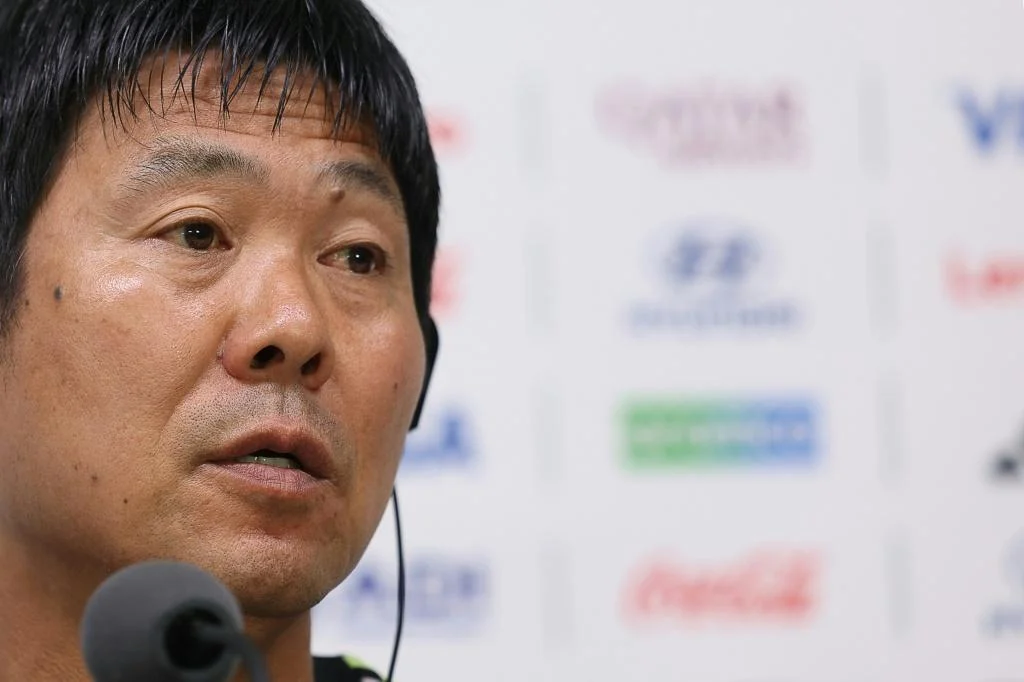
By International Sports Desk
As the global football community turns its collective gaze toward the Estadio BBVA in Monterrey, Mexico, the atmosphere is charged with more than just the typical fervor of a World Cup group stage match. This Saturday, the tournament reaches a historic zenith: the 1,000th match in the history of the FIFA World Cup. Japan, buoyed by a resilient performance against the Netherlands, prepares to face a Tunisian side currently embroiled in a dramatic, eleventh-hour coaching overhaul.
For Japan head coach Hajime Moriyasu, the objective is clear, yet the variables are increasingly complex. Facing a squad desperate to salvage their campaign after a humiliating opening defeat, Moriyasu has issued a stark warning to his players: expect an intensity that far surpasses the challenge posed by the Dutch.
The Main Facts: A Clash of Momentum and Desperation
The narrative heading into this fixture is defined by two contrasting trajectories. Japan enters the match with significant momentum. Their recent 2-2 draw against the Netherlands in Texas showcased a team capable of competing with footballing heavyweights, demonstrating tactical discipline and a clinical edge in the final third.
Conversely, Tunisia arrives in Monterrey in a state of institutional turbulence. Their opening Group F fixture against Sweden resulted in a catastrophic 5-1 defeat, a result that sent shockwaves through the North African nation’s football federation. In a move that sent tremors through the tournament, Tunisia opted to terminate the contract of head coach Sabri Lamouchi on Monday, making him the first manager in the 96-year history of the World Cup to be dismissed after managing only a single game in the finals.
To replace him, the Tunisian federation has "parachuted" in the seasoned French tactician Hervé Renard. Renard, a figure renowned for his ability to galvanize underdog squads, arrives with little time to implement a new philosophy. However, his reputation for high-octane, emotionally charged management suggests that Tunisia will not be a walkover.
Chronology: The Road to the 1,000th Match
The path to this landmark fixture has been anything but conventional. The 2026 World Cup, hosted across North America, has already been defined by unpredictable scorelines and tactical surprises.
- Pre-Tournament: Japan held an intensive training camp in Monterrey, a strategic decision aimed at acclimatizing the squad to the specific climatic conditions of Northern Mexico.
- Matchday 1: Japan earns a hard-fought, confidence-boosting 2-2 draw against the Netherlands in a controlled, air-conditioned environment in Texas.
- The Collapse: Tunisia suffers a devastating 5-1 loss to Sweden, leaving their tournament hopes hanging by a thread.
- The Shake-up: On Monday, the Tunisian Football Federation announces the sacking of Sabri Lamouchi.
- The Appointment: Hervé Renard is named as the new head coach, tasked with an immediate turnaround.
- The Milestone: FIFA confirms that the Japan vs. Tunisia match will officially be recorded as the 1,000th game in the history of the World Cup tournament, dating back to the inaugural 1930 edition in Uruguay.
Supporting Data and Strategic Considerations
The challenge for Japan is not merely emotional; it is environmental. While their previous encounter with the Netherlands took place under the climate-controlled dome of a modern stadium, the conditions in Monterrey are set to provide a rigorous physical test. Forecasts predict temperatures hovering near 30°C (86°F), with the added potential for afternoon storms, which could influence pitch conditions and the speed of play.
The Renard Factor
Hervé Renard’s presence on the touchline is a significant data point for the Japanese analytical team. Renard is famously the architect behind one of the greatest upsets in modern football history: Saudi Arabia’s 2-1 victory over eventual champions Argentina at the 2022 World Cup in Qatar. His ability to foster "siege mentality" within a squad is well-documented. Moriyasu is fully aware that Renard’s primary goal will be to simplify the Tunisian game plan and inject a level of aggression that was noticeably absent against Sweden.
Injury Concerns
Japan faces a notable setback with the absence of playmaker Takefusa Kubo. His injury forces a reshuffling of the attacking midfield, a department where Japan relies heavily on quick transitions and creative distribution. Moriyasu must now decide whether to opt for a more conservative, defensively solid setup or maintain his aggressive, front-foot approach despite the personnel change.
Official Responses: The Coaches Speak
In his pre-match press conference, Hajime Moriyasu projected an aura of calm, balanced with a deep respect for the volatility of the situation.
"They will have a great motivation to do their best so they can get to the next stage," Moriyasu remarked. "I believe they will battle us with that mentality, and we will not take that passively. To win, we should have a stronger will than them. Renard’s passion is something I am sure will come through in his team talks. He will bring out the best in the players, and we must be ready for that surge of energy."
Moriyasu, whose public ambition is to lead Japan to their first-ever World Cup title, emphasized that his team’s preparation in Monterrey has been thorough. "We have taken measures to deal with the heat and have experienced this environment during our camp. We have prepared very well, and the players are calm. Our focus remains on the process."
The Japanese coach also touched upon the significance of the 1,000th match. "It is an honor to be part of such a landmark moment. We want to make sure that it is a brilliant game worthy of being the 1,000th game of the World Cup. We owe it to the fans and to the history of this sport to put on a show."
Implications: What is at Stake?
The implications of this result extend far beyond the record books. For Japan, a win would almost certainly guarantee a path to the knockout stages, providing the team with the necessary points to rotate players for their final group match. A draw or loss, however, would throw Group F into chaos, forcing a high-stakes finale in the coming days.
For Tunisia, this is a matter of national pride. Following the public dismissal of Lamouchi, the players are under immense pressure to prove that the 5-1 drubbing by Sweden was an anomaly rather than a reflection of their true quality. A strong performance against a disciplined Japan side would go a long way in restoring their reputation.
Tactical Implications
The shift in Tunisian leadership suggests a tactical pivot. Expect Renard to move away from the expansive, perhaps overly exposed, structure used by Lamouchi. The focus will likely be on a low-to-mid block, utilizing quick counter-attacks and set-piece opportunities—the very hallmarks of Renard’s successful tenure with Zambia and Saudi Arabia.
Japan, meanwhile, must avoid the trap of complacency. By acknowledging the "wounded animal" nature of their opponent, Moriyasu is attempting to inoculate his players against the risk of an early, emotional Tunisian assault. If Japan can control the midfield tempo and negate the heat-induced fatigue, their technical superiority should prove decisive.
A Historic Legacy
As the world prepares for the kickoff, the 1,000th match serves as a reflection of how far the World Cup has evolved. From the modest beginnings in 1930 to the sprawling, high-tech spectacle of 2026, the tournament has remained a theater for human drama. Whether this match is remembered for a Tunisian resurgence or a Japanese masterclass, it will forever hold a permanent place in the annals of sporting history.
For the spectators in Monterrey and the millions watching globally, the message from the Japanese camp is clear: "We are ready for the challenge. We are ready to make history." With the weather forecast potentially adding a final layer of unpredictability to the proceedings, the 1,000th World Cup match promises to be a fitting tribute to the beautiful game.
© 2026 AFP


 Neng Nana
 Asro
Asro