Lina Irawan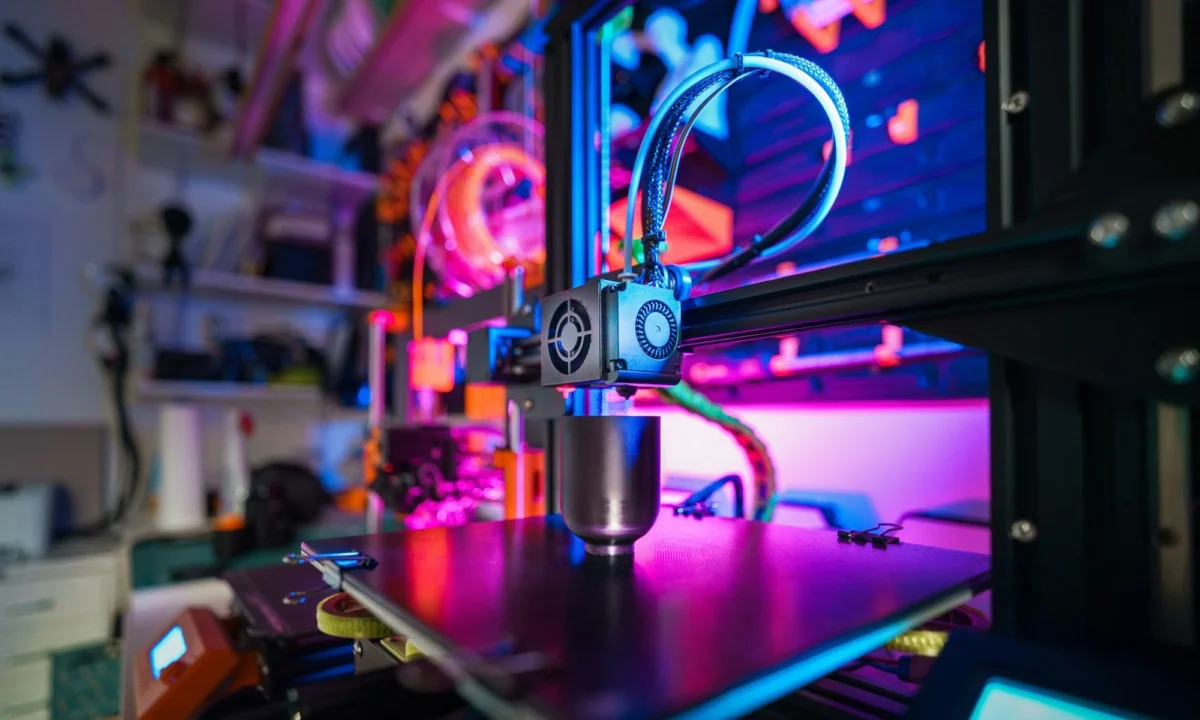
For decades, the trajectory of battery technology has been defined by a relentless obsession with chemistry. From the early adoption of nickel-cadmium to the dominance of lithium-ion and the current, high-stakes race toward solid-state electrolytes, the goal has remained singular: pack more energy into the same space. Industry titans have poured billions into refining anode materials, optimizing cathode coatings, and testing exotic additives to squeeze a few more watt-hours out of standard cylindrical or pouch-cell formats.
However, a quieter, more radical revolution is gaining momentum. It is a shift that ignores the chemical composition of the cell and instead targets the very architecture of energy storage. By leveraging the precision of 3D printing—also known as additive manufacturing—researchers and startups are moving toward a world where the battery is no longer a rigid, standalone component, but an integrated part of a device’s anatomy.
The Paradigm Shift: From "Component" to "Structure"
The traditional battery manufacturing process is inherently restrictive. Whether you are buying a laptop or an electric vehicle (EV), the design of the product must be dictated by the geometry of the available battery packs. Engineers must design around the battery, leading to bulky casings, wasted internal volume, and design compromises that favor utility over aesthetics or ergonomics.
3D-printed batteries fundamentally invert this relationship. By utilizing additive manufacturing techniques, batteries can be fabricated into virtually any shape, density, or configuration. This technology allows for the creation of conformal batteries that can conform to the internal curves of a drone chassis, the thin frame of smart glasses, or the irregular structural cavities of an electric vehicle.
This is not merely an exercise in industrial design; it is a profound efficiency play. By filling the "dead space" inside consumer devices with energy-storing material, manufacturers can reclaim volume previously lost to housing and structural support. The result is a device that is lighter, thinner, and significantly more efficient, potentially increasing the total energy density of a product without ever needing to improve the underlying battery chemistry.
A Chronology of Innovation: From Lab Bench to Battlefield
The transition of 3D-printed batteries from academic curiosity to commercial viability has been rapid, yet calculated.

- 2015–2020: The Academic Foundation. Initial research was primarily focused on proving the feasibility of extruding battery materials. Early papers demonstrated that researchers could print basic electrodes, though conductivity and lifespan remained significant hurdles.
- 2021–2023: Material Maturation. As 3D-printing hardware evolved, the focus shifted toward "inks" and slurries that could be printed without compromising the electrochemical stability of the cell. During this period, the concept of "structural batteries"—where the battery acts as a load-bearing member of a frame—moved from science fiction to laboratory testing.
- 2024–2025: The Scaling Surge. A turning point arrived in 2025, a year characterized by an explosion of academic interest. According to industry reports, roughly 25,000 papers were published in that calendar year alone regarding 3D-printed batteries and their components. This data reflects a global academic shift toward solving the "scaling" problem: moving from milligram-sized lab samples to production-grade cells.
- 2026: Commercial Realization. As of mid-2026, the technology has entered a nascent commercial phase. Startups like Material Hybrid Manufacturing and Sakuu have moved beyond the research stage, securing critical defense contracts and seed funding to prove their technology in high-stakes environments like drone warfare and aerospace.
Supporting Data: Efficiency and Economic Potential
The economic and performance-based arguments for 3D-printed batteries are compelling. The primary advantage lies in the elimination of traditional manufacturing bottlenecks. Conventional lithium-ion manufacturing is a high-waste, high-energy process involving massive "roll-to-roll" machines, toxic solvents, and energy-intensive drying ovens that must run for hours to remove liquid binders from electrodes.
The "Sakuu" Advantage
Companies like Sakuu are spearheading a shift toward "dry-process" additive manufacturing. By printing battery components without the need for solvents or drying, they effectively bypass the most expensive and environmentally taxing stages of battery production. This has the potential to:
- Reduce capital expenditure (CapEx): Smaller, more efficient factories can produce cells at a fraction of the cost of current gigafactories.
- Lower environmental footprint: Eliminating volatile organic compounds (VOCs) and massive heat-based drying processes creates a cleaner production cycle.
Performance Gains
The performance metrics cited by early movers are equally striking. Material Hybrid Manufacturing, for instance, has claimed that its 3D-printed approach can increase total energy storage by up to 35% within the same footprint as conventional packs. For a drone—where every gram of weight translates to flight time—a 35% increase in energy capacity is a transformative metric, potentially doubling operational range.
Official Responses and Strategic Alliances
The pivot toward 3D printing has not gone unnoticed by the most powerful entities in the world: the military and the aerospace industry. The U.S. Air Force, for example, has moved to secure its supply chain by awarding a $1.25 million contract to Material Hybrid Manufacturing.
"The goal is to move past the limitations of off-the-shelf components," notes an anonymous analyst familiar with defense logistics. "The military doesn’t just need more power; they need power that fits into the specific, hardened, and unconventional shapes of modern intelligence, surveillance, and reconnaissance (ISR) platforms."
By partnering with manufacturers like Teledyne FLIR to integrate custom batteries into the SkyRaider drone, the Air Force is effectively field-testing the future of energy storage. These partnerships serve as the "proving ground" for the technology. If a battery can survive the rigors of flight, vibration, and temperature fluctuations in a military drone, it becomes significantly easier to argue for its reliability in consumer vehicles and smartphones.

Implications: The Road Ahead
While the potential is vast, the road to mass-market adoption is paved with significant challenges.
The Quality Control Hurdle
Traditional battery manufacturing relies on massive, high-throughput lines that have been perfected over decades. Ensuring the same level of uniformity, quality control, and safety in a 3D-printed environment is non-trivial. If a single layer of a printed battery has a microscopic flaw, it could lead to thermal runaway or rapid capacity degradation. Achieving "six-sigma" quality in a 3D-printing environment will be the primary barrier to entry for the consumer electronics market.
Versatility Across Chemistries
One of the most encouraging aspects of this technology is its chemistry-agnostic nature. Because additive manufacturing is fundamentally about the structure of the cell, it is inherently compatible with whatever the future of chemistry holds. Whether the industry moves toward sodium-ion, solid-state electrolytes, or even silicon-anode designs, 3D printers can be recalibrated to work with these new materials. This future-proofing makes the investment in 3D-printing infrastructure a safe bet against the rapid obsolescence of current lithium-ion standards.
Radical Concepts: Beyond the Battery
Looking further into the future, the implications of this technology extend into the realm of materials science. Researchers are currently exploring batteries made from simulated lunar regolith (moon dust), designed to power extraterrestrial habitats. The idea is to print energy storage directly into the foundations of buildings on the Moon or Mars, using local materials rather than hauling batteries from Earth.
Conclusion
The 3D-printed battery represents a paradigm shift from "manufacturing" to "fabrication." By moving away from the rigid constraints of traditional cells, we are entering an era where energy storage will be as versatile as the devices it powers. While commercial adoption in your next smartphone may still be years away, the momentum is undeniable.
As military drones take to the sky with custom-printed, high-density cells, they are signaling the end of the "standard battery" era. We are moving toward a future where our vehicles, gadgets, and infrastructure no longer accommodate batteries; rather, the batteries themselves will define the form, function, and limits of our technology. The revolution is quiet, it is additive, and it is here to stay.


 Pevita Pearce
 Ammar Sabilarrohman