Neng Nana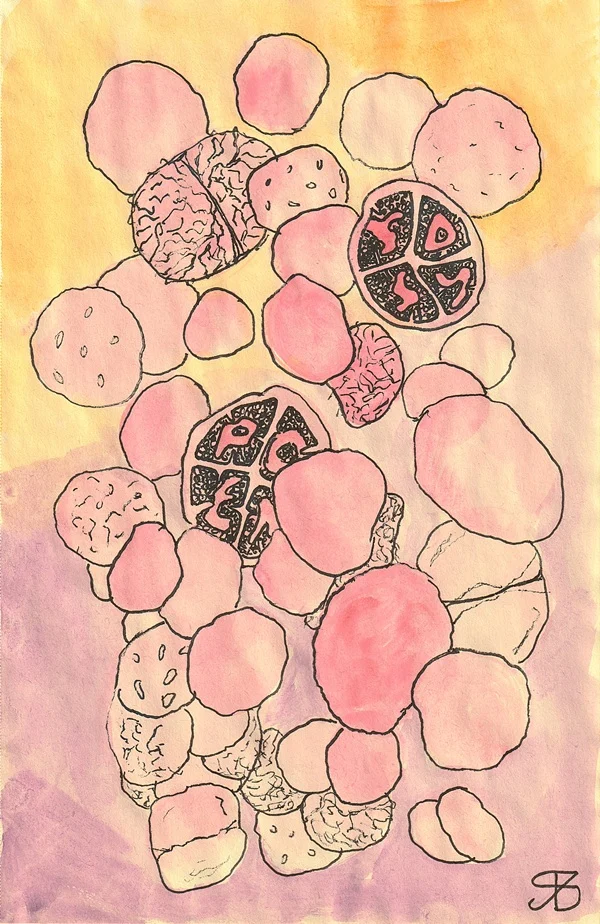
In a landmark intersection of molecular biology and literary art, Canadian poet Christian Bök and University of Texas chemical engineer Lydia Contreras have successfully achieved what was once considered the realm of speculative fiction: they have embedded a poem into the genome of a living organism. Using Deinococcus radiodurans—a bacterium colloquially known as "Conan the Bacterium" for its near-mythical resilience—the team has effectively created a biological library, a repository of human expression designed to outlast the very civilization that birthed it.
This project, which echoes the ambitions of Bök’s long-standing "Xenotext" experiments, represents a fundamental shift in how we conceive of archival permanence. By moving away from brittle paper, degrading ink, and vulnerable digital storage, the researchers have turned to the most stable information-storage system on the planet: the genetic code.
The Architecture of the Living Archive
The experiment centers on the translation of verse into the universal language of life. Every poem is, at its heart, a sequence of characters. Bök and Contreras identified that the four-letter alphabet of DNA—Adenine (A), Cytosine (C), Thymine (T), and Guanine (G)—could serve as a surrogate for the syntax of human language.
By converting the poem’s text into a digital string of nucleotides, the researchers synthesized a sequence of DNA that could be introduced into the host organism. This genetic sequence was then embedded into a plasmid—a small, circular, extrachromosomal DNA molecule. When introduced into the Deinococcus radiodurans, the bacterium treated the foreign genetic material as part of its own instructional blueprint.
Why Deinococcus radiodurans?
The choice of organism was not arbitrary. Deinococcus radiodurans is listed in the Guinness Book of World Records as the world’s toughest bacterium. It thrives in environments that would instantly annihilate most biological life, including the vacuum of space, extreme desiccation, acidic environments, and massive doses of ionizing radiation—up to 15,000 Grays. For context, a dose of 5 to 10 Grays is lethal to a human being.
The bacterium’s secret lies in its hyper-efficient DNA repair mechanism. It can reassemble its shattered genome within hours of exposure to radiation, effectively "healing" its own code. By placing a poem within such a creature, the researchers have ensured that the art piece will be protected by the most sophisticated repair apparatus in the natural world. As long as the bacteria continue to divide and reproduce, the poem remains alive, copied faithfully into every new generation.
A Chronology of the Xenotext Endeavor
The path to this achievement spans over a decade of interdisciplinary collaboration, bridging the gap between the humanities and the hard sciences.
- 2010–2015: The Conceptual Phase. Christian Bök began his initial Xenotext experiments, attempting to use D. radiodurans to store a poem. The early stages were fraught with technical hurdles regarding the stability of the inserted DNA and the biological viability of the host.
- 2020–2024: Scientific Refinement. The partnership with Dr. Lydia Contreras of the University of Texas provided the biochemical expertise necessary to refine the insertion process. Contreras focused on optimizing the synthetic DNA sequences to ensure they would not be interpreted as "junk" or "viral" by the bacterium’s defense systems.
- 2025: The Successful Integration. Following multiple rounds of testing, the team achieved a stable, replicable integration. The poem, translated into the genetic sequence, was successfully expressed within the microbial colony.
- 2026: Public Presentation and Documentation. The project garnered significant attention in the arts and science communities, leading to the visual documentation provided by illustrator Romie Stott, whose "Rosy Poem" captures the essence of this bio-poetic fusion.
Supporting Data: The Durability of DNA
The shift toward DNA as an archival medium is supported by emerging data in bioinformatics. Unlike magnetic tape or flash memory, which require constant energy input and hardware compatibility, DNA is a "passive" storage medium.
- Density: DNA can store information at an incredible density. A single gram of DNA can theoretically store upwards of 215 petabytes of data.
- Longevity: In optimal conditions (such as the deep freeze of permafrost or stable salt deposits), DNA can remain readable for hundreds of thousands of years.
- Self-Replication: By utilizing a living organism, the archive possesses a quality that traditional storage lacks: the ability to self-repair and propagate. As the colony grows, the "library" expands, creating millions of redundant copies of the poem without the need for manual maintenance.
Implications: A Message for the Distant Future
The implications of this experiment extend far beyond the aesthetic. It raises profound questions about the nature of legacy and the responsibility of humanity to the future.

The Post-Human Archive
If human civilization were to collapse or vanish, our digital footprints—servers, hard drives, and cloud storage—would likely degrade within a few decades. However, this biological archive, if properly situated, could survive in a state of suspended animation for millions of years. It represents a "time capsule" that does not require a key; the "reader" of the future, whether an evolved descendant or an artificial intelligence, would only need to understand the fundamental logic of genetics to "read" the poem.
The Ethics of Biological Alteration
Critics and ethicists have noted the potential risks associated with releasing "encoded" organisms into the environment. While D. radiodurans is generally considered harmless to humans, the act of engineering life to carry non-biological data creates a precedent for "bio-tagging." There are also philosophical concerns regarding the "enslavement" of life for the sake of human art—a sentiment echoed in the delicate, mournful tone of the poem itself.
Expert Perspectives
In the academic community, the project has been hailed as a triumph of "trans-disciplinary" research.
"What Bök and Contreras have achieved is the physical manifestation of the metaphorical," says Dr. Aris Thorne, a specialist in synthetic biology. "They have taken the abstract concept of ‘a poem’ and locked it into the very mechanism of survival. It’s not just a poem; it’s a biological monument."
However, some poets have expressed reservations. "There is something inherently tragic about the project," notes critic Elena Vossen. "By turning a poem into a sequence of A, C, T, and G, we strip away the sound, the rhythm, and the human voice. We save the data of the poem, but do we save the soul of it?"
Conclusion: The Soft Sound of Memory
The work of Vinita Agrawal and other contemporary poets highlights the theme of impermanence that permeates modern literature. In a world defined by the rapid turnover of technology and the threat of climate instability, the desire to leave a mark is increasingly urgent.
The "Rosy Poem," embedded within the microscopic frame of a bacterium, serves as a poignant reminder of human fragility. It is a work of art designed to be read by beings who may never know the sound of a human voice, the warmth of a sun-drenched afternoon, or the specific grief of being alive.
As the colony of Deinococcus radiodurans divides, multiplying the poem across its microscopic generations, it carries with it the "soft, human, utterly vulnerable sound of trying to remember." In this way, the project succeeds not just in preserving information, but in preserving the quintessentially human impulse to be known, to be felt, and to be remembered, long after the ink has faded and the paper has turned to dust.

 Ammar Sabilarrohman
 Pevita Pearce