Evan Lee Salim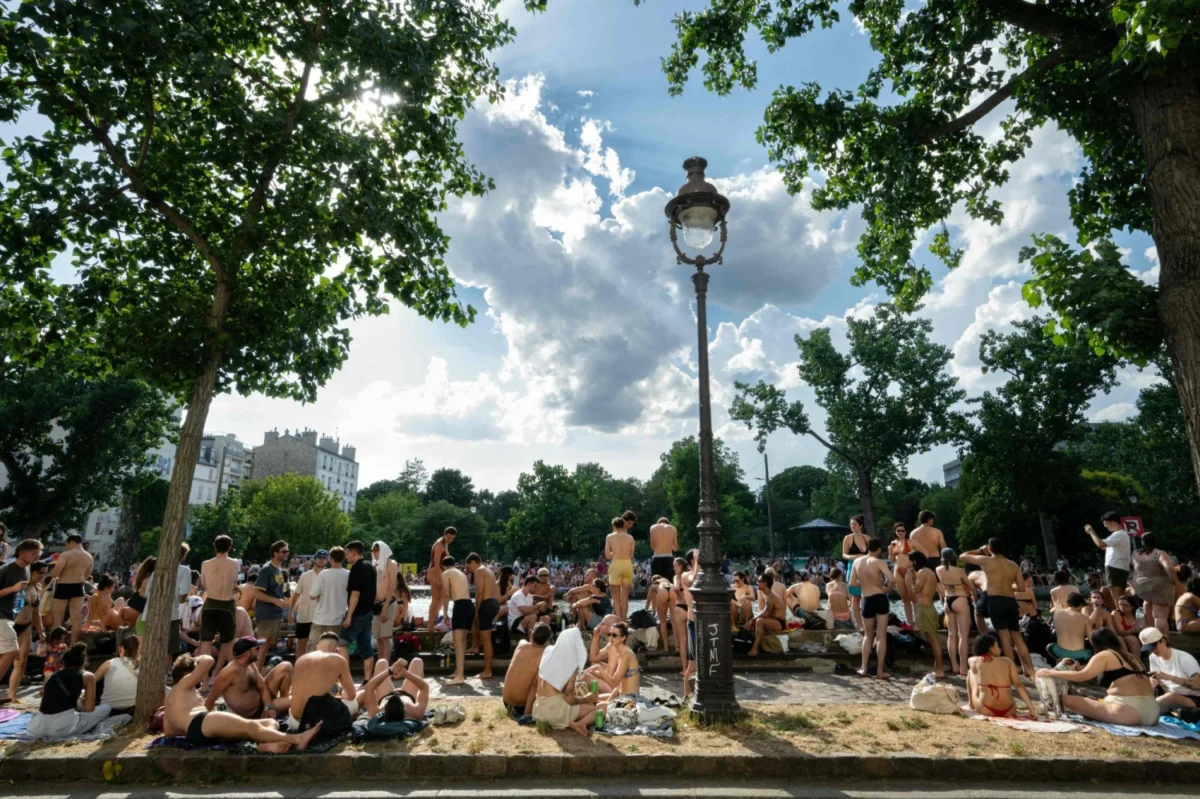
PARIS/BERLIN/ROME – A punishing, record-shattering heat wave has locked much of Europe in a stifling grip this week, forcing governments to implement radical public safety measures, closing iconic tourist sites, and sparking a renewed, urgent debate regarding the long-term economic and human toll of a changing climate.
From the sun-drenched plazas of Madrid to the historic streets of Paris and the humid corridors of Berlin, the mercury has climbed to life-threatening levels. As temperatures soar toward the 40°C (104°F) threshold, officials are scrambling to mitigate the impact of an extreme weather event that scientists warn is becoming the "new normal" for a continent largely unprepared for such prolonged thermal stress.
The Main Facts: A Continent Under Fire
The current meteorological phenomenon is characterized by an intense plume of hot air sweeping across the continent, creating a "heat dome" effect that has trapped sweltering temperatures over Western and Central Europe.
In France, the situation has reached a critical juncture. Meteorological services have placed 35 of the nation’s 96 departments on "red alert"—the highest level of warning—signaling a danger to the general population, not just the vulnerable. The hardest-hit regions extend from the southwest through the Paris basin and into the heart of Burgundy, where temperatures are expected to oscillate between 39°C and 41°C.
Simultaneously, Germany’s DWD weather service has issued widespread heat warnings as temperatures approach 38°C, with meteorologists cautioning that the dangerous cocktail of high humidity and heat is ripe for the development of severe, localized thunderstorms that could cause flash flooding in parched urban environments. In Italy, where the heat is transforming daily life into an endurance test, temperatures have consistently hit the 36-37°C range, significantly impacting both local commerce and the peak summer tourism season.
Chronology of the Crisis
The escalation of this heat event has occurred in rapid succession over the past 72 hours, forcing local authorities to move from monitoring to active crisis management.
- Day 1 (Initial Build-up): Meteorological models identified an encroaching high-pressure system moving north from the Sahara. Initial warnings were issued for Spain and southern France.
- Day 2 (Escalation): Temperatures surged past seasonal norms. France convened an emergency inter-ministerial meeting as the national health impact became clear. Spain’s football federation made the difficult decision to shutter public fan zones in Madrid.
- Day 3 (Peak Intensity): Red alerts were finalized for 35 French departments. Germany saw its first widespread warnings. The human toll became visible as tourists in Rome sought refuge in ancient underground ruins, and authorities in Paris ordered the city’s parks to remain open 24 hours a day to provide respite for residents living in cramped, non-air-conditioned apartments.
- Day 4 (Current State): The crisis persists as authorities attempt to manage public safety during scheduled festivals and large-scale sporting events, balancing the need for public morale against the dire risk of heatstroke and dehydration.
Official Responses and Public Safety Measures
The response to the heat wave has been as diverse as the cultural landscapes of the affected nations, reflecting both the urgency of the situation and the administrative challenges of managing extreme heat.
The French Intervention
Following a high-level crisis meeting, Prime Minister Sébastien Lecornu announced a preemptive ban on alcohol consumption during the annual Fête de la Musique and other public outdoor gatherings in the 35 "red alert" regions. The rationale is two-fold: alcohol accelerates dehydration and poses a significant risk to public order in environments where heat-induced aggression is statistically more likely.
Conversely, the Mayor of Paris, acknowledging that many urban dwellers lack access to air conditioning, ordered the city’s green spaces to remain open throughout the night, transforming municipal parks into makeshift cooling centers for the city’s most vulnerable populations.
Spanish Sports and Infrastructure
In Spain, the irony of the situation was not lost on the public. The Spanish football federation shuttered its flagship fan zone in Madrid’s Plaza de Colón—where thousands were expected to gather to watch the national team play Saudi Arabia—due to safety concerns.
Ironically, while fans in Madrid suffered in the blistering heat, the teams themselves are slated to compete in an air-conditioned stadium in Atlanta, Georgia. This discrepancy has fueled domestic debate regarding the necessity of upgrading public infrastructure to handle climate extremes, as the stadium’s reliance on solar-powered climate control stands as a beacon of the technological solutions that many European cities currently lack.
The Italian "Endurance Test"
In Rome, the Colosseum has become a site of both architectural wonder and profound physical struggle. Visitors are observed queuing for hours under a relentless, blazing sun. Many have sought refuge in the subterranean chambers of the Temple of Claudius, utilizing the ancient stone’s natural thermal mass to escape the worst of the day’s heat. In Bologna, a city renowned for its historic porticoes, residents are utilizing the traditional covered walkways for shade, while crowds gather at the 16th-century Fountain of Neptune to splash water on their faces—a desperate, traditional remedy for a modern climate crisis.
Supporting Data: The Science of the Heat
The consensus among climatologists is that the frequency and intensity of these heat waves are direct consequences of anthropogenic climate change. Data from the European Centre for Medium-Range Weather Forecasts suggests that the atmospheric patterns driving these events are becoming more persistent, locking heat over Europe for longer durations than seen in previous decades.
The combination of heat and humidity is particularly dangerous for the human body, as it inhibits the cooling effect of perspiration. When the "wet-bulb" temperature rises, the human body loses its ability to regulate core temperature, leading to rapid onset heat exhaustion and, in extreme cases, multi-organ failure. Health authorities are recording a spike in emergency room admissions, primarily involving respiratory issues exacerbated by the combination of stagnant, hot air and ground-level ozone.
Economic and Long-term Implications
Beyond the immediate human suffering, the economic fallout is beginning to weigh on the European landscape. The Bank of France, led by Governor Emmanuel Moulin, has begun assessing the medium-term impact of these thermal events.
The Productivity Paradox
Governor Moulin characterized the short-term economic effects as "somewhat ambiguous." On one hand, there is a clear, quantifiable reduction in labor productivity. Construction, agriculture, and outdoor logistics sectors see significant slowdowns as workers are forced to take more frequent breaks or shift their labor hours to the early morning.
On the other hand, the surge in energy consumption—driven by a desperate, widespread reliance on air conditioning and cooling systems—provides a short-term boost to energy utility revenues. However, this is offset by the massive infrastructure strain and the potential for grid failures.
The Medium-Term Outlook
The long-term concern, as highlighted by economists, is that these heat waves act as a "climate tax" on economic growth. Frequent extreme weather events discourage tourism, disrupt supply chains, and increase the cost of insurance and healthcare.
"The economic toll is no longer a theoretical risk for the end of the century," says Dr. Elena Rossi, an environmental economist based in Milan. "It is an immediate, operational reality for businesses today. If Europe does not invest in climate-resilient urban planning, the cost of these ’emergency’ measures will eventually dwarf the cost of proactive adaptation."
Conclusion: A Turning Point for Europe
As the current heat wave continues to test the limits of European infrastructure, a sobering realization is settling over the continent. The measures taken—the ban on public drinking in France, the closure of fan zones in Spain, and the transformation of public parks into cooling centers—are temporary stopgaps for a permanent problem.
The heat wave serves as a stark reminder that Europe is no longer a temperate haven shielded from the worst of the global climate crisis. Whether through the lens of public health, urban planning, or economic stability, the continent is entering a period where the environment will dictate the rhythm of society. For now, the focus remains on the next 48 hours, but as the sun sets over a sweltering Rome and Paris, the question of how to adapt to a permanently warmer world remains the most pressing challenge of the decade.


 Neng Nana
 Asro
Asro