Reynand Wu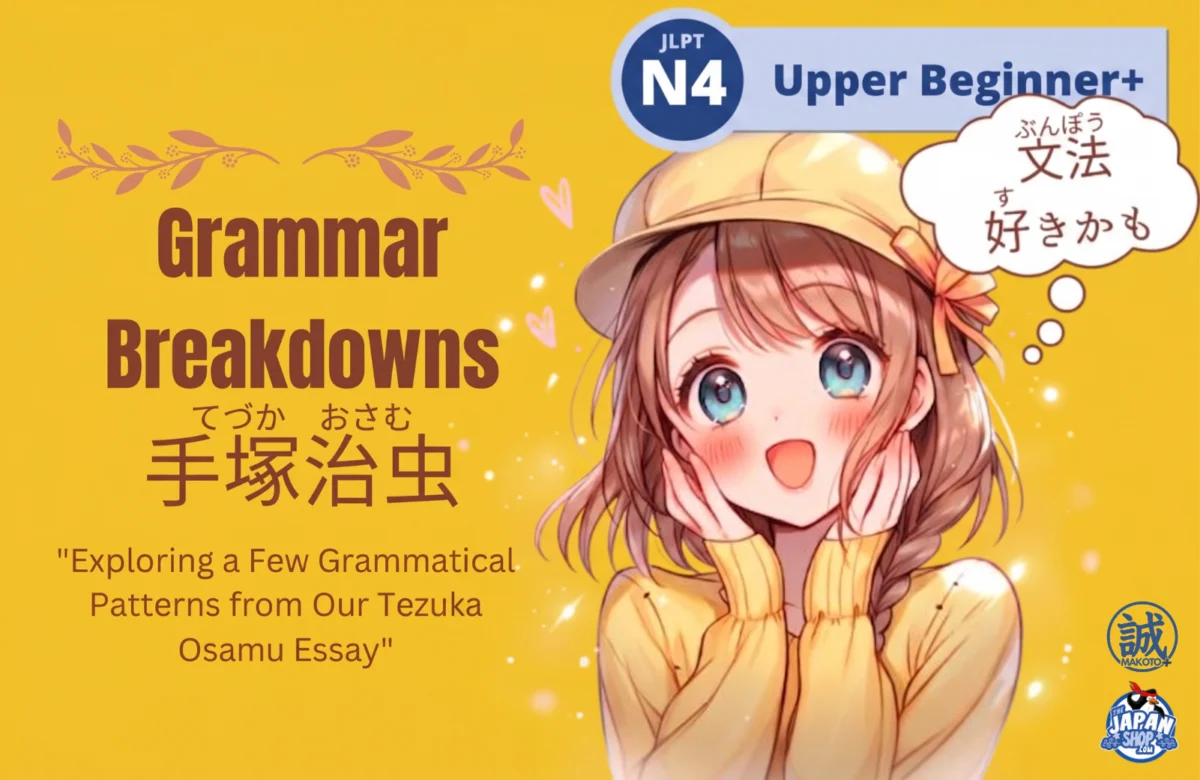
The journey toward Japanese fluency is often paved with rote memorization and disjointed textbook exercises. However, a new educational methodology is shifting the paradigm by integrating rigorous grammatical analysis with the captivating life stories of Japan’s most influential historical and cultural figures. By utilizing the Biographies of Great Japanese Figures digital bundle, learners are discovering that the most effective way to internalize complex linguistic structures is to see them in the context of genuine, high-level narratives.
This article explores how this unique pedagogical resource bridges the gap between novice-level comprehension and intermediate fluency, using the lives of legends like Osamu Tezuka—the "Godfather of Manga"—as a vessel for language acquisition.
The Intersection of Biography and Linguistics: Core Concepts
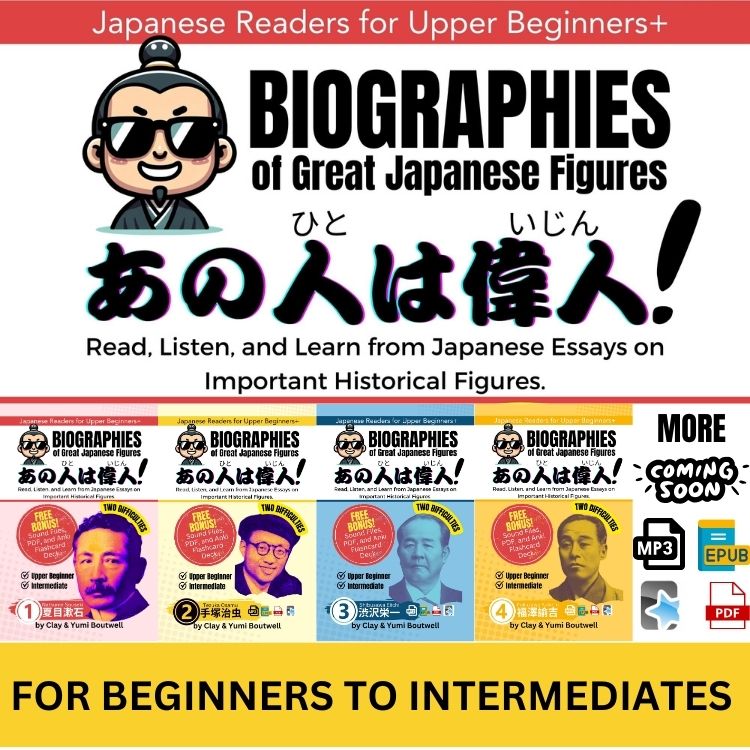
The Biographies of Great Japanese Figures bundle is not merely a collection of historical anecdotes; it is a structured curriculum designed to foster cognitive growth in language learners. Each biography is presented in two distinct versions. The first is composed in "simple Japanese," specifically tailored for beginners by adhering to the grammar and vocabulary standards of the JLPT N5 and N4 levels. The second version provides the same narrative in "natural Japanese," intended for intermediate learners.
The brilliance of this design lies in its scaffolding. Beginners are encouraged to engage rigorously with the vocabulary and grammatical breakdowns provided before each essay. This preparation acts as a bridge, allowing students to eventually transition into the more nuanced and complex sentence structures found in the intermediate version. By seeing the same information presented in two different linguistic registers, learners develop an intuitive sense of how Japanese shifts in tone, complexity, and formality.
Chronology of Learning: From N5 to Natural Fluency
The learning process advocated by this resource follows a deliberate, logical progression:
- Vocabulary Acquisition: Before tackling the narrative, the reader is provided with a comprehensive vocabulary list. This reduces the cognitive load during the reading process, ensuring that the student is not bogged down by unknown words.
- Grammatical Deconstruction: The resource isolates key grammatical structures, offering detailed breakdowns that explain not just the what, but the why of each construction.
- Contextualized Reading: By reading the simple version, the learner gains confidence and context. They understand the subject matter—the life, struggles, and triumphs of the figure—before they have to worry about the grammatical complexities of the intermediate version.
- The "Bridge" Strategy: By rigorously analyzing the simple essay, the learner builds the foundational knowledge necessary to decode the more challenging intermediate text, effectively preparing them for real-world Japanese communication.
Supporting Data: Understanding Key Grammatical Structures
To illustrate the pedagogical depth of these materials, we can examine three specific grammatical structures highlighted in the recent lesson materials. These examples demonstrate the practical application of the curriculum.

1. Expressing Evolution: The "Verb [plain form] + ようになる" Construction
This construction is essential for describing change over time, specifically the transition from inability to ability. It translates to "to become able to" or "to come to be in a state where one can."
- Context: It implies a change resulting from practice, learning, or adaptation.
- Example: If one were to discuss the development of a skill, such as reading Japanese, this structure perfectly captures the progression from "not being able to read" to "becoming able to read." It is a fundamental tool for learners to discuss their own personal growth in the language.
2. Identifying the Subject: The Particle "が" (ga)
While the particle wa (は) is often taught as the "topic marker," the particle ga (が) is the "subject marker." The Biographies bundle emphasizes its role in identifying exactly who or what is performing an action or exists in a specific state.
- Linguistic Nuance: In the provided lessons, the curriculum clarifies that ga marks the subject of the clause, regardless of whether that matches the English definition of a subject. For instance, in the context of "liking" something, ga marks the object of one’s affection, highlighting that it is the specific item being liked.
3. Maintaining Action: The "Masu-Stem + 続ける" (tsudzukeru) Construction
Compound verbs are a hallmark of natural Japanese. The combination of the masu-stem of a verb plus tsudzukeru allows the speaker to indicate the continuation of an action.
- Application: For example, taking the verb "to work" (hataraku) and adding tsudzukeru creates the term for "to continue working." This structure is indispensable for describing the career longevity of historical figures like Osamu Tezuka, whose creative output spanned decades.
Official Educational Perspectives and Pedagogy
Educators have long noted that "input hypothesis"—the idea that language is best acquired through comprehensible input—is most effective when the content is inherently interesting. The Biographies of Great Japanese Figures series excels here. By focusing on figures such as Tezuka, the curriculum taps into the reader’s existing interest in Japanese culture.
When a learner is interested in the subject matter, their motivation to decode the grammar increases. This is a deliberate strategy to combat the "plateau effect" often experienced by intermediate learners. The official design philosophy of the bundle is that by pairing high-interest historical content with high-utility grammatical patterns, the learner ceases to view grammar as an abstract chore and begins to view it as a necessary tool for understanding the "greatness" of the figures they are studying.
Implications for the Future of Language Acquisition
The implications of this approach extend beyond a simple textbook bundle. It suggests that the future of language learning lies in the "interdisciplinary" model. By blending history, biography, and linguistics, learners gain a dual benefit: they improve their proficiency in Japanese while simultaneously gaining a deeper cultural literacy regarding the figures who shaped the nation.
Furthermore, the focus on grammatical breakdowns—specifically those that explain the why of particles like ga or constructions like yō ni naru—demystifies the language. Many learners quit because they find Japanese particles and compound verbs to be "random" or "chaotic." A resource that provides a clear, logical, and repeatable framework for these structures provides the stability required to reach long-term fluency.
The Role of Digital Integration
The shift toward digital downloads for these materials also plays a significant role. With the ability to toggle between versions, use built-in lookup tools, and review grammatical breakdowns in a non-linear fashion, the modern learner is no longer restricted by the rigid structure of a physical textbook. This flexibility is essential for those balancing language study with professional or academic lives.
Conclusion: A Path Forward
The Biographies of Great Japanese Figures bundle serves as a prime example of how modern pedagogical tools can transform the learning experience. By moving away from the dry, repetitive drills of the past and toward a narrative-driven approach, learners are provided with a richer, more meaningful path to mastery.
Whether you are a beginner struggling to differentiate between particles or an intermediate learner looking to refine your grasp of natural, idiomatic Japanese, the key lies in the synthesis of input and analysis. Through the lives of the figures who defined Japan, students are finding the clarity and motivation needed to not just learn the language, but to truly inhabit it. As we continue to refine how we teach and learn, this fusion of content and grammar stands as a gold standard for the future of foreign language education.


 Neng Nana
 Asro
Asro