Ali Ikhwan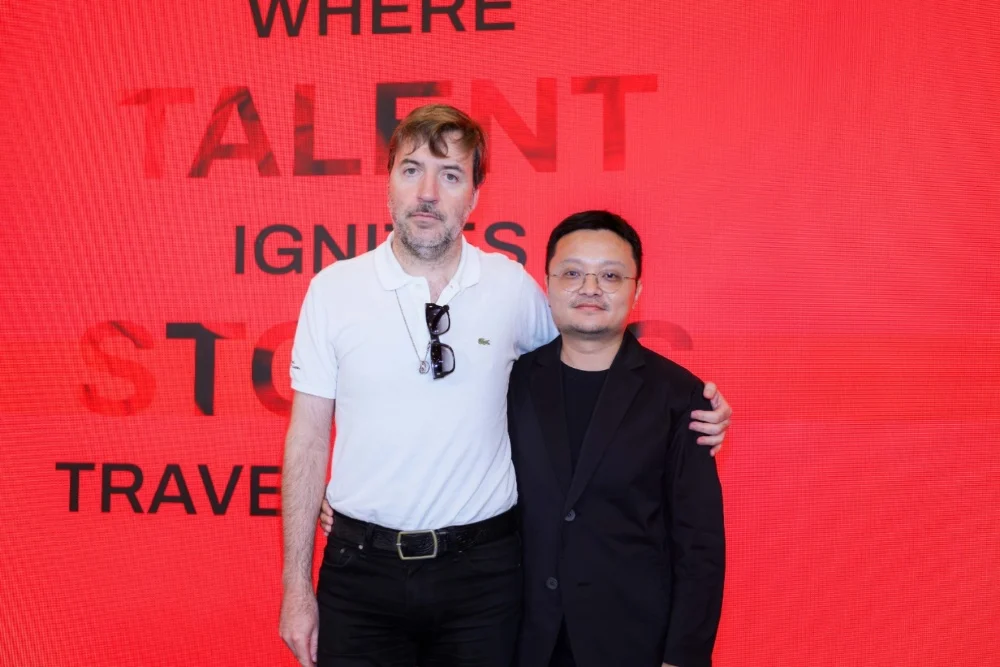
At the Shanghai International Film & TV Market, held in conjunction with the prestigious Shanghai International Film Festival, a fascinating cross-cultural dialogue unfolded between two of the most singular voices in contemporary world cinema: Spanish provocateur Albert Serra and Chinese auteur Bi Gan. Though they had only met for the first time in Paris just a month prior, the two filmmakers engaged in a rigorous, high-stakes debate on the nature of adaptation, the necessity of artistic "betrayal," and the encroaching influence of artificial intelligence on the creative process.
The panel, titled “Stories Travel Further: Literature & Cinema in Spain-China Dialogue,” served as a focal point for the market. It opened with a showcase of short films by Carla Simón, Turbo, and Nicolas Mendez, followed by a presentation from the Federation of Publishers’ Guilds of Spain, which sought to highlight the cinematic potential embedded within the Spanish literary canon. Yet, the ensuing conversation between Serra and Bi quickly transcended standard industry promotion, evolving into a philosophical masterclass on how to translate the written word into the moving image.
Chronology of a Creative Clash
The discussion began with the fundamental question of how literature informs the cinematic process. For Albert Serra, known for his idiosyncratic and often challenging works like Honor of the Knights and Afternoons of Solitude, the literary source material is merely a ghost in the machine.
“I just use some means or some very basic ideas that everybody knows, and from that point of departure, I create something on my own,” Serra remarked. “To write a script with a literary principle or to write a script based on a new idea—it’s not very different. The development of what you will do in the film is totally new and creative. I don’t care about the source; I just want to do a good, original, and personal film.”
Bi Gan, the visionary behind Kaili Blues and Long Day’s Journey Into Night, offered a more structural perspective. Rather than viewing literature as a blueprint for narrative, he treats it as a vessel for aesthetic organization. “A film’s title is its face,” Bi explained. “I often use book titles from literature as film titles, giving the audience a gateway into the story. Beyond that, my films incorporate poetic structures that set them apart from typical genre films. The narrative threads, the storytelling approach, and the character development all adapt a poetic structure.”
The Philosophy of "Betrayal"
Perhaps the most provocative moment of the panel occurred when the two directors debated the ethics of adaptation. Serra, characteristically blunt, argued that fidelity to a source text is often a sign of artistic weakness.
“Why would you want to adapt material that isn’t your own?” Serra challenged. “You have to be respectful to the material somehow, but if you aren’t willing to betray the original in order to create your own story, you are engaging in a lazy, narcissistic exercise. If you are just trying to recreate a book, you are a slave to it. You have to be brave enough to destroy the original to find the film beneath it.”
Bi Gan tempered this view by placing adaptation within a historical context. He acknowledged that while he finds Serra’s deconstructionist approach—specifically in Honor of the Knights—to be deeply compelling, the history of cinema is inextricably linked to successful literary translation. He pointed to the Film Noir movement as a prime example of how literature acted as an aesthetic engine for cinematic innovation.
“Adapting text to screen is a formidable task riddled with obstacles,” Bi noted. “Truly successful literary films are exceedingly rare because the transition from the page to the frame requires a fundamental shift in logic.”
The Paradox of Mediocrity
A striking point of convergence emerged when both directors posited that mediocre literature often serves as a better foundation for cinema than literary masterpieces.
“People who adapt good books are often too respectful,” Serra argued. “They feel trapped inside a prison. They want the artistic direction, the photography, and the script to match the greatness of the book, but the elements fail to ‘glue’ together. With bad books, filmmakers don’t feel that burden of reverence. They do whatever they want. They feel free.”
Bi agreed, noting that the "formidable task" of adaptation is often made harder by the heavy shadow of a well-known, high-quality text. The consensus among the two directors was clear: to create something truly cinematic, one must be willing to "forget" the original source material once the camera starts rolling.
Mutual Admiration: Finding Literature in the Image
Despite their differing approaches, the two men expressed profound respect for one another. Bi Gan spoke of his experience watching Serra’s Afternoons of Solitude, a documentary about bullfighting that eschews traditional narrative arcs.
“His film structured literature in cinematic language in a way that was completely new and fresh to me,” Bi remarked. “I saw scenes of clouds—some of them were quite long—but it didn’t feel dull. It felt like a literary experience because the narrative logic was so unexpected. It was poetry without words.”
Serra returned the compliment, citing Bi’s short film Resurrection as a masterclass in using imagery to alter the viewer’s relationship with language. “It inspires people to think about images differently,” Serra said. “It forces the audience to stop looking for a plot and start looking for a feeling.”
The Impending Shadow of AI
As the conversation turned toward the future, the directors addressed the rise of Artificial Intelligence in filmmaking. Both were deeply skeptical of the notion that AI could democratize or improve the creative process.
Bi Gan questioned the very premise of human-AI collaboration. “Language is a huge fantasy,” he said. “We think AI can create something based on our input, but the miscommunication is unsolvable. Telling an AI to complete a task has a natural contradiction within it—it lacks the human intent that makes art meaningful.”
Serra took the argument a step further, focusing on the psychological component of creativity. “The only thing AI will never have is innocence,” he stated. “AI is based on collecting data, but innocence is based upon deleting data. Real artistic filmmakers are unpredictable because they have the capacity to destroy what has been done before. If you think about a new form that has nothing in common with previous forms, you will always be ahead of AI.”
Implications for the Global Film Market
The dialogue between Serra and Bi at the Shanghai International Film & TV Market underscores a vital shift in how international cinema is being discussed. By moving away from commercial metrics and focusing on the philosophical "why" of filmmaking, the market highlighted the importance of auteur-driven projects in an era of franchise dominance.
The implications of their conversation are twofold: first, it signals a move toward a more fluid, borderless approach to adaptation, where literature serves as a spiritual rather than literal touchstone. Second, it reaffirms the role of the director as an "innocent" creator—one who must constantly shed the weight of existing data and traditional structures to remain original.
As the Shanghai International Film Festival continues to showcase global talent, the exchange between Serra and Bi stands as a testament to the enduring power of the medium. In a world of algorithms and content factories, these two directors advocate for a cinema that is, above all else, an act of defiance—a way of creating a universe that is entirely, and beautifully, one’s own.

 Evan Lee Salim
 Ammar Sabilarrohman