Siti Muinah
Valve has officially opened the doors for randomized reservations for its latest hardware endeavor: the Steam Machine. However, the anticipated launch has been met with a sobering reality check regarding consumer electronics pricing. With the base 512GB model starting at £879 / $1049 / €1039, and the 2TB version scaling up to £1149 / $1349 / €1359—further inflated by the optional Steam Controller bundle—the device finds itself in a precarious market position.
What was intended to be an accessible, entry-level PC gateway has, due to external macroeconomic forces, transformed into a premium-priced piece of hardware. As Valve navigates the complexities of global supply chains, the industry is forced to confront the harsh reality of "RAMnarök"—the catastrophic volatility in memory and storage costs that is currently reshaping the landscape of PC gaming.
The Financial Breakdown: Pricing the Steam Machine
The pricing structure announced by Valve reflects a significant departure from the company’s traditional hardware strategy, which usually prioritizes aggressive entry-level pricing to capture the widest possible user base.
- Base Model (512GB): £879 / $1049 / €1039
- High-Capacity Model (2TB): £1149 / $1349 / €1359
- Controller Bundle: +£59 / $79 / €79
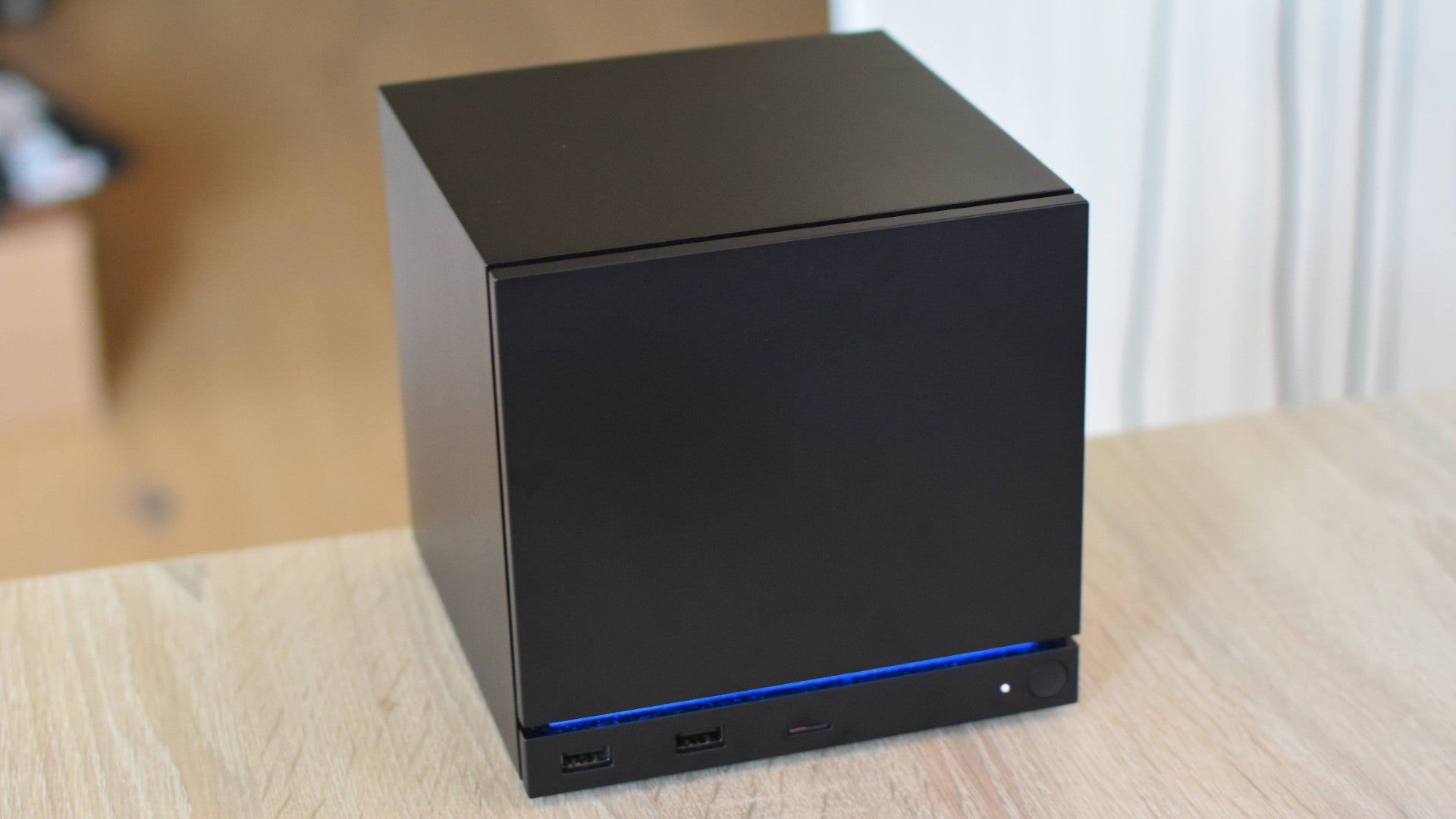
These figures place the Steam Machine in direct competition with mid-to-high-tier custom-built gaming PCs. While the device features a specialized, compact form factor that is undeniably elegant, the price-to-performance ratio is under intense scrutiny. Critics and consumers alike are asking whether the convenience of the Steam Machine’s ecosystem justifies the premium over a traditional desktop rig that could be upgraded modularly over time.
A Chronology of Supply Chain Instability
To understand how we arrived at these figures, one must look at the timeline of Valve’s procurement strategy. When the Steam Machine project began its development phase in early 2023, the global semiconductor market followed historical trends. Traditionally, the cost of components—specifically DRAM and NAND flash storage—tends to depreciate as technology matures and production scales.
Valve’s planning was rooted in this historical data, assuming that as the device approached its production cycle, the cost of its internal components would drop. However, the latter half of 2023 and the early months of 2024 saw a complete reversal of these trends. A "perfect storm" of manufacturing bottlenecks, raw material scarcity, and logistical hurdles caused component prices to spike, effectively blindsiding Valve’s original financial models. By the time the company secured the necessary inventory to initiate mass production, the manufacturing costs had ballooned far beyond the projected targets.
The Anatomy of the Shortage: Data and Market Forces
The primary drivers of this inflationary cycle are the memory and storage sectors. RAM—the backbone of any high-performance computing device—has become a volatile commodity. Industry analysts have noted that a variety of factors, ranging from geopolitical tensions affecting shipping lanes to a consolidated manufacturing market that limits supply-side elasticity, have created an environment where price stability is non-existent.
This is not a localized issue for Valve; it is a systemic crisis. The same "parts fuckery" affecting the Steam Machine has left its mark on other popular hardware. The Steam Deck OLED, once heralded as the undisputed champion of value-conscious portable gaming, recently saw its retail prices hiked by up to 46%. This trend signals a broader shift in the consumer electronics industry: the era of "cheap" high-performance hardware may be temporarily suspended until global supply chains reach a new, more stable equilibrium.
Official Responses: Valve’s Perspective
In an exclusive discussion, Valve designer Lawrence Yang and engineer Yazan Aldehayyat addressed the controversy head-on. Their comments underscore a shared sense of frustration within the company.
"The big, number one factor in cost is the components that make up the device," Aldehayyat explained. "We really wanted the Steam Machine to be a good entry-level PC. We want it to be affordable for as many people as possible. It’s definitely more expensive than we hoped."
Despite the price tag, Valve maintains that the Steam Machine still offers a compelling value proposition when compared to the broader "budget" gaming PC market. Because third-party manufacturers are subject to the same inflationary pressures, the Steam Machine remains competitive, even if it has lost its status as a "budget" alternative.
"We understand that it’s probably not as affordable as some might have hoped, and some people are going to be priced out," Aldehayyat conceded. "But we still think that even at this price point, comparing it to what’s available on the market, it’s still a good value."
When asked about the future of pricing and whether a reduction might be possible, the response was one of cautious transparency. Both Yang and Aldehayyat declined to offer speculative timelines, noting that the volatility of the market makes any forward-looking statement a liability. "At this moment," Yang stated, "component prices are too high, and components themselves are too rare, to make what we want, at the price that we want, when we want to."
Implications for the Future of PC Gaming
The implications of the Steam Machine’s current pricing are significant for the PC gaming industry. If a company with the market leverage and logistical expertise of Valve cannot keep prices within the "entry-level" bracket, the barrier to entry for new PC gamers becomes increasingly formidable.

The "Entry-Level" Dilemma
The goal of the Steam Machine was to bridge the gap between console convenience and PC versatility. By inflating the price, the target demographic—typically younger gamers or those looking to switch from consoles—may feel discouraged. The "budget" gaming PC category is undergoing an identity crisis; as components remain expensive, the definition of an "entry-level" machine is shifting upward, effectively gatekeeping higher-end experiences behind higher financial walls.
Manufacturer Agility
For hardware manufacturers, the lesson of 2024 is the need for greater supply chain agility. Valve’s public admission that their historical data on component price evolution failed them serves as a cautionary tale for the entire industry. Companies can no longer rely on the "inevitable depreciation" of hardware costs. Future product roadmaps will likely require more robust hedging strategies against component scarcity, which may lead to smaller, more localized production runs rather than global mass-market launches.
Conclusion: A Market in Flux
The Steam Machine stands as a monument to the current state of the hardware market: a sophisticated piece of engineering hampered by the rigid realities of global manufacturing. While the machine itself may provide a premium experience, the context of its launch serves as a stark reminder of how interconnected global technology supply chains truly are.
For now, the prospective buyer must decide if the Steam Machine’s unique ecosystem and form factor are worth the price of entry in an era of silicon scarcity. Valve’s refusal to promise price drops or speculate on future market conditions is perhaps the most honest part of this entire launch. In a world where the price of RAM can swing on the whims of global logistics, the only certainty is that the industry is in a period of painful transition.
Whether this represents a permanent shift in hardware pricing or a temporary correction remains to be seen. However, as it stands, the Steam Machine is a reminder that in the world of high-end technology, the cost of progress is often passed directly to the user.


 Asro
Asro
 Muslim