Evan Lee Salim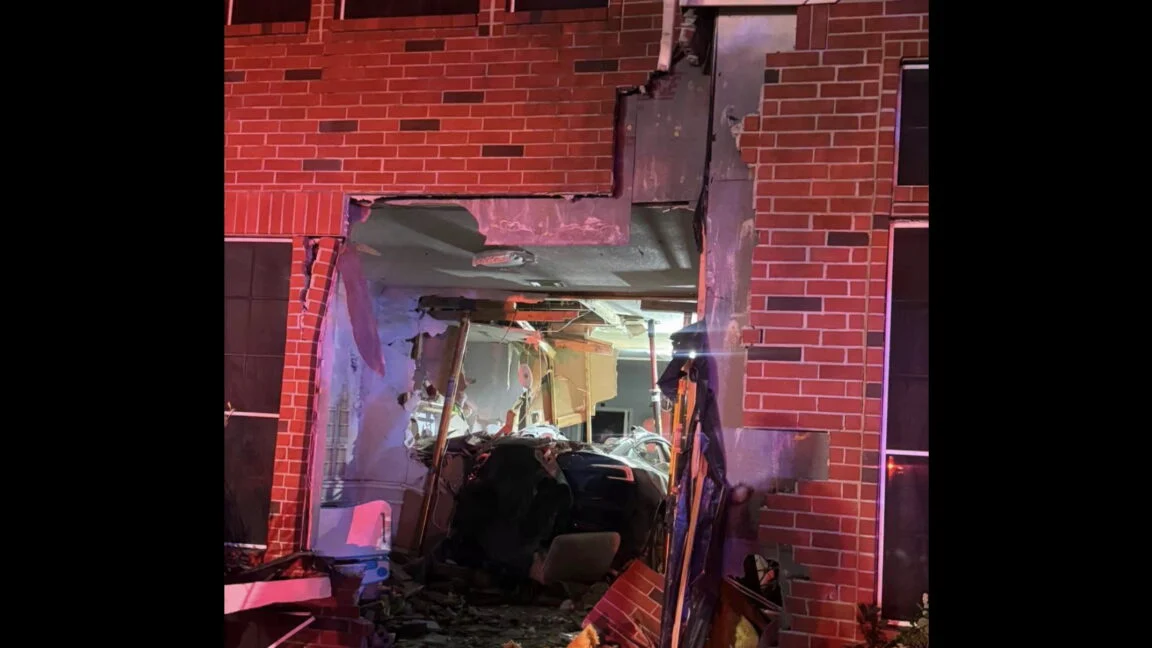
By Investigative Staff
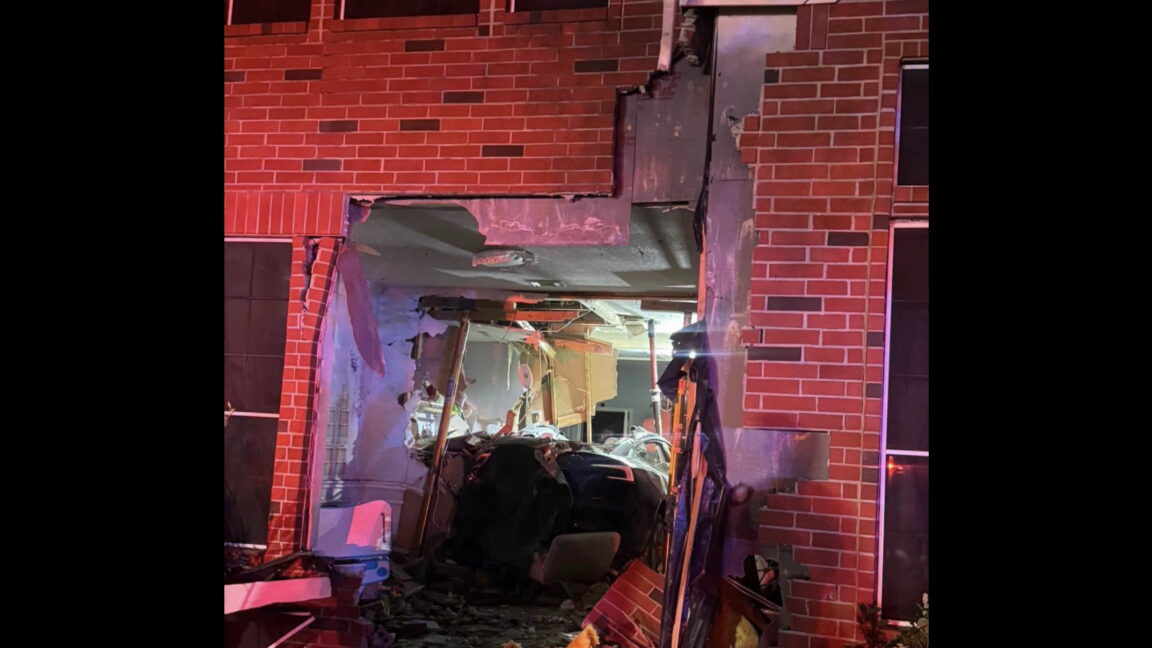
The quiet routine of a Friday afternoon in a Harris County, Texas, neighborhood was shattered in an instant, leaving a family mourning and a community grappling with the deadly intersection of human error and automated technology. Martha Avila, a 76-year-old grandmother, was inside her home when a Tesla Model 3, operating under the vehicle’s automated driver-assistance system, veered off the road and plowed through the brick exterior of the residence at a high rate of speed.
The tragedy has reignited a fierce national debate regarding the marketing, safety, and regulatory oversight of Tesla’s Autopilot system. As the Harris County Sheriff’s Office investigates the circumstances of the crash, the incident serves as a grim reminder of the gap between the "magical" promises of self-driving technology and the lethal reality of its current limitations.
The Tragedy: A Life Cut Short
Martha Avila was a fixture in her family’s life, a woman her daughter, Jennifer Barbour, described as being in excellent health with no reliance on medication. The suddenness of her death has left her family in a state of profound shock. Ms. Avila, who lived with her daughter, son-in-law, and three young grandchildren, was in the front room of the home when the vehicle struck.
"She didn’t deserve to go that way," Barbour told local media outlets, struggling to reconcile the sudden loss of a woman she believed might live to be 100. The family is currently displaced, residing in a hotel while they navigate the trauma of the event and the uncertainty of the ongoing investigation. For Barbour, the lingering question is not just about the driver’s actions, but the role of the machine itself. "I don’t know if it’s his fault or the car’s fault or what really happened," she said. "I’ve never seen a car go that fast."
Chronology of a Collision
According to the Harris County Sheriff’s Office, the driver, identified as Michael Butler, was operating the Tesla Model 3 with its automated driver-assistance features engaged at the time of the crash. Preliminary reports indicate that Butler failed to maintain his lane, exited the roadway, and accelerated into the residence.
While the exact speed of the vehicle remains a subject of investigation, doorbell camera footage reviewed by investigators and shared by the media paints a harrowing picture of the impact. The destruction was catastrophic, rendering the home uninhabitable. Law enforcement officials have confirmed that Butler was not under the influence of alcohol or drugs at the time of the incident and has been cooperative with investigators, providing insights into the engagement of the vehicle’s systems.
The Disconnect: Marketing vs. Reality
The fatal crash occurred just one day after Tesla’s official X (formerly Twitter) account promoted content suggesting the "life-changing" and "lifesaving" potential of its technology. This marketing strategy has long been a point of contention for safety advocates.
While Tesla’s owner’s manual explicitly states that drivers must remain attentive and keep their hands on the wheel, the company’s public-facing communications often emphasize the convenience of hands-free operation. In May, Tesla posted a video showing drivers with their hands off the wheel, engaged in tasks like drinking coffee—a direct contradiction to the safety protocols mandated in their own technical documentation.
Critics argue that this "mixed messaging" creates a dangerous level of complacency among users. By branding the software as "Autopilot" and "Full Self-Driving," Tesla risks conditioning drivers to over-rely on the system, leading to the "automation bias" that experts have warned about for years.
Regulatory Landscape: A Shift in Priority
The accident comes at a pivotal moment for the National Highway Traffic Safety Administration (NHTSA). Under the current political climate, the agency has moved toward a philosophy of rapid deregulation, aiming to remove "unnecessary barriers" for manufacturers of automated vehicles (AVs).
Recent proposals by the NHTSA, if enacted, would allow companies like Tesla to remove traditional dashboard indicators, such as transmission shift positions, and eliminate requirements for manual windshield wipers and defogging controls. Tesla has argued that these components are obsolete because their automated driving systems rely on cameras rather than human visual input.
Safety advocacy groups, most notably Advocates for Highway and Auto Safety, have pushed back against these proposals. They argue that if a vehicle’s automated system fails or if the vehicle is involved in a collision, the absence of basic manual controls could be the difference between life and death for occupants trying to escape. "It is critically important that passengers of a vehicle operated by an ADS can determine if the vehicle is in the proper gear before exiting or entering the vehicle," the organization stated in a recent regulatory comment.
The Myth of the "94 Percent"
A central pillar of the argument for rapid AV deployment is the oft-cited 2019 NHTSA study suggesting that 94 percent of accidents are caused by human error. Industry leaders, including Tesla, have frequently used this statistic to suggest that replacing human drivers with software will inherently lead to a massive reduction in fatalities.
However, safety experts argue this is a dangerous misinterpretation of the data. The NHTSA itself has clarified that the "human error" designation in that study was meant to identify the "critical reason" for a crash, not to assign ultimate fault or suggest that the environment or the vehicle design were not contributing factors. By focusing solely on human error, manufacturers may be side-stepping the need for rigorous vehicle safety standards and engineering redundancy.
Institutional Changes and Recalls
The history of Tesla’s Autopilot has been marked by regulatory friction. In 2023, Tesla was forced to recall over 2 million vehicles—effectively its entire fleet equipped with Autopilot—after regulators determined the system’s design did not sufficiently ensure driver attentiveness.
Since that recall, the regulatory environment has shifted significantly. Reports suggest that the Department of Government Efficiency has led efforts to downsize the NHTSA’s expert staff, particularly those specializing in AV safety evaluation. This depletion of expertise coincides with a period where Tesla’s Full Self-Driving (FSD) system has faced increased scrutiny, including a new federal probe opened last October following alarming reports of performance degradation.
Despite these warnings, NHTSA Administrator Jonathan Morrison has signaled that 2026 will be a "big year" for autonomous vehicle rulemaking. In a speech at CES, Morrison emphasized that the agency intends to move with "a sense of urgency" to enable the commercial deployment of vehicles that do not require steering wheels or brake pedals, characterizing the development of such technology as a top national priority.
Implications for the Future
The death of Martha Avila is more than a single statistical data point; it is a human tragedy that highlights the profound societal cost of experimental technology being deployed on public roads. As the investigation into the Harris County crash proceeds, the results may force a re-evaluation of the current "move fast and break things" approach to automotive autonomy.
The fundamental tension remains: Can the automotive industry reach a level of technological maturity where "no human intervention" is truly safe, or are we sacrificing human lives on the altar of innovation? Advocates argue that even a single fatality is an unacceptable outcome of unproven technology. For the family of Martha Avila, the loss is absolute, and the quest for accountability has only just begun.
As the regulatory bodies move to clear the path for a future of autonomous vehicles, they are increasingly confronted with the grim reality that the "pathway" is paved with uncertainty, and for many families, the consequences of a system failure are irrevocable. The industry’s promise of a safer, more efficient future now stands in direct opposition to the growing demand for transparency, rigorous testing, and a return to safety-first regulation.

 Muslim