Reynand Wu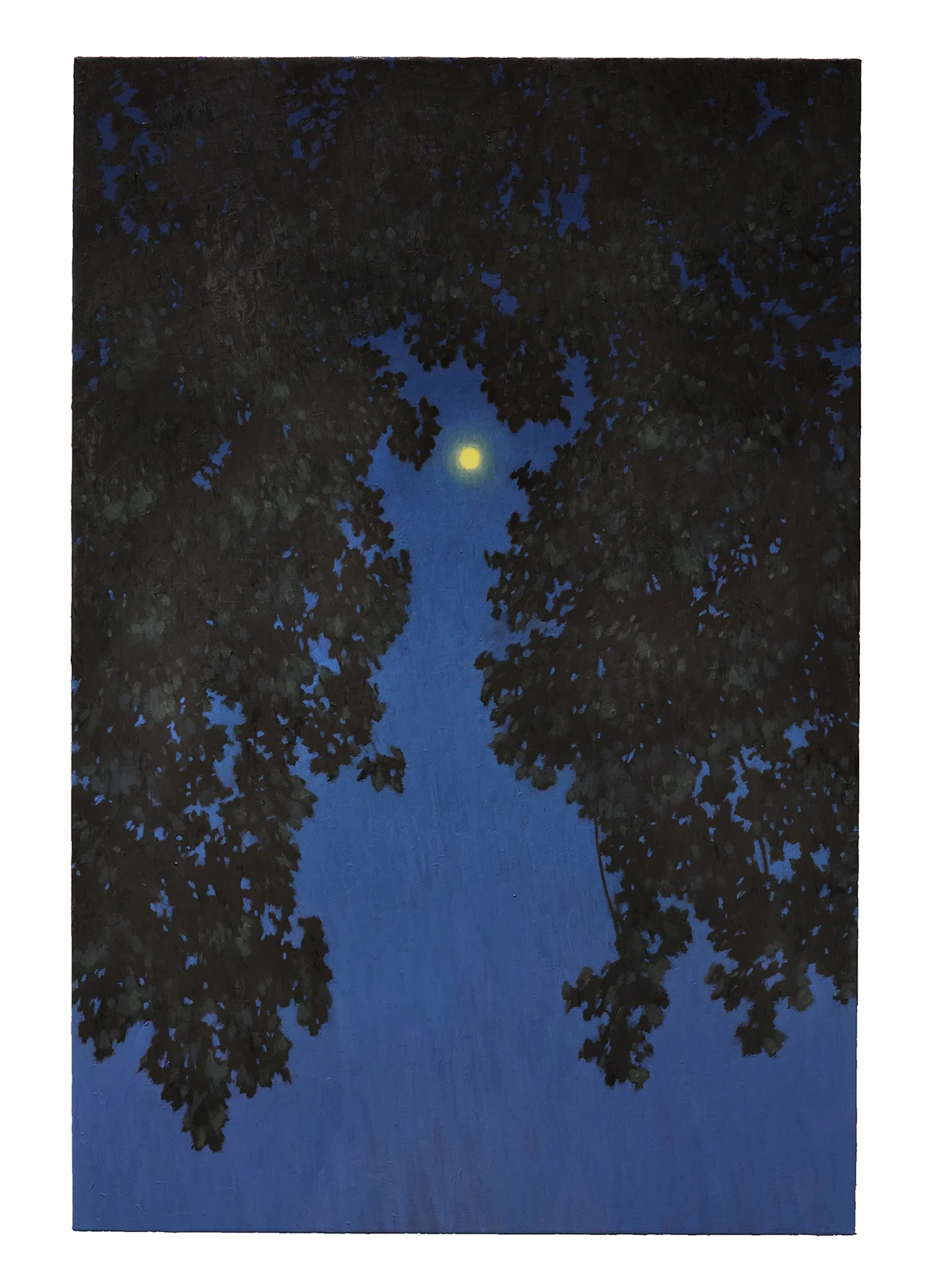
In the quiet corners of contemporary figurative painting, Brooklyn-based artist Xiangjie Rebecca Wu is constructing a visual language that feels both deeply intimate and profoundly universal. Her recent body of work, a sophisticated synthesis of memory, philosophy, and the fragile nature of identity, serves as a bridge between the historical self and the present moment. By weaving together the remnants of her upbringing in Jiangyin, Jiangsu, China, with the fluid possibilities of imagination, Wu has established herself as a formidable voice in the dialogue surrounding the "palpable fear of insecurity" that defines the modern human condition.
The Genesis of an Aesthetic: A Chronology of Artistic Development
To understand the weight and texture of Wu’s current canvases, one must trace the trajectory of her academic and personal evolution. Born in Jiangyin, China, Wu’s early exposure to the visual and cultural environment of her homeland provided the bedrock for her later inquiries into stillness and domesticity.
The first major milestone in her formal development occurred at the College of Wooster, where she pursued a dual degree in Studio Art and Philosophy. This intellectual grounding in existentialism and phenomenology, completed in 2022, is clearly visible in her approach to the canvas. Rather than merely depicting subjects, Wu treats her paintings as philosophical propositions.
Following her undergraduate studies, Wu transitioned to the Pratt Institute in New York, where she completed her MFA in 2024. It was during this period that her work matured, shifting from representational exercises to the evocative, psychological landscapes that define her current practice. In the competitive crucible of the New York art scene, Wu managed to carve out a unique niche—a space where "millennial Chinese objects" function as emotional anchors in a sea of abstraction.
The Anatomy of Contemplation: Analyzing the Work
Wu’s methodology is less about the transcription of reality and more about the excavation of the soul. In her own words, she describes her process as "embarking on secret voyages within the soul, oriented toward a lost time and space." This conceptual framework invites the viewer to look past the surface of the pigment to the underlying strata of history.
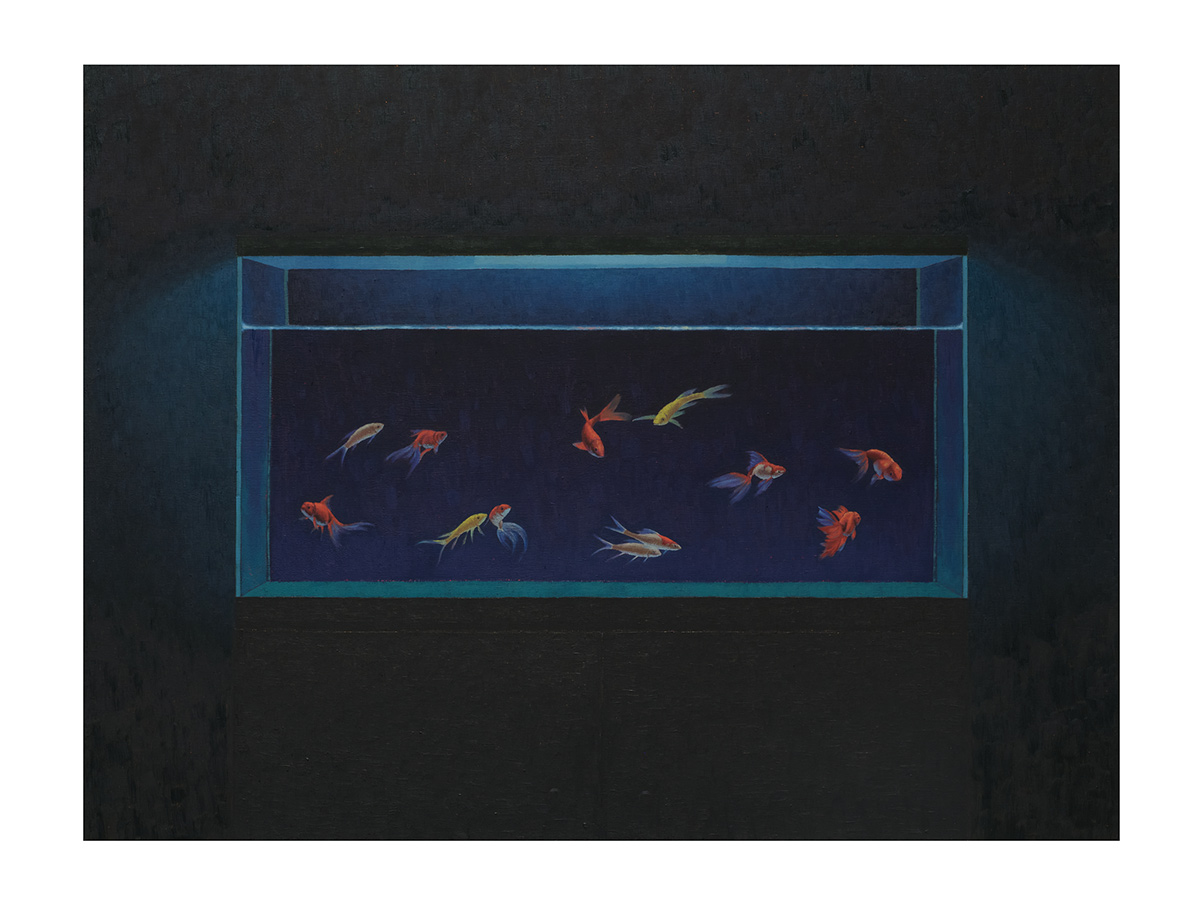
The Personification of Still Life
One of the most striking aspects of Wu’s portfolio is her treatment of inanimate objects. In her hands, still lifes become "personified in their presence." A teapot, a chair, or a fragment of architecture is rarely just a physical entity; instead, these objects are invested with the gravity of the memories they once witnessed. By placing these objects in "closed narrative environments," Wu creates a sense of familiarity that is simultaneously remote—a feeling akin to waking from a dream where the setting is recognizable, but the logic is entirely foreign.
The Balance of Realism and Symbolism
Wu’s technical proficiency allows her to walk the tightrope between strict realism and emotive symbolism. Her brushwork is precise enough to ground the viewer in the physical world, yet she introduces distortions—shifts in light, perspective, and color—that signal the unreliability of memory. Her work explores the idea that our relationship to history is "always vulnerable and ephemeral." By salvaging fragments of time and reassembling them on the canvas, she attempts to "preserve an awareness of existence" in an era defined by rapid flux and digital erasure.
Supporting Data: The Philosophical Underpinnings
Wu’s work does not exist in a vacuum. It is heavily influenced by the concept of "the palpable fear of insecurity," a phrase she uses to describe the existential anxiety that permeates modern life. In an interview regarding her practice, Wu offered a profound reflection on the nature of loss:
"In contemplation, I dive deeply into myself… those shards that were once parts of me coalescing within me and then dissipating. Sometimes loss is unavoidable; memories of times once filled me with sorrow, and our relationship to history is always vulnerable and ephemeral."
This perspective aligns with contemporary discourse in contemporary art theory, specifically regarding the "archival impulse"—the desire of artists to act as curators of their own personal history. Wu’s paintings serve as an archive of a life lived across cultures, using the canvas as a laboratory for the "salvaging and reassembling of the self."

Implications: The Role of the Artist in an Uncertain World
The implications of Wu’s work are significant, particularly in the context of the globalized art market. As artists continue to grapple with themes of displacement and the loss of cultural continuity, Wu’s work provides a compelling case study on how to synthesize the personal with the political without sacrificing aesthetic integrity.
The Doorway for Contemplation
By utilizing symbols specific to her upbringing in China, Wu offers a window into a specific cultural context while keeping the door open for universal interpretation. Her work suggests that the "inner, hidden character of existence" is only revealed through the act of sustained seeing. In an age characterized by the rapid, superficial consumption of imagery, Wu’s demand for "contemplation" acts as a form of resistance. She asks the viewer to slow down, to engage with the "shards" of her history, and by doing so, perhaps recognize the fragments of their own pasts.
The Future of Figurative Painting
Wu’s work signals a shift in figurative painting. She moves away from the grand, epic narratives of the past, focusing instead on the "micro-narratives" of the individual. As she continues to evolve, the impact of her MFA training and her immersion in the Brooklyn art scene will likely push her into more complex explorations of spatiality. Her ability to suspend her subjects "between obscurity and beauty" is a hallmark of a mature artist who understands that the most profound truths are often found in the shadows of what is forgotten.
Beyond the Canvas: The Expanding Booooooom Ecosystem
While Wu’s work invites quiet introspection, the broader art community continues to foster platforms for such voices to flourish. Recent developments in the creative ecosystem, such as the launch of Booooooom Studio, indicate a growing desire to professionalize and centralize the support systems for emerging artists.
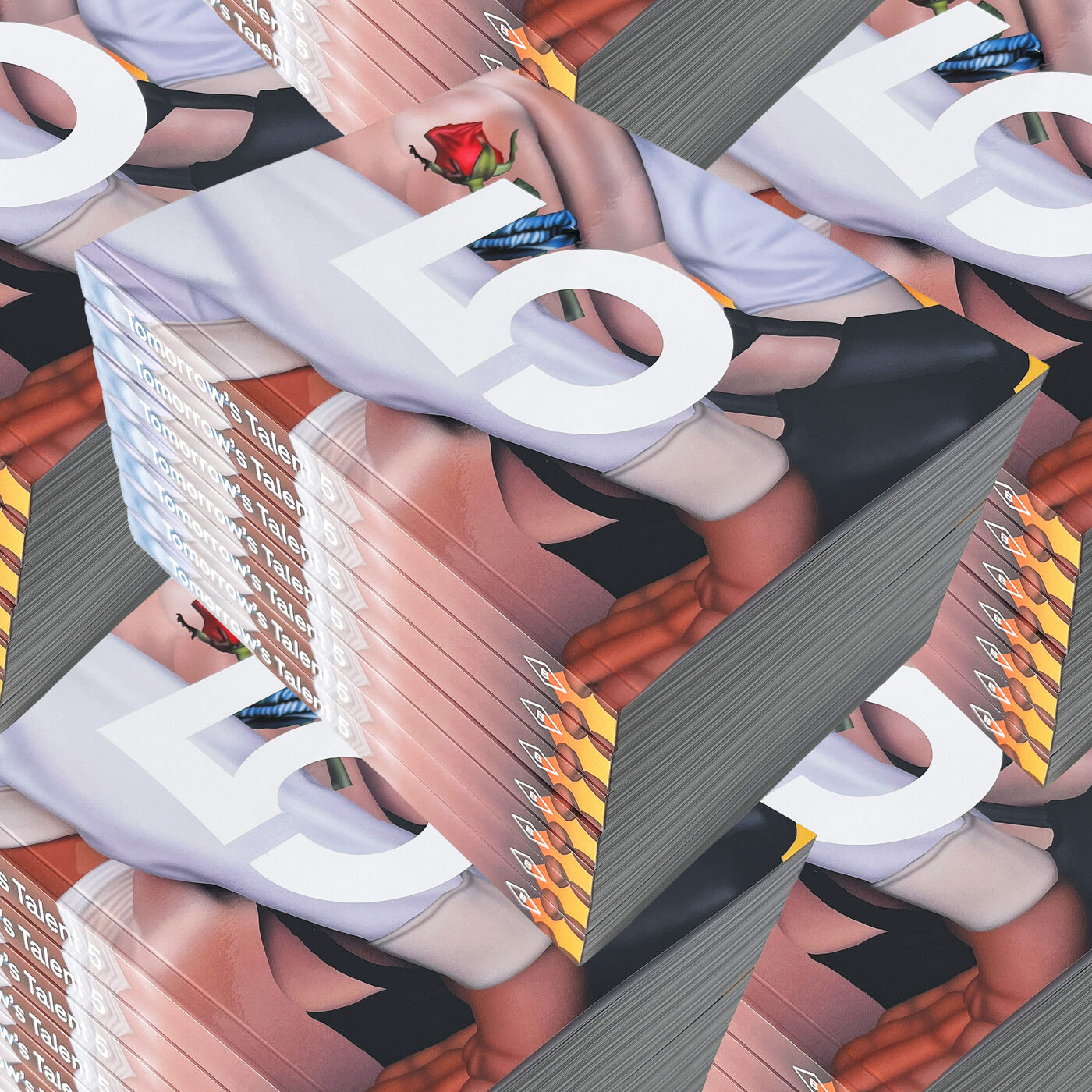
The initiative, described by its founders as a way to "make the work we’ve already been doing more official," aims to create a more robust network for artists like Wu to share their process, receive feedback, and reach wider audiences. Furthermore, the publication of the fifth volume of Tomorrow’s Talent, a massive 276-page compendium featuring over 60 artists, serves as a testament to the current vitality of the creative scene. These resources provide the necessary scaffolding for artists to sustain their careers in an increasingly volatile economic landscape.
Conclusion: Painting as an Act of Survival
Xiangjie Rebecca Wu’s work is a poignant reminder that painting remains one of the most vital tools for navigating the complexities of human existence. By embracing the vulnerability of memory and the inevitability of loss, she has created a body of work that is not merely decorative, but essential.
Her practice is a testament to the idea that we are all, in some way, "salvaging and reassembling the self." Whether through the specific lens of millennial Chinese objects or the universal experience of nostalgia, Wu provides a sanctuary for the viewer. As she continues her career in Brooklyn, one can only expect her "secret voyages" to become more daring, offering further insights into the beautiful, fleeting, and often painful process of becoming who we are.
In the final assessment, Wu’s paintings do not just depict the world; they interpret it. They remind us that while the past may be a "lost time and space," the act of remembering—when rendered in oil and imagination—can bridge the gap between what was, what is, and what might yet be. As she continues to navigate the space between the concrete and the metaphorical, Xiangjie Rebecca Wu stands as an artist of profound sensitivity, one whose work will undoubtedly continue to resonate as a lighthouse for those navigating their own fragments of time.

 Dwi Wanna