Reynand Wu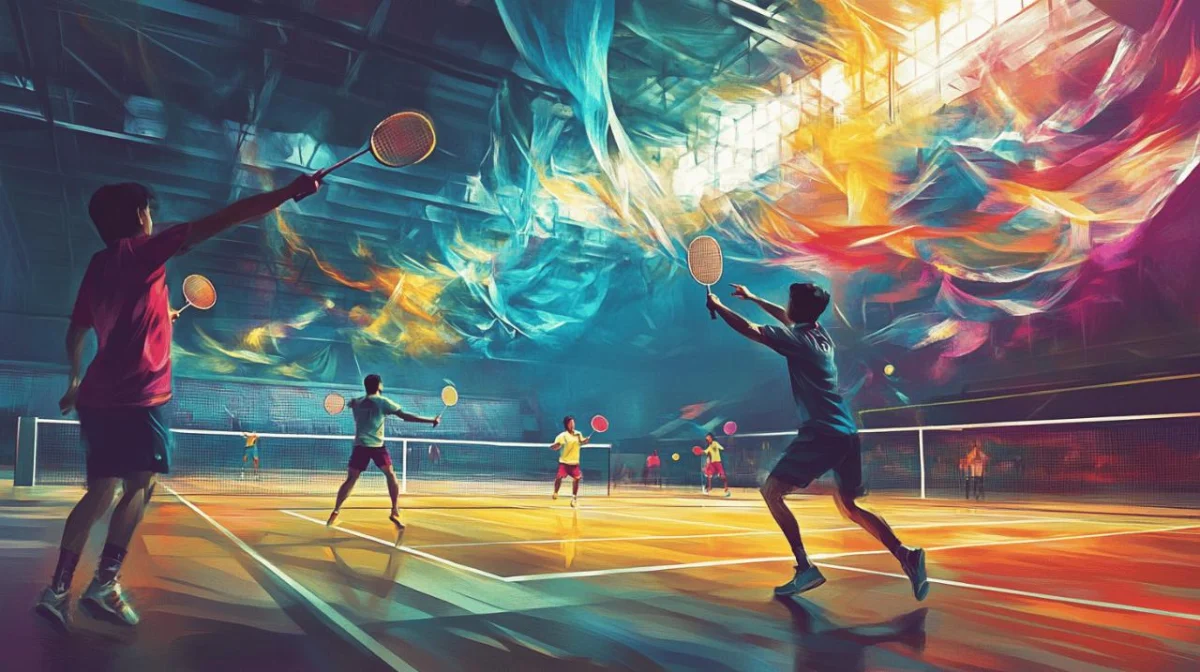
The intersection of professional sports and visual storytelling has long been a fertile ground for artistic expression, but few pairings are as aesthetically dynamic as badminton and manga. In recent years, the high-octane world of international badminton—defined by the Yonex All England, the Thomas Cup, and the Olympic Games—has transcended the physical court to become a cornerstone of Japanese narrative art. This fusion does not merely depict matches; it captures the kinetic poetry of the sport, turning the flight of a shuttlecock into a masterclass in visual tension.
Main Facts: The Intersection of High-Speed Sport and Visual Art
At its core, the relationship between badminton and manga is built on the shared pursuit of "intensity." Badminton is the fastest racket sport in the world, with smashes reaching speeds that challenge human reaction times. For a mangaka (manga artist), these physical constraints provide the perfect canvas for exaggerated perspective, speed lines, and the dramatic stalling of time.
The phenomenon is characterized by a "hyper-realistic stylized approach." Rather than providing a documentary-style recreation, artists utilize the medium’s unique visual vocabulary to emphasize the internal psychology of the athlete. The sweat, the focused gaze, the tension in the wrist, and the explosive power of a jump smash are magnified through the lens of character development. By integrating these technical elements, manga has effectively become an unofficial ambassador for the sport, introducing the nuances of badminton to a global audience that might otherwise never pick up a racket.
Chronology: From Court to Paper
The integration of professional badminton into the manga canon has occurred in distinct waves, often tethered to the sport’s most prestigious calendar events:
- The Early Influence (1980s–1990s): Initial depictions were sporadic, often used as secondary sports in larger "school life" dramas.
- The Yonex All England Awakening (2000s): As the Yonex All England Open became the ultimate benchmark for badminton excellence, mangakas began looking at the tournament’s history as a source of "mythic" storytelling.
- The Olympic Surge (2020–2021): The Tokyo Olympic Games served as a massive cultural catalyst. With the sport in the spotlight on home soil, there was an unprecedented surge in demand for badminton-centric narratives.
- The Modern Webtoon Era (2022–Present): The shift to digital platforms (webtoons) has allowed for a more "cinematic" approach, where color, vertical scrolling, and animation-like transitions are used to mimic the rapid-fire nature of professional rallies.
Supporting Data: Why Badminton Resonates with Mangakas
The success of badminton in manga is not arbitrary; it is rooted in the sport’s inherent structure. Analysis of current popular sports manga reveals that authors consistently gravitate toward three key pillars of the game:
- Kinetic Geometry: The trajectory of the shuttlecock—which can change direction in a millisecond—allows artists to experiment with complex panel layouts.
- Solo vs. Team Dynamic: The juxtaposition of singles matches (representing internal psychological struggle) and the Thomas Cup (representing team loyalty and national pride) provides a dual-narrative structure that keeps readers engaged.
- The "Legend" Factor: By mirroring the careers of real-world champions—such as the dominance of Lin Dan or the technical brilliance of Japanese national team stars—manga artists create a bridge between reality and fiction. Readers often find themselves checking actual match results after reading a chapter, indicating a high level of "cross-pollination" between fanbases.
Official Perspectives: The Synergy Between Federations and Creators
While sports federations traditionally focus on the competitive aspect, there is a growing recognition that pop culture is vital for recruitment and engagement. Representatives from organizations overseeing events like the Japan Open have noted that the "manga-fication" of the sport has provided a significant boost to youth interest.
"When a child sees a character perform a ‘technique’ that is grounded in the reality of a professional athlete’s movement, they become curious about the sport itself," says one industry observer. "The manga serves as a bridge. It makes the technical barrier to entry feel like a journey of personal growth rather than just a series of rules."
Furthermore, several collaborations have seen professional players providing motion-capture data or technical advice to artists to ensure that the "special moves" depicted in the manga remain anchored in the physics of the sport. This creates a feedback loop where the sport informs the art, and the art inspires the next generation of professional players.
Implications: The Evolution of Sports Narrative
The influence of these adaptations has profound implications for both the publishing industry and the sporting world.
The "Technical Realism" Trend
Mangakas are no longer satisfied with simply drawing a shuttlecock hitting a racket. The current trend involves a deep-dive into the mechanics of the game. Readers now expect accurate depictions of racket tension, footwork patterns, and the specific grip styles required for net play. This "technical realism" has set a new standard for sports manga, moving it away from pure fantasy and toward a genre that values athletic authenticity.
Global Outreach through Digital Platforms
The transition from traditional paper manga to digital webtoons has democratized the consumption of these stories. A reader in Europe or Southeast Asia can now follow a story about a protagonist dreaming of the Thomas Cup in real-time. This has created a global community of "badminton enthusiasts" who share a common language—one built on the visual and emotional vocabulary of these stories.
The Psychological Depth of Competition
Perhaps the most significant implication is the way these works treat the "psychology of the smash." By focusing on the mental strain of high-level tournaments, these manga provide a window into the life of an elite athlete. They tackle issues of injury, burnout, the pressure of national expectations, and the camaraderie of team competition. This elevates the genre, transforming it from mere "action" to a sophisticated exploration of the human condition under pressure.
Looking Forward: The Future of the Court
As we look to the future, the integration of technology and storytelling will likely deepen. We are already seeing the emergence of interactive manga experiences, where readers can influence the outcome of a match or explore the history of the Yonex All England through augmented reality features.
The "manga-fication" of badminton is not a passing trend; it is a permanent evolution in how we consume and appreciate sport. By turning the sweat and strategy of the court into the ink and emotion of the page, creators are ensuring that the spirit of the game—the pursuit of perfection, the agony of defeat, and the euphoria of a winning smash—will continue to inspire readers long after the final shuttlecock has landed.
In this unique creative ecosystem, every match is a story waiting to be told, and every athlete is a hero in a grand, ongoing epic. The legacy of the great tournaments is no longer just in the record books—it is etched into the very fabric of popular culture, ensuring that the rhythm of the game remains as vibrant and electric as the art that celebrates it.


 Siti Muinah
 Azzam Bilal Chamdy