Rifan Muazin
Warning: This article contains significant spoilers for the Season 3 premiere of "House of the Dragon," titled "Salt and Sea, Fire and Blood."
The premiere of House of the Dragon Season 3 has reignited the fiery debate surrounding the adaptation of George R.R. Martin’s Fire & Blood. While the production team has been praised for its high-octane spectacle and visceral portrayal of the Dance of the Dragons, the latest episode, "Salt and Sea, Fire and Blood," featured a glaring omission that has left book purists and casual viewers alike questioning the narrative direction of the series. During the harrowing Battle of the Gullet, two pivotal figures were conspicuously absent: Aegon III (the Younger) and Viserys II, the two youngest sons of Rhaenyra Targaryen and Daemon Targaryen.
In Martin’s source material, the fate of these two princes is inextricably linked to the brutality of the naval conflict. As the Triarchy fleet descends upon the gullet, the boys are meant to be spirited away to the safety of Pentos aboard a ship called the Gay Abandon. Their capture by the invading armada serves as one of the most traumatizing catalysts of the civil war, turning a military engagement into a deeply personal tragedy for Rhaenyra. By cutting this subplot, the series has fundamentally altered the stakes of the battle, leading showrunner Ryan Condal to step forward and explain the production realities behind this controversial creative choice.
The Chronology of the Conflict and the Book-to-Screen Discrepancy
To understand the weight of this change, one must look at the established canon of Fire & Blood. The Battle of the Gullet is widely considered the bloodiest naval engagement of the Dance of the Dragons. In the novel, the Velaryon fleet, supported by Jacaerys Velaryon on his dragon Vermax, attempts to break the blockade imposed by the Triarchy.
In the text, the tragedy is twofold: Jacaerys is killed during the assault, and his younger half-brothers, Aegon and Viserys, are lost at sea. Aegon famously manages to escape the carnage on the back of his young dragon, Stormcloud, arriving at Dragonstone wounded and traumatized, serving as the sole bearer of the horrific news. Viserys, however, is not so lucky. His disappearance leaves Rhaenyra’s camp in a state of mourning and desperation, as the loss of a royal heir shifts the political leverage of the war entirely.
In the television adaptation, however, the sequence focuses primarily on the military maneuvers and the immediate loss of Jacaerys. The absence of the young princes means that the visceral "lost child" narrative—a staple of GRRM’s writing—is currently sidelined. This shifts the focus from the internal, domestic trauma of the Targaryen household to the macro-political consequences of the naval defeat.
Logistical Hurdles: The "Safety and Practicality" Factor
The primary reason for the exclusion of Aegon and Viserys, according to showrunner Ryan Condal, is not a lack of narrative vision, but rather the logistical constraints of filming a high-budget fantasy series involving young children.
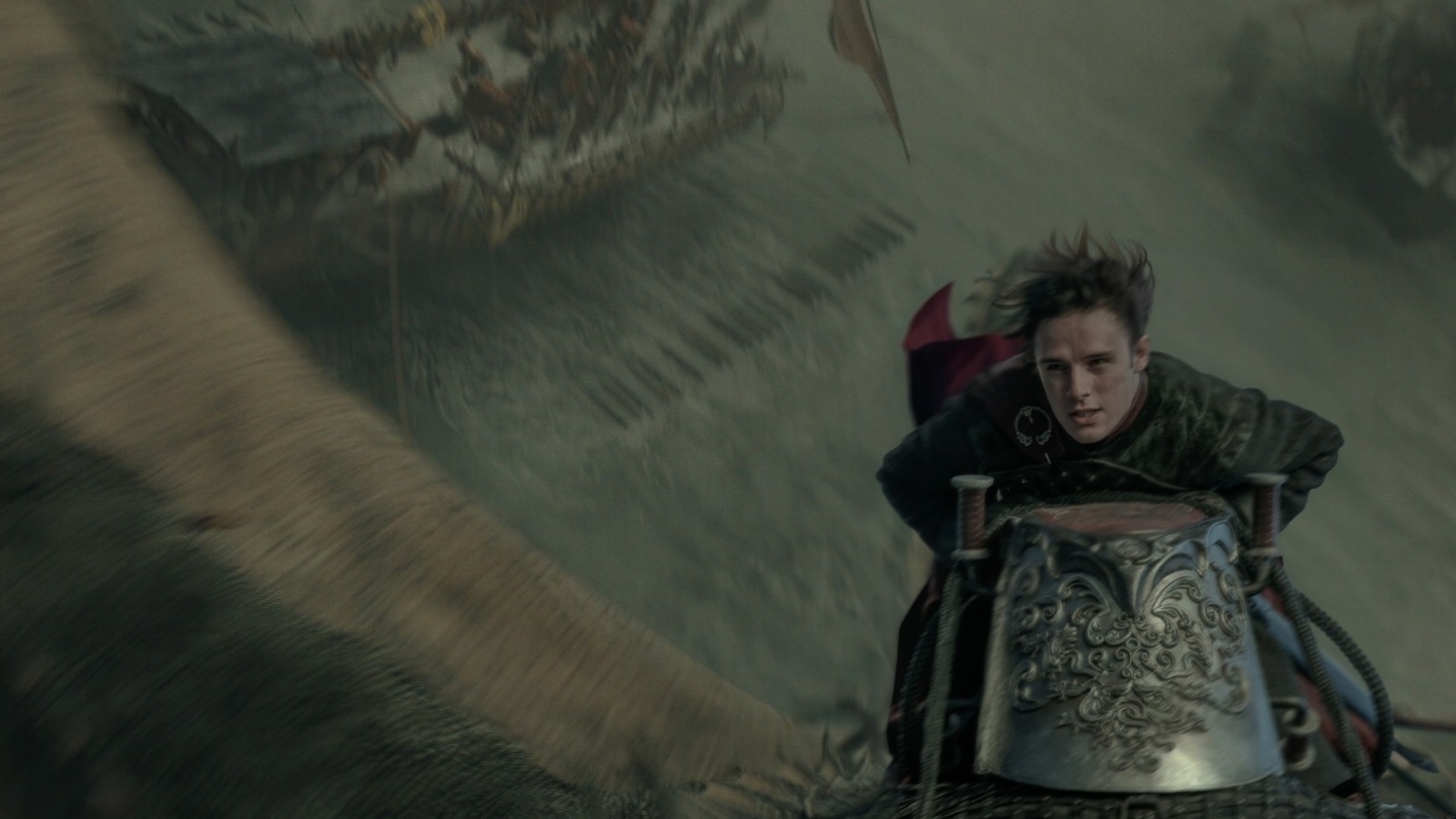
Speaking to IGN following the premiere, Condal was candid about the challenges posed by the age of the actors cast for these roles. "The kids that we had for Aegon and Viserys… are just not of an age where you can involve them with complex dramatic sequences, complex action," Condal explained. "It’s not safe, it’s not practical. So it was just something that we had to dispense of rather early on in the process."
This statement highlights a common struggle in modern prestige television: the bridge between child acting and the high-intensity demands of a CGI-heavy, stunt-filled production. House of the Dragon requires actors to interact with complex motion-capture rigs, intense lighting, and physically demanding sets. For very young children, the time constraints and safety regulations involved in filming such scenes can become a production bottleneck, often forcing writers to simplify or delay subplots until the actors are better suited for the rigors of the set.
Supporting Data: The Impact on Narrative Stakes
From a storytelling perspective, the removal of the princes creates a ripple effect. In the source material, the search for Viserys and the concern for Aegon’s survival provide a "human face" to the war. Without these elements, the Battle of the Gullet becomes a purely strategic loss.
When viewers compare the screen version to the written text, the stakes are objectively lower. In the book, Rhaenyra is not just fighting for the Iron Throne; she is a mother fighting for the return of her stolen son. This maternal desperation is a core theme of her arc, and its absence in the Season 3 premiere creates a vacuum of emotion that the show attempts to fill with the grief over Jacaerys. While Harry Collett’s portrayal of Jacaerys provides a powerful emotional anchor, the loss of the younger princes removes the existential dread that defined the latter half of the war in the books.
Furthermore, the "lost at sea" subplot is vital for the development of the Triarchy as a tangible threat. In the books, their victory is defined by the kidnapping of a royal prince, which makes the audience despise them on a personal level. By condensing the timeline, the showrunners have opted for a swifter, more action-oriented version of the battle, prioritizing the pacing of the Season 3 opener over the slow-burn character development of the boys’ plight.
Official Responses and the Future of the Targaryen Lineage
Despite the fan backlash and the narrative shift, Condal remains adamant that the exclusion is temporary. He has been careful to reassure the audience that the importance of Aegon III and Viserys II has not been overlooked.
"It’s not to say that those characters are out of the show or anything," Condal noted in his interview. "We all realize what an important role they play as Rhaenyra’s sons with Daemon and the heirs to their particular bloodline and where they sit in the history. So we haven’t forgotten about any of that."
This suggests a strategic delay. The showrunners likely intend to introduce the characters at an age where they can be integrated into more complex storylines, perhaps bypassing the "young child" phase entirely to jump straight into their roles as significant political players. This approach—while frustrating to those who want a beat-for-beat adaptation—is a common adaptation strategy used to ensure that the later seasons of a series have a consistent cast capable of carrying heavy, emotional, and action-driven arcs.
Implications for the Final Act of the Dance
As House of the Dragon moves toward its conclusion, likely in the fourth season, the role of these two princes becomes increasingly critical. Without spoiling the specific trajectory for those who haven’t read Fire & Blood, it is worth noting that the legacy of these boys is the bedrock upon which the future of the Targaryen dynasty rests.
Their eventual introduction will necessitate a shift in tone. If the show intends to remain faithful to the spirit of the ending of the Dance, the return or loss of these children will be the final emotional blow that defines Rhaenyra’s legacy. By holding off on their involvement in the Battle of the Gullet, the production team has essentially "saved" these characters for a moment in the story where their actions will have maximum impact on the audience and the political landscape of Westeros.
Conclusion: A Necessary Compromise?
Is the decision to cut the princes from the Battle of the Gullet a betrayal of the source material or a necessary sacrifice for the health of the production? The answer likely depends on the viewer’s priorities. For those who demand strict adherence to the chronology of Fire & Blood, the omission is a significant misstep that dampens the impact of one of the series’ most anticipated sequences. However, from a production standpoint, it represents the pragmatism required to keep a show of this scale moving forward without compromising the safety and performance of its youngest cast members.
As the series continues, the burden of proof lies with Condal and his writing team. They have promised that Aegon and Viserys will return to the narrative with the weight and gravity their lineage demands. Until then, fans are left to wonder how the absence of these two pivotal figures will continue to reshape the map of the Dance, and whether the eventual payoff will justify the long wait.
For now, the battle is over, the Triarchy remains a looming shadow, and the Targaryen family continues to splinter under the weight of their own ambition. House of the Dragon returns every Sunday on HBO, continuing the saga that, even without the princes, remains the most compelling—and controversial—fantasy drama on television.


 Siti Muinah
 Muslim