Dwi Wanna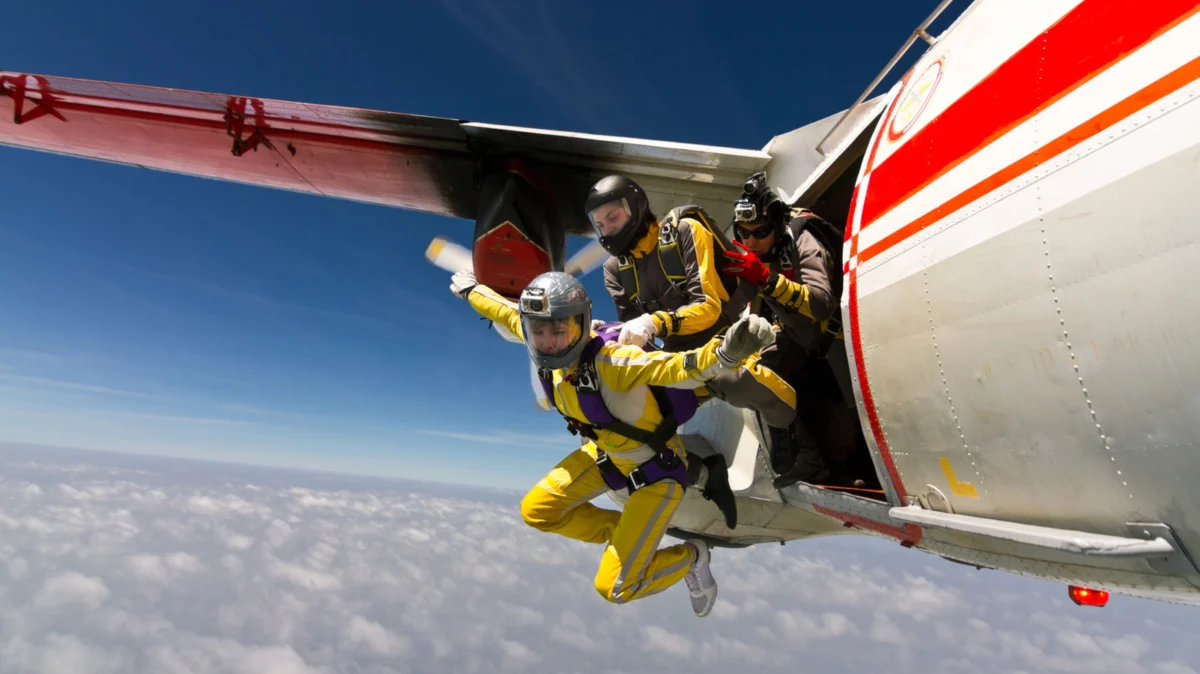
Every time you step onto a commercial airliner, you participate in a highly choreographed safety ritual. You are instructed on the location of emergency exits, the proper use of oxygen masks, and the inflation of life vests. Yet, there is a conspicuous absence in the safety manual: the parachute.
While the parachute has been a cornerstone of military aviation and recreational skydiving for over a century, it remains entirely absent from the cabin of a commercial jet. To the average traveler, this might seem like a missed opportunity for safety. However, aviation experts, engineers, and safety regulators have long concluded that for commercial air travel, a parachute is not a life-saving device—it is a liability.
The Evolution of the Parachute: A Brief Chronology
The concept of the parachute predates the airplane itself. Leonardo da Vinci famously sketched a design for a pyramidal parachute in the late 15th century. By 1797, André-Jacques Garnerin had successfully executed the first high-altitude jump from a hydrogen balloon.
When the Wright Brothers took to the skies in 1903, the parachute was already a proven, albeit primitive, technology. By World War I, military pilots were being equipped with parachutes to save them from burning aircraft. By the 1920s and 30s, as commercial aviation began to take its first tentative steps toward passenger transport, the question of whether to equip civilians with parachutes was already being debated.
As early as 1931, airline operators reached a consensus that remains largely unchallenged today: the nature of aviation emergencies—specifically the time element—rendered passenger parachutes effectively useless. The industry decided then, as it does now, that energy and capital were better spent on building more reliable aircraft and robust safety systems, rather than attempting to turn every passenger into a trained skydiver.
The Physics of Failure: Why High Altitude is a Death Sentence
To understand why parachutes are impractical, one must first understand the environment of a modern commercial airliner.
The Altitude Barrier
Commercial jets cruise at altitudes between 35,000 and 40,000 feet. At these heights, the atmospheric pressure is roughly one-quarter of that at sea level. The air is so thin that a human being would lose consciousness within seconds due to hypoxia. Furthermore, the outside temperature at cruise altitude typically hovers around -50 degrees Celsius.
To utilize a parachute, a passenger would need to exit the aircraft. This is not as simple as opening a door. At 35,000 feet, the cabin is pressurized. Opening a door would result in explosive decompression, potentially tearing the aircraft apart or causing severe injury to everyone on board. Even if the cabin were depressurized, the "jump" would take a passenger into an environment that is immediately lethal.
The Speed Factor
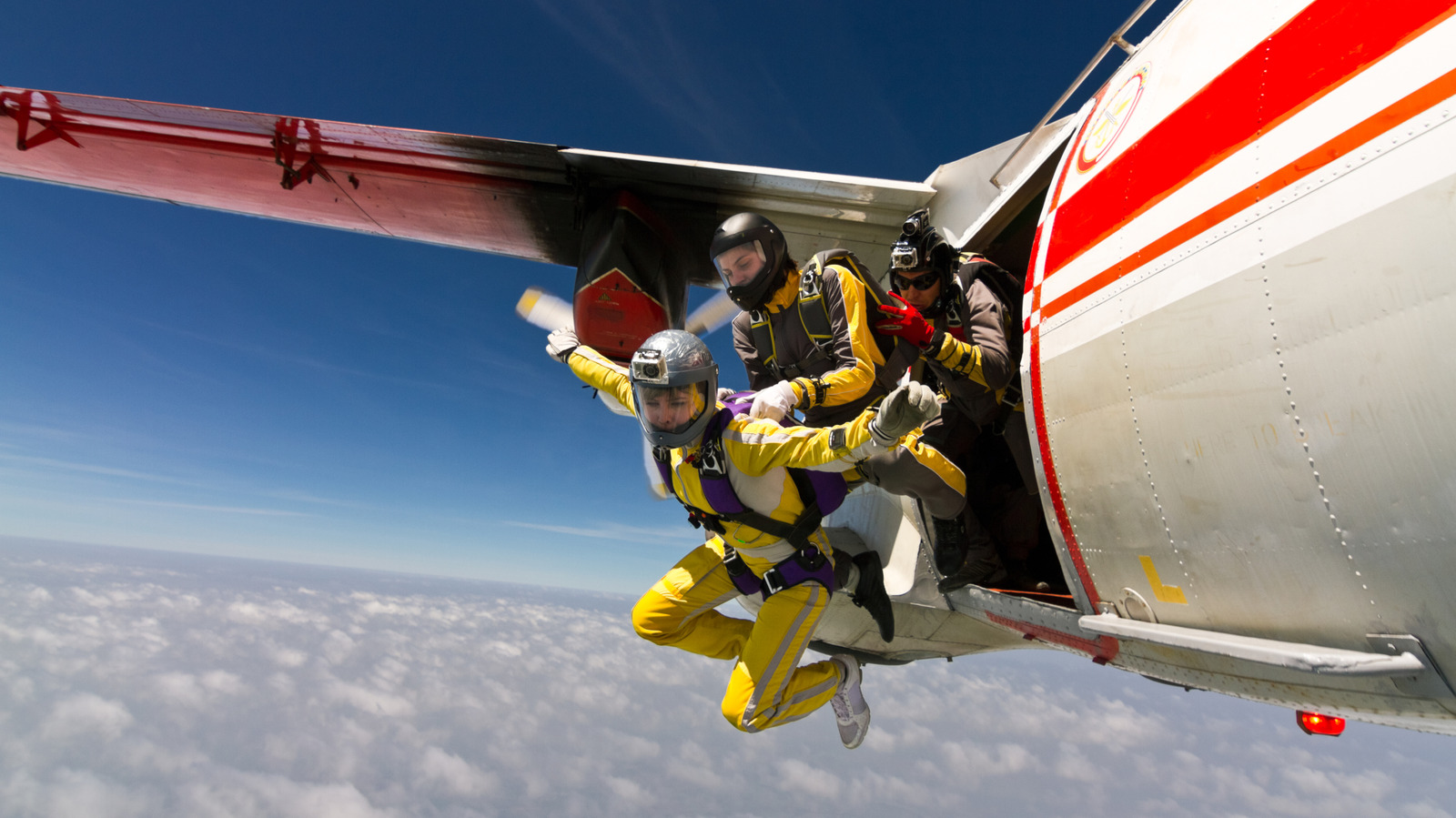
Commercial aircraft travel at speeds nearing 575 mph. If a passenger were to exit a plane moving at that velocity, the force of the wind (the "airstream") would be catastrophic. An untrained person exiting into a 500-mph wind would be buffeted by aerodynamic forces, likely striking the fuselage or tail of the plane, or suffering broken limbs instantly upon exit. Parachuting is a precision sport that requires specialized training, even under ideal conditions. To expect a passenger in street clothes—often wearing restrictive attire—to survive such a jump is a physical impossibility.
The Human Factor: Logistics and Panic
Even if we were to solve the environmental problems—say, by providing pressurized suits and oxygen—we are left with the insurmountable challenge of the human element.
The Queue of Chaos
Imagine an emergency scenario on a plane carrying 300 passengers. To conduct a safe "bailout," every passenger would need to be fitted with a harness, briefed on how to deploy the canopy, and directed to an exit in an orderly fashion.
In a real-world emergency, time is the rarest commodity. Pilots often have only minutes, or even seconds, to stabilize a failing aircraft. The time required for 300 people to put on parachutes would be orders of magnitude longer than the time available to react to a sudden structural failure or engine loss. Furthermore, the psychological state of passengers during an emergency is one of panic. A cabin full of untrained individuals attempting to manage complex, life-saving equipment is a recipe for mass casualty, not salvation.
The Case of British Airways Flight 009
The 1982 incident involving British Airways Flight 009 serves as a sobering lesson. While flying over the Indian Ocean, the 747 flew into a cloud of volcanic ash, causing all four engines to fail. The plane plummeted 25,000 feet before the crew managed to restart the engines.
Had the passengers been equipped with parachutes, the outcome would likely have been worse. Had the captain initiated a "jump" protocol, hundreds of people would have been scattered across the ocean in the dark, miles away from help, while the plane itself was actually recoverable. The crew’s decision to prioritize flight control and emergency landing proved that the aircraft itself is the safest place for the passenger to remain.
Supporting Data: Why Staying Onboard is the Safest Strategy
Aviation is statistically the safest mode of transportation. When an incident occurs, the probability of survival is significantly higher if the passenger stays inside the fuselage.
Modern aircraft are designed to be "crashworthy." This includes reinforced floor structures, energy-absorbing seats, and fire-retardant materials. If a plane is forced to make an emergency landing—whether on water or a runway—the fuselage provides a protective shell. A passenger inside that shell has a much higher chance of survival than a person dangling under a piece of nylon in the middle of a storm or over rugged terrain.
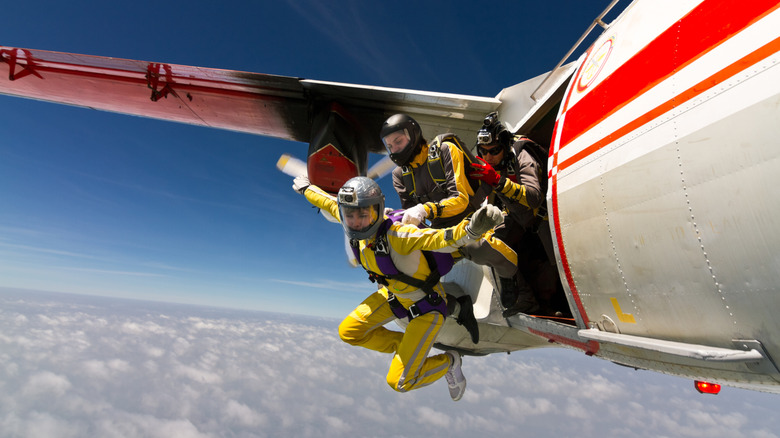
Furthermore, statistics show that the vast majority of commercial aviation incidents occur during the takeoff or landing phases—low-altitude, low-speed environments where a parachute would be useless because the ground is too close to allow for a full canopy deployment.
The "Whole-Airframe" Alternative
There is a technology that exists to save planes, though it isn’t a parachute for the individual: the whole-airframe parachute system. Companies like Cirrus Aircraft utilize a ballistic parachute that deploys to lower the entire aircraft to the ground in the event of a catastrophic engine failure or pilot incapacitation.
While this technology is effective for light, personal aircraft, it is currently impossible to scale for commercial airliners. A commercial plane weighs hundreds of thousands of pounds. To slow such a massive object, a parachute would need to be the size of a football field. The weight, cost, and structural requirements of such a system would effectively eliminate the payload capacity of the aircraft, rendering the flight economically non-viable.
Implications for Future Aviation Safety
The absence of parachutes on commercial flights is not a cost-cutting measure; it is a calculated decision based on the harsh realities of physics and human psychology. The aviation industry has instead focused on "preventative safety"—better training for pilots, redundant mechanical systems, and advanced weather-tracking technologies.
While science fiction often depicts passengers leaping from doomed planes, the reality of aviation safety is much more grounded. The greatest safety feature on any flight is not a pack on your back, but the professional crew at the front of the plane and the rigorous engineering standards that keep the aircraft in the sky.
Ultimately, the best way to survive a flight is to ensure that the flight never reaches the point of needing a parachute. By investing in air traffic control, predictive maintenance, and pilot proficiency, the aviation industry has achieved a safety record that makes the parachute, for all its romanticized history, a relic of a bygone era. You are far safer in your seat, buckled in, and listening to the crew, than you would ever be in freefall.

 Laily UPN
 Azzam Bilal Chamdy