Reynand Wu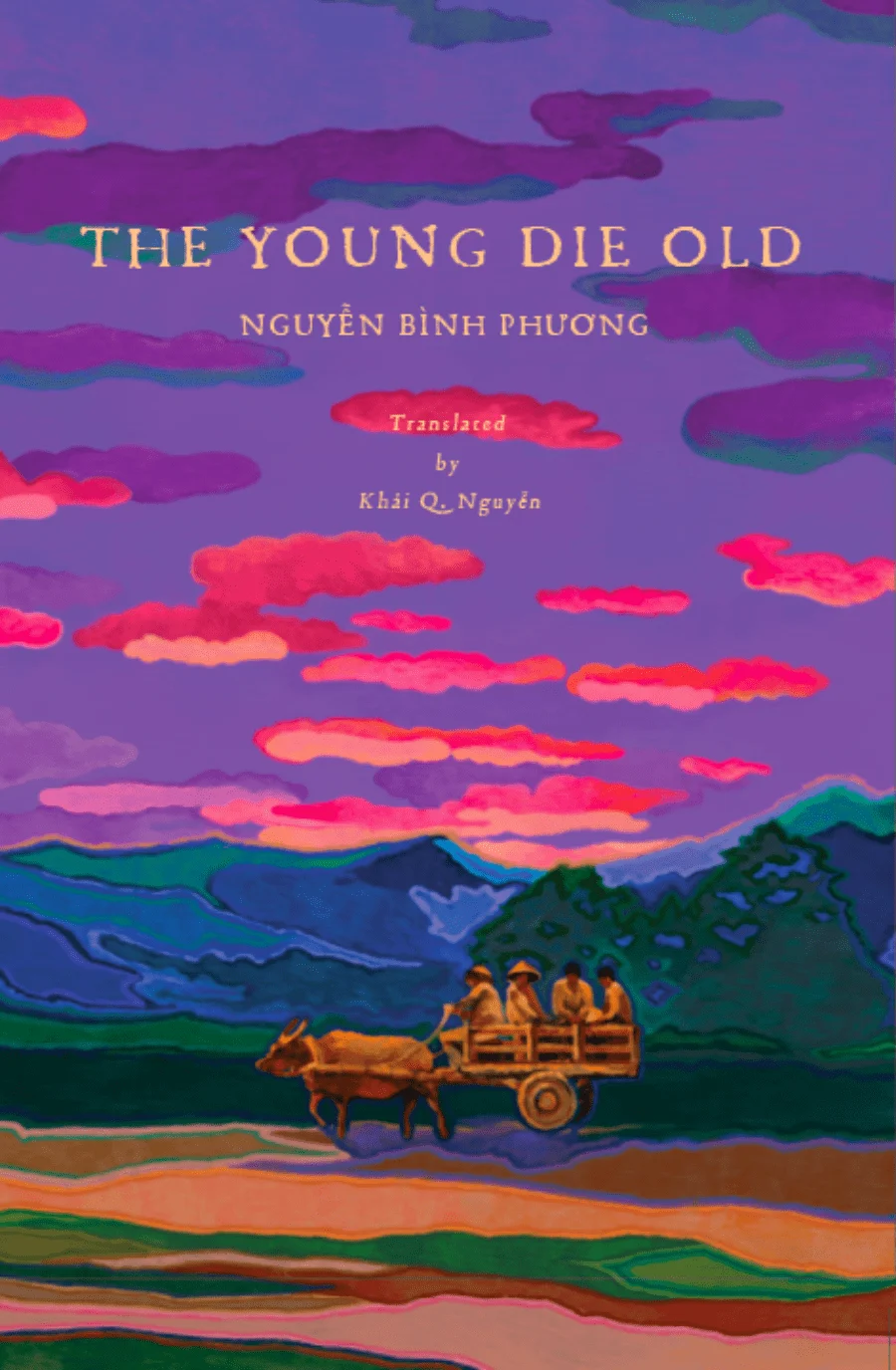
Nine years ago, a modest Kickstarter campaign sought to bridge a cultural divide, aiming to bring the surreal, shifting landscapes of Vietnamese fiction to an Anglophone readership. Today, that project has culminated in the release of Nguyễn Bình Phương’s The Young Die Old, published by Major Books. The novel is not merely a translation; it is a landmark moment for speculative literature, offering a profound, phantasmagorical window into the Vietnamese experience.
By grounding its narrative in the unique folklore and post-war psyche of Vietnam, The Young Die Old challenges the Western-centric view that magical realism is an exclusively Latin American invention. As the global literary community continues to embrace Asian speculative fiction, Nguyễn Bình Phương’s work stands as a testament to the power of the fantastic to articulate truths that realism alone cannot reach.
A Chronology of Vietnamese Speculative Translation
The journey of Vietnamese speculative fiction (SF) into the English-speaking world has been a slow, deliberate accumulation of voices. While recent years have seen a surge in interest, the groundwork was laid decades ago by scholars and translators dedicated to decolonizing the Western literary canon.
- 1998: Curbstone Press released Behind the Red Mist by Ho Anh Thai. This anthology served as an early, visceral introduction to the post-war Vietnamese imagination. Through stories involving men turning into goats or traveling through time to ensure their own birth, it highlighted how bureaucracy, family trauma, and the lingering horrors of war were being processed through a speculative lens.
- 2005: Curbstone Press followed up with The Cemetery of Chua Village and Other Stories by Doan Le. This collection expanded the scope of the genre, introducing readers to a world where ghosts gossip, humans transform into insects to escape administrative purgatory, and clones reveal the fractured nature of family history.
- 2017: A Kickstarter campaign is launched to secure the translation and publication of The Young Die Old, marking a new era of independent advocacy for Vietnamese literature.
- 2026: Major Books officially publishes The Young Die Old, cementing the novel’s status as a contemporary classic of the genre and proving that the appetite for non-Western speculative fiction is at an all-time high.
The Landscape of The Young Die Old: Fantasy as Cultural Necessity
Nguyễn Bình Phương, widely recognized as one of Vietnam’s most significant contemporary writers, does not treat the "supernatural" as a decorative element. In The Young Die Old, the border between reality and the uncanny is porous, mirroring a culture deeply steeped in its own indigenous folklore.
The Mythic Lion-Dog and Family Dynamics
The novel’s narrative structure is as fluid as its themes. Readers are dropped into the fictional Phan Village, where backstories overlap and bleed into one another with dizzying speed. A scene centered on a grandfather’s death can, in the space of a single paragraph, shift into his internal memory of a man digging a pond years prior.
Central to this chaos is the Nghê—a mythical lion-dog from Vietnamese tradition. When family members engage in violent, physical feuds, the intrusion of the Nghê forces a reckoning that transcends the mundane. Martial arts and physical conflict are rendered obsolete when confronted by the otherworldly, suggesting that in the Vietnamese consciousness, the ancient, spiritual world holds a higher jurisdiction than the present-day squabbles of the living.
The Power of Dreams and Temporal Fluidity
Dreams serve as a vital conduit for the novel’s imagery. Characters casually discuss visions of men flying dragons through the village with a matter-of-fact acceptance that defies Western skepticism. As the author notes in an interview with translator Khải Q. Nguyễn, these motifs are not imports from magical realism giants like Gabriel García Márquez; they are rooted firmly in the soil of Vietnam.
The book also grapples with the concept of time. The Vietnamese language, with its lack of rigid grammatical tenses, provides the linguistic scaffolding for the novel’s structure. Chapters alternate between standard prose and "Soundless" chapters, which track a man—presumably a veteran of the 1979 Sino-Vietnamese War—traveling on a buffalo cart. This structural choice mimics the way the Vietnamese language "flows" through time, allowing the past, present, and future to exist in a state of constant, simultaneous flux.
Linguistic Translation: Bridging the "Soundless" Gap
The translation process, spearheaded by Khải Q. Nguyễn, offers a compelling case study in the philosophy of language. The translator argues that the reader’s experience of the novel is intended to mirror the "Man" on the buffalo cart: drifting, without a clear destination, simply "flowing" through the present.
This challenges the translator to maintain a sense of temporal ambiguity in English—a language that is notoriously obsessive about tenses. The result is a prose style that feels both urgent and timeless. When Nguyễn writes about a winter that "squeezed humans and animals into sorrowful ragged piles," the imagery is not just poetic—it is a translation of the very atmosphere of a country still haunted by its history. By referencing Kafka, the author subtly nudges the reader to abandon the search for "genre" and instead embrace the internal logic of the narrative.
Implications: The Rise of Asian Speculative Fiction
The arrival of The Young Die Old is not an isolated event; it is part of a broader, systemic shift in global publishing. Since the 2010s, the "SFT" (Speculative Fiction in Translation) movement has gained significant momentum.
Why Vietnamese Voice Matters
For too long, the literary output of Asia has been categorized through a narrow set of lenses—usually political, historical, or conflict-driven. While The Young Die Old does not ignore the trauma of post-war Vietnam, it reclaims that trauma by filtering it through the lens of the fantastic. It posits that:
- Identity is transformative: Just as characters in the novel physically regress in age or turn into animals, the national identity of Vietnam is in a constant state of metamorphosis.
- Folklore is a living entity: The supernatural is not a retreat from reality, but a way to interrogate the "sorrowful ragged piles" of history that the characters inhabit.
- Genre is fluid: The insistence on separating "literature" from "speculative fiction" is a Western construct that fails to capture the traditional Vietnamese way of viewing the world.
Supporting the Ecosystem
The success of Major Books highlights the necessity of independent publishers who are willing to take risks on non-Anglophone literature. As we look toward the future, the integration of Vietnamese speculative voices will undoubtedly enrich the global conversation. We are seeing a move away from "world literature" being defined by its accessibility to Western audiences, and toward a model where the reader is asked to adapt to the language, structure, and cosmology of the source culture.
Conclusion
The Young Die Old is more than a novel; it is an act of cultural reclamation. By refusing to conform to the expectations of traditional realism, Nguyễn Bình Phương has provided a map of the Vietnamese soul—a landscape where the dead reside in banyan trees, ghosts participate in village gossip, and the trauma of war is transmuted into myth.
As we continue to diversify our bookshelves, the inclusion of works like this is essential. It challenges our understanding of what "fantasy" means and reminds us that for much of the world, the barriers between the mundane and the magical were never really there to begin with. The "Soundless" journey of the man on the buffalo cart is, in many ways, our own: we are all traveling through the landscape of history, searching for meaning in a present that is, and always will be, haunted by the echoes of the past.


 Basiran
 Lina Irawan