Asro
Asro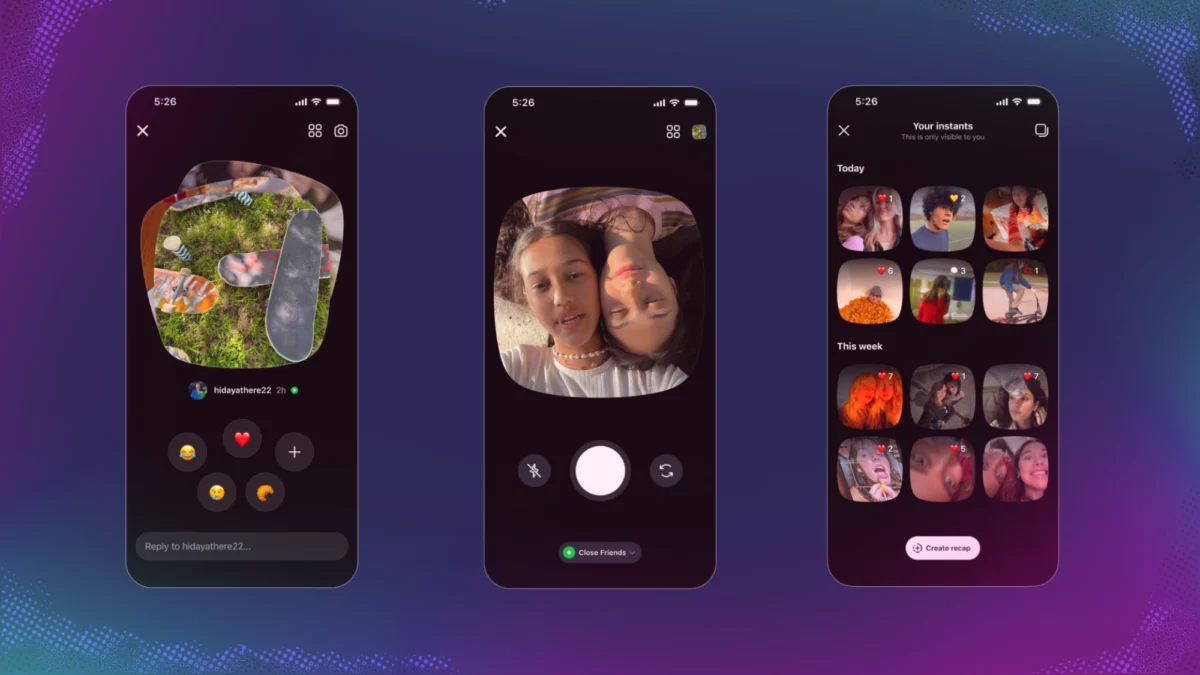
In an era defined by highly curated digital personas, Instagram has long been the primary battleground for aesthetic perfection. From hyper-edited color palettes to meticulously staged lifestyle shots, the platform has cultivated a culture where “authenticity” is often a performance. However, in a surprising pivot, Meta-owned Instagram has introduced a new feature titled “Instants,” designed to bypass the filter and embrace the chaotic, unvarnished reality of day-to-day life.
Announced on Wednesday, Instants represents a fundamental shift in how users interact via Direct Messages (DMs). By allowing users to share batches of unedited photographs that vanish upon viewing, Instagram is moving away from its traditional feed-centric model and leaning into the transient, high-frequency communication style popularized by rivals like Snapchat. While the feature offers a fresh way to connect with "Close Friends" and mutual followers, it also raises significant questions regarding privacy, platform safety, and the evolving nature of social media interaction.
The Core Functionality: How Instants Work
At its most basic level, Instants serves as a tool for rapid-fire, low-stakes photo sharing. Users can select a batch of photos—entirely unedited—and send them directly to a recipient or a group. The primary constraint, and perhaps the feature’s most defining characteristic, is the lack of post-processing tools. Unlike standard Instagram posts or Stories, where users have become accustomed to adjusting exposure, contrast, and applying filters, Instants forces a “raw” delivery. Users are permitted only to add simple captions.
Once the recipient opens the message, the photos appear as a "pile" in the inbox. After viewing, the content disappears. If the recipient does not open the batch, the content is automatically purged after 24 hours. This creates an ephemeral environment, emphasizing the “in-the-moment” nature of the interaction. For those prone to impulsive sending, Instagram has included an “undo” button, allowing users to retract a sent photo before it is viewed, providing a small safety net for potential social blunders.
Furthermore, the interactivity of the feature encourages a conversational rhythm. Recipients can react to specific images within the pile using emojis, reply with standard text-based DMs, or respond with their own collection of Instants. The result is a back-and-forth exchange that feels more akin to a rapid, visual conversation than a static social media post.
A Chronology of Ephemeral Social Media
The introduction of Instants does not exist in a vacuum. To understand why Meta is doubling down on disappearing content, one must look at the historical trajectory of social media privacy.
- The Snapchat Revolution (2011–2013): Snapchat effectively pioneered the "disappearing" media model. By introducing the concept of self-destructing messages, it fostered a sense of urgency and privacy that traditional social networks lacked.
- Instagram’s Pivot (2016): Recognizing the threat, Instagram launched "Stories," a direct competitor to Snapchat’s core offering. This move was arguably the most successful strategic pivot in the platform’s history, normalizing the 24-hour content cycle for its massive user base.
- The Encryption Era (2018–2022): Apps like Signal and Telegram rose to prominence by emphasizing end-to-end encryption (E2EE) and granular control over message lifespan. These platforms set a new standard for user expectations regarding digital security.
- The Modern Integration (2024): Today, features like WhatsApp’s “View Once” and Signal’s disappearing messages have become industry standards. Instagram’s introduction of Instants is essentially an attempt to unify these utility-focused features into the existing Meta ecosystem, keeping users within the app rather than migrating to third-party messaging services.
The Illusion of Privacy: Critical Caveats
While the ephemeral nature of Instants might suggest a heightened level of privacy, industry experts and security analysts are quick to warn that "disappearing" does not mean "deleted" in the strictest sense of the word.
1. The Screen-Capture Vulnerability
Instagram has implemented technical barriers to prevent screenshots within the Instants interface. However, this is a superficial protection. The fundamental reality of digital imaging remains: if an image can be displayed on a screen, it can be captured by another device. A second phone, a professional camera, or even a screen-recording hardware bypass can capture the content. Users should operate under the assumption that anything sent digitally, no matter how fleeting, is permanent.
2. Moderation and Surveillance
A common misconception among users is that "Close Friends" or private DM channels are immune to platform oversight. This is categorically false. Instagram continues to monitor content shared via DMs to enforce its Community Guidelines. Any images shared through Instants must still adhere to Meta’s strict nudity and safety policies. Given the algorithmic nature of these content moderation systems, automated filters will likely scan these "private" batches, potentially flagging accounts for violations that would otherwise have gone unnoticed in truly private, encrypted environments.

3. The End of End-to-End Encryption
Perhaps the most significant concern for privacy advocates is the status of encryption. Instagram has officially moved away from universal end-to-end encryption for DMs. Unlike Signal or WhatsApp, which prioritize E2EE by default, Instants operates under standard encryption. This means that while the data is encrypted in transit, it is theoretically accessible to the service provider. For a feature marketed as a "private" way to share moments, this represents a significant gap in the promise of user privacy.
Implications for Digital Culture
The rise of "Instants" signals a broader movement toward "un-curation." For the better part of a decade, Instagram was criticized for contributing to mental health issues, body dysmorphia, and the "comparison trap" due to the platform’s focus on perfection. By removing the ability to edit, Instagram is, in theory, lowering the barrier to entry for content creation.
However, this also creates new social pressures. When photos are unedited and fleeting, the pressure shifts from how good the photo looks to how interesting the user’s life is in real-time. This could lead to a new form of "performative spontaneity," where users rush to capture "authentic" moments just to keep up with the rapid-fire pace of their social circles.
Furthermore, the integration of an "undo" button suggests that Instagram is aware of the anxiety associated with unedited, impulsive sharing. By providing a "take-back" mechanism, the platform is acknowledging the human propensity for regret in digital communication, a tacit admission that its new tool could potentially lead to social friction.
Official Responses and Future Outlook
At the time of this writing, Mashable and other outlets have reached out to Meta for further clarification on the technical limitations of the Instants feature and its long-term impact on server storage. As of yet, the company has maintained a standard corporate stance, emphasizing that the feature is designed to "make communication more fun and spontaneous."
Looking ahead, the success of Instants will likely hinge on whether users actually adopt the feature for its intended purpose—candid, casual communication—or if it becomes yet another tool for the power-users of the platform to exert social influence.
One thing is certain: as Instagram continues to layer new features onto its already complex infrastructure, the line between "public" social media and "private" messaging continues to blur. Whether this leads to a healthier, more authentic digital experience or simply a faster, more chaotic one remains to be seen. Users should approach Instants with the same level of digital literacy they apply to any other platform: with the understanding that in the digital world, the "disappearing" act is often just a trick of the light.
As the platform continues to evolve, the discourse surrounding censorship, data privacy, and the influence of Meta’s algorithms will only intensify. For now, Instants is a fascinating case study in how a legacy social giant adapts to a market that is increasingly demanding both more privacy and more chaos. The "comet" of digital evolution is moving fast, and with the launch of Instants, Instagram is clearly trying to ensure it doesn’t get left in the crater.

 Rifan Muazin
 Siti Muinah