Pevita Pearce
For the better part of a decade, the social media department was often relegated to the "fun" corner of the corporate office. It was the realm of viral memes, witty brand banter, and the occasional "unhinged" post designed solely for engagement. While these tactics still serve a purpose in brand building, the landscape has undergone a seismic shift. In 2026, social media has graduated from a creative playground to a mission-critical, performance-driven channel that is essential for driving sustainable revenue.
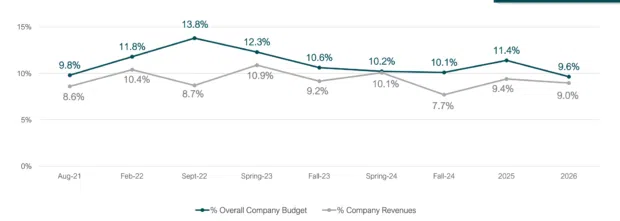
As marketing budgets tighten globally—dropping to a meager 9.6% of overall company budgets in 2026, the lowest level seen since 2021—the mandate for social media managers has become clear: evolve into performance marketers or risk becoming the first line item cut during budget reviews.

The Paradigm Shift: What is Performance Marketing?
Performance marketing is a results-oriented methodology where expenditure is directly tied to measurable outcomes. Unlike traditional "spray and pray" brand awareness campaigns, performance marketing requires that every dollar spent be accountable. You aren’t paying for impressions or visibility; you are paying for clicks, qualified leads, and final sales.
This shift is a response to the "cost center" stigma that has long plagued marketing departments. Historically, when corporate profits slumped, marketing budgets were the first to face the chopping block—often being slashed by up to 45% during periods of fiscal uncertainty. By adopting a performance-based model, social media teams can pivot from being viewed as an expense to being recognized as a high-ROI profit center. By utilizing sophisticated tracking, attribution modeling, and data-backed research, marketing departments are transforming into goldmines of actionable intelligence that can influence entire business strategies.

The Chronology of Change: From Engagement to Revenue
To understand the current urgency, one must look at the recent history of social media management:
- 2021-2022 (The "Growth at Any Cost" Era): Social media was driven by reach and follower counts. The focus was on "vanity metrics"—likes, shares, and comments—which provided a false sense of security.
- 2023-2024 (The "Scrutiny" Era): As the global economy cooled, CFOs began demanding better justification for social media spend. The limitations of vanity metrics became glaringly obvious.
- 2025-2026 (The "Performance" Era): Marketing budgets hit their lowest point in five years. Survival of the marketing department now hinges on the ability to prove direct contributions to the bottom line.
Social media managers who fail to pivot to a revenue-centric model are finding their influence—and their budgets—steadily eroding. Those who embrace performance tracking are, conversely, securing seats at the executive table.
Supporting Data: Why Metrics Must Evolve
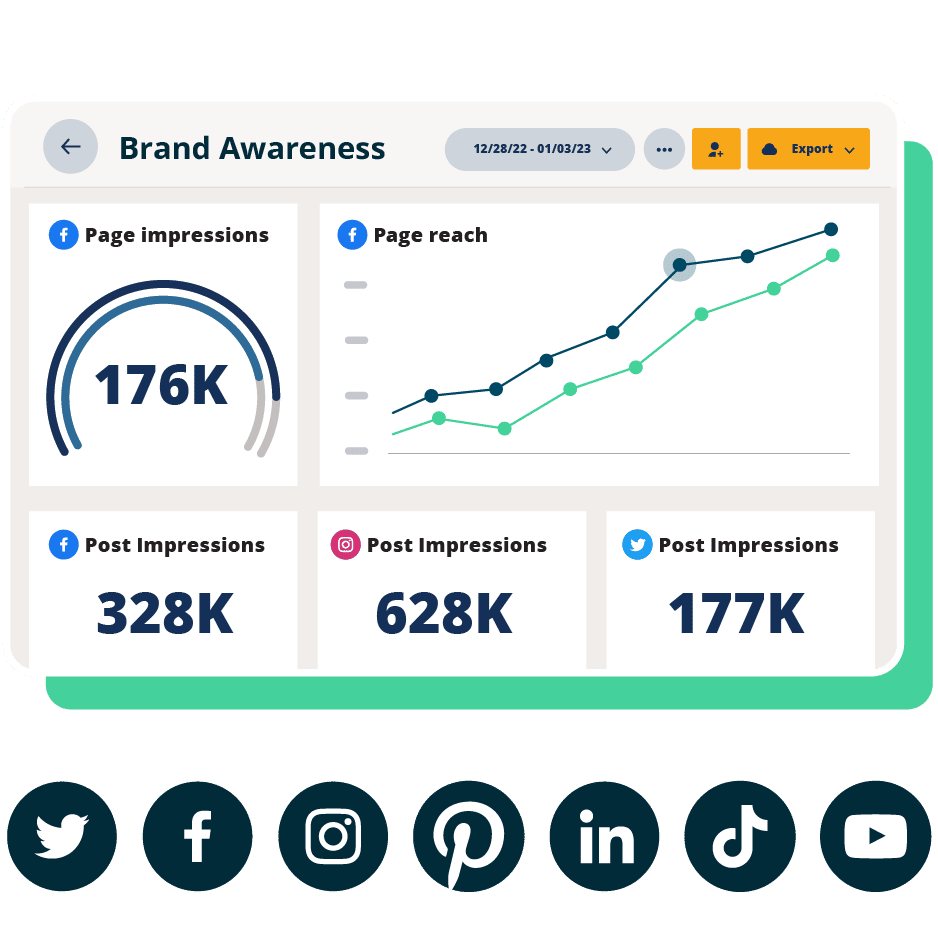
The correlation between engagement and revenue is not automatic. While a "like" provides a pulse check on sentiment, it does not pay the bills. According to recent industry surveys, the disconnect between "likes" and "leads" is the primary reason for marketing budget cuts.
When organizations analyze their performance, they must move beyond surface-level data. Key Performance Indicators (KPIs) must now include:

- Conversion Rate: The percentage of social users who complete a desired action (purchasing, signing up for a trial, or downloading a resource).
- Customer Acquisition Cost (CAC): The total spend required to acquire a new customer through social channels.
- Attribution Modeling: The complex task of tracking how many touchpoints a customer interacts with before converting. Social media is often a "top-of-funnel" initiator; acknowledging its role in the early stages of the customer journey is vital for accurate ROI reporting.
Seven Strategies for High-Performance Social Media
To turn social media into a reliable revenue driver, teams must implement a structured, data-led framework.
1. Align Social Goals with Business Objectives
Your social media goals cannot exist in a vacuum. If the company is focused on "profitable growth," your social team should not be focused on "viral reach." Map your KPIs directly to the company’s OKRs (Objectives and Key Results). If the business wants to increase high-value leads by 20%, your social strategy should prioritize lead-gen forms and webinar signups over general brand awareness.

2. Implement Smart Data Tracking
You cannot manage what you cannot measure. Utilize advanced tracking pixels, UTM parameters, and integrated CRM dashboards to monitor the customer journey from the first social click to the final transaction.
3. Leverage Social Listening
Social listening is not just for PR damage control. It is a goldmine for market intelligence. By tracking conversations around competitors and industry trends, you can identify product gaps and customer pain points before the competition does. This data can inform product development and sales strategy, effectively making the social team an R&D partner.

4. Rigorous Benchmarking
Performance is relative. You must benchmark your results against historical internal data and industry standards. Are you performing better than you were last quarter? How do your click-through rates compare to the industry average? Constant benchmarking creates a narrative of continuous improvement that stakeholders respect.
5. Standardize ROI Reporting
Reporting should never be a one-time event. Build a recurring rhythm of reporting that translates technical metrics into financial terms. When presenting to leadership, stop talking about "engagement rates" and start talking about "cost-per-lead" and "contribution to annual recurring revenue."

6. Adopt Proven Tactics: A/B Testing and CRO
Performance marketing relies on experimentation. A/B testing is the fastest way to refine your strategy. Whether it’s testing different video hooks or contrasting color palettes in ad creative, ensure you are only changing one variable at a time. Couple this with Conversion Rate Optimization (CRO)—optimizing your landing pages and calls-to-action to ensure that once a user leaves social media, they are greeted with an experience designed to convert.
7. Strategic Recommendations
Data without insights is noise. When you present your reports, always include a section for "Strategic Recommendations." Use your unique access to social sentiment and customer behavior to suggest changes to product positioning, sales messaging, or even customer service workflows. This positions the social team as strategic consultants rather than mere content creators.
Implications for the Modern Enterprise
The transition to a performance-based social media model carries significant implications for the future of the enterprise.
For the Social Media Team: The role is becoming increasingly technical. Proficiency in analytics tools, attribution models, and basic data science is now as important as copywriting or design skills.

For the Organization: Breaking down silos is essential. Social media must no longer exist as a separate entity; it must be integrated with sales, customer support, and product teams. When social data flows freely into these departments, the entire organization becomes more responsive and agile.
For Budget Allocation: As demonstrated by the 2026 data, the era of the "blank check" for social media is over. However, for those who can prove their impact, this is not a crisis—it is an opportunity. When you provide clear, undeniable proof of ROI, you stop fighting for budget and start receiving the resources necessary to scale your success.

Conclusion: The Path Forward
The "fun" days of social media are not gone, but they have been contextualized. Today, a meme is only successful if it drives a metric that supports the business. By aligning social goals with corporate strategy, investing in robust analytics, and reporting on bottom-line impact, social media managers can cement their place as essential drivers of growth.
As we look toward the future of digital marketing, the divide will continue to widen between teams that merely "post" and teams that "perform." The former will continue to see their budgets shrink, while the latter will become the backbone of modern customer acquisition and revenue generation. The tools to make this transition are available—the only missing ingredient is the shift in mindset required to move from the "Like" to the "Ledger."


 Nana Wu
 Neng Nana