Ali Ikhwan
Published: June 25, 2026, 8:01 PM EDT
In a digital landscape increasingly defined by transient content, a particular piece of 1990s cyberpunk cinema, featuring an unusually uninhibited performance from Keanu Reeves, is about to make its exit. Johnny Mnemonic, the 1995 action-thriller loosely adapted from a seminal William Gibson short story, is scheduled to leave Netflix on June 30, 2026. This announcement serves as a timely reminder for fans and curious viewers alike to revisit or discover a film that, despite its initial critical missteps, has cemented its place as a quintessential cult classic within the sci-fi genre.
For many, Keanu Reeves is synonymous with stoic heroes, from the philosophical intensity of Neo in The Matrix to the silent, lethal efficiency of John Wick. However, in Johnny Mnemonic, audiences are treated to a rare glimpse of Reeves channeling an almost Nicolas Cage-esque intensity, particularly in a now-legendary scene that has become a viral sensation. This departure from his typical persona, combined with the film’s gritty dystopian vision and a surprisingly star-studded ensemble, makes its impending removal from Netflix a significant event for cinematic archivists and casual streamers alike. The opportunity to witness Reeves deliver the iconic, exasperated plea, "I want room service!" is rapidly dwindling.
Main Facts: A Digital Farewell to a Cyberpunk Relic
Johnny Mnemonic, directed by Robert Longo and written by William Gibson himself, plunges viewers into a hyper-capitalist, technologically advanced, yet decaying 21st-century. The film stars Keanu Reeves as Johnny, a "data courier" who uses a neural implant to transport sensitive information, often for illicit clients. His latest assignment proves catastrophically dangerous: a data package exceeding his brain’s capacity, threatening fatal neural overload unless he can offload it within a tight deadline. Simultaneously, he is hunted by the Yakuza, who desperately want the data, and a deranged assassin known as the Street Preacher (played by Dolph Lundgren).
Set in the year 2021 (a prophetic detail given its 1995 release), the movie paints a bleak picture of a world ravaged by corporate control and digital overloads, where information is the most valuable, and deadliest, commodity. Johnny’s desperate quest for survival leads him to ally with Jane (Dina Meyer), a cybernetically enhanced bodyguard, and the LoTeks, an underground resistance movement led by Ice-T. While the film initially struggled with critics and at the box office, its audacious vision, unique aesthetic, and particularly Reeves’s memorable, over-the-top performance in certain scenes have earned it a devoted following over the decades. Its removal from Netflix marks the end of an accessible streaming run for a film that many consider an essential, albeit flawed, piece of cyberpunk cinema history.
Chronology: From Page to Screen and Beyond
The journey of Johnny Mnemonic from its conceptual genesis to its current status as a cult classic is as complex and convoluted as its plot, reflecting the tumultuous nature of adapting visionary science fiction.
The Genesis of a Cyberpunk Vision: Gibson’s Short Story
The roots of Johnny Mnemonic lie in William Gibson’s 1981 short story, first published in Omni magazine and later included in his influential 1986 collection Burning Chrome. This story predates Gibson’s groundbreaking novel Neuromancer (1984) and is often cited as a foundational text for the cyberpunk genre. It introduced many of the themes and stylistic elements that would define Gibson’s work: neural implants, global corporate dominance, cyberspace, data couriers, and a gritty, technologically advanced yet socially decaying future. The narrative of Johnny, a human hard drive, grappling with the physical and existential burden of his profession, immediately resonated with readers, laying fertile ground for a cinematic adaptation. Gibson’s vision was stark, minimalist, and deeply atmospheric, offering a compelling blend of noir and futurism that captured the anxieties and fascinations of the burgeoning digital age.
From Indie Dream to Studio Reality: A Troubled Production
The film’s path to the big screen was fraught with creative clashes and escalating ambitions. Initially, Gibson himself, alongside artist Robert Longo, envisioned Johnny Mnemonic as a low-budget, independent art film. Their modest proposal sought a mere $1.5 million to bring Gibson’s nuanced cyberpunk world to life with artistic integrity. However, Hollywood intervened, seeing potential for a larger-scale action spectacle. The project ballooned into a $30 million production, a significant sum for the mid-90s, with TriStar Pictures taking the reins.
This shift from an indie passion project to a studio tentpole inevitably led to compromises and creative friction. Gibson, while credited as the screenwriter, later spoke about the extensive studio interference, which pushed the film towards more conventional action tropes and away from the cerebral, understated tone of his original story. The casting of Keanu Reeves, fresh off the success of Speed (1994), was a strategic move to secure a bankable star, but it also meant adapting the character to fit Reeves’s burgeoning action hero persona, even if it sometimes felt at odds with the character’s internal struggles. The ensemble cast was remarkably eclectic, bringing together Japanese cinema icon Takeshi Kitano, hip-hop artists Ice-T and Henry Rollins, and action star Dolph Lundgren as the memorable, if somewhat cartoonish, Street Preacher. This diverse cast, while adding a unique flavor, also underscored the film’s struggle to find a consistent tone amidst its artistic and commercial aspirations.
1995 Release and Initial Reception: A Critical Disconnect
Upon its release in May 1995, Johnny Mnemonic was met with a largely unfavorable response from critics. Reviewers often lambasted its convoluted plot, uneven pacing, and perceived lack of emotional depth. Roger Ebert famously described it as "one of the great lost causes of the modern cinema," criticizing its attempts to be both a serious sci-fi meditation and a mindless action flick. Many found the special effects dated even for the time, and the dialogue, while often directly from Gibson’s pen, was sometimes delivered with a theatricality that bordered on the absurd.
The film’s box office performance was modest, grossing approximately $19 million domestically against its $30 million budget, indicating that it failed to capture a wide audience. Audiences, perhaps expecting another Speed or a more accessible sci-fi experience, were left bewildered by its unique blend of high-concept cyberpunk, B-movie aesthetics, and occasional moments of outright camp. The disconnect between Gibson’s nuanced source material and the studio’s desire for a commercial action film created a product that satisfied neither camp, leading to its initial dismissal as a forgettable sci-fi curio.
The Cult Following Emerges: A Re-evaluation Over Time
Despite its initial critical and commercial struggles, Johnny Mnemonic steadily gained a cult following in the years following its release. This re-evaluation was fueled by several factors. Firstly, the burgeoning appreciation for cyberpunk as a genre, particularly with the success of The Matrix (which coincidentally also starred Reeves and drew heavily from Gibson’s influences), led audiences to revisit earlier works. Johnny Mnemonic, with its authentic Gibsonian DNA, stood out as a genuine artifact of the genre’s formative years.
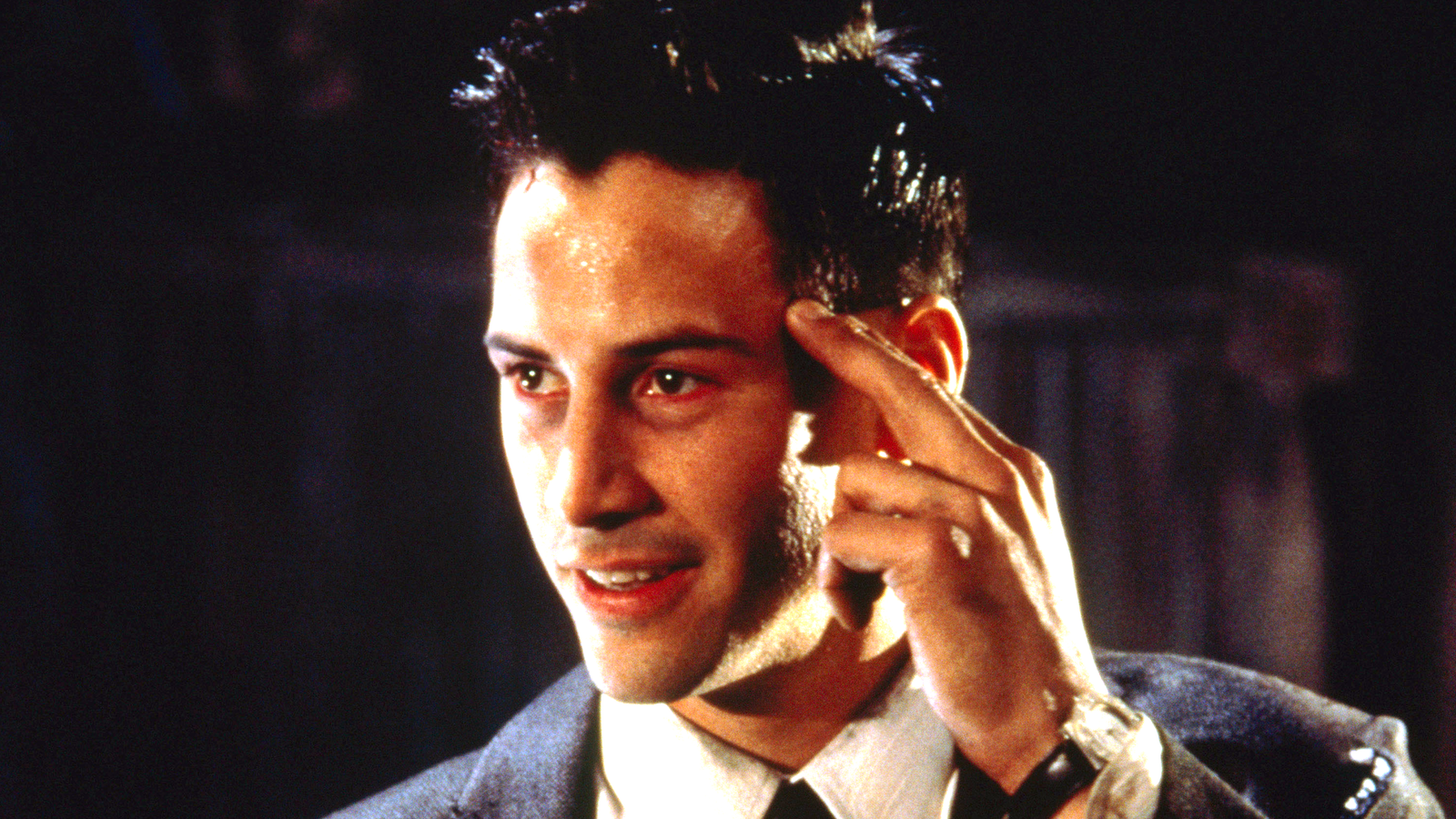
Secondly, the film’s "flaws" began to be seen as eccentricities, contributing to its unique charm. The uneven tone, the bizarre characterizations, and particularly Reeves’s intense, almost unhinged performance in certain scenes, evolved from liabilities into endearing qualities. The "I want room service!" rant, in particular, transcended its original context to become a beloved, meme-worthy moment, showcasing a side of Reeves rarely seen. Furthermore, director Robert Longo’s later release of a black-and-white extended cut, more closely aligning with his and Gibson’s original artistic intentions, offered a fresh perspective, further solidifying the film’s legacy as a misunderstood, yet ultimately significant, piece of cinematic history. Its presence on streaming platforms like Netflix introduced it to new generations, who, free from the expectations of 1995, could appreciate its raw, unfiltered cyberpunk energy.
Supporting Data: Deconstructing the Digital Dystopia
To understand the enduring appeal and significance of Johnny Mnemonic, it’s essential to delve into its thematic underpinnings, the unique performance by its lead actor, and its surprising prescience.
The World of Johnny Mnemonic: Cleanliness, Rot, and Corporate Tyranny
The film’s dystopian future is a masterclass in visual storytelling, reflecting Gibson’s stark contrasts. The world of Johnny Mnemonic is bifurcated: pristine, minimalist corporate towers and luxury hotels represent the domain of the powerful elites, exemplified by Johnny himself in his impeccably tailored suits. These spaces are sterile, controlled, and seemingly perfect, yet they hide layers of corruption and moral decay. Conversely, the vast majority of society lives in squalor, amidst industrial ruins, garbage-strewn streets, and overcrowded ghettos. This "cleanliness and rot" motif is not merely aesthetic; it’s a profound commentary on extreme wealth disparity and environmental degradation, where technological advancement has failed to uplift humanity universally.
Corporate power, embodied by the nefarious PharmaKom corporation, is absolute. They control information, healthcare, and ultimately, human lives. The widespread "nerve attenuation syndrome" (NAS), a debilitating neurological disease, is a direct consequence of their unchecked technological exploits and environmental negligence. Data couriers like Johnny are essential cogs in this information economy, risking their lives to circumvent corporate firewalls and surveillance. The LoTeks, an underground network of hackers and rebels, represent the last bastion of resistance against this corporate tyranny, fighting for free information and a more equitable future. This detailed world-building, despite the film’s narrative shortcomings, remains one of its strongest assets, painting a bleak yet believable portrait of a future where humanity’s reliance on technology has come at a steep price.
Keanu Reeves’s Against-Type Performance: The "Cage-ian" Outburst
Keanu Reeves is renowned for his controlled, often understated performances, lending a quiet intensity to characters like Neo or John Wick. This makes his portrayal of Johnny Mnemonic all the more captivating, as it occasionally veers into territory typically reserved for actors known for their explosive, theatrical flair – most notably, Nicolas Cage. Cage’s career is marked by moments of glorious, unbridled madness, where he fully commits to extreme emotional states, often to hilarious and memorable effect. In Johnny Mnemonic, Reeves delivers a similar, albeit rarer, spectacle.
The pinnacle of this "Cage-ian" performance is the now-iconic "I want room service!" scene. Occurring towards the film’s climax, after Johnny has endured relentless pursuit, near-fatal brain overload, and profound betrayal, he finally snaps. Cornered and seemingly defeated, he launches into a furious, guttural rant, screaming about responsibility, greed, and the sheer indignity of his predicament. His eyes bulge, his voice cracks, and his body contorts in a spasm of raw frustration. This ninety-second explosion of emotion is startling precisely because it is so uncharacteristic of Reeves. It’s a moment of pure, cathartic release for both the character and, arguably, the actor, providing a glimpse into an emotional register Reeves rarely explores. This scene, more than any other, has contributed to the film’s cult status, offering a delightful, unexpected peek at Keanu Reeves at his most gloriously unhinged.
Technological Predictions and Contemporary Relevance
Released in 1995, Johnny Mnemonic offered a speculative vision of 2021 that, in many ways, eerily presaged real-world developments. William Gibson’s foresight into the digital age is legendary, and the film, despite its studio modifications, retains much of his prophetic insight.
- Data Overload and Information Overload: The central premise of Johnny’s brain being overloaded with data resonates strongly in an era of big data, constant digital streams, and the psychological impact of information saturation.
- Corporate Control and Data Security: The film’s depiction of powerful corporations wielding immense influence over information and public health is strikingly relevant in a world dominated by tech giants and concerns over data privacy.
- Neural Implants and Human Augmentation: While not yet commonplace, the concept of brain-computer interfaces (BCIs) and human augmentation is a rapidly advancing field, making Johnny’s brain implant less fantastical than it once seemed.
- Virtual Reality and Cyberspace: The film’s portrayal of a nascent internet and virtual reality spaces, while visually crude by today’s standards, captured the essence of interconnected digital realms that would become central to modern life.
- The Gig Economy and Precarious Work: Johnny’s role as a precarious, high-risk data courier can be seen as an early fictionalized representation of the gig economy, where individuals perform dangerous or undesirable tasks for corporations without traditional job security.
While the film’s aesthetic might feel dated, its thematic concerns about the ethical implications of technology, corporate power, and the human condition in a hyper-connected world remain remarkably pertinent in 2026. This enduring relevance is a key factor in its continued re-evaluation and appreciation.
The Ensemble Cast’s Contribution: Adding Layers to the Dystopia
Beyond Reeves, Johnny Mnemonic boasts an impressive and eclectic supporting cast that significantly contributes to its unique texture. Dina Meyer, as the no-nonsense cyborg mercenary Jane, provides a strong, pragmatic foil to Johnny’s increasingly frantic state. Her combat prowess and cynical worldview ground the film’s more fantastical elements. Japanese cinematic legend Takeshi Kitano, as the Yakuza boss Takahashi, brings an understated menace and gravitas, elevating what could have been a stereotypical villain into a complex figure with his own code.
The inclusion of musicians Ice-T and Henry Rollins as leaders of the LoTeks, an anti-corporate hacker collective, injects a raw, punk rock energy into the narrative. Their performances lend an authenticity to the underground resistance, embodying the film’s rebellious spirit. Dolph Lundgren’s portrayal of the Street Preacher, a deranged, bible-thumping assassin, is arguably the most over-the-top performance in the film, rivaling Reeves’s outburst in its sheer audacity. While bordering on caricature, Lundgren’s intensity adds a genuinely unsettling and memorable antagonist. This diverse cast, drawn from various corners of film, music, and performance art, coalesces to create a rich tapestry of characters inhabiting Gibson’s dystopian vision, each adding a distinct flavor to the film’s chaotic charm.
Official Responses: Reconsidering a Misunderstood Vision
The initial "official responses" to Johnny Mnemonic were largely negative, predominantly from film critics upon its release. However, over time, the discourse has shifted, with filmmakers, actors, and scholars offering more nuanced perspectives.
Filmmakers’ Retrospective Views: Gibson and Longo’s Reflection
Both William Gibson and Robert Longo have been candid about the challenges and compromises inherent in the film’s production. Gibson has frequently expressed his frustrations with the studio’s meddling, acknowledging that the final product diverged significantly from his original screenplay and the artistic vision he shared with Longo. He has, however, also recognized the film’s unique place in his career and its contribution to the cyberpunk canon. Gibson’s retrospective comments often highlight the difficulties of translating complex literary themes into a commercial cinematic format, especially when facing pressure to appeal to a wider audience.

Longo, in particular, has pursued a form of artistic redemption for the film. His later release of a black-and-white extended cut on Blu-Ray was a direct attempt to reclaim his original artistic intentions. This version, stripped of the garish 90s color palette and featuring restored scenes, offers a more somber, art-house interpretation of the material, closer to the low-budget indie film he and Gibson initially envisioned. This director’s cut has been well-received by fans, offering a deeper appreciation for the film’s underlying artistic merit, divorced from the commercial pressures that shaped its theatrical release. Longo’s efforts underscore the persistent vision that, despite studio interference, still managed to shine through.
Actors’ Perspectives: Reeves and the Ensemble’s Experience
While Keanu Reeves rarely dwells extensively on his past roles, his performance in Johnny Mnemonic remains a notable point in his career trajectory. His willingness to experiment with a more expressive, even frantic, acting style for certain scenes indicates an actor unafraid to challenge audience expectations. While there aren’t extensive public comments from Reeves specifically about the "room service" scene, its enduring popularity suggests that it holds a special place in the collective memory of his diverse filmography.
Other cast members have occasionally spoken about the unique experience of working on the film. Dina Meyer has often acknowledged the film’s cult status and the enjoyment she derived from playing Jane. The presence of non-traditional actors like Ice-T and Henry Rollins, who were already established figures in the music world, highlights the film’s unconventional casting choices and its blend of mainstream and counter-culture elements, a reflection of the cyberpunk ethos itself. Their experiences on set, working with a visionary director and a unique script, likely contributed to the film’s distinct energy and its lasting appeal among fans who appreciate its unconventional approach.
Critical Re-evaluation: From Flop to Cult Classic
The most significant shift in official response has been the gradual critical re-evaluation of Johnny Mnemonic. What was once dismissed as an incoherent mess is now frequently cited as a fascinating, if flawed, precursor to later cyberpunk masterpieces like The Matrix. Film scholars and genre enthusiasts have increasingly recognized its historical importance, not just as an early big-screen adaptation of William Gibson, but as a bold, ambitious attempt to visualize a complex future.
Modern critics often highlight the film’s visual design, its prophetic themes, and the audacity of its performances, rather than focusing solely on its narrative inconsistencies. The very elements that drew scorn in 1995 – its maximalist aesthetic, its blend of high-tech and low-life, and its occasional theatricality – are now seen as intrinsic to its cult appeal. This re-evaluation reflects a broader trend in film criticism, where initial reactions are often reconsidered in the context of a film’s cultural impact and its ability to resonate with subsequent generations. Johnny Mnemonic stands as a testament to the idea that a film’s true legacy is often determined not by its immediate reception, but by its enduring ability to provoke thought and inspire discussion.
Implications: The Enduring Legacy and Urgent Call
The impending departure of Johnny Mnemonic from Netflix carries several implications, from its lasting influence on popular culture to the immediate imperative for viewers.
The Legacy of Johnny Mnemonic: Paving the Way for Cyberpunk
Despite its rocky production and initial reception, Johnny Mnemonic holds a significant place in the lineage of cyberpunk cinema. As one of the earliest major Hollywood adaptations of William Gibson’s work, it served as a crucial, albeit imperfect, bridge between the literary genre and mainstream audiences. Its visual style, thematic concerns, and even specific character archetypes undeniably influenced subsequent, more successful cyberpunk productions.
Elements like the omnipresent corporate control, the gritty urban decay juxtaposed with gleaming technology, and the concept of data as both currency and weapon, can be seen reflected in films like The Matrix (1999), which, while far more polished, shares a clear spiritual kinship with Gibson’s universe. Similarly, television series such as Altered Carbon (2018) and video games like Cyberpunk 2077 (2020), which famously features Keanu Reeves in a major role, owe a debt to the foundational world-building laid out in Johnny Mnemonic. The film, therefore, is not merely a standalone curiosity but a vital stepping stone in the evolution of how cyberpunk is depicted and consumed across various media. Its existence proved that there was an appetite for these complex, technologically driven dystopias, even if the execution was still finding its footing.
The Value of Cult Cinema: Rediscovery in the Streaming Age
Johnny Mnemonic‘s journey from critical flop to beloved cult classic underscores the inherent value and dynamism of cult cinema. These are films that, for various reasons, fail to connect with contemporary audiences or critics but find a passionate following over time. They often push boundaries, take risks, or offer unique perspectives that are ahead of their time or simply too unconventional for the mainstream. Streaming platforms like Netflix have played a crucial role in this process of rediscovery, offering a vast back catalogue where such films can find new life and new audiences, unburdened by the marketing hype or critical expectations of their initial release.
For Johnny Mnemonic, its availability on Netflix allowed a new generation to appreciate its raw cyberpunk energy, its prescient themes, and its delightful oddities – most notably, Keanu Reeves’s unhinged performance. It serves as a reminder that cinematic merit is not always immediately apparent and that some of the most interesting and influential works are often found on the fringes, waiting to be unearthed. The film’s re-evaluation reinforces the idea that "bad" or "flawed" cinema can still be profoundly engaging, thought-provoking, and ultimately, culturally significant.
The Urgency of Viewing: A Limited Window and Alternative Futures
The imminent departure of Johnny Mnemonic from Netflix on June 30, 2026, presents a clear, urgent call to action for anyone interested in cyberpunk, Keanu Reeves’s diverse filmography, or simply a fascinating piece of 90s genre cinema. With only five days remaining from the publication of this article, the window to stream this unique film is rapidly closing. This ephemeral nature of streaming content highlights a broader implication: the continuous churn of licensing agreements means that even beloved films can disappear without much warning, making timely viewing essential.
For those who miss the Netflix window, alternative viewing options exist, preserving the film’s legacy beyond streaming platforms. Director Robert Longo’s black-and-white extended cut on Blu-Ray offers a compelling, albeit different, viewing experience, closer to the filmmakers’ original artistic vision. This version not only provides a deeper appreciation for the film’s aesthetic and narrative but also serves as a testament to the enduring passion of its creators. Whether caught on a streaming service or sought out in its physical format, Johnny Mnemonic remains a potent, if peculiar, vision of a future that continues to resonate, reminding us that some stories, like crucial data, are simply too important to let disappear.

 Lina Irawan
 Sagoh
Sagoh