Layla Zulfa
By Ford James
Published Jun 26, 2026, 8:00 AM EDT
Main Facts
Wardogs, the eagerly anticipated multiplayer first-person shooter from developer Bulkhead, is poised to make a significant impact on the gaming landscape. Self-described as "tactical all-out warfare," the game is meticulously crafted to bridge the gap between the fast-paced, often chaotic experiences of mainstream shooters like Battlefield and Call of Duty, and the unforgiving realism found in titles such as Escape From Tarkov or Hell Let Loose. With an ambitious feature set including 100-player matches, dynamically destructible environments, a persistent cash-based metagame, and RuneScape-style skill progression, Wardogs promises an unprecedented degree of player agency and strategic depth.
At the heart of Wardogs‘ unique appeal is its philosophy of "selfish teamwork," a concept championed by Bulkhead co-founder and CEO Joe Brammer. This design ethos ensures that virtually any action a player takes, even seemingly individualistic ones, inherently contributes to the team’s overall objective. This innovative approach is particularly tailored to what Brammer affectionately calls "dad gamers" — a demographic of players, including the Bulkhead development team themselves, who seek engaging and rewarding experiences that accommodate their evolving lifestyles and time commitments, moving away from the pure twitch-reflex demands of younger, competitive scenes. Currently undergoing a closed pre-alpha playtest, Wardogs is slated for an early access launch later this year, signaling its readiness to introduce a fresh perspective to the saturated FPS genre.
Chronology
From Battalion 1944 to the Genesis of Wardogs
Bulkhead’s journey to Wardogs is deeply rooted in the experiences and lessons learned from their previous title, Battalion 1944. Launched in 2018, Battalion 1944 was an arena shooter that sought to rekindle the spirit of classic competitive FPS games, drawing comparisons to Counter-Strike and Valorant. It was a game built on rapid reflexes, precise aim, and intense, quick-fire engagements, catering to a highly skilled and competitive player base. Joe Brammer, then a younger developer, and his co-founders at Bulkhead were adept at this style of gameplay, crafting a title that resonated with their own competitive inclinations at the time.
However, the competitive arena shooter market is notoriously fierce, and Battalion 1944 faced the perennial challenges of player retention, evolving meta-strategies, and the constant demand for new content within a genre where skill ceiling and mechanical prowess reign supreme. While Battalion 1944 garnered a dedicated following and demonstrated Bulkhead’s technical capabilities and passion for shooters, it also provided invaluable insights into the broader gaming landscape and the diverse needs of players.
As the years passed, so too did the personal circumstances of the Bulkhead team. Brammer, now 33 with a two-year-old child, reflects on how his own gaming habits and those of his colleagues naturally shifted. The intense, practice-heavy demands of competitive arena shooters became less compatible with family life and other responsibilities. This personal evolution became the crucible for Wardogs. The idea wasn’t necessarily born from identifying a glaring "gap in the market" in a traditional sense, but rather from a genuine desire to create the kind of game they, as experienced but time-constrained gamers, now yearned to play.
The conceptualization of Wardogs began with a fundamental question: how could they craft a multiplayer FPS that offered depth, scale, and tactical engagement without solely relying on lightning-fast reflexes and endless practice hours? This led to the drawing board, where ideas for persistent progression, diverse roles, and meaningful contributions from various playstyles began to coalesce. The project entered pre-production with a clear vision: to create a game that allowed players to contribute meaningfully, regardless of their raw mechanical skill or the amount of time they could dedicate.
Over the past few years, Wardogs has progressed steadily through various development stages, from initial prototypes and engine tests to comprehensive feature implementation. The decision to pursue a closed pre-alpha playtest before a wider early access launch later this year underscores Bulkhead’s commitment to iterative development and community feedback. This phased approach allows the team to gather crucial data, identify core gameplay issues, and fine-tune mechanics with a dedicated player base before exposing the game to a broader audience, ensuring a more polished and robust experience upon its wider release. The journey from the tight-knit arenas of Battalion 1944 to the sprawling battlegrounds of Wardogs represents not just a technical evolution for Bulkhead, but a mature reflection of their growth as developers and as gamers.
Supporting Data
The Battlefield of Wardogs: Unpacking Core Mechanics
Wardogs differentiates itself through a robust and interconnected suite of mechanics designed to foster diverse playstyles and continuous engagement. The sheer scale of its 100-player matches is immediately striking. Unlike the often linear and objective-focused design of Call of Duty or the typically smaller-scale conflicts of Valorant, Wardogs aims for the grand, sprawling battlefields reminiscent of Battlefield, but with an added layer of strategic depth and player-driven narrative. This scale necessitates larger, more complex maps, encouraging diverse engagements ranging from intense close-quarters combat in urban environments to long-range vehicular warfare across open terrain. The sheer number of players means that individual actions, while contributing to the whole, don’t solely determine the outcome, reducing pressure on individual performance and allowing for a more communal sense of victory or defeat.
A cornerstone of Wardogs‘ dynamic environment is its destructibility. This isn’t merely cosmetic; the ability to destroy parts of the map actively influences gameplay. Walls can be breached to create new entry points or sightlines, cover can be eliminated, and strategic chokepoints can be altered mid-match. This mechanic encourages adaptability and creative problem-solving, preventing static gameplay and rewarding players who can leverage the environment to their advantage. Imagine a sniper nest being collapsed by an artillery strike, forcing the marksman to relocate, or a defensive position being compromised by a tank blasting through a building. This adds an unpredictable, organic layer to every match.
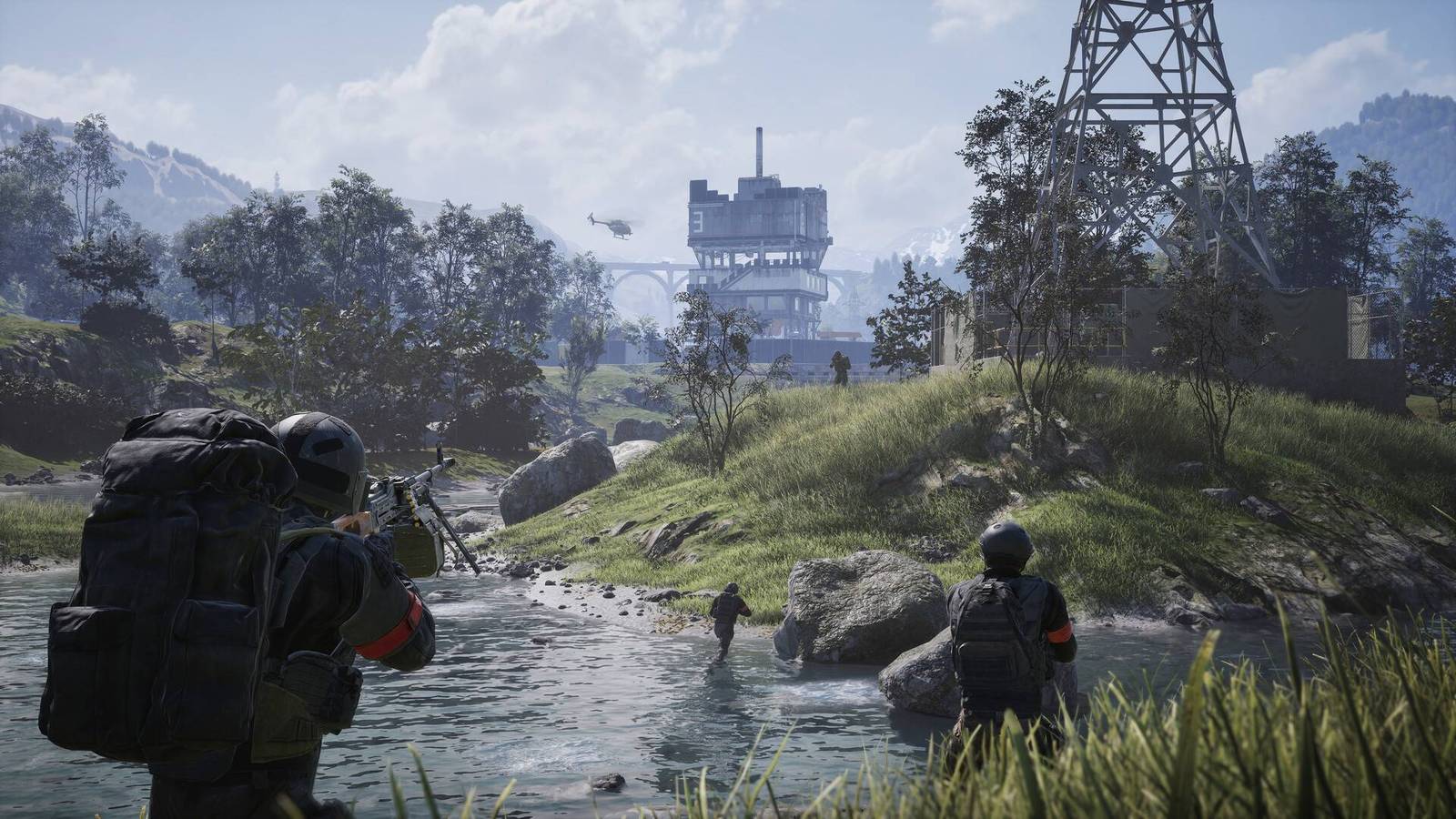
The cash-based metagame provides a persistent layer of progression and in-match decision-making. Players earn in-game currency through various actions – securing kills, capturing objectives, providing support, or even successfully completing base-building tasks. This cash can then be used to purchase new weapons, equipment, vehicles, or even contribute to team-wide upgrades or base defenses. This system incentivizes continuous engagement and offers a tangible reward for all forms of contribution, reinforcing the "selfish teamwork" philosophy by making individual economic success directly beneficial to the collective effort.
Perhaps one of the most intriguing features is the RuneScape-style skill leveling. Instead of abstract experience points, players improve their abilities by simply performing those actions. Healing teammates increases a medic skill, driving vehicles improves piloting proficiency, and using specific weapon types enhances mastery with those armaments. This organic progression means players naturally become better at what they enjoy doing, fostering specialization without rigid class systems. A player who prefers to provide logistical support by building fortifications will see their construction skills improve, leading to faster build times or more robust structures. This system intrinsically rewards commitment and diverse engagement, allowing players to genuinely "play their way" and see tangible growth in their preferred roles.
Base-building further expands the tactical possibilities. While details are still emerging, it’s expected to involve players contributing resources and effort to construct and fortify defensive structures, resource generators, or strategic outposts within a match. This adds a crucial strategic layer, where securing and maintaining control over built assets can turn the tide of battle. A well-placed and defended base can serve as a forward spawn point, a resupply depot, or a formidable defensive stronghold, requiring coordination and continuous investment from the team.
Coupled with a vast array of weapons and vehicles, these mechanics create a rich tapestry of gameplay opportunities. From infantry combat with diverse weapon loadouts to large-scale vehicular engagements involving tanks, APCs, and possibly even aerial assets, Wardogs promises a dynamic and ever-evolving battlefield where no two matches are exactly alike.
"Selfish Teamwork": A Paradigm Shift
The concept of "selfish teamwork" is the intellectual core of Wardogs, a philosophy that seeks to resolve the perennial tension between individual player agency and collective objective-based gameplay. Joe Brammer’s explanation highlights this beautifully: "Let’s say you just want to make [in-game] cash. The way you do that is by getting some kills, or maybe you snipe, you hang out on the edge of the zone and you kill a few red and green players on the opposition teams. Obviously, you’re getting kills, so you’re taking away from the other teams’ pool of players, but you’re also in the zone contributing [to the objective]." This means a sniper, seemingly operating alone, isn’t just padding their stats; their presence in a control zone, however passive their immediate objective, directly contributes to its capture or defense. Their kills weaken the enemy’s ability to contest the zone, and their very existence within the objective’s radius adds to the team’s numerical advantage for control.
This idea was vividly illustrated during internal playtests involving Bulkhead’s operations team, mostly women in their twenties who had no prior gaming experience. Brammer recounted how these non-gamers were initially overwhelmed by the "war" environment, fearing death. Instead of actively engaging, they retreated into a building within a control zone. "One of them would be like ‘you watch the window, you watch the door,’ and they wouldn’t move," Brammer explained. Crucially, their static presence was not a detriment. "But because it matters how many people you have in the control zone, whoever had the operations team on their side was winning. There were five people just sitting there, still contributing to the team effort."
This anecdote is a powerful testament to the efficacy of "selfish teamwork." It demonstrates that Wardogs is designed to be accessible and rewarding even for players who are not comfortable with, or skilled at, traditional combat. A player who might be afraid to push an objective can still contribute immensely by simply holding a position, providing numerical advantage, or even acting as bait for the enemy. This lowers the barrier to entry significantly, making the game enjoyable for a much broader audience than typical hardcore shooters. It suggests a future where players aren’t forced into roles they dislike but can find genuine value and enjoyment in contributing in ways that align with their comfort levels and individual goals, all while bolstering the team’s success.
Official Responses
The Genesis of the "Dad Gamer" FPS
The core philosophy driving Wardogs is remarkably simple yet profound: the Bulkhead team is building the game they genuinely want to play. Joe Brammer candidly admitted, "I haven’t got time to be as good as the younger crowd now." This statement, while initially requested to be omitted, perfectly encapsulates the shift in perspective that underpins Wardogs‘ design. It’s a recognition that as life changes – with responsibilities like family and work – the demands of competitive, reflex-driven gaming become less feasible and less appealing.
The "dad gamer" demographic, as Brammer identifies it, isn’t necessarily defined by age or parental status, but by a set of preferences born from evolving lifestyles. These players often seek:
- Reduced Reliance on Twitch Reflexes: While skill is still rewarded, success shouldn’t hinge solely on lightning-fast reactions.
- Strategic Depth Over Pure Mechanical Skill: Opportunities for tactical planning, thoughtful execution, and impactful decision-making.
- Varied Contribution Avenues: The ability to contribute meaningfully through diverse roles beyond just combat, such as logistics, support, base-building, or objective presence.
- Forgiving Mechanics: Less punishing for mistakes, allowing for learning and recovery without constant frustration.
- Persistent Progression: Rewarding time investment with tangible character or account growth, even during shorter play sessions.
- Less Time-Consuming Mastery: A game that can be enjoyed and progressed in without requiring dozens of hours of practice each week to stay competitive.
Wardogs caters to these needs directly. The "selfish teamwork" system ensures that every player, regardless of their combat prowess, can be a vital asset. The RuneScape-style skill leveling means that players naturally improve in areas they enjoy, providing a sense of progression and mastery without the pressure to become an esports-level sharpshooter. The 100-player matches and destructible environments create a dynamic battlefield where strategic thinking and adaptability can often outweigh raw aim.

Brammer emphasized that the project wasn’t necessarily initiated to fill a "gap in the market." While Wardogs certainly seems poised to serve an underserved demographic, the primary motivation was intrinsic. "What we knew from Battalion 1944 was, when we make games that we want to play in our evenings, we make a better game because of it." This speaks to the power of passion-driven development. When developers are genuinely invested in and excited by the game they are creating, that enthusiasm translates into a more thoughtful, polished, and ultimately, a better player experience. The transition from designing for their younger, more competitive selves to their current "dad gamer" selves has imbued Wardogs with a unique authenticity and a profound understanding of its target audience’s desires.
Bulkhead’s Vision and Community Engagement
Bulkhead’s approach to developing Wardogs signals a commitment to transparency and community involvement, a critical factor for success in today’s gaming landscape. The current closed pre-alpha playtest is a strategic move to gather early, invaluable feedback from a dedicated group of players. This early engagement allows the developers to identify bugs, assess gameplay balance, and validate core mechanics before the game reaches a wider audience. This iterative process is crucial for a title as ambitious and complex as Wardogs.
The upcoming early access release later this year will further deepen this community relationship. Early access isn’t just a soft launch; it’s an extended period of co-development where player feedback directly influences the game’s evolution. Bulkhead will likely be closely monitoring player data, forum discussions, and community suggestions to refine Wardogs‘ features, introduce new content, and ensure the game remains aligned with player expectations while staying true to its core vision.
Bulkhead’s long-term goals for Wardogs appear to extend beyond a mere launch. By designing a game that emphasizes longevity through diverse progression systems, strategic depth, and accommodating various playstyles, they are laying the groundwork for a thriving, long-term community. While e-sports might not be the primary focus given the "dad gamer" philosophy, the game’s tactical depth and large-scale battles could certainly foster a robust casual competitive scene or organized community events. The ultimate aspiration seems to be creating a benchmark for a new kind of shooter – one that offers the thrill of large-scale warfare without alienating players who prioritize strategy and varied contribution over pure mechanical domination.
Implications
Reshaping the FPS Landscape?
Wardogs‘ unique blend of features and its explicit targeting of the "dad gamer" demographic could have significant implications for the crowded and often homogenous FPS genre. For years, the market has been largely dominated by two distinct poles: the ultra-realistic, punishing simulators and the fast-paced, high-octane competitive titles. Wardogs is attempting to carve out a viable, engaging middle ground, one that offers tactical depth and large-scale conflict without the extreme skill ceiling or unforgiving nature of its more hardcore counterparts.
If Wardogs achieves critical and commercial success, it could signal a significant shift in game design philosophy. It might encourage other developers to look beyond traditional competitive models and cater to the diverse needs of an aging, yet still passionate, player base. The success of "selfish teamwork" could become a new blueprint for multiplayer design, inspiring mechanics that empower all players to contribute meaningfully, thereby fostering more inclusive and less toxic communities. This could lead to a new subgenre of "accessible tactical shooters" or "strategic sandbox FPS" games.
Established titles like Battlefield and Call of Duty, which often struggle with player retention and the demands of their ever-evolving communities, might be forced to observe and potentially adapt. If Wardogs proves that a significant market exists for a more accommodating yet still deep FPS experience, these giants might consider incorporating similar mechanics that reward diverse playstyles and reduce the reliance on constant high-skill output. The gaming industry is constantly evolving, and the success of Wardogs could be a testament to the market’s maturity and its readiness for more nuanced and player-centric designs. It suggests that innovation doesn’t always have to come from pushing graphical fidelity or raw competitive intensity, but from rethinking the fundamental ways players interact and contribute within a game world.
The Road Ahead: Early Access and Beyond
The upcoming early access launch for Wardogs marks a critical juncture for Bulkhead. While it offers an unparalleled opportunity for community feedback and iterative development, it also presents significant challenges. Balancing a 100-player game with destructible environments, a cash-based economy, and diverse skill progression is an enormous undertaking. Bulkhead will need to meticulously monitor player data, address bugs swiftly, and manage community expectations regarding content updates and feature implementation. The success of early access hinges on transparent communication, consistent updates, and a genuine responsiveness to player concerns.
The ultimate aspiration for Wardogs is likely to foster a thriving, long-term community that feels invested in the game’s continuous evolution. By empowering players to contribute in myriad ways and offering deep, persistent progression, Bulkhead is building a game designed for longevity. The question isn’t just whether Wardogs will be a good game, but whether it can sustain its unique appeal and grow its player base beyond the initial hype.
In a world saturated with high-stakes, high-skill competitive shooters, Wardogs stands out as a beacon for a different kind of player. It champions the idea that gaming can be a rich, engaging experience that evolves with its players, accommodating their lives while still delivering exhilarating "all-out warfare." If Bulkhead can successfully navigate the complexities of early access and deliver on its ambitious vision, Wardogs has the potential to not only carve out a unique niche but also redefine what it means to be a "hardcore" gamer in the modern era, proving that dedication and enjoyment can manifest in forms far beyond pure twitch reflexes. The gaming world eagerly awaits its early access debut to see if this promise will be fully realized.


 Lina Irawan
 Sagoh
Sagoh