Iffa Jayyana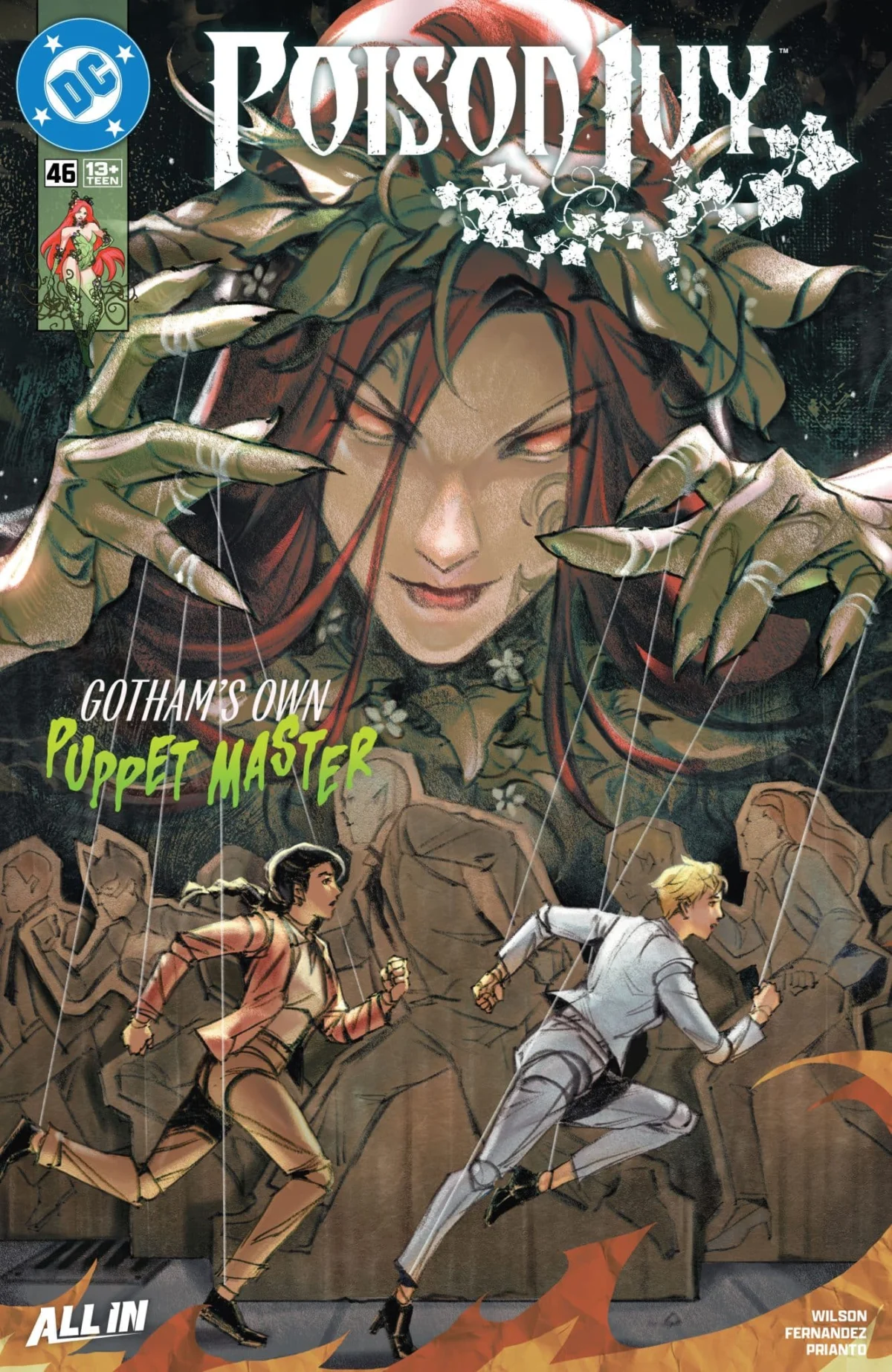
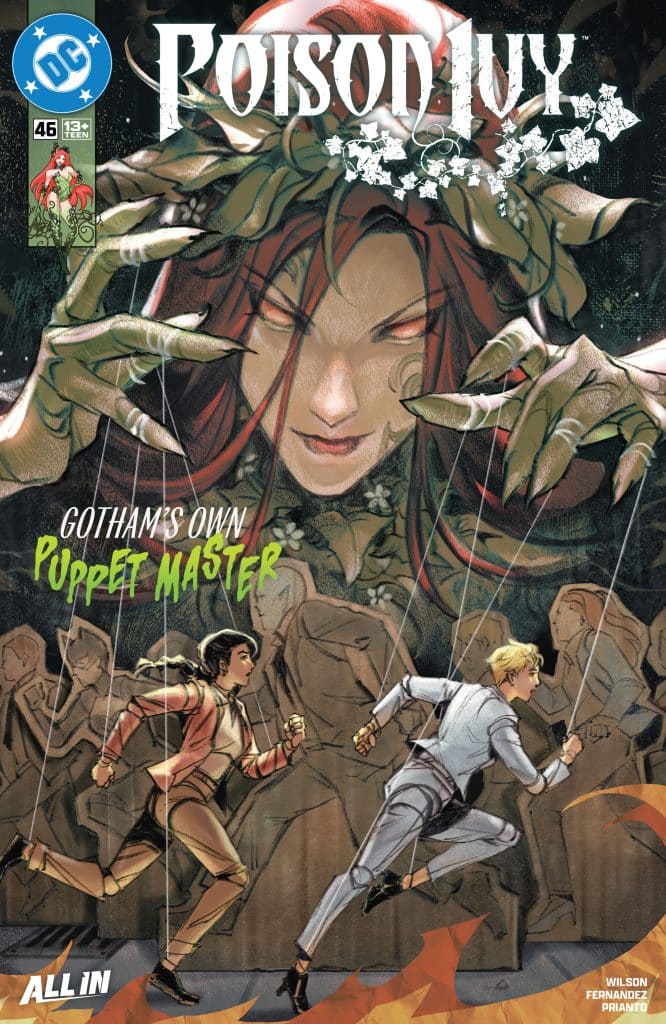
The streets of Gotham City have long been defined by shadows, corruption, and the thin line between justice and vengeance. However, in the latest installment of the critically acclaimed series Poison Ivy, writer G. Willow Wilson and artist Leandro Fernández are pushing the narrative stakes to an unprecedented breaking point. As Poison Ivy #46 arrives on shelves, readers are presented with a city on the precipice of total structural collapse, with Pamela Isley—the woman who would be mayor—serving as the literal and metaphorical match in this powder keg.
The Main Facts: A City at the Boiling Point
Poison Ivy #46 serves as a critical juncture in the ongoing saga of Pamela Isley’s tenure within the Gotham landscape. Following a trajectory that has challenged traditional portrayals of the character, this issue forces Ivy to confront the consequences of her unique brand of stewardship.
The central conflict is straightforward yet devastating: Gotham is boiling over with a volatile cocktail of anger, systemic pain, and existential despair. As the narrative tension reaches a crescendo, the citizens of Gotham are turning their eyes toward the Mayor’s office, and the knives—metaphorically and perhaps literally—are out. The "chopping block" is no longer a distant threat; it is the immediate reality for an administration struggling to maintain order in a city that is inherently allergic to it.

The issue is penned by G. Willow Wilson, whose work on the title has been lauded for its psychological depth and commitment to exploring Ivy’s complex motivations. Accompanied by the atmospheric and gritty pencils of Leandro Fernández, the issue captures the visceral sense of panic that currently grips the urban sprawl of Gotham.
Chronology: How We Arrived at the Brink
To understand the severity of Poison Ivy #46, one must look at the recent history of the series. The narrative arc has been a slow burn, meticulously constructed to lead to this moment of instability.
- The Rise of Isley: The series began with a departure from traditional villainy, exploring Ivy’s attempt to reform and reshape the world through a green, eco-conscious lens. Her ascension to a position of authority was not a power grab in the traditional sense, but a radical experiment in environmental and social policy.
- The Erosion of Trust: Over the past forty-five issues, the initial optimism surrounding her leadership began to erode. As external forces—ranging from corporate interests to traditional caped crusaders—pressured her, the internal stability of her coalition began to fracture.
- The Current Crisis: Poison Ivy #46 picks up in the immediate aftermath of a series of societal shocks. The air in Gotham is described as "full of anger, pain, and despair." This isn’t merely an external threat; it is an internal psychological environment that Isley is responsible for managing.
- The Turning Point: The issue focuses on the transition from "management" to "survival." As the city turns against her, the question shifts from "Can she change Gotham?" to "Can she survive the city she sought to save?"
Supporting Data: The Anatomy of a Gotham Collapse
Gotham City’s instability is a recurring motif in DC Comics, but the circumstances surrounding Poison Ivy #46 offer a unique case study in political and environmental volatility.
The Environmental Factor
Ivy’s power set and her connection to the "Green" have always acted as a barometer for her mental state. In this issue, the physical state of the city mirrors her own internal turmoil. The tension described by the creative team suggests that the city is not just angry—it is reactive. The infrastructure of the city itself, influenced by her presence, seems to be pushing back against her influence, creating a feedback loop of chaos.
The Socio-Political Climate
The "powder keg" metaphor used by the creative team refers to the disenfranchisement of the Gotham populace. Historically, Gothamites have been hardened by decades of supervillain skirmishes and vigilante activity. However, under Mayor Isley, the city has experienced a paradigm shift. The current panic suggests that the people feel trapped between two extremes: the chaos of the past and the radical, potentially suffocating control of the present.
Official Responses and Creative Direction
In discussions regarding the direction of the series, G. Willow Wilson has consistently emphasized that this iteration of Poison Ivy is defined by her contradictions.

"Pamela is a character who wants to be a savior, but she is a predator by nature," Wilson noted in recent promotional interviews for the series. "In issue #46, we are stripping away the veneer of governance. We are seeing what happens when the ‘Green’ is pushed to its absolute limit, not by a villain, but by the weight of human expectation."
Leandro Fernández’s visual storytelling plays a pivotal role in this narrative. By focusing on the faces of the crowd and the claustrophobic nature of the city’s architecture, Fernández emphasizes that this is a story about the intersection of power and intimacy. The art direction suggests a shift toward a more frantic, high-contrast aesthetic that reflects the "panic in the streets" described in the official solicitation.
Implications: The Future of the Mayor
The implications of Poison Ivy #46 are significant for the broader DC Universe. If Pamela Isley fails to quell the uprising, the potential consequences are dire:

- Political Vacuum: A collapse of the mayoral office would leave Gotham vulnerable to a power vacuum. With the traditional power structures already weakened, the city could descend into a state of lawless anarchy that even the Bat-family might struggle to contain.
- The Transformation of Ivy: The most profound implication lies in the character arc of Ivy herself. The solicitation poses the ultimate question: Can her faithful underlings save her from herself? This hints at a potential breakdown in her support network. If she is forced to abandon her humanity to survive, the results could lead to a permanent shift in her alignment, moving her further away from the hero she has struggled to become.
- The City as an Antagonist: The recurring theme of the "city swallowing them whole" suggests that Gotham may be sentient or, at the very least, an active participant in its own destruction. This narrative choice elevates the city from a backdrop to a primary antagonist, one that is fundamentally incompatible with Ivy’s goals.
Conclusion: A Must-Read for Fans of Psychological Drama
As the dust settles on the events of Poison Ivy #46, one thing is clear: G. Willow Wilson and Leandro Fernández have crafted a pivotal chapter that challenges the reader’s perception of morality and governance. This is not just a comic about a supervillain-turned-politician; it is a profound examination of the burden of power and the terrifying reality of what happens when a savior is rejected by the very people they intended to rescue.
For long-time readers of the series, this issue is a mandatory experience. It delivers on the promise of the last year of storytelling while setting the stage for a dramatic shift in Gotham’s political and ecological landscape. Whether Pamela Isley emerges as a martyr or a monster remains to be seen, but one thing is certain—the streets of Gotham will never be the same.
Poison Ivy #46 is available now through all major comic book retailers and digital platforms. As the city continues to teeter on the edge, the question remains: will the green, or the grey, prevail? The answer lies within the pages of this intense, gripping chapter of a legendary character’s history.

 Sagoh
Sagoh
 Ammar Sabilarrohman