Lina Irawan
The Marvel Universe’s temporal landscape is once again shifting under the weight of Lucas Bishop’s fractured history. As the ongoing Bishop series continues to redefine the stakes for the iconic time-traveling X-Man, the creative team has unveiled a startling addition to the future’s most dangerous organization. In an exclusive reveal for Bishop #2, readers are introduced to "Skippingstone," a grotesque and formidable new antagonist who carries the twisted genetic legacy of two of the Brotherhood of Evil Mutants’ most infamous members: the Blob and Toad.
The Genesis of a New Threat: Who is Skippingstone?
The introduction of Skippingstone is not merely a "monster-of-the-week" scenario; it represents a thematic escalation in the Bishop series. As a direct descendant of Fred J. Dukes (the Blob) and Mortimer Toynbee (Toad), Skippingstone occupies a unique space in the hierarchy of the "Final Brotherhood."
This new antagonist serves as a physical manifestation of the long-term consequences of the X-Men’s battles against the Brotherhood. By merging the unmovable, dense durability of the Blob with the agile, amphibious, and toxic physiology of the Toad, Skippingstone presents a dual-threat profile that few mutants are equipped to handle. Character design sheets provided by Marvel illustrate a figure that blends the girth and menace of the former with the predatory, unsettling aesthetic of the latter, suggesting a character that is as difficult to hit as it is to harm.

For Lucas Bishop, who has spent his entire life policing the timelines to prevent catastrophic futures, the emergence of a legacy villain like Skippingstone is deeply personal. It serves as a reminder that the enemies he thought he had buried in the annals of history have evolved, intermingled, and adapted to become even more lethal than their progenitors.
Chronology: From the Future to the Present
To understand the weight of this development, one must look at the trajectory of the Bishop series under the guidance of writer Saladin Ahmed.
- The Foundation (Issue #1): The debut issue established a grounded, introspective tone. Rather than focusing solely on high-octane action, Ahmed leaned into the psychological toll that constant time-traveling has taken on Bishop. The narrative arc focused on his search for identity and his struggle to reconcile his past in the dystopian future with his present-day responsibilities.
- The Catalyst (The Return of Shard): The narrative momentum shifts dramatically in the second installment. The return of Shard, Bishop’s sister, acts as the emotional anchor for the issue. However, as the solicitations indicate, this is no heartwarming reunion. The tension stems from the mystery surrounding her mission—a mission that threatens to destabilize everything Bishop has fought to protect.
- The Escalation (Issue #2): With the arrival of the Final Brotherhood’s latest operative, Skippingstone, the story transitions from an internal character study to an external existential threat. The appearance of Skippingstone, alongside hints of other legacy mutants like the descendants of Pyro and Avalanche, suggests that the "Final Brotherhood" is an organized, multi-generational coalition bent on ensuring the dark future Bishop tried to escape becomes a reality.
Supporting Data: The Anatomy of the Final Brotherhood
The Final Brotherhood is not a random collection of villains; it is a calculated response to the heroes of the present day. By analyzing the genetic lineage of their ranks, we can deduce the strategic threat they pose to the X-Men:
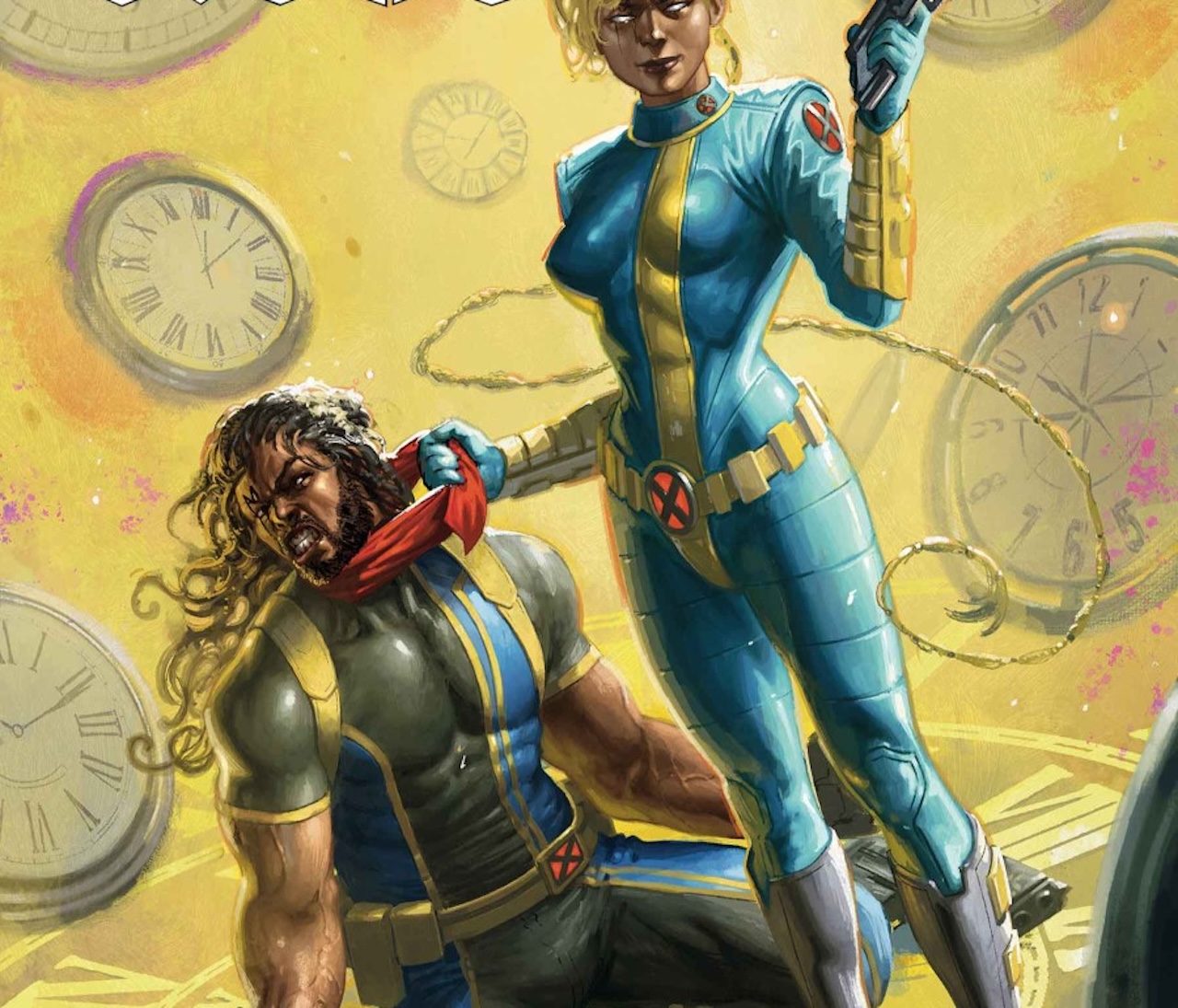
- The Blob/Toad Hybrid (Skippingstone): Provides a tank-and-harassment hybrid. Skippingstone can withstand massive damage while simultaneously utilizing amphibious agility to close distances, making him an ideal vanguard for the Brotherhood’s operations.
- The Pyro/Avalanche Legacy: The presence of descendants from these two heavy hitters suggests a tactical emphasis on area-of-effect destruction and terrain manipulation. If the Brotherhood’s goal is to reshape the environment to suit their needs, these mutants are the perfect tools for environmental warfare.
- The Organizational Hierarchy: The Final Brotherhood appears to be operating with a level of sophistication unseen in previous iterations of the group. By recruiting descendants, they are building a collective identity rooted in spite and ancestral grievance, which creates a more disciplined and ideologically driven adversary.
Official Creative Perspective: Inside the Writer’s Room
While specific quotes from the creative team remain under wraps, the thematic direction of the series has been clear since its inception. Saladin Ahmed’s approach to the character has been to peel back the layers of the "cop" persona Bishop often adopts.
By placing him against opponents who are literal echoes of his past, Ahmed is forcing a confrontation that cannot be solved by simply shooting plasma blasts. The "Final Brotherhood" is a reflection of the "Finality" of the timeline. The creative team’s choice to use legacy characters implies that the history of the X-Men is not a closed book, but a living, breathing cycle that continues to generate conflict long after the original villains have passed.
The art team, featuring Mario Santoro on pencils and Federico Blee on colors, plays a vital role in this transformation. The unlettered preview pages highlight a stark, high-contrast aesthetic that emphasizes the grime and grit of the future-warrior lifestyle. The colors, specifically, bring a sickly, visceral quality to the designs of characters like Skippingstone, reinforcing the idea that these are not noble warriors, but the byproduct of a corrupted evolution.

The Wider Implications for the X-Men Mythos
The implications of this arc extend far beyond the pages of a single series. If the Final Brotherhood successfully establishes a foothold in the current timeline, it raises several critical questions:
1. The Erasure of History
If these descendants are allowed to thrive, does it imply that the dark future Bishop escaped is now "locked in"? If the villains of the future are actively participating in the present, the temporal feedback loop could potentially erase the progress the X-Men have made in the Krakoan or post-Krakoan eras.
2. The Burden of Legacy
Bishop is a character defined by the burden of knowledge. He knows what could happen. Seeing the children of his greatest foes walking the streets creates a psychological dilemma: Does he hunt them down for crimes they have yet to commit, or does he wait for them to act, risking the lives of others? This moral gray area is the core of the current series.

3. Shard’s Role in the Conflict
The return of Shard is the wild card. As a character who has historically served as a moral compass or a victim of circumstance, her involvement with a potentially compromised agenda suggests that the "Final Brotherhood" might be using, or attempting to use, the most important person in Bishop’s life against him.
Conclusion: A Future That Cannot Be Outrun
As Bishop #2 approaches its release, the focus remains on the synthesis of legacy and threat. Skippingstone is a symbol of everything that went wrong in the timeline from which Lucas Bishop hails. By giving the Brotherhood a new, younger, and more diverse set of abilities, the series is ensuring that Bishop’s journey remains as treacherous as ever.
Whether the "Final Brotherhood" is a sign of a looming apocalypse or a manageable challenge remains to be seen. However, one thing is certain: in the world of Lucas Bishop, you can travel through time, you can shift your loyalties, and you can change your allegiance—but you can never truly escape the sins of your past.

Bishop #2 is set to hit comic shelves next month, promising a deep dive into the fractured psyche of an X-Man who has run out of time to run.

 Sagoh
Sagoh
 Ammar Sabilarrohman