Evan Lee Salim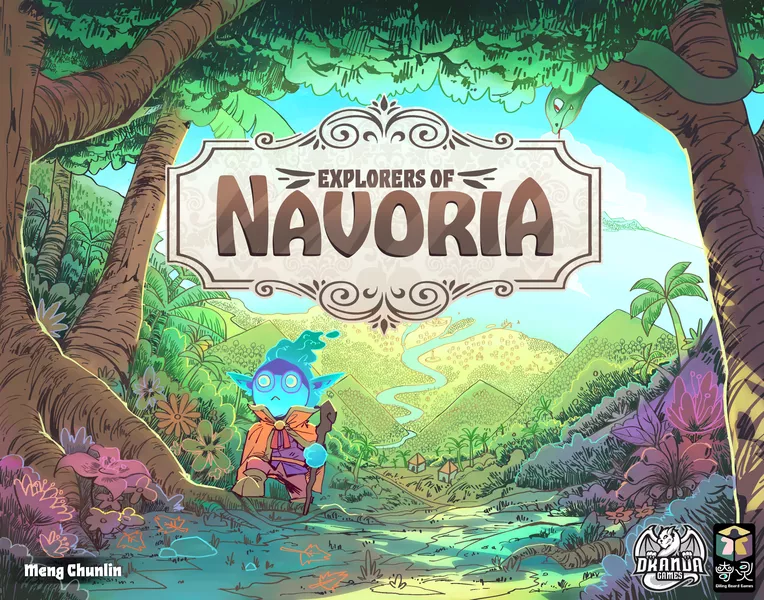
In the ever-expanding landscape of modern board gaming, the "gateway-plus" category—games that offer more depth than a simple party game but remain accessible to newcomers—is a crowded field. Yet, occasionally, a title emerges that balances aesthetic charm with mechanical precision in a way that captures the attention of both families and seasoned hobbyists. Explorers of Navoria, the latest offering from publisher Qiling Board Games, is one such title. Designed and illustrated by Meng Chunlin, the game invites 2–4 players to set out on a journey of discovery, resource management, and engine building across a freshly unveiled continent.
Main Facts: The Anatomy of a New Frontier
At its core, Explorers of Navoria is a sophisticated drafting and tableau-building game that distills the complexities of expedition management into a digestible 40 to 80-minute experience. Players act as leaders of their own exploration parties, tasked with recruiting adventurers, securing resources, and establishing a presence in the mysterious lands of Navoria.
The game is structured over three distinct rounds, each requiring players to balance immediate gains against long-term scoring objectives. The physical components include a vibrant deck of adventurer cards, a variety of wooden tokens, and a central board that serves as the heart of the action. With its focus on iconography over text, the game effectively lowers the barrier to entry, ensuring that players are focused on strategy rather than deciphering complex manuals.
A Chronology of Play: How the Expedition Unfolds
The gameplay loop of Explorers of Navoria is divided into two distinct phases within each of the three rounds: the Recruit Phase and the Gather Phase. Understanding this rhythm is essential for anyone hoping to master the game’s mechanics.
The Recruit Phase
Each round begins with the Recruit Phase. Here, the drafting mechanic takes center stage. Players draw action tokens from an opaque cloth bag—a tactile element that adds a sense of anticipation to every turn. These tokens represent specific categories of adventurers or resources. Players use these tokens to "hire" cards from a shared display. If a player finds that the tokens they have drawn do not align with their current goals, they are granted the flexibility to pull a token from the "town center," effectively claiming an action that a previous player may have discarded. This creates an immediate layer of tactical decision-making: do you take what you need, or do you deprive an opponent of a key resource?
The Gather Phase
Following the recruitment of your team, the game moves into the Gather Phase. This acts as a secondary draft, where the tokens collected earlier are deployed to activate specific sectors on the main game board. These sectors allow for exploration, the acquisition of rare resources, military expansion, or the generation of income. Once the board actions are resolved, players enter an "income phase," collecting rewards based on the cards residing in their personal tableau. This cycle—drafting to build the engine, then using the engine to extract value—is the primary engine of the game, providing a satisfying sense of progression as the rounds tick by.
Supporting Data: Why the Pacing Works
One of the most frequent critiques of tableau-building games is the "downtime problem," where players wait in silence while others calculate complex, multi-layered turns. Explorers of Navoria effectively avoids this trap. The game is designed to be lean, with each turn boiling down to a singular, meaningful decision.
Data from playtesting suggests that the game maintains a steady clip of roughly 20 minutes per player. This efficiency is achieved by limiting the "combo-chaining" that often slows down heavier titles. By forcing players to commit to one clear action at a time, the game maintains a brisk, momentum-driven pace. Even with a full table of four players, the wait time between turns remains negligible, which is a significant feat for a title that emphasizes strategy.
Furthermore, the game’s interaction model, while primarily indirect, is mathematically sound. Because card displays are limited and subject to the "first-come, first-served" rule, players are forced to engage in "hate drafting." If you observe an opponent building a heavy military strategy, you might choose to take the specific card they need, even if it doesn’t perfectly align with your own goals. This keeps the experience competitive without descending into the aggressive confrontation found in war-themed games.

Official Perspectives and Design Philosophy
In discussions surrounding the game’s development, Meng Chunlin has emphasized the goal of creating a "cohesive fantasy experience." The theme, which could easily have been a generic backdrop, is tightly integrated with the mechanics. Recruiting a scout feels like a tactical choice, not just a card selection, because the icons and the visual language of the game support that narrative.
The visual design, characterized by "bird-faced" hot air balloons and whimsical creatures, serves a dual purpose. It makes the game aesthetically pleasing—a key factor for modern table presence—but it also serves a functional role in gameplay. By using a consistent, bright color palette, Chunlin has ensured that the board remains readable even during the heat of a high-stakes round. The component quality, from the sturdy cards to the tactile canvas bag, reflects a commitment to a premium player experience at a mid-tier price point.
Implications for the Hobby: Where Does Navoria Fit?
For the board gaming industry, Explorers of Navoria represents a successful attempt to bridge the gap between "gateway games" (like Ticket to Ride) and "heavy hobbyist games" (like Terraforming Mars). It is an ideal recommendation for families whose children have graduated from simple card games and are ready to tackle worker placement or engine-building concepts.
The "Gateway-Plus" Effect
The primary implication of this game’s design is its accessibility. By removing heavy text and relying on intuitive iconography, it invites a wider demographic into the hobby. Younger gamers, even those as young as six or seven, can grasp the core concepts with minimal guidance, while the strategic depth remains high enough to keep adults engaged throughout the hour-long session.
The Expansion Potential
While Explorers of Navoria is a complete and satisfying experience out of the box, the consensus among reviewers is that it serves as an excellent foundation. The game is "one or two mechanics away" from becoming a long-term staple. The modularity of the card deck suggests that an expansion—perhaps introducing new regions of Navoria or more complex objective scoring—could easily elevate this from a great game to a masterpiece.
Strategic Limitations
It is important to note, however, that the game is not designed for the "crunchy" gamer who enjoys 30-minute turn cycles and spreadsheet-like calculations. If the player’s goal is to engage in deep, multi-hour strategic planning, they may find the experience somewhat limited. Explorers of Navoria is a sprint, not a marathon. For the dedicated enthusiast, it is a perfect "filler" or "cooldown" game, but it is not intended to replace the heavy-duty titles that dominate the BGG Top 100.
Conclusion: Is It Worth the Journey?
Explorers of Navoria succeeds because it understands its identity. It does not try to be everything to everyone. Instead, it focuses on delivering a polished, visually stunning, and mechanically sound experience that respects the player’s time.
For the average gamer, the game offers a perfect balance of tension and reward. The drafting loop is genuinely satisfying, and the progression of building a tableau feels meaningful. It is rare to find a game that is this easy to teach but remains this engaging to play repeatedly. As the tabletop market continues to grow, titles like Explorers of Navoria will likely serve as the gold standard for how to introduce complexity in a way that feels like an invitation rather than a chore. Whether you are an experienced explorer looking for a lighter challenge or a family seeking your next Sunday afternoon staple, the continent of Navoria is well worth the visit.


 Sagoh
Sagoh
 Ammar Sabilarrohman