Lina Irawan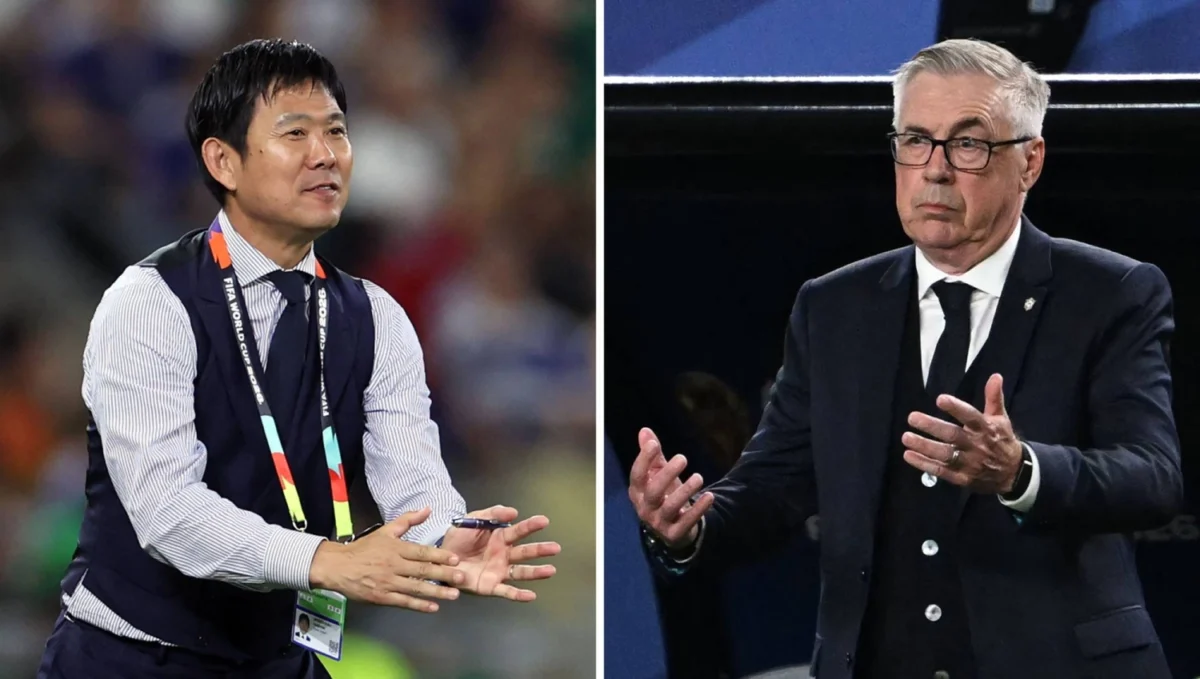
Introduction: The Weight of History in the Round of 32
The FIFA World Cup, a theater of dreams and nightmares, arrives at its most unforgiving stage this Monday in Houston. As the Round of 32 commences, the spotlight falls squarely on a fixture that carries far more weight than a typical knockout match. Japan, a team defined by tactical discipline and an increasingly lethal counter-attacking identity, faces Brazil, the tournament’s most storied nation, currently under the stewardship of the legendary Carlo Ancelotti.
For Ancelotti, this is not merely a path to the Round of 16; it is a reckoning. The match serves as a crucible for his tenure as the Seleção manager, a position he assumed with the singular mandate of restoring Brazilian dominance. Standing in his way is Hajime Moriyasu’s Japan, a side that has evolved from a perennial underdog into a legitimate disruptor on the global stage.
The Chronology of a Rivalry Reborn
To understand the gravity of Monday’s clash, one must look back to the autumn of 2025. In a friendly fixture that shocked the footballing world, Japan hosted Brazil in Tokyo. For 70 minutes, the script followed the traditional narrative: Brazil, fluid and clinical, led 2-0 and appeared to be cruising toward a comfortable victory.
However, the final 20 minutes of that match have since become part of Japanese football folklore.
- 72nd Minute: Japan finds the breakthrough, exposing a lack of defensive cohesion in the Brazilian ranks.
- 78th Minute: The momentum shifts decisively. A quick transition catches the Brazilian midfield flat-footed, leveling the score.
- 89th Minute: Japan completes the comeback, securing a 3-2 victory—their first-ever win against the South American giants in 14 historical meetings.
That October evening exposed the "disjointed" nature of a Brazilian squad in transition. For Ancelotti, who had left the sanctuary of Real Madrid to take on the most high-pressure job in world football, it was a baptism by fire. It served as a visceral reminder that the global landscape of the sport had shifted; the gap between the traditional elite and the rising powers of Asia had narrowed significantly.
Supporting Data: Tactical Evolution and Statistical Realities
The statistics leading into the Houston encounter reveal two teams on diverging paths of maturity.
The Japanese Blueprint
Hajime Moriyasu has spent his tenure cultivating a "total team" philosophy. Unlike many of his predecessors, Moriyasu has prioritized physical conditioning and a high-pressing system that forces turnovers in the final third. In the group stages of this World Cup, Japan boasted one of the highest turnover rates in the tournament. Their ability to capitalize on transition—a trait that decimated Brazil in 2025—is their primary weapon.
The Ancelotti Transformation
Ancelotti’s mandate has been to balance Brazil’s innate creative flair with a pragmatic defensive structure. Since the 2025 collapse in Tokyo, the data shows a tightening of the Brazilian defensive third.
- Clean Sheet Ratio: Brazil has increased its clean-sheet percentage by 22% since the October friendly.
- Midfield Retention: Under Ancelotti, the team has shifted from a 4-3-3 to a more flexible 4-2-3-1, allowing for more defensive protection in the center of the park—a direct response to the vulnerability they displayed against Japan’s counter-attacks.
The challenge for Ancelotti remains psychological. The "Tokyo collapse" is not just a statistical anomaly; it is a mental hurdle. How the Brazilian backline responds under the pressure of a knockout game against the very team that exploited them previously will define their campaign.
Official Responses and Tactical Posturing
The buildup to the match in Houston has been marked by professional respect, yet underlying tensions remain.

Hajime Moriyasu’s Perspective
During the pre-match press conference, Moriyasu remained characteristically measured. "Brazil is a different team today than they were in 2025," the Japan coach stated. "We have immense respect for the quality of their individual players and the experience of their coach. However, our confidence is built on the belief that our system can challenge any opponent if we maintain our concentration for the full 90 minutes."
Carlo Ancelotti’s Defense
Ancelotti, a man who has won everything there is to win in club football, has adopted a stoic approach to the media. Addressing the 2025 defeat, he noted: "In football, you learn more from your losses than your wins. That match in Tokyo was a painful lesson, but it was a necessary one. It forced us to confront our structural weaknesses. We are not looking for ‘revenge’ in an emotional sense; we are looking for a professional execution of our game plan. The context of a World Cup knockout match is entirely different from a friendly."
Implications: The Legacy of a Manager and a Nation
The outcome of this match carries profound implications for both sides.
For Brazil: The "Ancelotti Project"
Should Brazil fall to Japan once more, the questions surrounding Ancelotti’s tenure will reach a fever pitch. The Brazilian Football Confederation (CBF) hired him with the goal of winning the 2026 World Cup. An early exit in the Round of 32 would be viewed as an existential failure, potentially ending the experiment of hiring a European manager for the Seleção. It would also raise questions about whether the traditional Brazilian style can ever truly mesh with the rigid, tactical demands of modern international football.
For Japan: Entering the Elite
Conversely, for Japan, a win would represent more than just advancement. It would signal their arrival as a permanent fixture among the world’s elite. Having previously reached the round of 16 multiple times, Japan is hungry for a quarterfinal berth—or better. Defeating Brazil on the biggest stage would effectively strip away the "giant-killer" label, replacing it with the status of a legitimate contender. It would be a validation of Moriyasu’s long-term project and a massive boost for the development of football within the J-League and across Asia.
The Houston Atmosphere
The city of Houston is bracing for a capacity crowd. The influx of fans from both nations has created a vibrant, cosmopolitan atmosphere. Local organizers have noted that ticket demand for this specific fixture has eclipsed all other Round of 32 matches, highlighting the global intrigue surrounding the Ancelotti-Moriyasu tactical duel.
The climate in Houston—notoriously humid and hot—could also play a role. Both squads have been training in similar conditions, but the endurance levels of the players will be tested in the final stages of the match. If the game remains tied, the tactical discipline required to manage extra time will fall squarely on the managers.
Conclusion: The Final Analysis
As the whistle blows on Monday, the history of the 2025 friendly will serve as the backdrop for a much larger narrative. Brazil enters the match with the weight of expectation and the sting of past failures. Japan enters with the confidence of a team that knows exactly how to expose the cracks in the Brazilian armor.
Whether Ancelotti can prove that his team has evolved beyond their past vulnerabilities, or whether Moriyasu can replicate the tactical brilliance that brought the world to a standstill in Tokyo, remains to be seen. What is certain is that the Round of 32 in Houston will be remembered not just for the scoreline, but for the trajectory of two nations navigating the pressures of the world’s most prestigious tournament.
The stage is set. The history is written. Now, the players must decide the future.


 Neng Nana
 Asro
Asro