Azzam Bilal Chamdy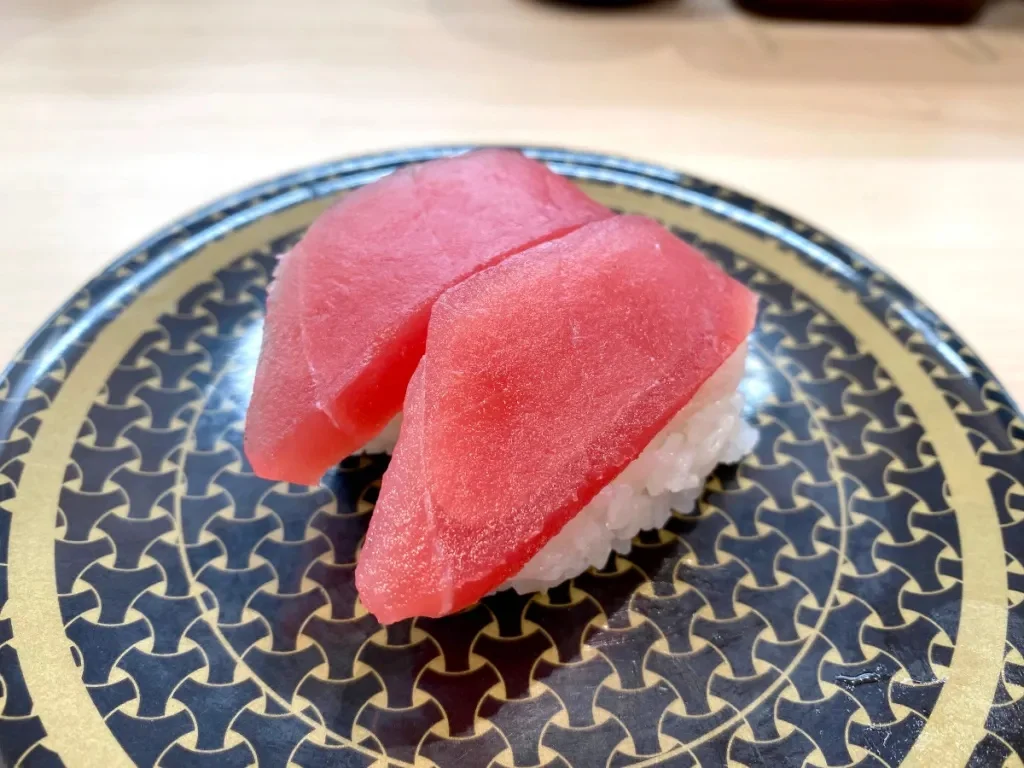
In the modern digital age, the pursuit of social media notoriety has increasingly intersected with the real-world legal system, often with devastating consequences for those who prioritize engagement over ethics. A recent incident at a kaitenzushi (conveyor belt sushi) restaurant in Saitama Prefecture, Japan, serves as a stark reminder that the quest for online clicks can carry a hefty financial and legal price tag. A 43-year-old man, seeking to capitalize on the "prank" trend, found his actions leading not to viral fame, but to a criminal conviction and a significant fine.
The incident highlights the precarious balance of trust that sustains Japan’s beloved conveyor belt sushi industry—a system that relies heavily on the collective social contract of hygiene and mutual respect.
Main Facts: A Misguided Pursuit of Clout
On May 27, 2026, a 43-year-old individual entered a branch of the popular Hama Sushi chain in Tsurugashima, Saitama Prefecture. While the restaurant was busy serving patrons, the man engaged in an act of performative disruption. He filmed himself retrieving a plate of tuna sushi from the conveyor belt, brandishing a container labeled as dish soap, and proceeding to squeeze the liquid onto the food.
The video was subsequently uploaded to social media platforms, where the man intended for it to go viral. When questioned by investigators regarding his motivation, the man offered a blunt explanation: he simply wanted to "get a lot of views on social media."
The aftermath of the video was swift. Hama Sushi, a major player in the Japanese dining landscape, did not view the act as a harmless prank. Instead, the company and local law enforcement treated the incident as a serious matter of public safety and corporate integrity. The man was subsequently arrested on charges of "forcible obstruction of business." Recently, the Kawagoe Summary Court in Saitama handed down its verdict, ordering the defendant to pay a fine of 500,000 yen (approximately $3,125 USD).
Chronology of the Incident
The sequence of events leading to the sentencing paints a picture of a calculated, albeit foolish, disruption:
- May 27, 2026: The perpetrator enters the Hama Sushi branch in Tsurugashima. He films himself taking a plate of tuna sushi and applying a foreign liquid from a dish soap container onto the food. The video is uploaded to his social media profile.
- Late May 2026: Following the circulation of the footage, Hama Sushi initiates internal investigations and contacts local authorities to report the tampering.
- Early June 2026: Police launch an investigation into the incident, leading to the arrest of the 43-year-old suspect.
- June 2026: The case is brought before the Kawagoe Summary Court. During proceedings, the defendant claims the liquid in the bottle was actually water, not dish soap, despite the deceptive packaging used to film the stunt.
- Late June 2026: The court issues a judgment of 500,000 yen for the forcible obstruction of business.
Supporting Data and Context
To understand the severity of the fine, one must look at the economic structure of the restaurant. At standard Hama Sushi locations, a two-piece plate of high-quality tuna or salmon typically retails for roughly 200 yen (approx. $1.25 USD). The 500,000 yen fine is equivalent to the cost of approximately 3,789 plates of sushi. While this amount is not necessarily ruinous for a middle-aged adult, it represents a substantial penalty for a single, fleeting moment of internet vanity.
The debate surrounding the punishment has been fierce. Many online observers in Japan have argued that the penalty was too lenient, citing the potential for public health risks and the damage caused to the brand’s reputation. The court’s decision to impose this specific fine likely took into account that the defendant appeared to have targeted a plate he had personally ordered. Since he pulled the plate from the belt before applying the substance, the risk of another patron consuming the tampered food was theoretically mitigated. However, the legal threshold for "obstruction of business" does not require actual harm to a consumer; it requires only that the business was forced to divert resources to address the disruption.
Official Responses and Corporate Impact
The corporate response from Hama Sushi was immediate and necessary. Upon discovering the video, the restaurant was forced to perform extensive sanitation procedures to ensure the safety of its facilities and to reassure the public that no contaminated items remained on the conveyor belt.
Beyond the physical cleanup, the incident imposed a significant "soft" cost on the company. Staff members were required to spend valuable time fielding inquiries, addressing customer concerns, and coordinating with law enforcement. In the eyes of the court, this operational interference constituted a clear case of obstruction of business.
Industry experts note that conveyor belt sushi chains operate on a high-trust model. Unlike traditional restaurants where servers bring food directly from the kitchen, kaitenzushi relies on the customer’s belief that the items circulating in the public space are clean and untouched. When that trust is breached, even if the "prank" is fake or staged, the damage to the restaurant’s brand image is tangible.
Implications for Digital Culture and Law
The Tsurugashima incident is part of a growing trend in Japan of "sushi terrorism"—a phenomenon where individuals film themselves tampering with food in public restaurants to gain attention online. This trend has forced major chains to adopt new technologies, such as AI-powered surveillance cameras, to monitor conveyor belts and prevent such incidents before they occur.
The Legal Framework
The charge of "forcible obstruction of business" (imminyō bōgai) is a serious offense in Japan. It covers actions that impede the smooth operation of a company, whether through threats, violence, or, in this case, disruptive conduct that forces a business to suspend operations or incur costs. The 500,000 yen fine sends a clear message to the public: the digital realm is not an exempt space. What happens on a smartphone screen has real-world consequences in a court of law.
The Social Implications
For many in Japan, the incident is a reflection of a decline in public etiquette. In a culture that prizes omotenashi (hospitality) and collective harmony, the deliberate contamination of food—even if the liquid was "just water," as the defendant claimed—is viewed as a profound insult to both the restaurant and the community.
Furthermore, the defense that the liquid was "only water" demonstrates a fundamental misunderstanding of the gravity of the act. The offense is not just about the chemistry of the liquid; it is about the act of the performance itself. By creating the impression that a hazardous substance was being introduced into a public food supply, the perpetrator intentionally undermined the public’s sense of safety.
Moving Forward
As social media platforms continue to incentivize "shock" content, the judiciary in Japan is clearly signaling that it will not tolerate the use of public spaces as backdrops for antisocial behavior. The swift sentencing of the 43-year-old man serves as a deterrent, but it also reflects the reality that the age of "trust-based dining" is evolving.
Restaurants are increasingly moving away from open conveyor belts toward systems where food is delivered directly to the table, effectively ending the era of the "free-roaming" sushi plate. In this way, the actions of a few "morons," as some online critics have labeled them, are permanently altering the dining experience for millions of law-abiding citizens.
Ultimately, the 500,000 yen fine serves as a expensive lesson: the cost of a plate of tuna is negligible, but the cost of violating the social contract is, and should remain, exceedingly high. The authorities hope that by making these examples, they can preserve the integrity of a culinary tradition that has brought joy to generations of diners. For the man in question, the "views" he sought have come at a price that far outweighs any digital benefit he might have received.


 Neng Nana
 Asro
Asro