Ammar Sabilarrohman
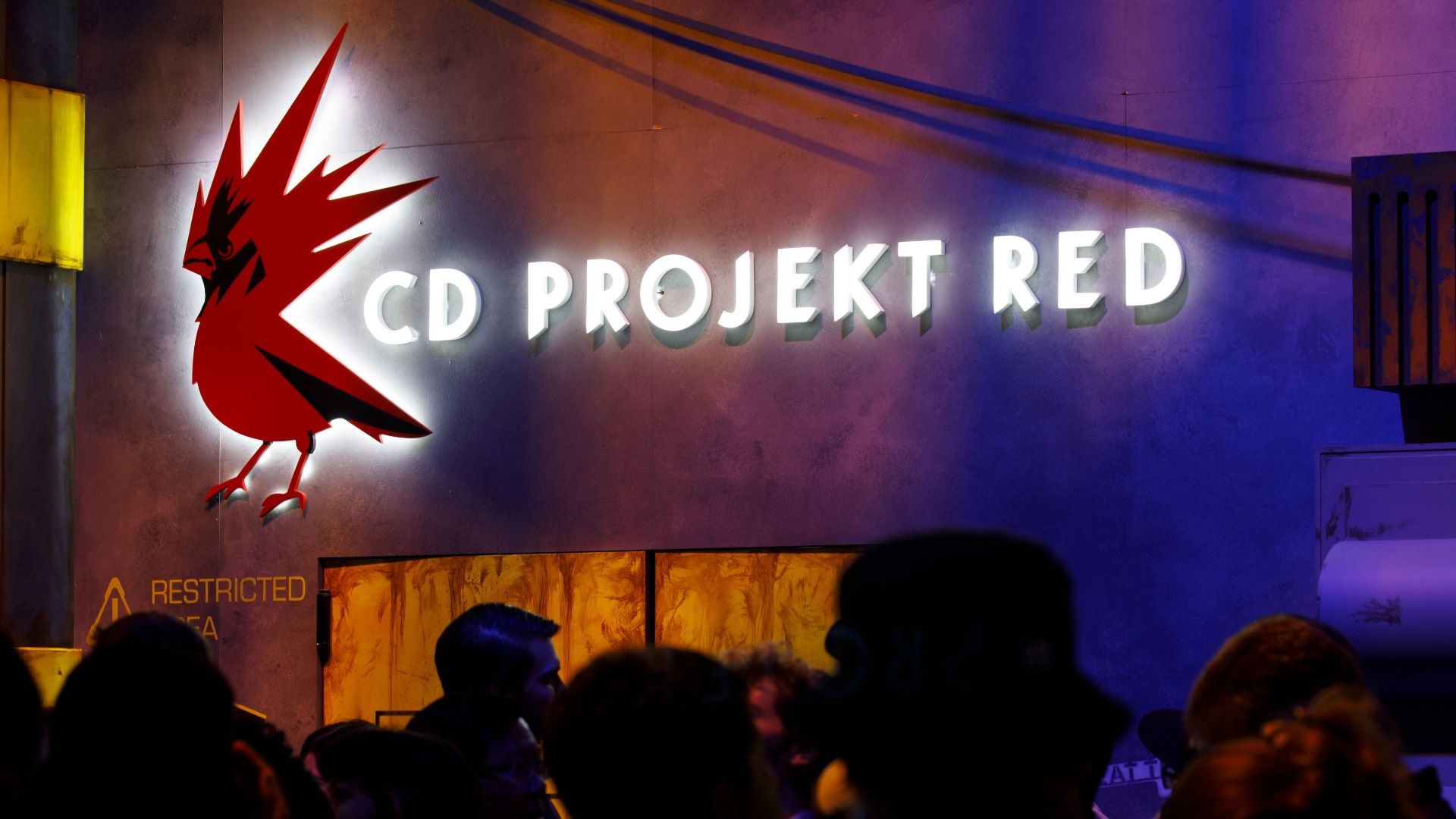
In a strategic move that marks the end of a decades-old corporate distinction, the Polish gaming giant CD Projekt has announced its intention to rebrand its parent company. Moving forward, the entity formerly known as "CD Projekt" will align its corporate identity with its globally recognized development studio, "CD Projekt Red." This decision, formalized in recent company resolutions, aims to eliminate the long-standing confusion between the parent corporation and its primary subsidiary, while signaling a more cohesive future for one of the industry’s most recognizable brands.
The End of a Dual Identity
For years, the distinction between CD Projekt (the parent company) and CD Projekt Red (the development studio behind The Witcher and Cyberpunk 2077) has been a source of minor, yet persistent, friction for journalists, investors, and fans alike.
In the complex world of corporate structures, this separation was once functional. The parent company handled the broader business interests, publishing, and overarching financial strategy, while the "Red" label was reserved specifically for the creative engine producing the company’s blockbuster titles. However, in an era where global brand recognition is the primary currency, the dual-naming convention became an unnecessary hurdle. By consolidating the brand under the "CD Projekt Red" banner, the company is effectively acknowledging that, in the eyes of the public and the consumer market, they have always been one and the same.
Chronology of a Corporate Evolution
The history of the CD Projekt brand is one of rapid expansion and transformation.
- 1994: Marcin Iwiński and Michał Kiciński founded CD Projekt in Warsaw, Poland. Initially, the company focused on importing video games from the West into the burgeoning Polish market.
- 2002: The company established its internal game development studio, CD Projekt Red, to create original intellectual property.
- 2007: The studio achieved international acclaim with the release of the first The Witcher game, based on the novels by Andrzej Sapkowski.
- 2015: The Witcher 3: Wild Hunt cemented the studio’s status as a top-tier global developer, simultaneously elevating the parent company’s market value on the Warsaw Stock Exchange.
- 2020: The launch of Cyberpunk 2077 brought unprecedented scrutiny to the corporate structure, as investors and gamers alike began to scrutinize the division of labor between the studio and the parent organization.
- 2026: The company formally moves to unify its brand, dissolving the distinction between the parent company and the studio in all public-facing documentation.
This evolution tracks the journey of a company that grew from a local distributor into a multinational powerhouse. The shift toward a unified identity is the natural conclusion of this growth, as the brand’s value is now inextricably linked to the products created by the "Red" team.
Supporting Data and Market Positioning
The decision to rebrand is not merely aesthetic; it is deeply rooted in market efficiency. According to the company’s recent draft resolution for its General Meeting, the Management Board explicitly stated that the new name is designed to "ensure full brand consistency and facilitate the identification of the Company with its products on the global market."
Market analysts note that brand fragmentation can lead to "cognitive load" for investors and consumers. When a consumer buys a game, they interact with the studio; when an investor buys stock, they interact with the parent. By aligning the two, CD Projekt reduces the friction in its marketing funnel. For a company currently navigating the high-stakes development of the next entries in both The Witcher and Cyberpunk franchises, this streamlining is a vital step in maintaining clear messaging during investor calls and public marketing campaigns.
Official Responses and Strategic Intent
In official communications, the board has remained brief but clear regarding the rationale behind the change. The move is viewed as a "modernization" of the company’s corporate image. By shedding the generic "CD Projekt" name for the parent entity, the company is leaning into the equity it has spent three decades building.
"We are, and have always been, a studio at heart," a company representative noted during the lead-up to the official resolution. The integration ensures that when the company speaks, it speaks with one voice. This is particularly important for the company’s future, as it moves toward a multi-project model—working on multiple AAA titles simultaneously—which requires a unified corporate culture to manage effectively.
Implications for the Industry and the Future
The rebranding carries several long-term implications for the gaming industry and the company’s future output.
1. Consumer-Facing Simplification
For the average gamer, the change is a welcome simplification. "CD Projekt Red" has become a shorthand for high-fidelity, story-driven RPGs. By branding the parent company with the same name, the company avoids the occasional confusion where corporate announcements (such as financial earnings or fiscal restructuring) were mistakenly attributed to the development team, or vice versa.
2. Streamlining Investor Relations
From an investment perspective, the unified brand allows for a more focused narrative. Instead of explaining the complex relationship between a parent holding company and a primary subsidiary, the company can present itself as a singular entity dedicated to its core competency: game development. This is expected to clarify the company’s financial reporting and improve its public relations efficacy.
3. Cultural Cohesion
Internally, the change may foster a stronger sense of unity. Large companies often suffer from "siloing," where the business side and the creative side view themselves as distinct, sometimes antagonistic entities. By placing everyone under the same brand, CD Projekt is attempting to foster a culture where the business of game development is treated as a holistic, integrated process rather than a fragmented one.
4. The Challenges Ahead
The challenge, of course, remains the output. Rebranding is a cosmetic change that carries weight only if the product continues to satisfy. With projects like The Witcher 4 (codenamed "Polaris") and the sequel to Cyberpunk 2077 (codenamed "Orion") currently in the works, the company is under immense pressure to deliver. The new brand name, "CD Projekt Red," will now bear the full weight of these expectations. If the company fails to deliver, the brand will suffer; if it succeeds, the brand will become even more synonymous with quality.
Conclusion: A New Era
The decision to unify the brand under the "CD Projekt Red" name is a recognition of the company’s reality. It is a studio-first organization that has outgrown its legacy corporate structure. While the loss of the distinction may provide a moment of nostalgia for those who enjoyed the "mnemonic rhymes" of the past, the industry’s trajectory toward greater transparency and brand clarity makes this move both inevitable and prudent.
As the company transitions into this new chapter, it does so with a simplified identity that reflects its current status as one of the world’s most significant gaming entities. For the developers in Warsaw and beyond, the work remains the same: crafting the expansive, narrative-heavy worlds that have defined their legacy. But for the world watching them, the message is now clearer than ever—there is only one CD Projekt Red, and they are fully focused on the future.
The "Red" label, once just a division, is now the entire identity. In an industry that often thrives on complexity, this move toward simplicity may well be the most significant development in the company’s recent history, ensuring that the legacy of Geralt of Rivia and the neon-soaked streets of Night City are forever linked to the singular, unified banner of their creators.


 Asro
Asro
 Muslim