Jia Lissa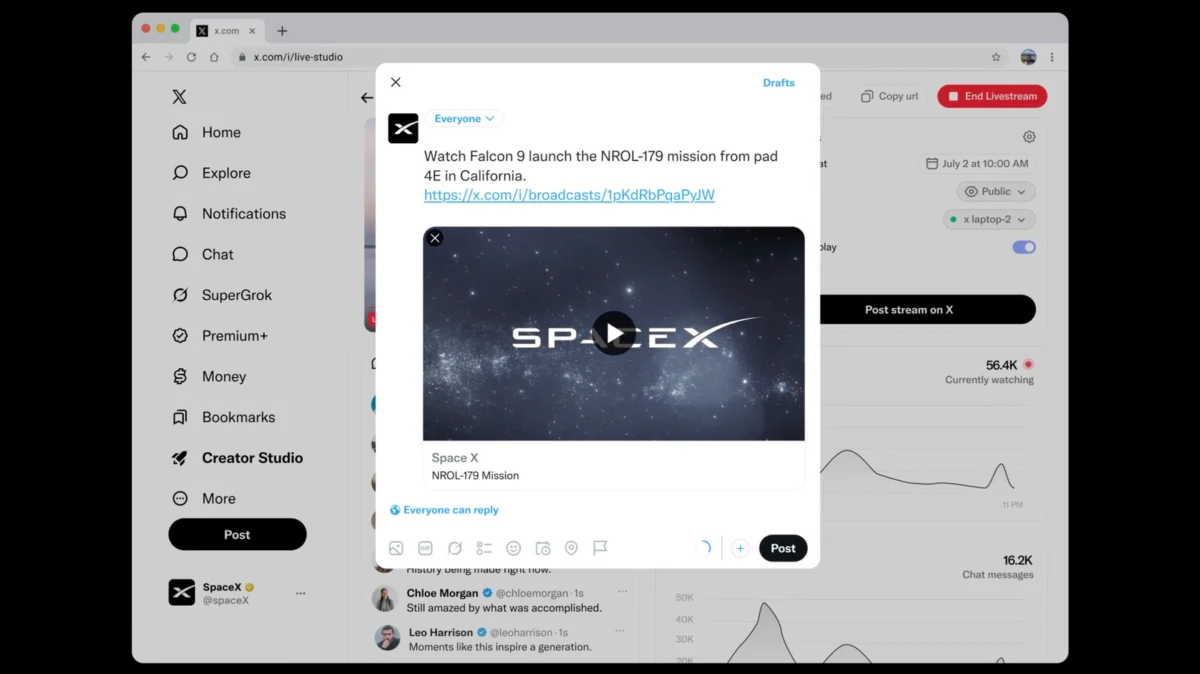
In a bold move to transform its platform into a comprehensive hub for real-time video content, X (formerly Twitter) has unveiled a significant initiative aimed at capturing the creator economy. The company announced this week the launch of "Live Studio," a centralized command hub designed to streamline the broadcasting experience for content creators. Perhaps more importantly, the platform is backing this technological rollout with a $1 million incentive pool, signaling a concerted effort to pivot from being a text-centric social network to a destination for professional-grade live streaming.
The Core Initiative: Live Studio and the $1 Million Incentive
The introduction of Live Studio marks a pivotal shift in how X handles video. For years, the platform has offered live streaming capabilities, but they were often relegated to secondary status, lacking the sophisticated management tools required by professional streamers.
Nikita Bier, the head of product at X, announced the initiative via the platform, highlighting the company’s intent to make X the primary destination for "what is happening now." The $1 million creator fund is intended to act as a catalyst, rewarding those who utilize the new tools to broadcast content to their followers. While specific payout structures—such as whether compensation is based on concurrent viewership, total hours streamed, or subscriber engagement—have not yet been detailed, the scale of the investment suggests that X is eager to lure talent away from competitors like Twitch, YouTube Live, and Kick.
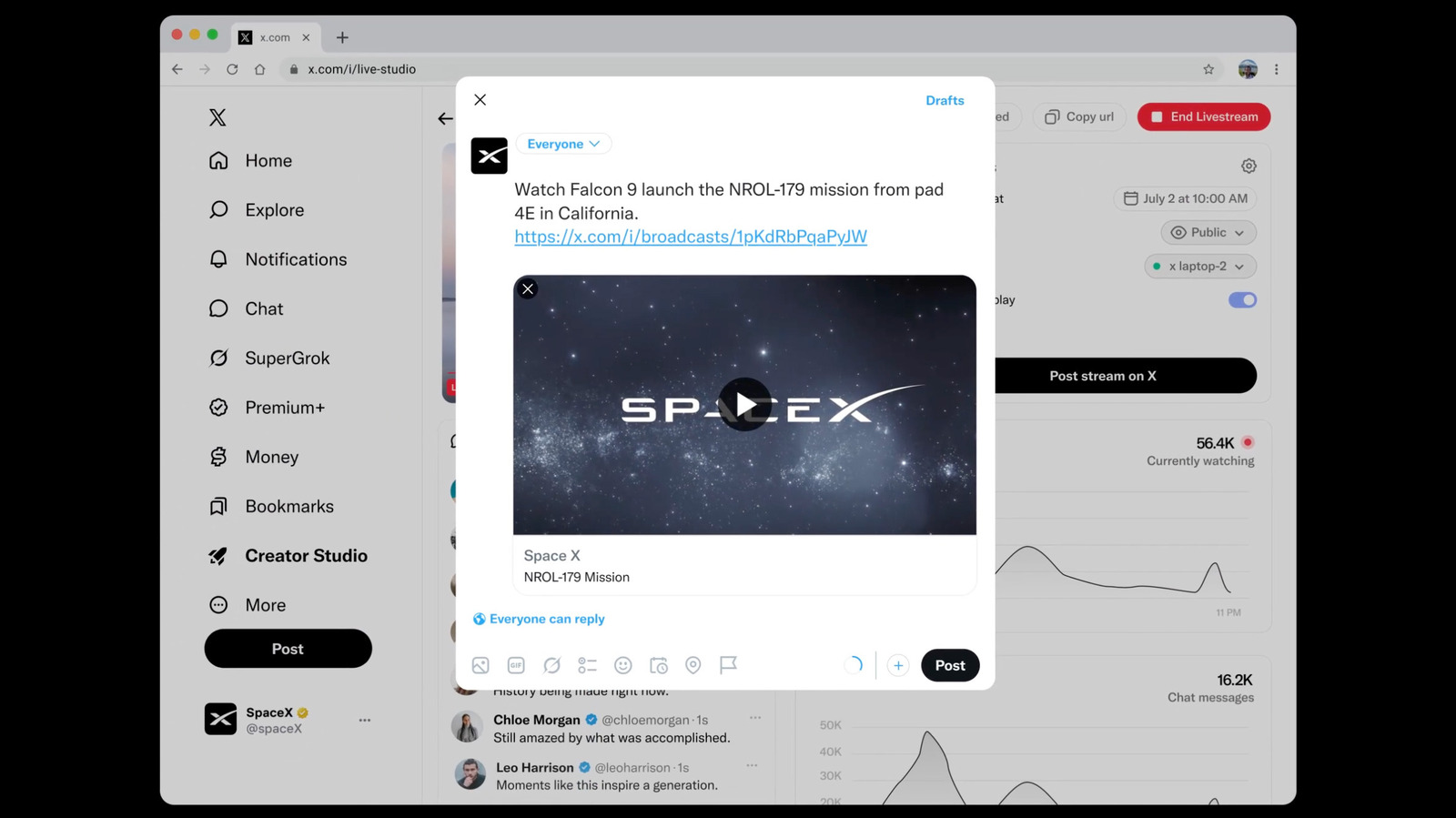
Live Studio functions as a dashboard within the platform’s existing "Creator Studio." It provides streamers with granular control over their broadcasts, including:
- Production Controls: Users can set stream titles, upload custom thumbnails, and schedule broadcasts in advance.
- Audience Segmentation: Creators can restrict access to their streams, limiting them to verified accounts, specific followers, or paid subscribers, while also retaining the option to broadcast to the general public.
- Real-Time Analytics: The dashboard offers live data on concurrent viewers, audience geography, and device usage, allowing creators to pivot their strategies mid-stream to better engage their specific demographics.
A Chronology of X’s Streaming Ambitions
To understand the significance of this launch, one must look at the platform’s rocky history with live broadcast technology.
2016-2020: The Early Days
Following the acquisition of Periscope, Twitter integrated live streaming directly into its app. While it gained popularity for news coverage and citizen journalism, it failed to build a sustainable ecosystem for professional content creators, eventually leading to the sunsetting of the standalone Periscope app in 2021.
2023: The Server Strain
The platform’s reputation for reliable streaming took a significant hit in May 2023. During an event meant to showcase the platform’s live capabilities—the presidential bid announcement of Ron DeSantis via "Spaces"—the servers suffered catastrophic failures. Users were greeted with error messages, and the audio stream was plagued by constant disconnections. The incident served as a public relations embarrassment, highlighting that the infrastructure was not yet ready for high-traffic, high-stakes events.
2024: The DDoS Allegations
A year later, an interview between Elon Musk and Donald Trump faced similar hurdles. As thousands attempted to tune in, the stream became inaccessible. Musk later attributed the delay to a "massive DDoS attack," though the technical fragility of the platform remained a talking point among critics and tech analysts alike.
2026: The New Era
The rollout of Live Studio represents a "Version 2.0" attempt. By tying the feature to a premium subscription model ($3/month for X Premium), the company is attempting to curate a higher-quality environment, potentially reducing the noise and technical overhead that plagued previous high-profile events.
Supporting Data and The Economics of Streaming
The pivot to live video is not merely a feature update; it is an economic necessity. Advertisers are increasingly shifting budgets toward short-form and live video, which offer higher engagement rates than static text posts.
The $1 million allocation, while modest compared to the multi-billion dollar budgets of YouTube’s creator funds, serves as a "seed investment." The strategy relies on a classic platform-building tactic: subsidize the supply side (creators) to ensure there is enough high-quality content to draw the demand side (viewers). If the platform can prove that creators are making consistent income through Live Studio, it could trigger a virtuous cycle of increased traffic, improved ad revenue, and better server utilization.
However, the barrier to entry remains the $3 monthly subscription fee. By restricting the ability to host professional-level streams to Premium users, X is attempting to solve two problems at once: increasing recurring subscription revenue and creating a "walled garden" that theoretically reduces bot activity and low-quality spam in live feeds.
Official Responses and Strategic Messaging
The messaging from X’s product leadership has been clear: the company wants to own the "real-time" narrative. Nikita Bier’s announcement emphasized that "X is where everything is happening now," a sentiment that positions the platform as a competitor not just to social networks, but to traditional cable news and event broadcasting.
Industry analysts have noted that the emphasis on "Creator Studio" tools is a direct response to the professionalization of the creator class. Modern streamers require more than just a "Go Live" button; they need OBS integration, thumbnail management, and audience gating. By providing these tools natively, X is removing the friction that typically forces streamers to use third-party software like Streamlabs or OBS, which can be daunting for casual users.
Implications for the Future of X
The success of this initiative will be measured by three primary metrics: stability, discoverability, and creator retention.
1. The Stability Hurdle
Regardless of the features offered, X must prove that its infrastructure can handle high-concurrency events. The "melting server" reputation of the past is a psychological barrier for professional streamers who fear losing their audience during a technical crash. If the platform cannot maintain uptime during a major live event, the $1 million incentive may not be enough to keep creators on the platform.
2. The Discovery Problem
One of the biggest complaints from creators on X has been the algorithmic discovery of video content. Unlike TikTok or YouTube, where discovery engines are highly tuned to video retention, X has historically prioritized text-based threads and image-based news. To succeed, X must adjust its recommendation engine to surface live content to users who have not yet followed a specific creator, effectively making live streams a primary content discovery path.
3. The Competitive Landscape
X is entering a market dominated by incumbents with deep pockets and established creator communities. Twitch holds the gaming market; YouTube holds the long-form and educational market; and Instagram/TikTok hold the short-form, mobile-first market. X is attempting to carve out a niche for "conversational" live streaming—content that blends news, politics, and real-time commentary. If X can successfully position itself as the "Town Square" for live discussion, it could differentiate itself enough to carve out a sustainable market share.
Conclusion: A High-Stakes Pivot
The launch of Live Studio and the associated $1 million payout pool marks the most significant change to X’s content strategy since its rebranding. By transitioning from a text-heavy platform to a video-first ecosystem, X is acknowledging the changing habits of digital consumers.
The company is clearly betting that if it builds the right tools and provides the right incentives, the creators will follow. Whether this influx of content will lead to a revitalized platform or simply repeat the technical frustrations of the past remains the central question. As the rollout progresses over the coming month, the industry will be watching closely to see if X can finally master the art of the live stream, or if it will once again face the limits of its own infrastructure. For now, the "Live Studio" is open for business, and the race to capture the next generation of live-streamed conversation has officially begun.


 Sagoh
Sagoh
 Raul Delapena Setiawan