Rifan Muazin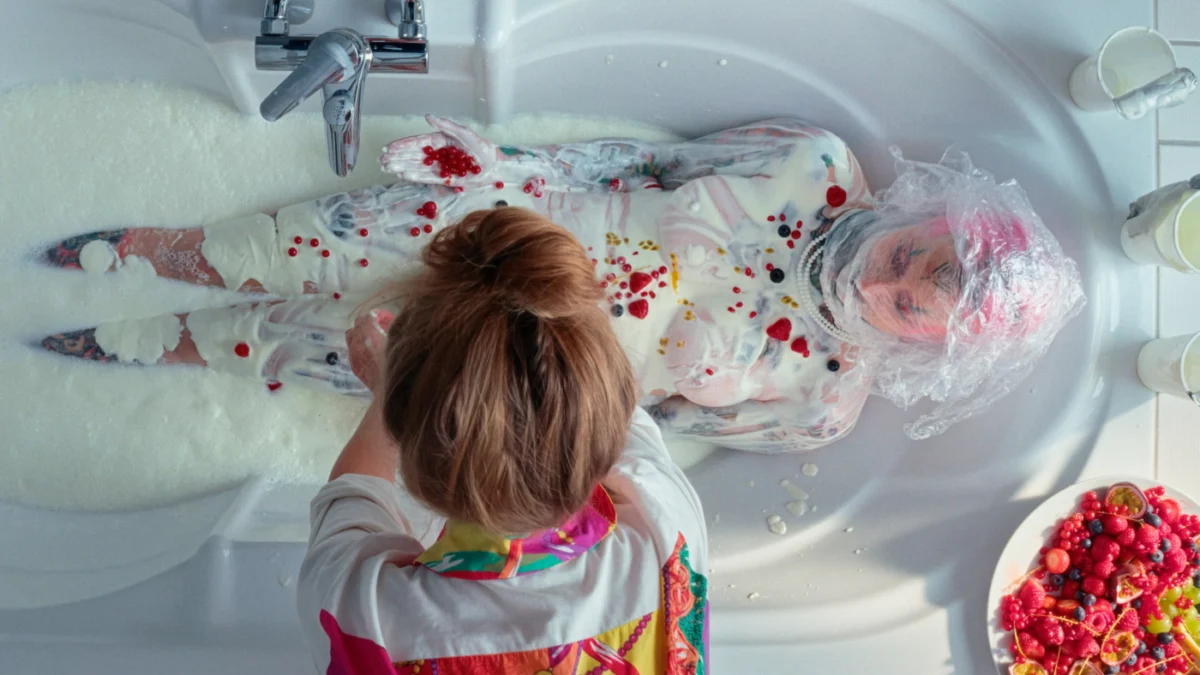
In the landscape of contemporary documentary filmmaking, few projects dare to tread the volatile intersection of intimacy, technology, and public perception as brazenly as My Friend the Porn Star. Austrian writer-director Rosa Friedrich, previously recognized for her work on Wander, has crafted a hybrid documentary that refuses to fit into conventional genre boxes. Set to hold its world premiere on July 7 at the 60th Karlovy Vary International Film Festival (KVIFF) within the prestigious Proxima competition, the film is already generating significant buzz for its unconventional genesis and its brave utilization of emerging technology to navigate the complexities of human shame.
Produced by Dominic Spitaler for the Vienna-based production company Kacerovsky (formerly known as ostblok), the film represents a bold evolution in Friedrich’s body of work. With cinematography by Laura Ettel and expert editing by Melanie Schmidt, the film has secured distribution through Stadtkino Filmverleih in Austria, with international sales handled by New Docs.
A Chronology of a Creative Crisis
The origins of My Friend the Porn Star are rooted in an earnest, if naive, favor. Friedrich, who openly admits to having had little professional or personal interest in the adult film industry, was approached by a close friend—referred to by the pseudonym "Timo"—who expressed a deep-seated desire to star in an "artistic erotic film."
What began as a standard, supportive documentary project—capturing the behind-the-scenes process of a friend realizing a long-held fantasy—quickly descended into a creative and psychological crisis. As the production timeline neared the scheduled shoot date, the reality of the endeavor began to weigh heavily on Timo. The excitement of artistic expression was rapidly eclipsed by the paralyzing fear of public judgment and the potential social repercussions of being explicitly associated with the pornographic genre.
"The closer it gets to the shooting date, the more Timo feels embarrassed and doubtful about having involved himself in the first place," notes the official KVIFF program summary.
Timo’s subsequent withdrawal from the project left Friedrich in a precarious position. She was holding a hard drive full of intimate, highly sensitive footage and was forced to confront a fundamental question: Does one abandon a project when the primary subject loses their nerve, or does one pivot to address the very silence that remains? Friedrich chose the latter. In a move that effectively redefined the film’s trajectory, she utilized artificial intelligence to replace Timo’s facial features, ensuring his anonymity while preserving the narrative arc of his departure. This decision, while technically innovative, served as the catalyst for the film’s second, more expansive act.
The Collective Experiment: Redefining the Erotic
With the original protagonist effectively "erased" from the visual record, Friedrich transformed the project into a collective experiment. She sought out a diverse array of individuals—including a dominatrix, three trans women, a non-binary food-porn creator, a stylist, an actress, a sex coach, and a chef—to participate in a series of discussions and creative workshops.
This cast, featuring individuals like the provocative performance artist Alice Moe (known by the stage name Eric Big Clit), brings a kaleidoscope of perspectives to the screen. The resulting film is a meta-documentary that moves fluidly between playful reenactment, raw interview footage, and existential inquiry. By inviting these participants to reshape the film’s narrative, Friedrich moved away from the traditional, singular "porn" narrative and toward a multifaceted exploration of what it means to be seen in the digital age.
Official Statements and Artistic Intent
In her director’s statement, Friedrich emphasizes that the film’s evolution was not merely a reaction to a production setback, but an intentional shift toward a deeper philosophical inquiry.

"I never expected to find myself caught up in the making of a porn film," Friedrich writes. "But when Timo—my friend’s stage name—told me about his long-held dream of making an artistic sex film with himself in the lead role, the story wouldn’t let me go. As we started working together, I realized I was less interested in whether Timo’s film would actually get made than in what would happen along the way. What fascinated me was the contradiction at the heart of it: the desire to be seen, and the fear of being judged for it."
Regarding her decision to use AI as a tool for narrative preservation, Friedrich notes: "When Timo dropped out, I decided to stay with the material and find a new way in. That led me to anonymize his footage with AI and to continue the film as a collective process… In the end, the film became a result with its own purpose: not a provocation, but an invitation to think differently about visibility, shame, and self-protection."
Implications: Technology, Identity, and the Ethics of the Camera
My Friend the Porn Star arrives at a time when the ethics of documentary filmmaking are under intense scrutiny. By integrating AI into the fabric of the documentary, Friedrich is not just "fixing" a problem; she is commenting on the nature of digital identity. The film poses a vital question: If our faces and bodies can be manipulated or masked, does the underlying truth of our experiences remain intact?
The film’s implications extend far beyond the adult industry. It serves as a mirror for a society obsessed with digital visibility—where social media demands constant performance—while simultaneously fostering a culture of extreme surveillance and judgment. The "fear of being seen," which initially paralyzed Timo, is identified by the film as a universal modern condition.
Furthermore, by centering the voices of sex workers, performers, and those who operate within the margins of "normative" sexuality, the film challenges the viewer’s own prejudices. It forces the audience to confront the arbitrary lines drawn between "art" and "pornography," and, more importantly, between the person and the projection.
Conclusion: A Must-See at KVIFF
As the film prepares for its debut at the Karlovy Vary International Film Festival, it stands as a testament to the resilience of the documentary form. It is a work that acknowledges its own artifice, embraces the messiness of human relationships, and refuses to provide easy answers.
For those looking to engage with the film, a word of caution from the press materials is perhaps necessary: this is not a traditional documentary, and it is certainly not "porn" in the conventional sense. It is an exploration of desire, a meditation on the cost of visibility, and a humorous, often startling, look at how we navigate our most private impulses in a very public world.
As the trailer suggests, while the subject matter might cause a few red faces, the intellectual and emotional rewards of My Friend the Porn Star are likely to resonate long after the credits roll. Whether or not you are comfortable discussing the title with your friends, the film is undeniably one of the most provocative and necessary additions to the 2026 festival circuit.

 Nila Kartika Wati
 Ali Ikhwan