Azzam Bilal Chamdy
In the crowded landscape of indie party games, few titles manage to capture the pure, unadulterated essence of chaotic fun quite like Frog Sqwad. Developed as a whimsical, tongue-in-cheek physics-based adventure, Frog Sqwad tasks players with a simple yet increasingly frantic objective: feed the Swamp King. By combining elements of platforming, cooperative strategy, and physics-driven hilarity, the game invites up to eight players to navigate treacherous, procedurally generated environments using nothing but their sticky, prehensile tongues.
Whether you are a lone frog looking to prove your worth or part of a coordinated troupe of amphibians, Frog Sqwad offers a unique brand of mayhem that is quickly carving out a niche in the multiplayer gaming sphere.
The Core Concept: Serving the Swamp King
At its heart, Frog Sqwad is a test of coordination and appetite. Players control small, vibrant frogs tasked with scavenging food to meet the daily quota required by the elusive Swamp King. The menu is surprisingly diverse—ranging from hamburgers and crispy fries to giant, cumbersome eggs and apples.
The primary mechanic revolves around the frog’s tongue. Unlike traditional platformers where players might rely on direct combat or intricate weapon systems, here the tongue is your multi-purpose tool. It is used for traversal, pulling items, and interacting with the environment. However, the game adds a layer of depth through its consumption mechanics. Smaller food items can be eaten to restore health, but they also trigger a physical transformation: as your frog eats, it grows.
This growth mechanic creates a compelling risk-reward dynamic. A larger frog is capable of smashing through walls and clearing paths that would otherwise be impassable, but increased size comes at the cost of agility. Players must decide whether to remain small and nimble—perfect for navigating tight, platform-heavy sections—or to balloon into a hulking, rolling projectile capable of brute-forcing the level’s geometry.
A Chronology of Development and Public Reception
The journey of Frog Sqwad from a conceptual prototype to a fully realized Steam release is a testament to the vibrancy of the modern indie game scene.
The Prototype Phase
During its early development, the team focused heavily on the physics of the "floaty" movement. The goal was to create a game that felt slippery and unpredictable, mirroring the nature of a frog in a swamp. Early testing sessions revealed that while the movement was difficult to master, it provided the perfect foundation for "funny failure"—moments where players would miss a jump or drop an item, resulting in group laughter rather than frustration.
The Showcase at New Game Plus
A pivotal moment in the game’s lifecycle occurred during the New Game Plus event. It was here that the community—and journalists like Jupiter Hadley—got their first hands-on experience with the title. Feedback was immediate and constructive: players noted that while the movement felt unconventional, it rewarded teamwork. The demo showcased that when players communicated effectively, they could compensate for the game’s inherent physical challenges, turning a "floaty" platformer into a high-octane cooperative puzzle.
Official Launch
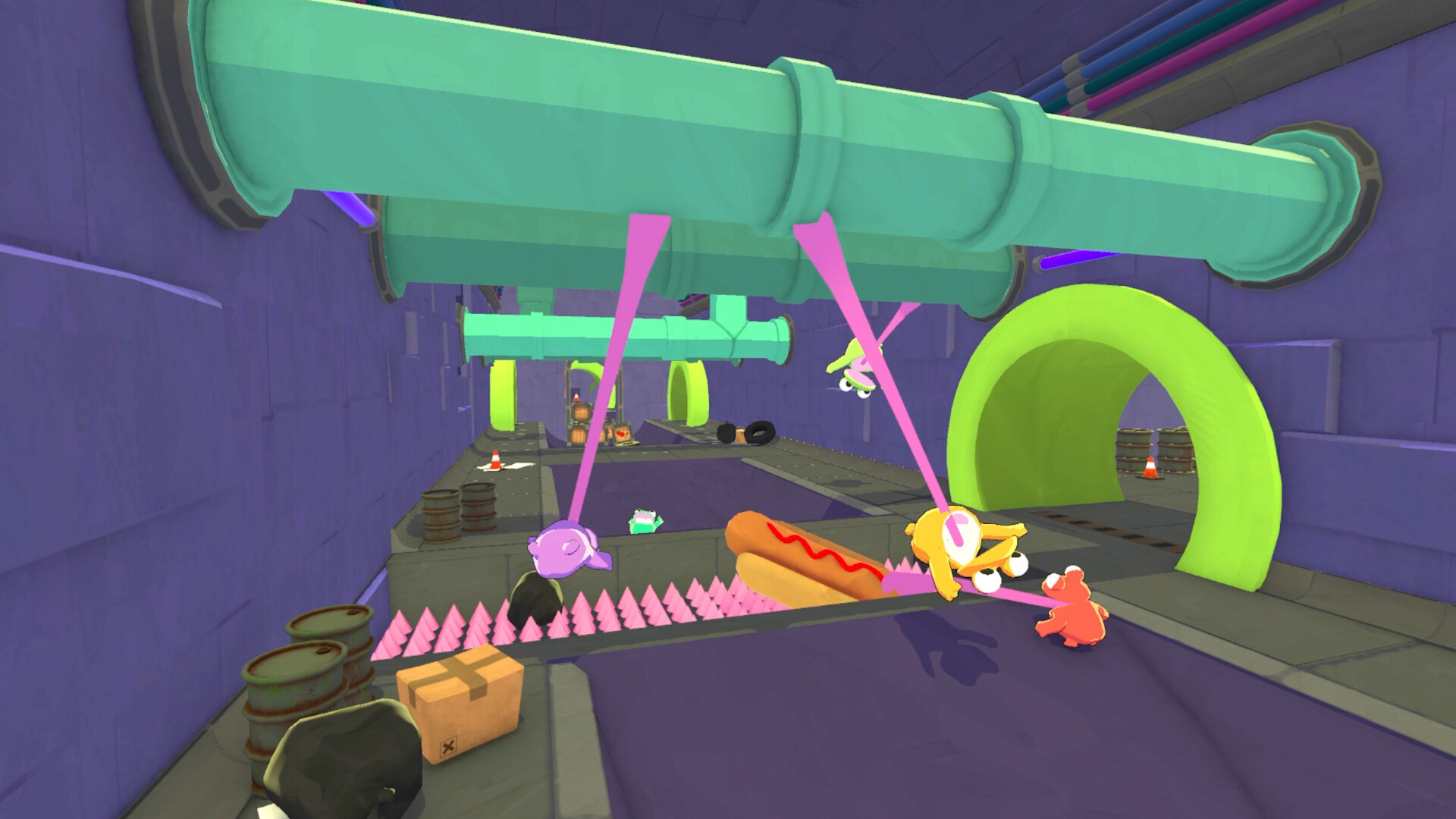
Following the positive reception at indie showcases, Frog Sqwad officially hit Steam. The transition from a demo build to a full release saw the implementation of more robust level generation, a wider array of hazards, and the fine-tuning of the eight-player cooperative mode, which remains the title’s primary draw.
Supporting Data: Mechanics and Environmental Hazards
The difficulty of Frog Sqwad is not just in the movement, but in the hostile environments the frogs must traverse. Each map is procedurally generated, ensuring that no two sessions feel the same.
The Hazards of the Swamp
The level design is intentionally cruel, featuring a variety of obstacles designed to test the limits of even the most skilled frog troupe:
- Slime Monsters: These entities act as the primary antagonists, roaming the maps and waiting for a stray frog to wander too close.
- Toxic Ooze: A persistent environmental threat, the ooze acts as a "hard reset" for players. If a frog falls into the toxic liquid, they are eliminated from the current run, putting more pressure on the remaining squad members to meet the quota.
- Spikes and Traps: Precision is key. Many levels feature spike pits that require careful, calculated leaps.
Puzzle Elements
Beyond simple platforming, Frog Sqwad introduces environmental puzzles. Players may encounter buttons, levers, or pressure plates that, when activated, trigger moving platforms or open shortcuts. Solving these as a group is essential for efficiency. A team that coordinates—with some players acting as "porters" to carry the food while others act as "scouts" to clear the path—will always outperform a group of unorganized players.
Official Perspectives and Critical Analysis
While Frog Sqwad has been praised for its charm, critical analysis remains focused on the "floaty" movement. In a professional journalistic capacity, one must acknowledge that this is a polarizing design choice.
"I found the movement of the frogs… to be ridiculously floaty," notes veteran indie journalist Jupiter Hadley. "For a game where you need to jump specifically and ensure you don’t die, this creates a high skill ceiling."
However, Hadley is quick to highlight that the design is intentional. The game is not designed to be a precision platformer in the vein of Celeste; rather, it is designed to be a social experience where the struggle is part of the joke. When played with seven friends, the chaotic input—everyone trying to grab the same burger or accidentally jumping into a pit—becomes the core loop. The "floatiness" acts as a catalyst for comedic situations, turning simple tasks into monumental, hilarious struggles.
Implications: The Future of Co-op Party Gaming
The success of Frog Sqwad highlights a growing trend in the industry: the "Chaos Party" genre. Players are increasingly moving away from hyper-competitive, solitary online experiences and toward games that facilitate shared laughter and chaotic teamwork.
The "Eight-Player" Standard
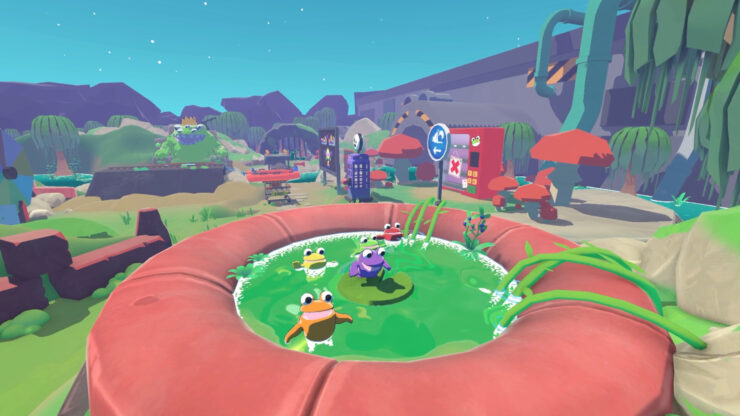
By supporting up to eight players, Frog Sqwad pushes the boundaries of what is expected for a small-scale indie title. Most cooperative games cap at four players; by doubling that, the developers have created an environment that is significantly more chaotic. This has implications for future developers, proving that there is a hunger for "large-group" party games that don’t require the complexity of an MMORPG.
Community-Driven Longevity
The procedural nature of the levels ensures that Frog Sqwad has a long shelf life. Because the game relies on physics and player interaction rather than scripted sequences, the "meta" of the game is constantly evolving. Strategies that worked in one session may fail in the next due to a different level layout, encouraging players to return to the game repeatedly.
Final Assessment: Should You Play?
Frog Sqwad is an unapologetic, loud, and messy celebration of co-op gaming. It is a title that thrives in the living room or on a Discord call with friends who don’t mind a bit of failure. While the movement mechanics may take a few rounds to get used to, the reward—successfully hauling a giant, wobbly egg back to the Swamp King’s bowl amidst a chorus of shouting friends—is well worth the effort.
For those looking for a serious, highly polished platformer with tight controls, Frog Sqwad may feel frustrating. But for the player looking to inject some chaotic, hilarious energy into their next game night, it is an essential addition to the library.
Technical Specifications:
- Developer: Independent (Available on Steam)
- Platform: PC
- Multiplayer: Up to 8 players (Co-op)
- Core Loop: Collect food, meet quotas, navigate hazards, grow in size.
In conclusion, Frog Sqwad proves that you don’t need complex narratives or cutting-edge graphics to make a lasting impression. Sometimes, all you need is a sticky tongue, a hungry Swamp King, and seven friends willing to make a mess.


 Lina Hope
 Muslim